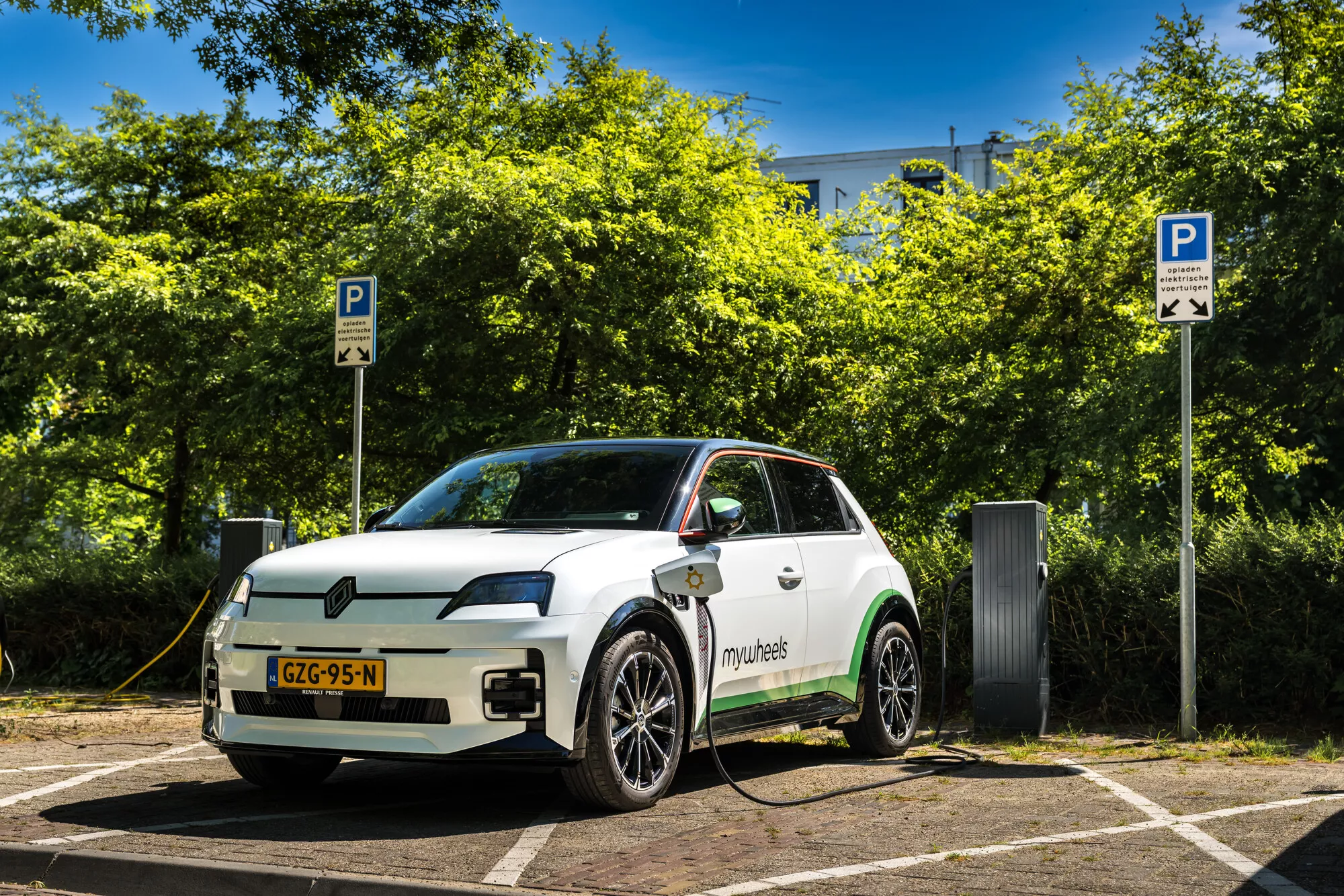
Imagine a future where your electric car does much more than take you from one place to another. While it sits parked at home overnight or waits in an office parking lot during the day, it quietly helps power homes, stabilize the electricity grid, and support the growing use of renewable energy. Instead of simply consuming electricity, your vehicle becomes an active part of the energy system.
This is the promise of Vehicle-to-Grid (V2G) technology. It represents a major shift in how electricity is generated, stored, and shared. As electric vehicles become increasingly common around the world, scientists, engineers, and energy companies are exploring ways to transform millions of parked vehicles into a vast network of mobile energy storage units.
Vehicle-to-Grid technology is more than an innovation for electric cars. It is a new way of thinking about energy—one where transportation and electricity systems work together to create a cleaner, more reliable, and more efficient future.
Understanding Vehicle-to-Grid Technology
Vehicle-to-Grid, commonly abbreviated as V2G, is a technology that allows electric vehicles (EVs) to both receive electricity from the power grid and send electricity back to it when needed.
Traditionally, electricity flows in only one direction. The power grid generates electricity, and homes, businesses, and electric vehicles consume it.
V2G changes this one-way relationship into a two-way exchange.
When electricity demand is low, such as late at night, an electric vehicle charges its battery. Later, when electricity demand rises during the day or evening, part of that stored energy can be sent back to the power grid if the vehicle owner has agreed to participate in a V2G program.
The vehicle effectively becomes a temporary energy storage system that supports the grid without requiring a dedicated battery installation.
Why Vehicle-to-Grid Technology Matters
Electricity demand changes throughout the day.
In the early morning, demand begins to rise as people wake up. It increases further during business hours, and in many regions reaches its highest levels in the evening when millions of people return home, cook meals, use lighting, charge devices, and run household appliances.
Power companies must continuously balance electricity supply and demand.
If demand suddenly exceeds supply, the stability of the electrical grid can be threatened. In severe cases, this imbalance may contribute to blackouts or require expensive backup power plants to come online.
At the same time, renewable energy sources such as solar and wind generate electricity only when weather conditions allow. Solar panels produce electricity during daylight hours, while wind turbines depend on wind speeds that can vary from hour to hour.
Vehicle-to-Grid technology helps bridge these gaps.
By using the batteries already installed in electric vehicles, electricity can be stored when renewable energy production is high and released when demand increases or renewable generation decreases.
How Vehicle-to-Grid Technology Works
The operation of V2G relies on intelligent communication between the electric vehicle, the charging station, and the electricity grid.
When an EV is plugged into a compatible charging station, software continuously monitors several factors. These include the battery’s current charge level, electricity prices, overall grid demand, and the driver’s charging preferences.
Suppose a vehicle owner plans to leave for work at 8:00 a.m. and wants the battery to be at least 80 percent charged before departure.
The V2G system takes this requirement into account.
If the electricity grid experiences unusually high demand overnight, the system may temporarily return a small amount of electricity from the vehicle to the grid. Later, when demand decreases or electricity becomes cheaper, the battery is recharged to meet the owner’s desired level before departure.
Throughout this process, sophisticated software ensures that the driver’s transportation needs remain the highest priority.
Bidirectional Charging: The Heart of V2G
A key requirement for Vehicle-to-Grid technology is bidirectional charging.
Most conventional EV chargers move electricity in only one direction—from the grid into the vehicle.
V2G requires chargers capable of transferring electricity both into and out of the battery.
These specialized chargers contain advanced power electronics that safely convert electricity between the alternating current (AC) used by the electrical grid and the direct current (DC) stored in vehicle batteries.
Without bidirectional charging hardware, Vehicle-to-Grid operation is not possible.
Electric Vehicle Batteries as Energy Storage
Every electric vehicle contains a rechargeable battery capable of storing a significant amount of electrical energy.
Modern EV batteries often store tens of kilowatt-hours of electricity, and some larger vehicles can store well over 100 kilowatt-hours.
When multiplied across thousands or even millions of vehicles, this represents an enormous amount of distributed energy storage.
Unlike traditional power plants, these batteries are already owned by drivers and are parked for much of the day.
Studies have shown that private vehicles typically remain parked for the vast majority of their lifetime.
During these parked periods, V2G allows batteries to perform useful work without interfering with normal transportation.
Supporting Renewable Energy
One of the greatest challenges facing renewable energy is variability.
Solar panels stop producing electricity after sunset.
Clouds can reduce solar generation within minutes.
Wind turbines generate different amounts of electricity depending on changing wind conditions.
Electricity, however, must be available whenever people need it.
Vehicle-to-Grid technology helps smooth these fluctuations.
During sunny afternoons with abundant solar power, electric vehicles can charge using clean electricity.
Later, after sunset when solar production ends but electricity demand remains high, some of that stored energy can flow back to the grid.
Similarly, excess electricity generated during windy periods can be stored in vehicle batteries rather than being wasted.
This improves the efficiency of renewable energy systems and reduces dependence on fossil fuel power plants.
Reducing Pressure on the Power Grid
Electricity grids occasionally experience periods of exceptionally high demand, known as peak demand.
Meeting these short-lived peaks often requires expensive power plants that may operate only a few hours each year.
Vehicle-to-Grid technology can reduce these peaks.
Instead of building additional generating stations solely for occasional demand spikes, utilities can temporarily draw small amounts of electricity from thousands of connected vehicles.
Because the contribution is distributed across many vehicles, the impact on any individual battery is relatively small.
Collectively, however, these vehicles can provide substantial support.
Helping Prevent Blackouts
Maintaining grid stability requires constant balance between electricity generation and consumption.
Unexpected equipment failures, extreme weather events, or sudden increases in electricity demand can create instability.
Vehicle-to-Grid systems respond rapidly.
Advanced control software can adjust charging rates or supply electricity back to the grid within seconds.
This rapid response helps stabilize voltage and frequency, reducing stress on the electrical network.
Although V2G alone cannot eliminate all blackouts, it can improve grid resilience and provide valuable support during emergencies.
Saving Money for Electric Vehicle Owners
Vehicle owners participating in V2G programs may receive financial compensation.
Utilities may pay drivers for allowing their batteries to provide electricity or grid-support services during periods of high demand.
In some electricity markets, charging occurs when electricity prices are low, while energy is returned to the grid when prices are higher.
This approach can reduce the overall cost of owning an electric vehicle.
The exact financial benefits depend on local electricity markets, utility policies, charging infrastructure, and program design.
Environmental Benefits
Vehicle-to-Grid technology offers several important environmental advantages.
By making better use of renewable electricity, V2G reduces the need for fossil fuel power plants that emit carbon dioxide and other air pollutants.
Improved integration of renewable energy also decreases the amount of clean electricity that might otherwise be wasted during periods of low demand.
Instead of curtailing excess solar or wind generation, that electricity can be stored in vehicle batteries for later use.
As countries work toward reducing greenhouse gas emissions, Vehicle-to-Grid technology may become an important part of cleaner energy systems.
Vehicle-to-Home and Vehicle-to-Building
Vehicle-to-Grid belongs to a broader family of technologies based on bidirectional charging.
One closely related concept is Vehicle-to-Home (V2H).
In this system, an electric vehicle supplies electricity directly to a house rather than to the public electricity grid.
During power outages, the vehicle can temporarily operate as a backup power source for essential household appliances.
Another variation is Vehicle-to-Building (V2B).
Here, an electric vehicle helps power commercial buildings, schools, hospitals, or offices, reducing electricity costs during expensive peak-demand periods.
Although these systems operate differently, they all rely on the same fundamental principle of two-way energy flow.
Smart Charging and Vehicle-to-Grid
Vehicle-to-Grid is often confused with smart charging, but they are not identical.
Smart charging adjusts when and how quickly an electric vehicle charges.
For example, charging may automatically begin during periods of low electricity demand or when renewable energy production is high.
However, electricity still flows only into the battery.
Vehicle-to-Grid goes a step further by allowing electricity to move in both directions.
Every V2G system typically includes smart charging, but not every smart charging system supports V2G.
The Importance of Communication
A successful Vehicle-to-Grid system depends on continuous communication.
The charging station exchanges information with the vehicle.
The utility communicates with the charging station.
Software monitors battery health, electricity prices, charging schedules, and grid conditions.
This communication ensures that vehicles remain ready for their owners while simultaneously supporting the electrical system.
Cybersecurity also plays an essential role, protecting communication networks from unauthorized access and maintaining the reliability of critical infrastructure.
Battery Health and Longevity
One common concern about Vehicle-to-Grid technology is whether sending electricity back to the grid will shorten battery life.
Every rechargeable battery gradually degrades through repeated charging and discharging.
Additional cycling associated with V2G could contribute to battery wear.
However, researchers continue studying this issue, and the results are more nuanced than many people expect.
Modern battery management systems carefully control charging conditions, temperature, and depth of discharge.
Many V2G programs also limit how much energy is exchanged, helping minimize battery stress.
Battery technology continues improving, with newer chemistries designed for greater durability and longer service life.
The overall effect of V2G on battery longevity depends on battery design, operating conditions, charging strategies, and how frequently grid services are provided.
Challenges Facing Vehicle-to-Grid
Despite its tremendous potential, Vehicle-to-Grid technology still faces several challenges.
Not all electric vehicles currently support bidirectional charging.
Many existing charging stations are designed only for one-way charging.
Installing bidirectional chargers can be more expensive than conventional chargers.
Electricity regulations differ among countries, and some regions are still developing policies that allow vehicle owners to sell electricity back to the grid.
Utilities must also build advanced software systems capable of managing thousands or millions of connected vehicles simultaneously.
Public awareness remains another challenge, as many drivers are unfamiliar with how Vehicle-to-Grid works or how it could benefit them.
The Role of Artificial Intelligence
Artificial intelligence is becoming increasingly important in Vehicle-to-Grid systems.
AI algorithms can predict electricity demand, renewable energy production, charging behavior, weather conditions, and vehicle availability.
These predictions allow charging schedules to be optimized automatically.
Instead of every vehicle charging immediately after arriving home, AI can coordinate charging across thousands of vehicles to reduce grid stress and maximize renewable energy use.
Machine learning also helps improve battery management and identify the most efficient times for electricity exchange.
Vehicle-to-Grid Around the World
Interest in Vehicle-to-Grid technology is growing rapidly.
Research institutions, automobile manufacturers, utilities, and governments across North America, Europe, Asia, and other regions are conducting pilot projects and commercial demonstrations.
Some countries are testing neighborhoods where electric vehicles help stabilize local electricity networks.
Others are exploring how V2G can support renewable energy expansion or improve disaster resilience.
Although widespread adoption is still developing, the technology continues advancing as electric vehicle ownership increases.
The Future of Vehicle-to-Grid Technology
The future of transportation is increasingly electric.
At the same time, electricity systems are becoming smarter, cleaner, and more connected.
Vehicle-to-Grid sits at the intersection of these two transformations.
As battery technology improves, bidirectional charging becomes more common, and renewable energy expands, V2G could evolve into a major component of modern electricity infrastructure.
Millions of electric vehicles may eventually function not only as transportation but also as distributed energy resources that help balance supply and demand across entire countries.
This transformation could reduce electricity costs, improve grid reliability, increase renewable energy use, and strengthen energy security.
Why Vehicle-to-Grid Technology Is Important
Vehicle-to-Grid technology represents a powerful example of how innovation can reshape familiar technologies in unexpected ways. An electric vehicle is no longer viewed simply as a means of transportation but as a valuable energy asset capable of supporting homes, businesses, and the wider electricity grid.
By enabling two-way electricity flow between vehicles and the grid, V2G creates new opportunities to store renewable energy, stabilize electrical networks, reduce greenhouse gas emissions, and improve the efficiency of modern power systems. While technical, economic, and regulatory challenges remain, ongoing research and real-world demonstrations continue to show that the concept is both practical and promising.
As the world moves toward cleaner energy and widespread electrification, Vehicle-to-Grid technology has the potential to transform millions of parked electric vehicles into an intelligent, flexible energy network. In doing so, it could help build a future where transportation and electricity work together to create a more sustainable, resilient, and environmentally responsible world.