Not long ago, finding information on the internet meant opening a search engine, typing a few keywords, and scrolling through pages of links. Whether you wanted to know why the sky is blue, how to bake bread, or who invented the telephone, the process was almost always the same. You searched, clicked, read several websites, compared information, and finally found your answer.
Today, that experience is beginning to change.
Instead of searching through dozens of webpages, millions of people now ask AI assistants questions in everyday language. They receive direct answers within seconds. They can ask follow-up questions, request explanations, summarize long documents, translate languages, write emails, solve math problems, and even generate computer code—all within the same conversation.
This shift has sparked one of the biggest questions in the technology world:
Will AI assistants eventually replace search engines?
The answer is not as simple as “yes” or “no.” Artificial intelligence is transforming how people find and use information, but search engines also continue to play an essential role. Rather than one completely replacing the other, the future is likely to involve both technologies evolving together.
To understand why, it helps to first understand what search engines and AI assistants actually do.
What Is a Search Engine?
A search engine is a computer system that helps users find information on the internet.
It continuously explores the web, discovers new pages, stores information about them, and creates enormous indexes that allow users to search billions of webpages in fractions of a second.
When someone enters a search query, the search engine evaluates many factors to determine which webpages are most relevant. It then presents a ranked list of links, often along with images, maps, videos, news articles, shopping results, and other useful information.
Importantly, traditional search engines usually do not create answers themselves. Instead, they help users discover information published by other people and organizations.
For decades, this approach has shaped how billions of people access knowledge online.
What Is an AI Assistant?
An AI assistant works differently.
Instead of mainly presenting lists of webpages, an AI assistant attempts to understand the user’s request and generate a direct response.
You can ask questions naturally, almost as if speaking to another person.
Instead of typing “weather Tokyo tomorrow,” you might ask, “Should I carry an umbrella if I’m visiting Tokyo tomorrow?”
Instead of searching “photosynthesis explanation,” you can ask, “Can you explain photosynthesis as if I were twelve years old?”
The AI understands context, remembers earlier parts of the conversation within the chat, and adjusts its explanations accordingly.
This conversational style makes information easier to access, especially for people who are unfamiliar with technical search techniques.
Why AI Assistants Feel Different
One reason AI assistants have become so popular is that they reduce effort.
Traditional searching often requires several steps.
A person searches.
They open multiple websites.
They compare information.
They ignore advertisements or unrelated results.
They decide which source appears trustworthy.
Finally, they combine everything into a useful answer.
AI assistants often perform much of that work automatically.
Instead of presenting ten possible answers, they generate a single response that combines relevant information into an organized explanation.
For many everyday questions, this feels faster and more convenient.
AI Understands Conversations
One of the greatest strengths of AI assistants is conversational understanding.
Imagine asking a search engine:
“What causes lightning?”
After reading the answer, you ask:
“Can you explain that more simply?”
Then you ask:
“What about thunderstorms?”
Traditional search engines treat each search largely as a separate request.
AI assistants recognize that all three questions are connected.
This ability creates a much more natural learning experience.
Users can gradually explore a topic without constantly rephrasing searches.
Search Engines Were Built for Discovery
Although AI assistants provide direct answers, search engines excel at something equally important: discovery.
Sometimes people are not looking for a single answer.
They want options.
Suppose someone wants to buy a camera.
They may wish to compare prices, read reviews, watch demonstration videos, visit manufacturers’ websites, and evaluate expert opinions.
Search engines make this exploration easy by directing users to many different sources.
Similarly, travelers planning vacations often browse maps, hotel websites, local attractions, restaurant reviews, transportation schedules, and official tourism information.
These tasks depend on exploring the broader web rather than receiving only one summarized answer.
AI Relies on Information
Artificial intelligence does not create knowledge from nothing.
Modern AI systems learn from enormous collections of data during training.
Some AI assistants can also retrieve current information from trusted online sources when designed to do so.
In either case, AI depends on information created by people.
Scientists publish research papers.
Journalists investigate events.
Governments release statistics.
Universities conduct studies.
Businesses publish product information.
Experts write educational articles.
Without this constantly growing body of human knowledge, AI would have little reliable information to summarize or explain.
In many ways, AI assistants and search engines depend on the same information ecosystem.
The Speed Advantage
AI assistants are exceptionally fast at answering questions that require explanation.
Instead of reading several articles about climate change, gravity, or the human digestive system, users often receive a clear summary within seconds.
Students can ask for simplified explanations.
Programmers can request coding help.
Writers can brainstorm ideas.
Scientists can summarize research papers.
Professionals can draft reports.
This speed saves time and reduces the effort required to locate useful information.
The Importance of Sources
One important difference between AI assistants and traditional search engines involves sources.
Search engines usually direct users to the original websites where information appears.
Readers can examine the evidence themselves.
They can compare viewpoints.
They can identify authors.
They can evaluate credibility.
AI assistants summarize information directly.
For this reason, transparency about sources becomes especially important.
Many modern AI systems increasingly provide citations or links to original sources, particularly when answering factual or current questions.
This allows users to verify information independently.
For scientific, medical, financial, and legal decisions, consulting original, authoritative sources remains essential.
Can AI Make Mistakes?
Yes.
Although AI has improved dramatically, it is not perfect.
AI systems sometimes generate inaccurate statements, misunderstand questions, or provide outdated information if they lack access to recent data.
These errors occur because AI predicts likely responses based on patterns rather than possessing human understanding.
Search engines also present challenges.
They may rank low-quality webpages highly.
Users may encounter misinformation.
Advertisements can sometimes resemble ordinary results.
Neither technology guarantees perfect accuracy.
Critical thinking remains important regardless of how information is obtained.
Current Information
Search engines traditionally excel at providing rapidly changing information.
Breaking news.
Live sports scores.
Weather updates.
Stock prices.
Business hours.
Flight schedules.
Election results.
These topics change continuously.
Many AI assistants now access current online information, allowing them to answer many real-time questions. However, this capability depends on the design of the specific AI system and whether it can retrieve up-to-date information.
For fast-changing events, reliable, current sources remain especially valuable.
AI as a Learning Partner
One area where AI assistants particularly shine is education.
Students often struggle because textbooks explain concepts only one way.
AI can adapt explanations to individual learners.
If a concept seems confusing, students can ask for another explanation.
They can request examples.
They can ask increasingly detailed questions.
They can explore related topics immediately.
This interactive style encourages curiosity and sustained learning.
Rather than replacing teachers, AI serves best as an additional educational tool that supports personalized learning.
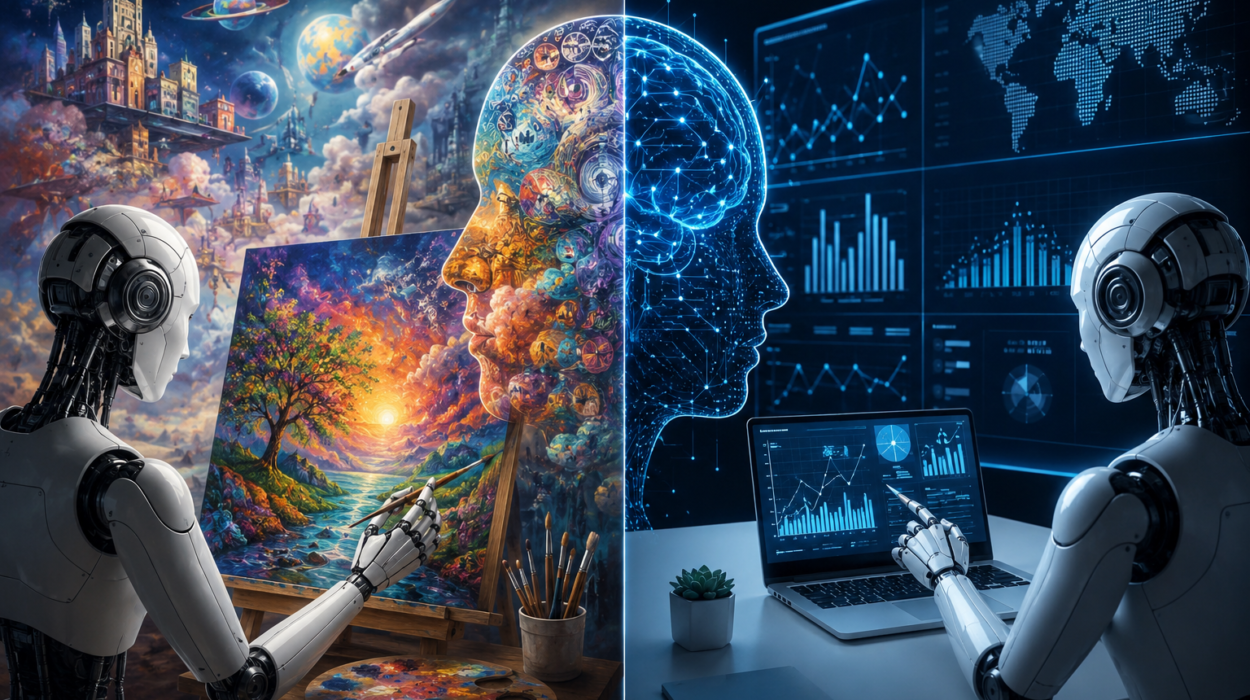
Creativity and Productivity
AI assistants do much more than answer questions.
People use them to brainstorm ideas, draft emails, summarize reports, translate languages, create study guides, write computer programs, analyze data, and organize information.
These tasks go far beyond traditional web searching.
Instead of simply locating information, AI actively helps people work with information.
This represents one of the biggest differences between AI assistants and search engines.
Search Engines Are Evolving Too
The technology landscape is not standing still.
Search engines themselves increasingly incorporate artificial intelligence.
Many now generate AI-powered summaries, answer questions directly, improve language understanding, recognize images, and personalize results.
Likewise, AI assistants increasingly incorporate web search capabilities.
The distinction between the two technologies is becoming less clear.
Rather than competing as completely separate products, they are gradually borrowing strengths from one another.
Businesses Are Adapting
The rise of AI assistants is changing how businesses think about online visibility.
For years, companies focused heavily on appearing prominently in search results.
Now many are also considering how AI systems discover, summarize, and reference information.
Organizations increasingly emphasize producing clear, accurate, trustworthy, and well-structured content.
High-quality information benefits both search engines and AI assistants.
As AI becomes more common, credibility and expertise may become even more valuable.
Scientific Research
Professional researchers rarely depend on a single source.
Scientists typically consult original journal articles, datasets, conference papers, technical reports, and multiple independent studies.
AI assistants can help summarize research, explain terminology, and identify important concepts.
However, scientific conclusions still require careful examination of original evidence.
The same principle applies to medicine, engineering, law, and many other specialized fields.
AI accelerates learning but does not eliminate the need for expert judgment.
Privacy Considerations
Both search engines and AI assistants raise important privacy questions.
Search engines may collect information about search activity to improve services and personalize results.
AI assistants may also process conversations depending on how they are designed and the user’s settings.
Technology companies increasingly provide privacy controls, allowing users to manage stored information and account preferences.
Understanding these options helps people make informed decisions about how they use digital tools.
Will Websites Still Matter?
Some people worry that if AI answers every question directly, websites may become unnecessary.
In reality, websites remain essential.
AI depends on information created by researchers, journalists, educators, businesses, governments, and countless other organizations.
Original reporting, scientific discoveries, educational materials, and expert analysis continue to originate from people.
Websites provide depth that short summaries cannot always capture.
Readers often want detailed explanations, videos, interactive graphics, downloadable resources, official documentation, and direct access to original publications.
These experiences remain important regardless of how people first discover them.
The Future May Be Hybrid
Rather than replacing search engines entirely, AI assistants are likely to become another way of interacting with information.
Sometimes people will want direct answers.
Other times they will want to explore multiple viewpoints.
Sometimes they will need creative assistance.
Other times they will need official documents.
Future digital assistants may seamlessly combine conversational AI with powerful search capabilities.
A user might ask a question, receive a concise explanation, view supporting sources, compare expert opinions, watch instructional videos, and continue asking follow-up questions—all within one integrated experience.
This hybrid approach is already beginning to emerge.
Human Judgment Still Matters
No matter how advanced technology becomes, people remain responsible for evaluating information.
Critical thinking cannot be automated completely.
Users should ask important questions.
Is the information supported by evidence?
Is it current?
Does it come from trustworthy sources?
Can it be verified independently?
These habits remain valuable whether information comes from an AI assistant, a search engine, a textbook, or another person.
Technology can provide knowledge, but wisdom still requires human judgment.
A Changing Relationship with Information
The way people interact with information has changed many times throughout history. Books transformed learning by preserving knowledge across generations. Libraries organized that knowledge so more people could access it. The internet connected billions of documents from around the world. Search engines made navigating that vast network practical. Now, AI assistants are introducing a new way to interact with information—through conversation.
This shift is not simply about replacing one technology with another. It reflects a broader change in how people seek, understand, and use knowledge. Instead of spending most of their time searching, users increasingly spend their time asking, exploring, creating, and learning.
Search engines remain unmatched for discovering original sources, comparing viewpoints, and navigating the enormous diversity of the web. AI assistants excel at explaining concepts, summarizing information, generating ideas, and helping people complete tasks more efficiently. Each technology has strengths that complement the other.
The future is therefore unlikely to belong exclusively to search engines or AI assistants. Instead, it will likely belong to systems that combine the best of both. Search engines are becoming more conversational, while AI assistants are becoming better at finding, citing, and organizing information from the web.
In the years ahead, people may think less about whether they are “searching” or “using AI.” They will simply ask questions, receive trustworthy answers, explore original sources when needed, and continue learning in ways that are faster, more interactive, and more personalized than ever before. Rather than replacing search engines, AI assistants are reshaping how humanity discovers knowledge, making information more accessible while reminding us that reliable answers will always depend on the quality of the human knowledge from which they are built.