Every time you unlock your smartphone, stream a movie, play a video game, ask an AI assistant a question, or drive a modern car, billions of microscopic electronic components begin working almost instantly. Hidden deep inside these devices are computer chips—tiny pieces of technology that quietly power nearly every aspect of modern life.
Although they are small enough to fit on a fingertip, computer chips have transformed civilization. They have taken humanity from room-sized computers in the 1940s to powerful smartphones that fit comfortably into a pocket. Today, these chips are enabling artificial intelligence, space exploration, self-driving vehicles, advanced medical equipment, and scientific discoveries that once seemed impossible.
Yet despite their extraordinary progress, today’s computer chips are approaching some of the physical limits of traditional technology. Engineers and scientists around the world are now working on revolutionary ideas that could completely reshape computing over the coming decades.
The future of computer chips is not simply about making computers faster. It is about creating smarter, more energy-efficient, and entirely new kinds of machines capable of solving problems beyond the reach of today’s technology.
What Is a Computer Chip?
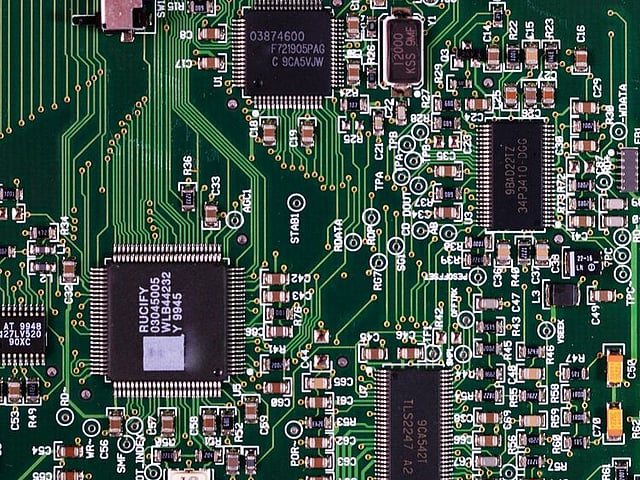
A computer chip, also called an integrated circuit or microchip, is a small piece of semiconductor material—usually silicon—that contains millions, billions, or even tens of billions of microscopic electronic components.
The most important of these components is the transistor.
A transistor acts like an electronic switch. It controls whether electricity flows through a circuit, representing the binary digits—zeros and ones—that computers use to process information.
Individually, a transistor performs only a simple task. But when billions of them work together at incredible speeds, they allow computers to perform complex calculations, display graphics, recognize speech, process images, and run sophisticated software.
Modern chips are engineering marvels. Many contain features so small that they are measured in nanometers, where one nanometer equals one billionth of a meter.
Why Computer Chips Matter
Computer chips are often called the brains of electronic devices.
Without them, modern technology simply would not exist.
Every smartphone depends on chips to process apps, display videos, connect to the internet, and manage battery power.
Cars use dozens or even hundreds of chips to control engines, safety systems, navigation, and entertainment.
Hospitals rely on chips inside medical imaging systems, heart monitors, and diagnostic equipment.
Factories use computer chips to automate production.
Satellites depend on radiation-resistant chips to survive the harsh environment of space.
Even household appliances such as washing machines, refrigerators, and microwave ovens now contain computer chips that make them more efficient and intelligent.
As society becomes increasingly digital, the importance of computer chips continues to grow.
How Computer Chips Became So Powerful
The history of computer chips is one of the greatest technological success stories ever achieved.
Early computers contained thousands of vacuum tubes, making them enormous, expensive, and unreliable.
The invention of the transistor in 1947 marked a turning point.
Transistors were smaller, faster, consumed less power, and generated less heat.
Soon afterward, engineers learned how to place many transistors onto a single chip.
This breakthrough led to integrated circuits, allowing computers to become dramatically smaller while becoming far more powerful.
For decades, engineers continually reduced the size of transistors.
As transistors became smaller, more could fit onto a chip, increasing computing power while reducing cost.
This trend became famously known as Moore’s Law, named after Intel co-founder Gordon Moore, who observed that the number of transistors on integrated circuits tended to double approximately every two years.
Although Moore’s Law was never a law of physics, it accurately described the rapid pace of semiconductor development for many decades.
The Challenge of Miniaturization
Today’s transistors are astonishingly small.
Some are only a few nanometers wide.
To appreciate this scale, a human hair is roughly 80,000 to 100,000 nanometers thick.
Modern transistors are so tiny that only a few dozen silicon atoms may span parts of their structure.
As engineers continue shrinking these components, they face increasingly difficult scientific challenges.
At extremely small scales, the behavior of electrons is governed not only by classical physics but also by quantum mechanics.
Electrons can tunnel through barriers that were once considered insulating.
Heat becomes harder to remove.
Manufacturing becomes incredibly precise and expensive.
Even tiny imperfections can affect performance.
These physical limits mean that simply making transistors smaller is no longer enough.
The future of computer chips requires entirely new approaches.
Beyond Smaller Transistors
Instead of relying only on shrinking components, engineers are finding new ways to improve performance.
One major strategy involves redesigning transistor architecture.
Traditional flat transistors have gradually been replaced by three-dimensional structures that provide better control over electrical current.
These advanced transistor designs reduce power consumption while improving speed.
Researchers continue developing even more sophisticated transistor structures that may enable future generations of processors.
Innovation is no longer focused solely on size.
It is increasingly focused on smarter engineering.
Three-Dimensional Chips
For decades, computer chips were built mostly as flat structures.
Today, engineers are increasingly stacking chip components vertically.
These three-dimensional designs shorten the distance that electrical signals must travel.
This improves speed while reducing energy consumption.
Instead of placing every component side by side, future chips may contain multiple layers working together almost like floors inside a skyscraper.
This approach allows greater computing power without dramatically increasing chip size.
Three-dimensional integration is expected to become one of the defining technologies of future semiconductor manufacturing.
Chiplets: Building Chips Like Building Blocks
Another exciting trend is the use of chiplets.
Rather than manufacturing one enormous processor, engineers create several smaller chips designed for specific tasks.
These chiplets are then connected together inside a single package.
One chiplet may specialize in artificial intelligence.
Another handles graphics.
Another manages memory.
Others process general computing tasks.
This modular approach improves manufacturing efficiency and allows companies to combine the best technologies into a single processor.
It also makes future upgrades more flexible.
Artificial Intelligence Is Changing Chip Design
Artificial intelligence is not only running on computer chips—it is also helping design them.
Modern chip development is extraordinarily complex.
A single advanced processor may contain tens of billions of transistors arranged in incredibly intricate patterns.
AI systems can analyze enormous numbers of possible designs far faster than human engineers.
They help optimize power consumption, improve circuit layouts, reduce manufacturing costs, and identify potential design flaws.
As AI becomes more capable, future chips may increasingly be designed with assistance from intelligent software.
In some cases, AI may discover engineering solutions that humans would never have imagined.
Chips Designed Specifically for AI
Artificial intelligence workloads differ from traditional computing.
Training large language models or recognizing images requires enormous numbers of mathematical calculations performed simultaneously.
This has led to the development of specialized AI accelerators.
Unlike traditional central processing units, these processors are optimized specifically for machine learning tasks.
They perform parallel calculations much more efficiently.
As AI continues expanding into healthcare, transportation, education, robotics, and scientific research, demand for specialized AI chips is expected to grow rapidly.
Future computers may include multiple processors, each designed for a different kind of intelligence.
Energy Efficiency Will Become Even More Important
Computing power continues increasing.
Unfortunately, energy consumption often increases as well.
Modern data centers already require enormous amounts of electricity.
Artificial intelligence models consume particularly large amounts of computational power.
Future chip development therefore focuses not only on speed but also on efficiency.
Scientists are developing processors that perform more calculations while using less energy.
Better cooling systems, improved transistor designs, advanced manufacturing methods, and intelligent power management all contribute to reducing electricity consumption.
This is essential for both economic and environmental reasons.
New Semiconductor Materials
Silicon has dominated computer chips for decades.
It remains one of the most successful engineering materials ever discovered.
However, researchers are exploring materials that could complement or even surpass silicon in certain applications.
Compounds such as gallium nitride and silicon carbide are already being used in some high-power electronics because they can operate at higher voltages and temperatures.
Scientists are also investigating atomically thin materials, including graphene and transition metal dichalcogenides.
Graphene is a single layer of carbon atoms arranged in a honeycomb pattern.
It is remarkably strong and conducts electricity extremely well.
Although significant engineering challenges remain before graphene replaces silicon in mainstream processors, it continues attracting intense scientific interest.
Future chips may combine several materials, each chosen for specific electrical properties.
Optical Computing
Today’s processors move information using electrical signals.
Researchers are exploring the possibility of using light instead.
Photons can travel extremely fast while producing less heat than moving electrons through wires.
Optical computing could dramatically increase communication speeds inside computers.
Light-based connections are already becoming common in high-speed communication between data centers.
Future processors may increasingly integrate optical components directly onto chips.
This technology could become especially valuable for artificial intelligence and supercomputing.
Neuromorphic Computing
The human brain remains one of nature’s most efficient computing systems.
Despite consuming only about 20 watts of power, it performs tasks that still challenge the world’s fastest supercomputers.
Neuromorphic computing attempts to imitate how biological brains process information.
Instead of performing calculations exactly like conventional computers, neuromorphic chips use networks inspired by neurons and synapses.
These processors may become especially useful for pattern recognition, robotics, autonomous systems, and real-time learning.
Although still an active area of research, neuromorphic computing could eventually complement traditional processors rather than replace them.
Quantum Computing
Perhaps the most revolutionary possibility lies in quantum computing.
Unlike classical computers, which store information as binary bits, quantum computers use quantum bits, or qubits.
Qubits can exist in combinations of states due to the principles of quantum mechanics.
For certain specialized problems, this could allow quantum computers to solve calculations far beyond the capabilities of classical machines.
Researchers believe quantum computers may eventually accelerate discoveries in chemistry, materials science, cryptography, medicine, and optimization.
However, quantum computers are not expected to replace ordinary laptops or smartphones.
Instead, they will likely work alongside classical computers, each solving the kinds of problems they handle best.
Memory Is Also Evolving
Future computer performance depends not only on processors but also on memory.
Engineers are developing faster, denser, and more energy-efficient memory technologies.
New forms of non-volatile memory can retain information even when power is turned off.
Researchers are exploring memory systems that operate more closely with processors, reducing delays caused by moving information back and forth.
This approach, sometimes called memory-centric computing, may significantly improve future AI performance.
Security Built Into Hardware
As cyber threats become increasingly sophisticated, future computer chips will play a larger role in protecting digital information.
Many modern processors already include dedicated security hardware.
Future designs may incorporate even stronger encryption, secure identity verification, tamper detection, and hardware-based protection against cyberattacks.
Building security directly into chips makes attacks more difficult because protection begins at the lowest level of computing.
Chips for Space Exploration
Future space missions require computer chips capable of surviving conditions far more extreme than those on Earth.
Radiation, intense temperature changes, and long mission durations present major engineering challenges.
Scientists continue developing specialized chips that remain reliable even under intense cosmic radiation.
These processors will help power future lunar bases, Mars missions, robotic explorers, and deep-space telescopes.
As humanity ventures farther into the Solar System, advanced semiconductor technology will become increasingly essential.
Flexible and Wearable Electronics
Future chips may no longer be rigid.
Researchers are developing flexible electronics that bend, stretch, and conform to different shapes.
These technologies could lead to wearable health monitors, smart clothing, electronic skin for robots, and lightweight medical sensors.
Some future devices may become almost invisible while continuously monitoring health, environmental conditions, or industrial equipment.
Sustainable Chip Manufacturing
Building advanced computer chips requires enormous manufacturing facilities and highly sophisticated equipment.
Future semiconductor production aims to become more environmentally sustainable.
Manufacturers are working to reduce water consumption, lower energy use, recycle valuable materials, and decrease greenhouse gas emissions.
As demand for chips continues rising worldwide, sustainable manufacturing will become increasingly important.
The Global Importance of Computer Chips
Computer chips have become one of the world’s most strategically important technologies.
Nations invest heavily in semiconductor research because chips influence economic growth, national security, scientific progress, healthcare, communications, transportation, and artificial intelligence.
The semiconductor industry involves thousands of companies working together across global supply chains.
Designers, material scientists, equipment manufacturers, software developers, and fabrication plants all contribute to producing the tiny processors that power modern civilization.
Continued innovation depends upon international scientific collaboration, engineering expertise, and sustained investment in research.
The Future of Everyday Technology
Over the coming decades, computer chips are likely to become nearly invisible while becoming more powerful than ever.
Smartphones may perform tasks that currently require powerful desktop computers.
Medical devices may continuously monitor health with remarkable accuracy.
Autonomous vehicles may process their surroundings in real time with greater safety.
Robots may become more capable of understanding complex environments.
Artificial intelligence may operate directly on small portable devices without relying entirely on distant cloud servers.
Homes, cities, factories, farms, and transportation systems may all become more intelligent through increasingly efficient computing.
Much of this transformation will be driven by advances in semiconductor technology.
Challenges That Still Remain
Despite remarkable progress, many scientific and engineering challenges remain.
Heat dissipation continues limiting performance.
Manufacturing costs continue rising.
Design complexity grows with every generation.
Quantum effects become increasingly important as transistors shrink further.
Researchers must balance speed, efficiency, reliability, affordability, and sustainability.
These challenges ensure that the future of computer chips will depend not only on scientific discoveries but also on creative engineering solutions.
A Future Built on Tiny Innovations
Computer chips are among the smallest technologies humans have ever created, yet they have produced some of the greatest changes in history. They have revolutionized communication, medicine, transportation, education, entertainment, science, and industry. Every generation of chips has expanded what computers can accomplish, opening new possibilities that once belonged only to imagination.
The future promises even greater transformation. Instead of relying solely on smaller transistors, tomorrow’s chips will combine new materials, three-dimensional architectures, artificial intelligence, specialized processors, optical communication, and perhaps even quantum technologies. They will become faster, more energy-efficient, more secure, and better suited to solving the increasingly complex challenges of our world.
As humanity enters a new era of intelligent machines, advanced healthcare, space exploration, and scientific discovery, the future of computer chips will continue to shape nearly every aspect of civilization. Hidden beneath the surfaces of our devices, these extraordinary pieces of engineering will remain the silent engines driving innovation, connecting billions of people, and helping unlock the next chapter of human progress.