Have you ever typed a few words into an AI writing tool and watched it instantly produce a complete article, email, story, or poem? It can feel almost magical. In just a few seconds, the blank page disappears, replaced by sentences that seem thoughtful, organized, and surprisingly human.
But behind this remarkable experience is not magic. It is the result of decades of research in artificial intelligence, computer science, linguistics, mathematics, and data science. AI writing tools do not possess human thoughts, emotions, or consciousness. Instead, they generate text by recognizing patterns learned from enormous amounts of written language.
Understanding how AI writing tools work not only makes these technologies less mysterious but also helps us use them more effectively and responsibly. Whether you are writing a school assignment, creating content for a website, drafting an email, or brainstorming ideas for a novel, knowing what happens behind the scenes reveals why these tools can be incredibly helpful—and why they sometimes make mistakes.
What Is an AI Writing Tool?
An AI writing tool is a computer program designed to generate, edit, summarize, translate, or improve written text using artificial intelligence.
Unlike traditional writing software, which simply checks spelling or grammar, AI writing tools can produce entirely new content based on a user’s instructions.
For example, you might ask an AI to write a blog post about climate change, summarize a scientific paper, translate a paragraph into another language, or create a bedtime story about dragons. Instead of selecting from a collection of pre-written templates, modern AI generates fresh text one word at a time.
The quality of the output depends on the AI model, the clarity of the user’s instructions, and the information available to the model.
The Foundation of AI Writing
At the heart of most modern AI writing tools is a type of machine learning model called a large language model, often abbreviated as LLM.
A language model is designed to understand and generate human language by learning patterns from text.
Imagine reading millions of books, newspapers, scientific articles, websites, and conversations. Over time, you would begin noticing that certain words commonly appear together, sentences follow recognizable structures, and ideas often develop in predictable ways.
A large language model learns similar patterns, but instead of understanding language like a human does, it learns mathematical relationships between words, phrases, and concepts.
This learning process allows the AI to predict what text is most likely to come next.
Learning From Massive Collections of Text
Before an AI writing tool can help users, it goes through an extensive training process.
During training, the model analyzes enormous collections of publicly available, licensed, and other appropriately used text. These datasets may include books, articles, websites, educational materials, programming code, and many other forms of writing.
The AI does not memorize every document or store a giant searchable library. Instead, it learns statistical patterns within language.
For example, after seeing countless examples, the AI learns that words like “doctor” often appear near words such as “hospital,” “patient,” and “medicine.” It learns that recipes usually begin with ingredients before explaining cooking steps. It recognizes that news articles often start with the most important information, while stories introduce characters before developing a plot.
Over billions or even trillions of examples, these patterns become deeply embedded within the model’s mathematical structure.
Breaking Language Into Tokens
Although humans naturally think in words and sentences, AI models process language differently.
Most modern language models divide text into small pieces called tokens.
A token may represent a whole word, part of a word, punctuation mark, or even a single character, depending on the language and the model’s design.
For example, the sentence:
“The cat is sleeping.”
might be divided into several tokens representing each word and punctuation mark.
When you type a prompt, the AI first converts your text into tokens. These tokens become numerical representations that the neural network can process.
After generating a response, the numerical output is converted back into readable language.
This conversion happens so quickly that users rarely notice it.
Understanding Patterns Instead of Meaning
One of the biggest misconceptions about AI writing tools is that they “understand” language exactly as humans do.
Human understanding comes from personal experiences, emotions, senses, memories, and conscious reasoning.
AI operates differently.
Instead of true understanding, AI identifies statistical relationships between words and ideas.
If millions of examples show that the phrase “The Earth revolves around the…” is usually followed by “Sun,” the model learns to predict that continuation with very high confidence.
Similarly, if countless scientific articles describe photosynthesis, the AI learns the language patterns commonly associated with that topic.
This ability allows AI to produce surprisingly accurate explanations without possessing awareness or personal knowledge.
Neural Networks: The Brain-Inspired Technology
Modern AI writing tools rely on artificial neural networks.
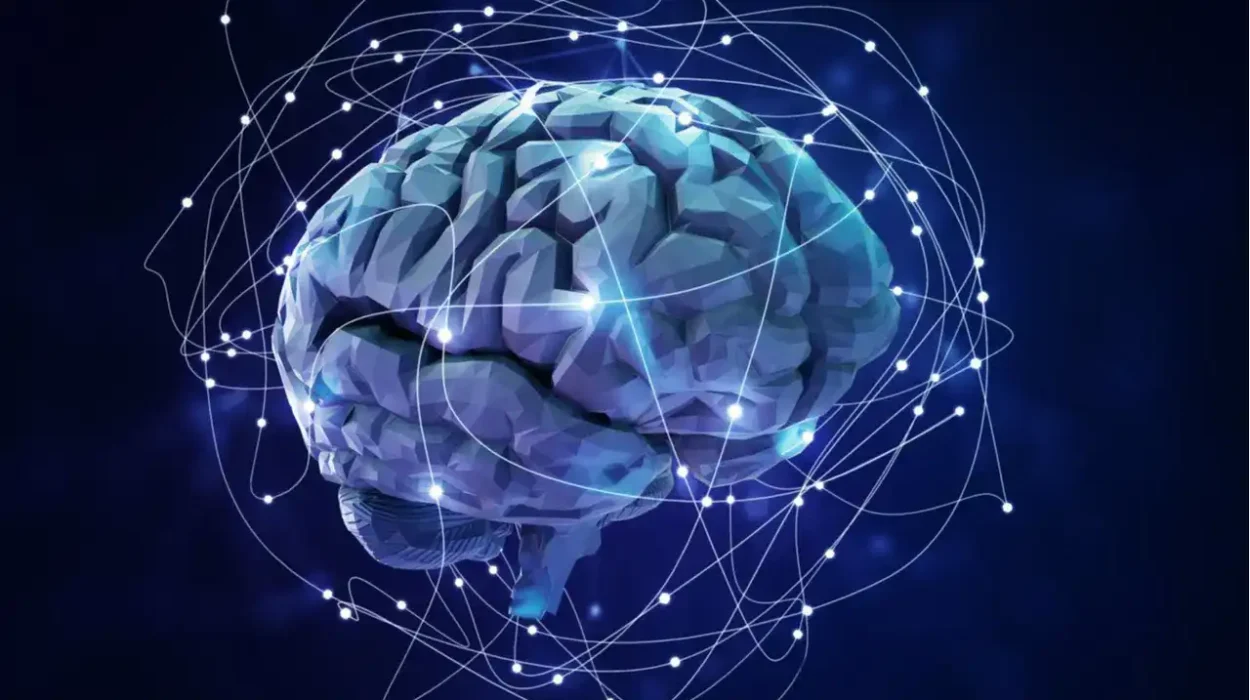
These systems are inspired by the interconnected structure of neurons in the human brain, although they are much simpler and function very differently.
A neural network consists of many layers of mathematical operations.
Each layer processes information, identifies increasingly complex patterns, and passes its results to the next layer.
Early layers may recognize basic relationships between words.
Later layers identify grammar, sentence structure, writing style, context, and long-range relationships between ideas.
With billions of adjustable parameters, these networks become extremely powerful pattern-recognition systems.
The Transformer Revolution
The biggest breakthrough in AI writing came with an architecture called the Transformer, introduced by researchers in 2017.
Before Transformers, many language models struggled to remember information from earlier parts of long passages.
Transformers solved this problem using a mechanism called attention.
Attention allows the model to consider many different parts of the input simultaneously instead of reading strictly one word after another.
For example, if a paragraph introduces “Marie” in its opening sentence, the model can later recognize that “she” refers to Marie even several sentences later.
This ability greatly improved writing quality, coherence, translation, summarization, and question answering.
Nearly all modern AI writing systems are based on Transformer technology or closely related architectures.
Predicting One Token at a Time
One of the most surprising facts about AI writing tools is that they generate text gradually.
They do not create an entire paragraph all at once.
Instead, the model predicts one token at a time.
Suppose you type:
“Explain why leaves change color in autumn.”
The AI first predicts the most likely opening word.
After generating that word, it predicts the next token based on everything written so far.
Then it predicts another.
And another.
This process continues rapidly until the response is complete.
Although each prediction is relatively small, thousands of predictions combine to create coherent paragraphs.
Why AI Can Write in Different Styles
AI writing tools can produce news articles, poems, essays, business reports, social media posts, speeches, and technical documentation.
This flexibility comes from their exposure to many different writing styles during training.
When a user requests a formal scientific explanation, the model recognizes patterns associated with scientific writing.
If the prompt requests a fairy tale, the model shifts toward storytelling language.
If asked to write a friendly email, it generates conversational text.
The AI adapts because it has learned statistical characteristics of different writing styles.
It does not switch personalities. It changes the probability of which words and sentence structures are most appropriate.
Following Instructions
Modern AI writing tools are designed not only to generate language but also to follow user instructions.
After the initial training phase, many models undergo additional training to improve their ability to respond helpfully, safely, and accurately.
During this stage, human reviewers may evaluate model responses and provide feedback that helps improve future behavior.
As a result, today’s AI writing systems are much better at understanding prompts, following formatting instructions, maintaining tone, and answering questions than earlier language models.
How AI Remembers Context
When you have a conversation with an AI writing tool, it remembers earlier parts of that conversation within a limited context window.
This temporary memory allows it to answer follow-up questions without requiring you to repeat everything.
For example, if you first ask for an article about oceans and later request a shorter introduction, the AI can usually recognize that the introduction should relate to the same article.
However, this memory is not unlimited.
Very long conversations or documents may exceed the model’s context capacity, meaning earlier information may no longer influence later responses.
Newer AI systems continue expanding these context windows, making it possible to work with increasingly larger documents.
Why AI Sometimes Makes Mistakes
Despite impressive capabilities, AI writing tools are not perfect.
Because they generate text by predicting likely continuations rather than checking every statement against reality, they can sometimes produce incorrect information.
Researchers often describe these confident but inaccurate outputs as hallucinations.
An AI might invent a book title, misstate a date, create a fictional scientific study, or combine facts incorrectly.
These mistakes do not occur because the AI intends to deceive.
Instead, the model predicts language that appears plausible based on learned patterns.
For this reason, important information should always be verified using reliable sources, especially in medicine, law, science, finance, and education.
How AI Understands Your Prompt
Every response begins with your instructions.
A detailed prompt provides the AI with valuable context.
For example, asking:
“Write about volcanoes.”
gives relatively little information.
In contrast,
“Write a 2,000-word beginner-friendly article explaining how volcanoes form, using simple language and scientific accuracy.”
provides far more guidance.
The more clearly you explain your goals, audience, tone, and desired format, the more effectively the AI can generate useful content.
Good prompts lead to better results because they reduce uncertainty.
The Role of Probability
Every word the AI writes is chosen from many possible alternatives.
For example, after the phrase:
“The sky is…”
possible continuations might include:
blue
cloudy
clear
dark
bright
The model assigns probabilities to these possibilities based on context.
It then selects one according to its generation settings.
This probability-based process allows AI to produce creative, varied, and context-appropriate writing instead of repeating identical responses every time.
Improving Grammar and Style
AI writing tools do more than generate new text.
They can also improve existing writing.
When editing a paragraph, the AI analyzes grammar, sentence structure, punctuation, vocabulary, clarity, and overall flow.
Rather than simply correcting spelling mistakes, it can reorganize ideas, remove repetition, improve transitions, and adjust tone for different audiences.
This makes AI especially useful for students, researchers, journalists, marketers, and professional writers.
Supporting Creativity Rather Than Replacing It
Many people worry that AI will replace human writers.
In reality, writing involves far more than producing grammatically correct sentences.
Human creativity comes from lived experiences, emotions, imagination, cultural understanding, ethical judgment, humor, curiosity, and personal perspective.
AI does not possess these qualities.
Instead, it serves as a powerful creative assistant.
Writers often use AI to brainstorm ideas, overcome writer’s block, organize outlines, summarize research, suggest alternative wording, or edit drafts.
The most compelling writing usually combines human creativity with AI-assisted efficiency.
The Importance of Human Review
Even when AI produces excellent writing, human review remains essential.
People can verify facts, evaluate accuracy, consider ethical implications, check citations, refine style, and ensure the final content truly communicates the intended message.
This is especially important for scientific articles, educational materials, medical advice, legal documents, and journalism.
AI can accelerate the writing process, but responsibility for published content still belongs to human authors and editors.
The Future of AI Writing Tools
AI writing technology continues advancing rapidly.
Future systems are expected to become better at reasoning through complex problems, maintaining long conversations, understanding multiple languages, working with text, images, audio, and video together, and providing more reliable factual assistance.
Researchers are also working to reduce hallucinations, improve transparency, strengthen privacy protections, and make AI systems more energy efficient.
As these improvements continue, AI writing tools will likely become even more valuable partners for education, research, business, and creative work.
Rather than replacing human communication, they may help more people express ideas clearly, learn new subjects, and collaborate across languages and cultures.
Conclusion
AI writing tools represent one of the most remarkable achievements in modern artificial intelligence. Although they may seem capable of thinking like humans, they actually work through sophisticated mathematical models that recognize patterns in language. By processing text as tokens, using powerful neural networks, applying Transformer architectures, and predicting one token at a time, these systems can generate coherent and useful writing across an extraordinary range of topics.
Their abilities are impressive, but they also have important limitations. AI does not possess consciousness, emotions, beliefs, or personal experiences, and it can sometimes produce inaccurate information with great confidence. Understanding these strengths and weaknesses allows people to use AI wisely—taking advantage of its speed, creativity, and versatility while continuing to rely on human judgment for critical thinking, factual verification, and ethical decision-making.
As artificial intelligence continues to evolve, AI writing tools are likely to become even more capable, helping people communicate ideas, solve problems, and create knowledge in ways that were once unimaginable. The future of writing is unlikely to belong to humans or AI alone. Instead, it will be shaped by thoughtful collaboration between human creativity and intelligent machines, combining the strengths of both to produce clearer, richer, and more meaningful communication.