Imagine waking up one day to discover that many of the digital locks protecting the world’s most sensitive information no longer work. Bank accounts, private messages, medical records, government secrets, and even the passwords securing your online life could suddenly become vulnerable. While that scenario is not today’s reality, it is one of the reasons scientists and cybersecurity experts are paying close attention to quantum computing.
Quantum computers promise extraordinary computing power that could solve certain problems far faster than today’s most advanced supercomputers. This exciting technology could lead to breakthroughs in medicine, materials science, artificial intelligence, and climate research. At the same time, it could challenge the encryption systems that have protected digital information for decades.
The relationship between quantum computing and encryption is not simply a story of computers becoming faster. It is about a fundamentally different way of processing information. Understanding this connection helps explain why researchers around the world are already preparing for a new era of cybersecurity.
What Is Encryption?
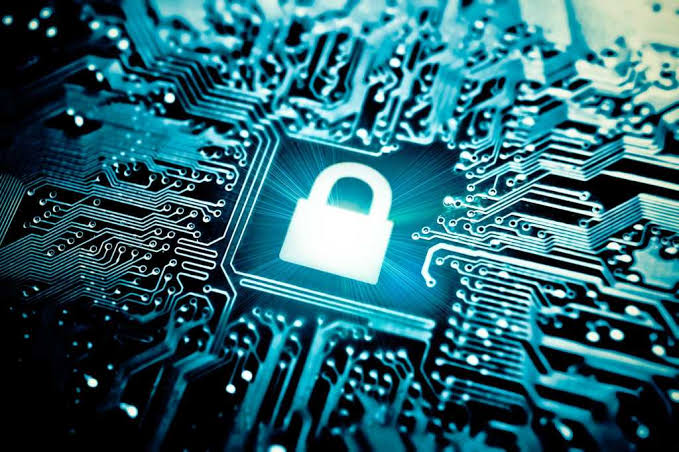
Encryption is the process of turning readable information into coded data that only authorized people can understand.
Imagine writing a letter in a secret language that only you and your friend know. Anyone else who reads the letter would only see meaningless symbols. Modern encryption works in a similar way, except it uses complex mathematical algorithms instead of secret alphabets.
Every time you visit a secure website, send a private message, shop online, or use mobile banking, encryption helps protect your information while it travels across the internet.
Without encryption, the internet as we know it would not exist. Online commerce, digital healthcare, cloud storage, remote work, and secure communication all depend on strong encryption.
Why Encryption Is So Difficult to Break
Modern encryption relies on mathematical problems that are extremely difficult for ordinary computers to solve.
One common example involves multiplying two very large prime numbers together. Performing the multiplication is relatively easy. However, if someone only knows the final result, figuring out which two prime numbers created it can take an enormous amount of computing time.
Today’s public-key encryption systems take advantage of this imbalance. They are easy to use for legitimate users but extraordinarily difficult for attackers to crack using conventional computers.
Even the fastest supercomputers would need an impractically long time to solve some of these mathematical problems when sufficiently large encryption keys are used.
This enormous computational challenge is what gives current encryption its security.
What Makes Quantum Computers Different?
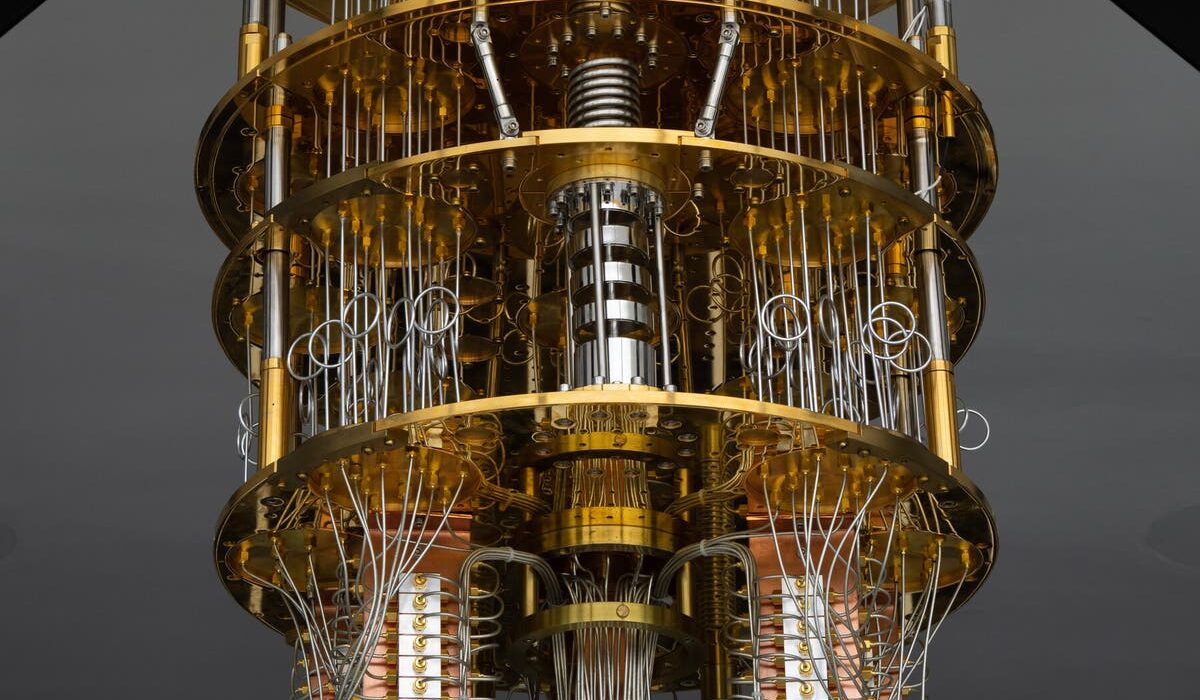
Quantum computers do not simply perform calculations faster than ordinary computers. They process information in a completely different way.
Traditional computers use bits, which can exist in one of two states: 0 or 1.
Quantum computers use quantum bits, or qubits. Thanks to the principles of quantum mechanics, qubits can exist in combinations of states described by quantum superposition. Multiple qubits can also become linked through a phenomenon known as entanglement, allowing certain calculations to be performed in ways that have no equivalent in classical computing.
These unusual properties enable quantum computers to solve particular types of problems much more efficiently than classical machines.
It is important to understand that quantum computers are not faster at every task. For many everyday computing jobs, traditional computers remain highly effective. Quantum computers excel only for specific kinds of mathematical problems.
The Science Behind Quantum Computing
Quantum computing is based on the laws that govern atoms and subatomic particles.
At these incredibly small scales, nature behaves differently from our everyday experience.
Particles can exhibit wave-like behavior.
Quantum systems can exist in superpositions of multiple possible states.
Particles may become entangled so that their properties are strongly correlated even when separated by large distances.
Quantum computers are carefully engineered to use these effects for computation.
Keeping qubits stable is extraordinarily difficult because they are highly sensitive to disturbances from their surroundings. Even tiny vibrations, heat, or electromagnetic noise can introduce errors.
This is why building large, reliable quantum computers remains one of the greatest engineering challenges in modern science.
Why Quantum Computers Could Threaten Current Encryption
The biggest concern comes from a quantum algorithm developed by mathematician Peter Shor in 1994.
Shor’s algorithm showed that a sufficiently powerful quantum computer could efficiently solve certain mathematical problems that are considered extremely difficult for classical computers, including the integer factorization problem that underlies RSA encryption and the discrete logarithm problem used in several other public-key cryptosystems.
If future quantum computers become powerful and reliable enough to run this algorithm at large scales, they could potentially break many of today’s widely used public-key encryption systems.
This would not happen because passwords become weaker or because hackers become smarter. It would happen because the mathematics protecting today’s encryption would no longer provide the same level of security against quantum attacks.
Which Types of Encryption Are Most at Risk?
Not every encryption method faces the same level of risk.
Many internet security systems rely on public-key cryptography. These systems allow two people who have never met to establish secure communication over the internet.
Examples include RSA, Diffie–Hellman key exchange, and elliptic curve cryptography. These algorithms are believed to be vulnerable to sufficiently capable quantum computers because of Shor’s algorithm.
However, many forms of symmetric encryption, such as the Advanced Encryption Standard (AES), are affected differently.
Quantum computers could speed up certain search processes using another algorithm called Grover’s algorithm, effectively reducing the security margin of symmetric keys. In practice, this threat can often be addressed by using longer encryption keys, making symmetric encryption much easier to adapt than many public-key systems.
This distinction is one reason cybersecurity experts focus much of their attention on replacing vulnerable public-key cryptography.
Could Quantum Computers Read Every Password?
This is one of the most common misconceptions.
Quantum computers will not instantly reveal every password or magically unlock every device.
Most passwords are protected by additional security measures, including hashing algorithms, rate limits, multifactor authentication, and account lockout mechanisms.
Breaking a password often requires more than raw computing power.
Quantum computing changes the landscape for specific cryptographic problems, but it does not eliminate the need for attackers to overcome many other layers of security.
The “Harvest Now, Decrypt Later” Concern
One reason experts are preparing early is the possibility of “harvest now, decrypt later.”
An attacker could intercept and store encrypted communications today without being able to read them.
If powerful quantum computers become available years from now, those stored files could potentially be decrypted if they were protected using vulnerable public-key encryption.
This matters because some information remains valuable for decades.
Government records, military communications, scientific research, corporate secrets, financial data, and medical records may all require long-term confidentiality.
Protecting such information means preparing before quantum computers become capable enough to threaten current systems.
The Search for Quantum-Safe Encryption
Fortunately, scientists are not waiting for quantum computers to become a problem.
Researchers have spent years developing new cryptographic methods designed to resist attacks from both classical and quantum computers.
These methods are collectively known as post-quantum cryptography or quantum-resistant cryptography.
Unlike quantum cryptography, which may require specialized hardware, post-quantum cryptography uses mathematical problems that are currently believed to remain difficult even for quantum computers.
These new algorithms are intended to replace vulnerable public-key encryption while working on today’s computers and internet infrastructure.
Governments, technology companies, financial institutions, and cybersecurity organizations are already beginning this transition.
Why Replacing Encryption Takes Time
Changing global encryption systems is far more complicated than installing a software update.
Modern encryption is built into billions of devices.
Web browsers, smartphones, banking systems, cloud services, satellites, industrial equipment, medical devices, military networks, and internet infrastructure all depend on cryptographic software.
Many systems remain in operation for years or even decades.
Updating every device, testing compatibility, verifying security, and ensuring reliability is a massive undertaking.
That is why experts emphasize starting the transition long before quantum computers become powerful enough to pose a practical threat.
Quantum Computing Could Also Improve Cybersecurity
Quantum computing is not only a potential challenge.
It could also become a valuable tool for defenders.
Researchers are exploring how quantum computers might improve threat detection, optimize cybersecurity systems, analyze massive datasets, and strengthen cryptographic protocols.
At the same time, advances in quantum communication may enable new methods of secure information exchange.
One example is quantum key distribution, which uses principles of quantum mechanics to help detect eavesdropping during the exchange of encryption keys. While it is not a replacement for all encryption and has practical limitations, it demonstrates how quantum science may contribute to future security technologies.
How Close Are We to Breaking Encryption?
Despite rapid progress, today’s quantum computers are still limited.
Current machines contain far fewer reliable qubits than would likely be needed to break modern public-key encryption at practical scales. They also experience significant noise and computational errors.
Researchers continue improving hardware, error correction techniques, and quantum algorithms, but building fault-tolerant quantum computers capable of breaking widely used encryption remains an enormous scientific and engineering challenge.
No one can predict with certainty exactly when such machines will become practical.
This uncertainty is one reason organizations are preparing now rather than waiting.
How Governments and Technology Companies Are Responding
Around the world, governments and technology companies are investing heavily in quantum research.
National cybersecurity agencies have encouraged organizations to identify systems that rely on vulnerable public-key cryptography and begin planning upgrades.
Technology companies are testing post-quantum encryption in web browsers, cloud platforms, operating systems, and communication protocols.
Banks, healthcare providers, telecommunications companies, and critical infrastructure operators are also evaluating how to protect sensitive information for the decades ahead.
The transition will likely happen gradually rather than all at once.
What This Means for Everyday Internet Users
For most people, quantum computing is unlikely to change daily online life overnight.
Your smartphone will not suddenly become unsafe because a new quantum computer is announced.
Instead, much of the transition will happen behind the scenes.
Software developers will update security protocols.
Operating systems will adopt new cryptographic standards.
Web browsers and websites will gradually replace older encryption methods with quantum-resistant alternatives.
Most users may never notice these changes, just as many people are unaware of the encryption already protecting their online activities today.
The Bigger Picture
Quantum computing represents one of the most exciting scientific frontiers of the twenty-first century.
Its potential reaches far beyond cybersecurity. Researchers hope it could accelerate drug discovery, improve climate modeling, design advanced materials, optimize transportation networks, and deepen our understanding of chemistry and physics.
Like many transformative technologies, however, it brings both opportunities and challenges.
The possibility that future quantum computers could weaken today’s encryption has motivated one of the largest cybersecurity transitions in history. Rather than waiting for a crisis, scientists, engineers, governments, and technology companies are working together to build stronger defenses before they become necessary.
Encryption has always evolved alongside advances in computing. As computers became more powerful, encryption became more sophisticated. Quantum computing is simply the next chapter in that ongoing story.
The digital world has adapted to major technological revolutions before, and it is already preparing for this one. While quantum computers may eventually reshape the foundations of modern encryption, they are also inspiring a new generation of security technologies designed to keep our information safe in an increasingly connected world.