Imagine trying to solve a giant maze. A traditional computer explores one path after another, checking each possibility until it finds the correct route. Now imagine a completely different kind of machine that uses the strange rules of quantum physics to explore many possibilities in fundamentally different ways. This idea captures the excitement surrounding quantum computing, one of the most fascinating and ambitious technologies of the twenty-first century.
Quantum computing is not simply a faster version of today’s computers. It is a new way of processing information based on the laws that govern atoms, electrons, photons, and other tiny particles. These laws are very different from the rules we experience in everyday life, and they allow quantum computers to solve certain problems that would be extraordinarily difficult for even the world’s most powerful supercomputers.
Although quantum computing is still in its early stages, researchers believe it could eventually transform fields such as medicine, chemistry, materials science, artificial intelligence, cybersecurity, finance, logistics, and climate research. At the same time, scientists recognize that building practical quantum computers is one of the greatest engineering challenges humanity has ever attempted.
To understand why quantum computing is so revolutionary, we first need to understand how ordinary computers work.
How Traditional Computers Process Information
Every digital device we use today, from smartphones and laptops to satellites and supercomputers, operates using the same basic principle.
At the heart of every conventional computer is a tiny unit of information called a bit.
A bit can exist in only one of two possible states.
It is either 0 or 1.
These two values form the language of modern computing. Every photograph, video, email, website, computer game, scientific simulation, and financial transaction is ultimately represented by enormous sequences of zeros and ones.
Modern processors contain billions of microscopic transistors that rapidly switch between these two states. By performing billions or even trillions of calculations every second, traditional computers solve mathematical problems, display images, run software, and power the digital world.
For most tasks, classical computers are incredibly efficient. They can search databases, stream movies, edit videos, and perform complex calculations with astonishing speed.
However, some problems become so complicated that even the fastest supercomputers would require thousands, millions, or even billions of years to solve them.
This is where quantum computing enters the picture.
The Birth of Quantum Computing
The idea of quantum computing emerged from an important realization.
Scientists discovered that nature itself behaves according to quantum mechanics, the branch of physics that describes the behavior of matter and energy on extremely small scales.
Atoms and subatomic particles do not always behave according to the intuitive rules we observe in everyday life.
Instead, they follow remarkable quantum laws that often seem surprising.
During the early 1980s, physicists began asking a bold question.
If nature operates according to quantum mechanics, why not build computers that use those same quantum rules?
Among the scientists who helped develop this idea was the physicist Richard Feynman, who argued that certain physical systems could only be efficiently simulated using quantum computers rather than classical ones.
This insight laid the foundation for an entirely new field of science and engineering.
What Is a Quantum Computer?
A quantum computer is a machine that processes information using the principles of quantum mechanics instead of relying solely on classical electrical circuits.
Rather than using ordinary bits, quantum computers use quantum bits, better known as qubits.
This single difference changes everything.
While a classical bit must always be either 0 or 1, a qubit can exist in a quantum state that allows it to represent combinations of these possibilities until it is measured.
This unusual property enables quantum computers to perform certain kinds of calculations in fundamentally different ways from traditional computers.
It is important to understand that quantum computers do not magically try every possible answer simultaneously, nor do they automatically outperform classical computers on every task. Their advantage comes from carefully designed quantum algorithms that use quantum effects to increase the probability of obtaining correct answers for specific problems.
Understanding Qubits
A qubit is the basic unit of quantum information.
Unlike ordinary bits, qubits are physical quantum systems.
Scientists can create qubits using different technologies.
Some are made from tiny superconducting electrical circuits cooled to temperatures close to absolute zero.
Others use trapped ions suspended by electromagnetic fields.
Researchers are also exploring neutral atoms, photons, silicon-based devices, and other approaches.
Each qubit behaves according to quantum mechanics rather than classical physics.
This means it can exhibit properties that have no everyday equivalent.
Managing these fragile quantum states is one of the greatest technical challenges in quantum computing.
The Strange World of Superposition
One of the most remarkable ideas in quantum mechanics is superposition.
In everyday life, objects occupy definite states.
A light switch is either on or off.
A coin resting on a table shows either heads or tails.
Quantum systems behave differently.
Before measurement, a qubit can exist in a quantum state described by a combination of the basis states commonly labeled 0 and 1.
This does not mean the qubit is literally both values in the ordinary sense. Instead, quantum mechanics describes its state using probabilities and mathematical amplitudes that determine the outcomes of future measurements.
Superposition allows quantum algorithms to encode and manipulate information in ways unavailable to classical computers.
Quantum Entanglement
Perhaps the most mysterious feature of quantum mechanics is entanglement.
When two or more qubits become entangled, their quantum states become correlated in ways that cannot be explained by treating each qubit independently.
Even if the qubits are separated by large distances, measurements on one are related to measurements on the other according to the predictions of quantum mechanics.
Entanglement does not allow information to travel faster than light, but it creates powerful correlations that quantum algorithms can exploit.
Many of the most important quantum computing techniques rely heavily on entanglement.
Without it, quantum computers would lose much of their potential advantage.
Quantum Interference
Another key concept is quantum interference.
Just as water waves can strengthen or cancel one another, quantum states can interfere.
Quantum algorithms are carefully designed so that undesirable computational paths interfere destructively while desirable paths interfere constructively.
This process increases the likelihood of measuring useful answers.
Interference is one of the reasons quantum computing is so different from simply performing many calculations at once.
Why Quantum Computers Are Powerful
The power of quantum computing comes from combining superposition, entanglement, and interference into carefully designed algorithms.
Instead of solving every problem faster than classical computers, quantum computers excel at certain specialized tasks.
Some problems that scale poorly on classical machines may become significantly more manageable using quantum algorithms.
Scientists continue searching for additional applications where quantum computing provides a meaningful advantage.
Quantum Computing Is Not Replacing Traditional Computers
A common misconception is that quantum computers will eventually replace laptops, smartphones, and desktop computers.
This is extremely unlikely.
Classical computers are excellent at most everyday tasks.
Writing documents, watching videos, browsing websites, playing games, and sending emails do not require quantum computing.
Quantum computers are expected to become specialized tools used alongside conventional computers.
Just as graphics processors accelerate certain visual tasks, future quantum processors may accelerate specific scientific and mathematical problems.
Rather than replacing classical computers, they will complement them.
Building a Quantum Computer
Constructing a quantum computer is extraordinarily difficult.
Quantum states are extremely delicate.
Tiny disturbances from the surrounding environment can destroy them through a process known as decoherence.
Heat, vibration, electromagnetic noise, and even microscopic interactions with nearby particles can interfere with fragile qubits.
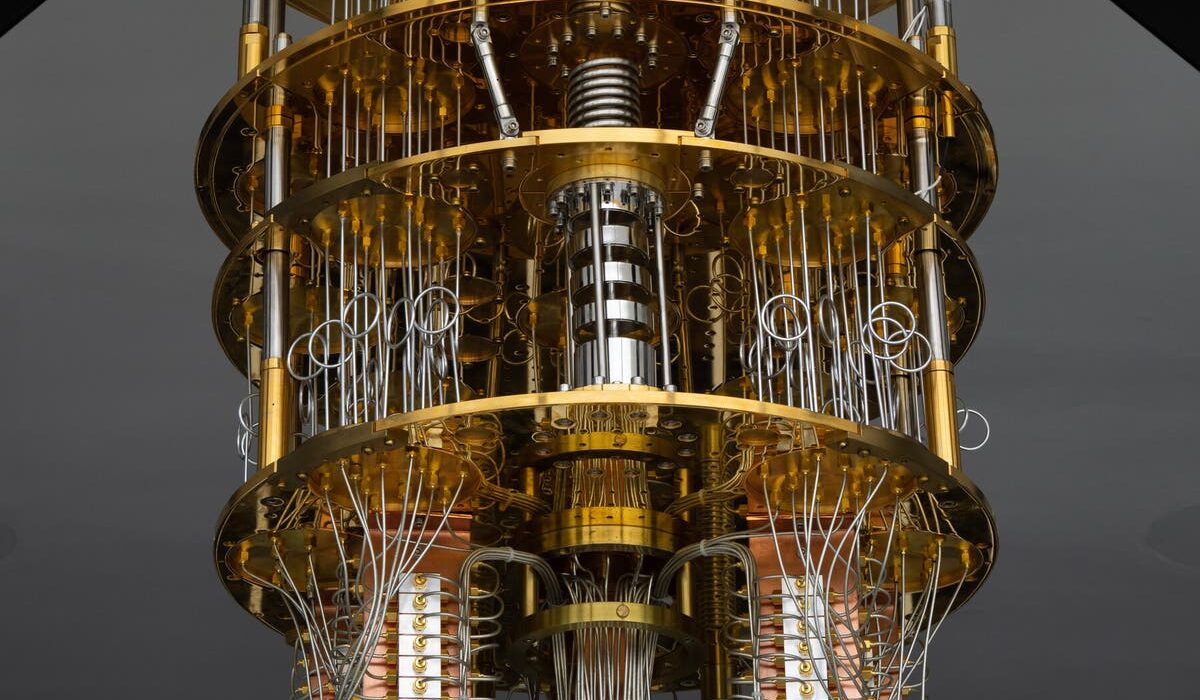
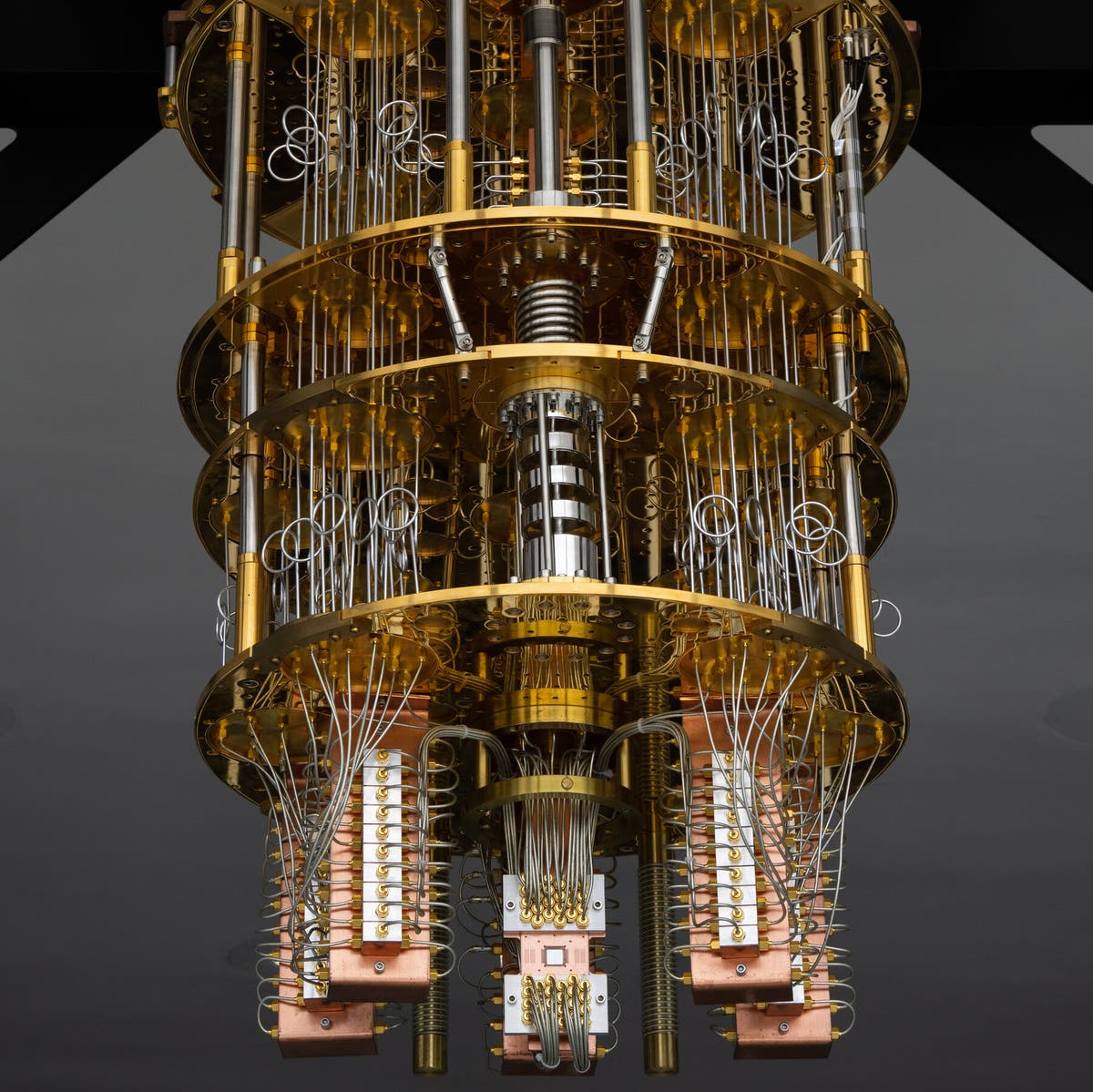
To reduce these disturbances, many quantum computers operate inside sophisticated refrigerators that cool their processors to temperatures only fractions of a degree above absolute zero.
These temperatures are colder than most naturally occurring places in the universe.
Maintaining such extreme conditions requires advanced engineering and precise control systems.
The Challenge of Quantum Errors
Quantum computers are much more susceptible to errors than ordinary computers.
Every operation performed on a qubit introduces some possibility of error.
Environmental interactions make the problem even more difficult.
To overcome this challenge, researchers are developing quantum error correction.
Instead of relying on a single physical qubit, quantum error correction encodes information across many physical qubits to create more reliable logical qubits.
Achieving large-scale fault-tolerant quantum computing remains one of the field’s greatest goals.
Different Types of Quantum Computers
Scientists have developed several approaches to building quantum computers.
One widely used method employs superconducting circuits.
Another uses electrically charged atoms known as trapped ions.
Other researchers investigate neutral atoms held by lasers, photons traveling through optical systems, semiconductor quantum dots, and topological approaches that aim to improve stability.
Each technology offers unique strengths and challenges.
At present, no single approach has clearly emerged as the universal winner.
Researchers continue improving all of them.
Quantum Algorithms
A computer becomes useful because of its algorithms.
Quantum computers are no different.
Scientists have developed several important quantum algorithms that demonstrate how quantum computers can outperform classical methods for particular problems.
One famous example is Shor’s algorithm, which can efficiently factor certain large integers on a sufficiently powerful fault-tolerant quantum computer. This has major implications for some widely used public-key encryption systems.
Another important example is Grover’s algorithm, which provides a quadratic speedup for certain unstructured search problems compared with classical algorithms.
Many additional quantum algorithms continue to be developed for chemistry, optimization, simulation, and machine learning.
Quantum Computing and Cryptography
One of the most discussed applications of quantum computing involves cybersecurity.
Many existing encryption systems rely on mathematical problems that are believed to be difficult for classical computers.
A sufficiently advanced fault-tolerant quantum computer running Shor’s algorithm could efficiently solve some of these problems, potentially threatening widely deployed cryptographic methods such as RSA and certain elliptic-curve systems.
This possibility has encouraged researchers to develop post-quantum cryptography.
Unlike traditional encryption methods vulnerable to Shor’s algorithm, post-quantum cryptographic algorithms are designed to remain secure against attacks by both classical and quantum computers.
Around the world, governments and technology companies are gradually preparing for this future transition.
Simulating Nature
One of the greatest strengths of quantum computing is simulating quantum systems themselves.
Nature operates according to quantum mechanics.
Atoms, molecules, and chemical reactions all follow quantum laws.
Classical computers often struggle to accurately simulate these systems because the required calculations grow enormously as molecules become more complex.
Quantum computers offer the possibility of studying these systems more efficiently.
This could help scientists better understand chemical reactions, biological molecules, superconductors, and advanced materials.
Transforming Medicine
Drug discovery is an expensive and time-consuming process.
Scientists must understand how molecules interact before developing new medicines.
Quantum computing may eventually allow researchers to simulate molecular interactions with greater accuracy than many existing computational approaches.
Better simulations could accelerate the discovery of medicines for diseases that currently have limited treatment options.
Although significant scientific and engineering challenges remain, many pharmaceutical companies are actively exploring quantum computing research.
Creating New Materials
Many technologies depend upon advanced materials.
Solar panels, batteries, aircraft, electronics, and medical devices all rely on carefully engineered substances.
Quantum computers may help scientists understand materials at the atomic level, making it easier to design stronger, lighter, more efficient, and environmentally friendly materials.
This could influence renewable energy, transportation, electronics, and manufacturing.
Artificial Intelligence and Quantum Computing
Artificial intelligence and quantum computing are two of today’s most exciting research fields.
Scientists are exploring whether quantum computing can improve certain machine learning techniques.
This area, known as quantum machine learning, remains largely experimental.
Researchers continue investigating where genuine quantum advantages may exist.
While some algorithms appear promising, practical large-scale applications have not yet been established.
The relationship between AI and quantum computing remains an active area of research.
Climate Science
Understanding Earth’s climate requires enormous computational resources.
Scientists build sophisticated climate models containing countless interacting variables.
Future quantum computers may help improve simulations related to atmospheric chemistry, energy systems, optimization, or materials used in clean-energy technologies.
Although quantum computing will not solve climate change by itself, it may become an important scientific tool for addressing some related challenges.
Space Exploration
Space agencies and researchers are also interested in quantum technologies.
Future quantum computers might assist with spacecraft design, optimization problems, advanced materials, communication technologies, and scientific simulations related to planetary exploration.
As space missions become increasingly ambitious, powerful computational tools could play an important supporting role.
Quantum Internet
Researchers are developing another remarkable technology known as the quantum internet.
Unlike today’s internet, which transmits classical information, a quantum internet would distribute quantum information between distant locations.
Such networks could enable highly secure communication protocols, distributed quantum computing, and new scientific experiments.
Although this technology remains under development, early demonstrations have already shown important progress.
Current Limitations
Despite impressive advances, today’s quantum computers remain limited.
Most available systems contain relatively small numbers of noisy qubits.
Errors accumulate rapidly.
Many algorithms require far more reliable qubits than current hardware can provide.
As a result, today’s quantum computers cannot yet outperform classical supercomputers for most practical real-world applications.
Researchers describe the present era as one of rapid experimentation and technological development.
Steady improvements continue each year, but significant challenges remain before large-scale fault-tolerant quantum computers become reality.
The Race to Build Better Quantum Computers
Universities, government laboratories, and technology companies around the world are investing heavily in quantum research.
Engineers continue improving qubit quality, reducing errors, increasing coherence times, developing better control electronics, and creating more efficient quantum software.
International collaboration has accelerated progress while also encouraging healthy scientific competition.
Although predicting exact timelines is difficult, advances continue at an impressive pace.
Common Myths About Quantum Computing
Quantum computing has generated enormous public excitement, but it has also inspired many misconceptions.
One myth is that quantum computers instantly solve every problem.
In reality, they only provide advantages for certain types of computations.
Another myth claims they violate the laws of physics.
In fact, quantum computers operate precisely because they follow quantum mechanics.
Some people imagine quantum computers thinking like human brains.
They do not.
Quantum computers are highly specialized mathematical machines designed to execute quantum algorithms.
Others believe practical quantum computers already exist for every application.
While remarkable experimental systems have been built, large-scale fault-tolerant quantum computers capable of solving many transformative real-world problems are still under development.
Understanding both the promise and the limitations of quantum computing helps separate scientific reality from popular imagination.
Learning Quantum Computing
Quantum computing combines ideas from several disciplines.
Students often study quantum mechanics, linear algebra, computer science, mathematics, electrical engineering, and information theory.
Although the subject can seem intimidating at first, researchers continue developing educational resources that make these concepts increasingly accessible.
As quantum technologies mature, knowledge of this field is likely to become valuable across many scientific and engineering careers.
The Future of Quantum Computing
Predicting the future of any emerging technology is difficult.
History shows that scientific breakthroughs often arrive gradually rather than overnight.
Quantum computing is unlikely to transform the world instantly.
Instead, progress will probably occur through continuous improvements in hardware, software, algorithms, and engineering.
As these advances accumulate, quantum computers may eventually solve problems that have remained beyond humanity’s reach for generations.
New medicines could be discovered more quickly.
Advanced materials may become easier to design.
Scientific simulations could become far more accurate.
Complex optimization problems may be solved more efficiently.
Entirely new industries could emerge around quantum technologies.
Many challenges remain before this vision becomes reality, but the scientific progress achieved over the past few decades suggests that quantum computing will continue to be one of the most exciting frontiers of modern science.
Why Quantum Computing Matters
Quantum computing represents much more than a new kind of computer. It reflects humanity’s growing ability to harness the deepest laws of nature for practical purposes. By using the principles of quantum mechanics to process information, quantum computers offer a fundamentally different approach to solving certain computational problems that challenge even the most powerful classical machines.
While everyday computers will continue to serve our daily needs, quantum computers have the potential to become indispensable tools for scientific discovery, technological innovation, and industrial research. Their greatest impact may not be in making familiar tasks faster, but in enabling entirely new kinds of calculations that were previously beyond our reach.
The journey toward practical quantum computing is still unfolding. Every improvement in qubit stability, error correction, and algorithm design brings researchers closer to machines capable of tackling some of the most complex questions in chemistry, physics, biology, engineering, and mathematics.
In many ways, quantum computing is a reminder that the universe still holds remarkable possibilities. The strange behavior of atoms and particles, once considered merely a curiosity of theoretical physics, is now inspiring one of the most ambitious technological revolutions ever attempted. As scientists continue to unlock the power of the quantum world, they are not only building new computers—they are expanding the limits of human knowledge and opening doors to discoveries that may shape the future for generations to come.