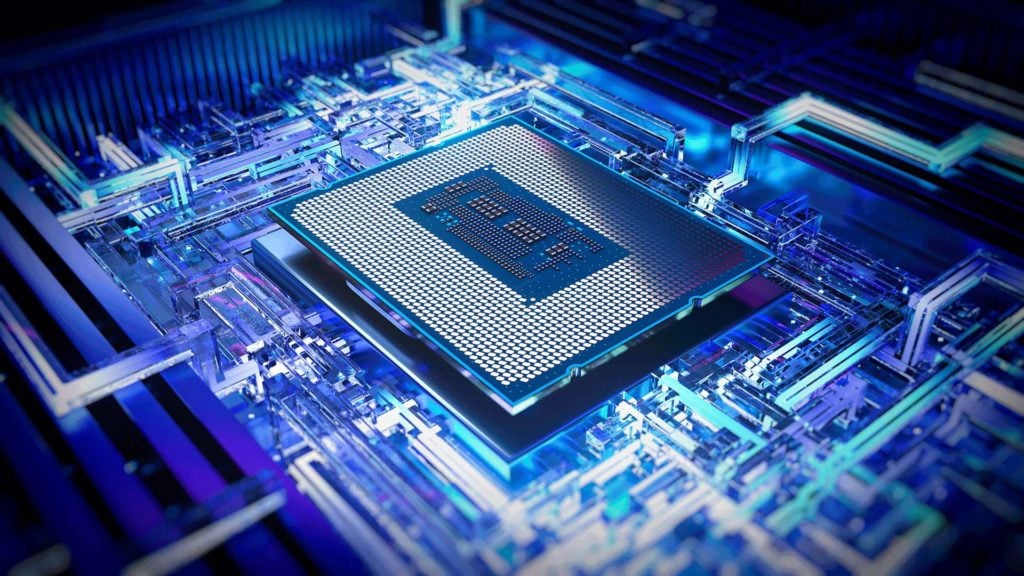
Every time you unlock your smartphone, stream a movie, edit a photo, play a video game, ask an AI chatbot a question, or drive a modern car, an incredibly sophisticated electronic brain begins working behind the scenes. This brain is called the processor, and it is responsible for carrying out billions—or even trillions—of calculations every second.
Today’s processors are already astonishingly powerful, but a new generation of chips is pushing computing into an entirely different era. These next-generation processors are designed to handle artificial intelligence, massive amounts of data, advanced graphics, scientific simulations, and energy-efficient computing in ways that were almost unimaginable just a decade ago.
Although these processors are incredibly complex inside, the basic idea remains surprisingly simple. They receive instructions, process information, make decisions, and produce results—all at extraordinary speeds.
Understanding how next-generation processors work reveals not only the technology inside our devices but also the future of computing itself.
What Is a Processor?
A processor, often called a Central Processing Unit (CPU), is the primary component that executes instructions inside a computer or electronic device. It performs calculations, moves data, and coordinates nearly every operation taking place within the system.
Think of a processor as the conductor of an orchestra. Every musician may have a different instrument, but the conductor ensures they work together in harmony. Similarly, the processor directs memory, storage, graphics hardware, sensors, and other components so they function as one complete system.
Without a processor, a computer is simply a collection of electronic parts with no ability to perform meaningful tasks.
From Simple Chips to Computing Powerhouses
The earliest commercial processors contained only a few thousand transistors. These tiny electronic switches formed the building blocks of computing, allowing chips to perform simple calculations.
Over the decades, engineers continuously reduced the size of transistors while increasing their number. This made processors faster, more efficient, and capable of handling increasingly complex software.
Today, modern processors contain tens of billions of transistors packed onto a silicon chip no larger than a fingernail. These microscopic switches operate billions of times every second, creating one of the most advanced technologies ever built.
Next-generation processors continue this trend by combining improved transistor technology with entirely new architectural designs.
The Tiny Switches That Make Computing Possible
At the heart of every processor are transistors.
A transistor works like an extremely tiny electronic switch. It can either allow electricity to flow or stop it. These two states represent the binary digits 0 and 1, which form the language of computers.
Every photograph, song, document, video, website, scientific simulation, and AI model ultimately becomes an enormous sequence of zeros and ones.
Billions of transistors work together to manipulate these binary signals at incredible speeds.
Even though each transistor performs a simple task, billions operating simultaneously create the extraordinary capabilities of modern processors.
Shrinking Transistors Makes Chips Better
One of the biggest reasons processors have become so powerful is the ability to manufacture increasingly smaller transistors.
Smaller transistors have several important advantages.
They require less electrical power.
They generate less heat.
Signals travel shorter distances, allowing faster operation.
More transistors fit onto the same chip.
Modern semiconductor manufacturing often uses dimensions measured in nanometers, where one nanometer is one-billionth of a meter.
Although terms such as “3-nanometer” or “2-nanometer” chips no longer correspond directly to the physical size of every transistor feature, they generally represent newer manufacturing generations with improved performance and energy efficiency.
As transistors become smaller, engineers can pack more computing power into compact devices while reducing energy consumption.
Understanding the Processor’s Core
Inside every processor are one or more cores.
A core is an independent computing unit capable of executing instructions.
Early processors contained only a single core.
Modern processors often include multiple cores working simultaneously.
Some smartphones contain eight or more CPU cores.
Desktop processors may have dozens.
High-performance server processors can include well over one hundred cores, depending on the design and intended workload.
Each core can work on different tasks at the same time, making computers much faster when running multiple applications or performing demanding calculations.
Why Multiple Cores Matter
Imagine a single chef preparing dinner for an entire restaurant.
Now imagine twenty skilled chefs working together.
The meal reaches customers much faster.
Multiple processor cores operate in a similar way.
Instead of one core handling every calculation, many cores divide the workload.
While one core opens a web browser, another may play music, another checks for software updates, and another processes background security tasks.
Applications designed for parallel computing can divide large jobs among many cores, dramatically increasing performance.
This approach has become one of the defining features of next-generation processors.
The Processor’s Clock
Processors operate according to an internal clock.
This clock synchronizes every operation occurring inside the chip.
Clock speed is commonly measured in gigahertz (GHz), representing billions of clock cycles each second.
A higher clock speed generally allows more operations per second.
However, clock speed alone does not determine processor performance.
Modern processor design focuses equally on architectural improvements, smarter instruction handling, larger caches, specialized processing units, and energy efficiency.
As a result, a newer processor with a lower clock speed may outperform an older processor running at a higher frequency.
Instructions Become Actions
Every computer program consists of instructions.
When you click a button, type text, edit a video, or launch a game, software sends instructions to the processor.
The processor repeatedly performs a sequence called the instruction cycle.
It retrieves an instruction from memory.
It determines what the instruction means.
It performs the required operation.
It stores the result.
This cycle repeats billions of times every second.
Because this process happens so quickly, users experience smooth and responsive computing.
Memory Works Closely with the Processor
A processor constantly exchanges information with memory.
The main memory, called Random Access Memory (RAM), temporarily stores programs and data currently in use.
However, even RAM is slower than the processor itself.
To avoid delays, processors contain extremely fast memory called cache.
Cache stores frequently used instructions and data close to the processor cores.
When information is already in cache, the processor can access it much more quickly than retrieving it from RAM.
Next-generation processors often include larger and more sophisticated cache systems, improving overall performance without increasing clock speed.
Specialized Processing Units
Modern processors are no longer designed only for general-purpose computing.
Many include specialized hardware for particular tasks.
Artificial intelligence workloads can use dedicated AI accelerators.
Graphics processing benefits from integrated graphics units.
Media engines accelerate video playback and video encoding.
Encryption hardware improves security.
Signal processors enhance camera performance and audio processing.
Instead of forcing one processor core to perform every task, specialized units complete certain operations far more efficiently.
This saves both time and energy.
Artificial Intelligence Inside the Processor
Artificial intelligence has become one of the biggest drivers behind next-generation processor development.
Modern AI applications perform enormous numbers of mathematical operations.
Traditional CPU designs can execute these calculations, but dedicated AI hardware performs them much faster while consuming less energy.
Many new processors now include Neural Processing Units (NPUs) or similar AI accelerators.
These specialized processors can rapidly recognize speech, translate languages, improve photographs, generate text, remove background noise during video calls, and assist with image generation.
Instead of sending every AI request to cloud servers, many tasks can now run directly on personal devices.
This reduces delays, improves privacy, and lowers internet bandwidth requirements.
Graphics Processors Play a Major Role
Many computing tasks depend heavily on Graphics Processing Units (GPUs).
Originally developed to render video games, GPUs excel at performing many calculations simultaneously.
Thousands of small processing units work together to create realistic graphics, simulate physical systems, and train artificial intelligence models.
Today’s next-generation processors often integrate CPUs and GPUs onto the same chip.
This design allows faster communication while reducing power consumption.
For laptops, smartphones, and tablets, this integration helps deliver impressive graphics without requiring large amounts of energy.
The Rise of Chiplets
One of the biggest innovations in modern processor design is the use of chiplets.
Instead of manufacturing one enormous processor, engineers build several smaller chips that work together as a single processor.
Each chiplet performs specific tasks.
One may contain processor cores.
Another handles memory connections.
Another controls communication with other hardware.
Building processors from chiplets improves manufacturing efficiency, reduces production costs, and allows companies to create different processor models using similar components.
This modular approach is becoming increasingly common in high-performance computing.
Faster Communication Inside the Chip
As processors become more powerful, moving information quickly inside the chip becomes increasingly important.
Modern processors include sophisticated communication networks connecting cores, cache, memory controllers, graphics units, and AI accelerators.
These internal connections are designed to minimize delays while maximizing data transfer speed.
Efficient communication allows different parts of the processor to cooperate smoothly, improving performance across many applications.
Energy Efficiency Is More Important Than Ever
Simply increasing processor speed is no longer enough.
Faster processors consume more electricity and generate more heat.
Next-generation processors therefore place enormous emphasis on energy efficiency.
Modern chips constantly monitor their workload.
When performing simple tasks like reading email, they reduce power consumption.
When editing video or running scientific simulations, they automatically increase performance.
Some processor cores are designed for maximum speed, while others prioritize efficiency.
The processor intelligently chooses which cores should handle different tasks.
This balance extends battery life in portable devices while maintaining excellent performance.
Advanced Cooling Helps Maintain Performance
Powerful processors generate heat during operation.
Excessive heat can reduce performance or even damage electronic components.
Modern computers therefore use advanced cooling systems.
Desktop computers may rely on large heat sinks, fans, or liquid cooling.
Laptops use compact heat pipes and carefully designed airflow systems.
Smartphones often include graphite layers or vapor chambers that spread heat away from the processor.
Better cooling allows processors to maintain high performance for longer periods without overheating.
Modern Manufacturing Is an Extraordinary Achievement
Building next-generation processors requires one of the most advanced manufacturing processes ever developed.
Factories known as semiconductor fabrication plants produce chips inside highly controlled cleanrooms.
Even tiny particles of dust could damage microscopic circuits.
Manufacturing equipment uses extreme ultraviolet (EUV) lithography, a technology that projects intricate circuit patterns onto silicon wafafers using extremely short-wavelength light.
Layer after layer of materials is deposited, etched, and polished until billions of transistors form a functioning processor.
Producing a single advanced chip involves hundreds of precisely controlled manufacturing steps.
Security Built into Hardware
Cybersecurity has become an essential part of processor design.
Modern processors include hardware features that help protect sensitive information.
They isolate secure operations from ordinary software, making it harder for attackers to steal passwords, encryption keys, or financial information.
Many processors also include secure startup mechanisms that verify software before it begins running.
These hardware protections complement software security measures, creating stronger overall system defense.
Quantum Effects Become a Challenge
As transistors continue shrinking, engineers encounter new physical challenges.
At extremely small scales, quantum mechanical effects become increasingly significant.
Electrons may tunnel through barriers that once blocked them.
Heat becomes more difficult to manage.
Manufacturing precision becomes extraordinarily demanding.
Because of these challenges, future processor improvements depend not only on making transistors smaller but also on developing entirely new materials, architectures, and manufacturing techniques.
Beyond Silicon
Silicon has powered computing for decades because of its excellent electrical properties and mature manufacturing ecosystem.
Researchers are now exploring additional materials that could complement or extend silicon technology.
Compounds such as gallium nitride, silicon carbide, and emerging two-dimensional materials are being investigated for specialized electronic applications due to their unique electrical characteristics.
While silicon remains the dominant material for mainstream processors, future generations may incorporate a wider range of materials to improve performance, energy efficiency, or specific capabilities.
Next-Generation Processors and Artificial Intelligence
Artificial intelligence is reshaping processor design more than any previous computing trend.
Training large AI models requires enormous computational resources.
Running AI applications efficiently on personal devices demands specialized hardware.
Next-generation processors are increasingly built with AI as a core capability rather than an optional feature.
Whether improving smartphone photography, enabling voice assistants, supporting scientific research, or accelerating medical discoveries, AI-optimized processors are becoming central to modern computing.
Processors in Everyday Life
Although processors are often associated with desktop computers, they are found almost everywhere.
Smartphones rely on processors to manage communication, photography, navigation, and entertainment.
Cars use dozens of processors to control engines, safety systems, navigation, and driver-assistance technologies.
Medical equipment depends on processors to analyze diagnostic data and monitor patients.
Factories use processors to automate manufacturing.
Satellites use radiation-resistant processors to operate in the harsh environment of space.
Even household appliances such as washing machines, microwave ovens, televisions, and robotic vacuum cleaners contain processors that quietly perform countless calculations every day.
The Future of Processor Technology
The next generation of processors will likely become even more intelligent, energy-efficient, and specialized.
Researchers are exploring three-dimensional chip designs that stack components vertically to improve performance while saving space.
New memory technologies may reduce delays between processors and stored data.
Optical communication inside chips, advanced packaging techniques, and more capable AI accelerators could dramatically increase computing efficiency.
Scientists are also investigating neuromorphic computing, which draws inspiration from the structure of the human brain, and quantum computing, which uses the principles of quantum mechanics to solve certain types of problems that are extremely difficult for today’s computers. These technologies are not expected to replace conventional processors for most everyday tasks in the near future, but they may complement them in specialized applications.
Why Next-Generation Processors Matter
Next-generation processors represent far more than faster computer chips. They are the foundation of the technologies shaping the twenty-first century. From artificial intelligence and scientific research to healthcare, climate modeling, autonomous vehicles, and space exploration, these processors provide the computational power needed to solve increasingly complex problems.
Their remarkable performance comes from billions of microscopic transistors, advanced manufacturing techniques, multiple processing cores, specialized accelerators, intelligent power management, and innovative chip architectures working together with extraordinary precision.
As technology continues to evolve, processors will become even more capable while consuming less energy and fitting into smaller devices. They will enable discoveries that are difficult to imagine today, supporting innovations across nearly every field of science and engineering.
Every tap on a smartphone, every search on the internet, every AI-generated response, and every modern digital experience is made possible by these remarkable electronic engines. Although hidden beneath layers of metal and silicon, next-generation processors are quietly transforming the way humanity learns, creates, communicates, and explores the universe.