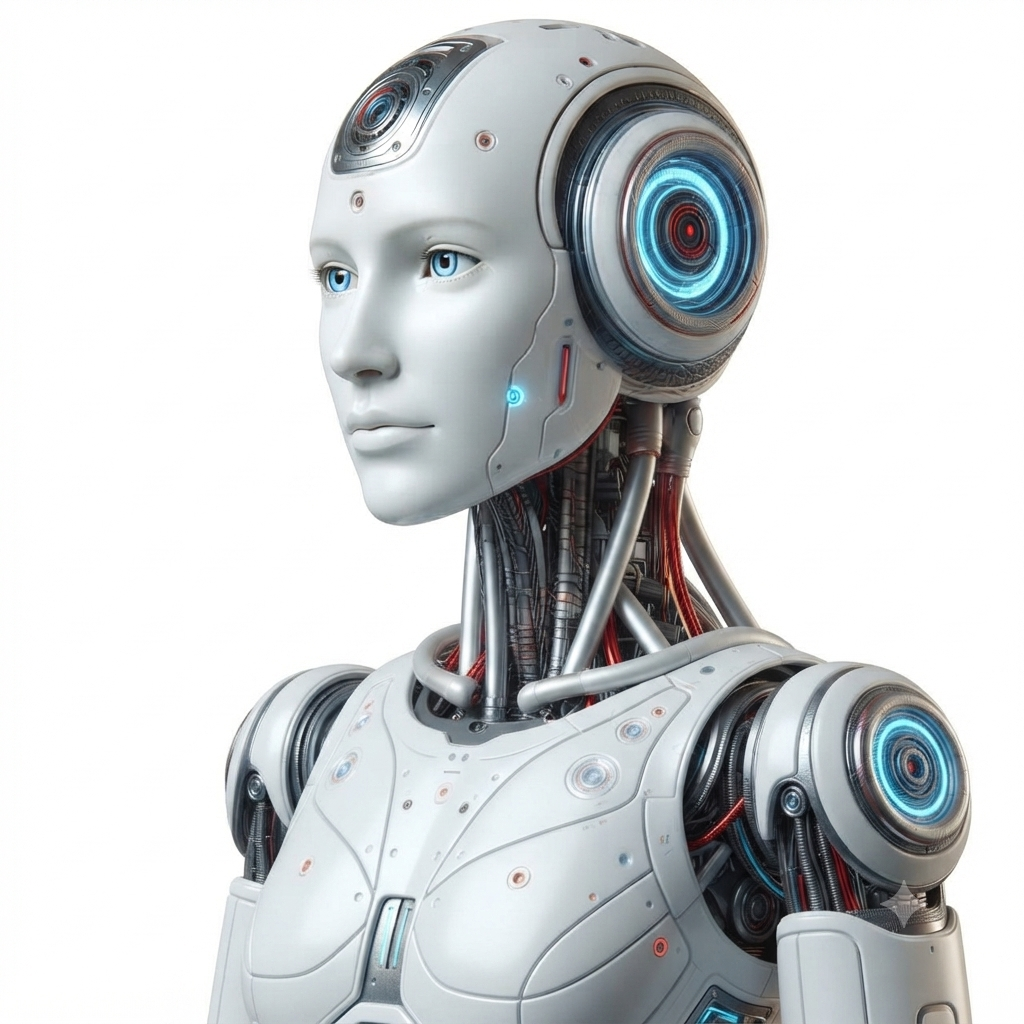
For generations, people have worried that new technology might take away their jobs. When factories introduced machines during the Industrial Revolution, many workers feared they would become unnecessary. Later, computers transformed offices, and the internet reshaped entire industries. Each technological revolution changed the way people worked, creating uncertainty but also opening new opportunities.
Today, a new wave of technology has sparked a similar question—perhaps the biggest one yet.
Can artificial intelligence (AI) replace human jobs?
The answer is not as simple as “yes” or “no.” AI is already changing workplaces around the world. It can write reports, analyze enormous amounts of data, recognize speech, generate images, answer customer questions, and even assist doctors in diagnosing diseases. Some jobs are becoming increasingly automated, while many others are evolving instead of disappearing.
Rather than replacing all human workers, AI is reshaping the nature of work itself. Understanding what AI can—and cannot—do helps us prepare for the future instead of fearing it.
What Is Artificial Intelligence?
Artificial intelligence is a branch of computer science that develops systems capable of performing tasks that typically require human intelligence. These tasks include recognizing patterns, understanding language, making predictions, solving problems, and learning from data.
Unlike traditional computer programs that follow fixed instructions, many modern AI systems improve their performance by analyzing large datasets. This approach, known as machine learning, allows AI to identify patterns without being explicitly programmed for every situation.
Some AI systems can recognize faces in photographs. Others translate languages, recommend movies, detect fraud in banking, or help scientists analyze research data.
Although these systems may appear intelligent, they do not think or understand the world in the same way humans do. They recognize statistical patterns rather than possessing consciousness, emotions, or genuine understanding.
Why AI Is Changing the Workplace
Businesses constantly seek ways to improve efficiency, reduce costs, and increase productivity. AI offers powerful tools that can perform certain tasks faster than humans, especially those involving repetitive work or large amounts of information.
For example, an AI system can review thousands of documents in minutes, identify unusual financial transactions almost instantly, or answer common customer questions twenty-four hours a day.
These capabilities allow companies to automate tasks that previously required many hours of human effort.
However, automation does not necessarily eliminate entire jobs. More often, it changes the tasks people perform.
A worker who once spent hours organizing data may now focus on interpreting results, making decisions, or communicating with clients while AI handles routine processing.
Jobs That AI Can Perform Well
AI performs best when tasks follow clear patterns and rely heavily on data.
For example, AI can quickly recognize objects in images, convert speech into text, classify emails as spam, recommend products based on shopping history, and generate summaries of lengthy documents.
In manufacturing, robots guided by AI can assemble products with remarkable precision.
In transportation, AI helps optimize delivery routes and manage traffic systems.
In agriculture, AI assists farmers by monitoring crop health through satellite images and drones.
Banks use AI to detect suspicious transactions that may indicate fraud.
Hospitals use AI to help analyze medical scans.
These examples demonstrate AI’s strength in handling repetitive, predictable, and data-intensive work.
Jobs Most Likely to Change
Not every occupation faces the same level of automation.
Jobs involving repetitive administrative tasks are generally more susceptible to AI-assisted automation.
For example, data entry, routine bookkeeping, basic scheduling, simple customer support, and document classification increasingly rely on AI tools.
Many manufacturing processes have also become more automated through robotics and intelligent machines.
Even professional fields such as law, journalism, finance, and software development are seeing AI assist with drafting documents, reviewing information, writing code, and conducting research.
Importantly, in many cases AI is changing how professionals work rather than replacing them entirely.
A lawyer may use AI to search legal documents more quickly.
A journalist may use AI to organize research before writing an original story.
A programmer may use AI to generate code suggestions while still making the final design decisions.
The human role shifts toward supervision, creativity, and judgment.
Jobs That Depend on Human Skills
Many occupations require qualities that AI currently cannot fully replicate.
Empathy, emotional understanding, ethical reasoning, creativity, leadership, and complex interpersonal communication remain deeply human strengths.
Teachers do far more than present information. They encourage students, adapt lessons to individual needs, and build meaningful relationships.
Doctors not only diagnose illnesses but also comfort patients and help families make difficult medical decisions.
Psychologists understand emotions, trust, and human behavior in ways that extend beyond pattern recognition.
Artists, musicians, writers, and filmmakers create works shaped by personal experiences, emotions, and cultural understanding.
Managers motivate teams, resolve conflicts, negotiate agreements, and make decisions in uncertain situations.
These aspects of human work are difficult to automate because they involve understanding people rather than simply processing information.
Creativity and AI
One of the biggest surprises in recent years has been AI’s ability to generate text, music, artwork, and videos.
At first glance, this may seem like genuine creativity.
However, AI creates by learning patterns from enormous collections of existing examples. It predicts what is likely to come next based on its training data.
Human creativity often works differently.
People draw upon emotions, personal memories, imagination, curiosity, and lived experiences. They ask entirely new questions, invent original ideas, and create meaning from their unique perspectives.
AI can certainly become a powerful creative assistant.
It can help brainstorm ideas, generate rough drafts, suggest designs, or compose background music.
But human creativity continues to provide originality, cultural understanding, and intentional expression that AI does not possess.
AI in Healthcare
Healthcare demonstrates how AI often works best alongside humans.
AI systems can analyze medical images to identify patterns associated with certain diseases. They can process patient records, estimate health risks, and help doctors prioritize urgent cases.
These tools can improve efficiency and support medical decision-making.
However, healthcare involves much more than identifying patterns.
Doctors consider patients’ medical histories, lifestyles, personal preferences, emotional well-being, and ethical concerns.
They explain treatment options, answer difficult questions, and provide compassionate care.
AI serves as a valuable assistant, but medical professionals remain responsible for diagnosis, treatment decisions, and patient relationships.
AI in Education
Education is also changing because of AI.
Students now use AI to explain difficult concepts, solve practice problems, summarize textbooks, and improve their writing.
Teachers can use AI to create lesson plans, prepare quizzes, and analyze student progress.
Yet education is not simply the transfer of information.
Excellent teachers inspire curiosity, encourage critical thinking, recognize individual learning styles, and help students develop confidence.
Learning also depends on motivation, collaboration, discussion, and human encouragement.
AI can support education, but it cannot replace the human connection between teachers and students.
AI in Business
Businesses increasingly rely on AI to improve decision-making.
Marketing teams analyze customer behavior using AI.
Retail companies predict product demand.
Manufacturers optimize production schedules.
Financial institutions assess risks more efficiently.
Customer service departments use AI chatbots to answer common questions around the clock.
These systems reduce repetitive workloads and allow employees to concentrate on more complex responsibilities.
Instead of replacing entire departments, AI often enhances productivity across many different industries.
The Rise of New Jobs
History shows that technological revolutions often create entirely new careers.
Before computers existed, there were no software developers, cybersecurity specialists, or app designers.
Before the internet, jobs such as social media managers, cloud engineers, and digital marketers did not exist.
AI is creating new professions as well.
Organizations increasingly need AI engineers, machine learning researchers, AI safety specialists, prompt engineers, AI ethics experts, robotics technicians, and professionals who understand how humans and AI can work together effectively.
Many future careers have likely not even been invented yet.
As technology evolves, the demand for new skills continues to grow.
Skills That Will Become More Valuable
As AI becomes more capable, uniquely human abilities become increasingly important.
Critical thinking helps people evaluate information instead of accepting it blindly.
Creativity enables innovation beyond existing patterns.
Communication allows people to explain ideas clearly and build trust.
Collaboration helps diverse teams solve complex problems together.
Adaptability enables workers to learn new tools and adjust to changing industries.
Ethical reasoning ensures that technology is used responsibly.
Emotional intelligence strengthens leadership, teamwork, and customer relationships.
These skills complement AI rather than compete with it.
The Importance of Lifelong Learning
One of the greatest lessons of the AI era is that learning should not end after school or university.
Technology evolves rapidly.
Workers who continuously develop new skills are more likely to adapt successfully to changing workplaces.
Learning may involve mastering AI tools, improving technical knowledge, strengthening communication skills, or exploring entirely new fields.
Many professionals now regularly update their knowledge through online courses, certifications, workshops, and practical experience.
Lifelong learning has become one of the most valuable career strategies in the modern economy.
Can AI Think Like Humans?
Although AI can perform impressive tasks, it does not possess human consciousness.
It does not experience happiness, fear, curiosity, love, or ambition.
It does not understand the meaning of its own words in the way humans understand language.
Modern AI generates responses by identifying statistical relationships in data rather than by forming beliefs or personal experiences.
This distinction is important.
AI can produce useful outputs without actually understanding the world as humans do.
Its intelligence differs fundamentally from human intelligence.
The Challenges of AI in Employment
The rapid adoption of AI raises important social and economic questions.
Some workers may need retraining as automation changes their industries.
Companies must decide how to integrate AI fairly and responsibly.
Governments may need policies that support workforce transitions, education, and economic resilience.
AI systems can also make mistakes.
If trained on biased or incomplete data, they may produce unfair or inaccurate results.
For this reason, human oversight remains essential in many high-stakes applications such as healthcare, finance, hiring, education, and criminal justice.
Responsible AI development requires transparency, accountability, and careful evaluation.
Will Every Job Be Replaced?
Current scientific evidence suggests that complete replacement of all human jobs is highly unlikely.
Most occupations involve a combination of technical tasks, social interaction, creativity, judgment, and decision-making.
AI excels at some of these activities but struggles with others.
Researchers increasingly describe the future as one of human-AI collaboration rather than total automation.
In many workplaces, AI will handle repetitive tasks while humans focus on strategic thinking, innovation, relationship building, and solving unfamiliar problems.
Instead of replacing workers, AI often changes how work is organized.
How People Can Prepare for the AI Future
Preparing for an AI-driven world does not necessarily require becoming a computer scientist.
Understanding how AI works, recognizing its strengths and limitations, and learning to use AI responsibly can benefit people in almost every profession.
Developing digital literacy, improving communication, strengthening problem-solving skills, and maintaining curiosity will help individuals remain adaptable throughout their careers.
Rather than competing directly with AI, many successful professionals will learn how to collaborate with it.
Those who combine human judgment with AI-powered tools may become even more productive than either humans or AI working alone.
The Future of Work
The future workplace will almost certainly look different from today’s.
Some routine tasks will become increasingly automated.
Many existing jobs will evolve.
Entirely new industries and professions will emerge.
This transformation has happened repeatedly throughout history as societies adopted new technologies.
The pace of change may be faster today because AI continues improving rapidly.
Even so, technology alone does not determine the future of work.
Human choices, education, government policies, business decisions, and ethical considerations all shape how AI is used in society.
The future depends not only on what AI can do but also on how people choose to use it.
Conclusion
Artificial intelligence is one of the most transformative technologies ever developed. It is already changing the way people work, learn, communicate, and solve problems. Some jobs will become more automated, certain tasks will disappear, and many occupations will be transformed by intelligent tools.
However, AI is not simply replacing humans. It is reshaping work by taking over repetitive and data-driven activities while creating opportunities for new careers and new ways of working. Human qualities such as creativity, empathy, ethical judgment, critical thinking, and meaningful communication remain essential in countless professions.
The most successful future is unlikely to be one where humans compete against AI. Instead, it is likely to be one where humans and AI work together, each contributing strengths that the other does not possess.
The question, therefore, is not only whether AI can replace human jobs. A more important question is how people can adapt, learn, and use AI wisely to build a future where technology expands human potential rather than diminishing it. In that future, the greatest advantage will belong not to those who fear AI, but to those who understand it, use it responsibly, and continue developing the uniquely human abilities that no machine can truly replace.