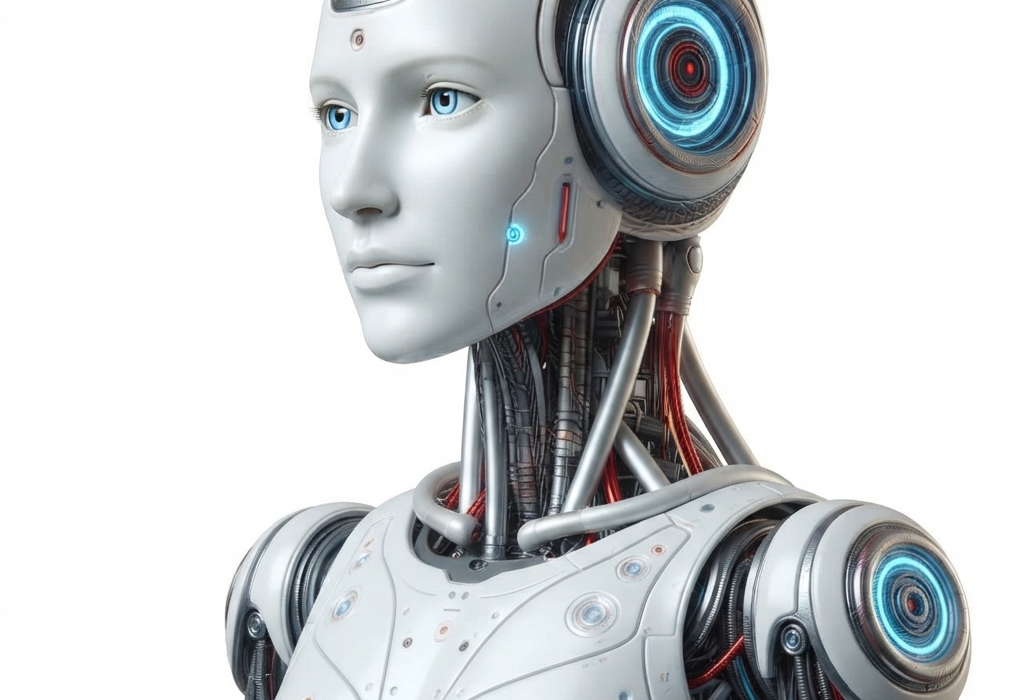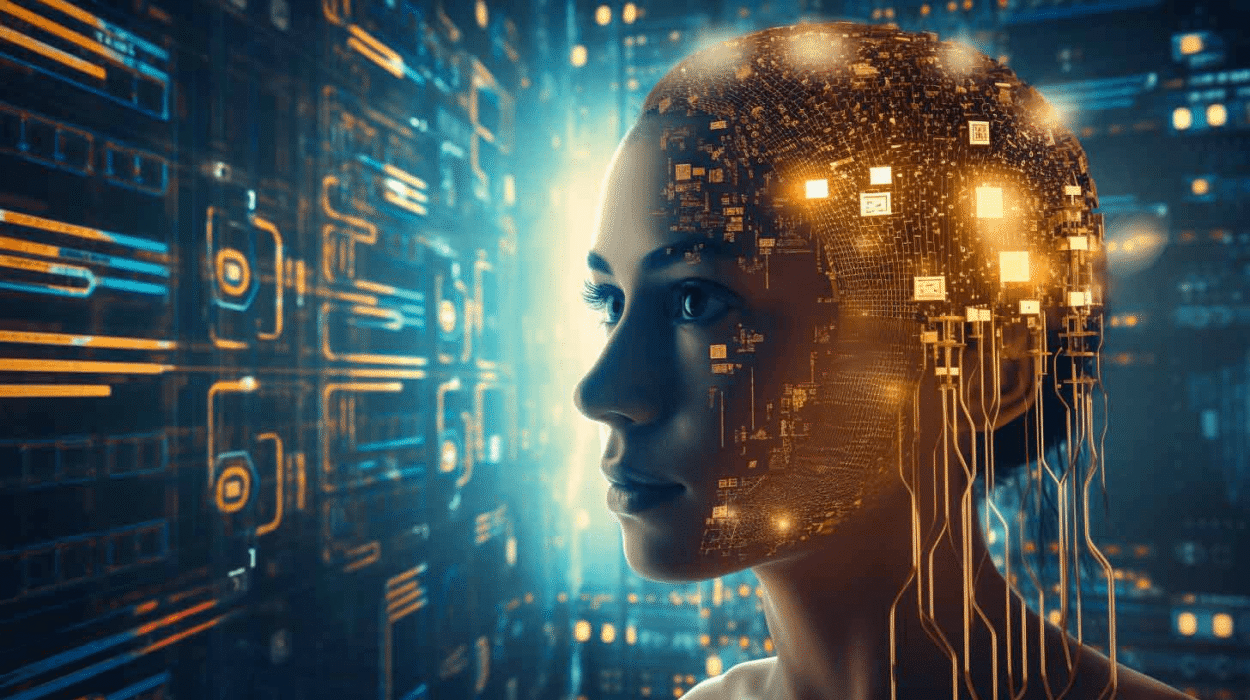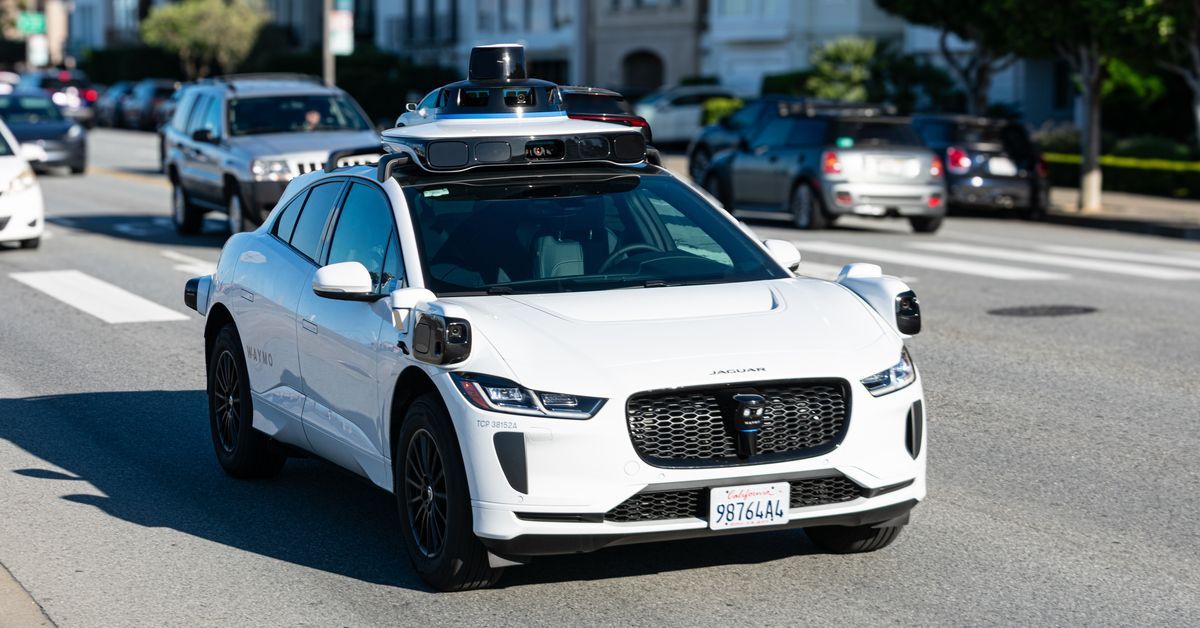
Imagine sitting inside a car that quietly starts moving on its own. It recognizes traffic lights, slows down for pedestrians, avoids obstacles, changes lanes safely, and finds the fastest route to your destination—all without anyone touching the steering wheel. Just a few decades ago, this idea belonged only to science fiction. Today, it is becoming a reality, thanks to one of the most powerful technologies ever developed: artificial intelligence, or AI.
Autonomous vehicles, often called self-driving cars, are among the most remarkable examples of AI in action. They are designed to drive with little or no human intervention by combining powerful computers, advanced sensors, and intelligent software. Instead of relying on instinct like a human driver, these vehicles use AI to observe their surroundings, interpret what they see, make decisions, and control the vehicle safely.
But how does AI actually help a car drive? What happens inside the vehicle every second as it travels down the road? The answer lies in a fascinating combination of computer science, robotics, physics, mathematics, and machine learning.
What Are Autonomous Vehicles?
An autonomous vehicle is a car or other road vehicle that can perform driving tasks by itself. Depending on its level of automation, it may assist the driver with certain tasks or handle nearly all aspects of driving under specific conditions.
To drive safely, an autonomous vehicle must constantly answer several critical questions. Where am I? What is around me? Is that object moving? Is the traffic light red or green? Is someone about to cross the road? Which direction should I go next?
Humans answer these questions using their eyes, ears, memory, and experience. Autonomous vehicles answer them using AI combined with sophisticated sensors and computers.
What Is Artificial Intelligence?
Artificial intelligence is a branch of computer science that enables machines to perform tasks that normally require human intelligence. These tasks include recognizing objects, understanding speech, solving problems, making decisions, learning from experience, and predicting outcomes.
Unlike traditional computer programs that follow fixed instructions, many AI systems improve their performance by learning from large amounts of data.
In autonomous vehicles, AI acts as the vehicle’s digital brain. It processes enormous amounts of information every second and decides how the car should respond.
AI Gives Cars the Ability to See
One of AI’s most important jobs is helping autonomous vehicles understand their surroundings.
Human drivers use their eyes to watch the road. Autonomous vehicles use cameras, radar, ultrasonic sensors, and, in many designs, LiDAR (Light Detection and Ranging).
These devices collect vast amounts of information about the environment.
However, simply collecting data is not enough. The vehicle must understand what that data means.
AI analyzes camera images and sensor information to recognize roads, lane markings, traffic signs, traffic lights, bicycles, pedestrians, animals, construction zones, and other vehicles.
This process is known as computer vision.
Modern AI systems can identify thousands of different objects in real time, allowing the vehicle to build a detailed understanding of its surroundings.
Understanding the Road Environment
Driving is much more than recognizing objects.
The vehicle must understand the entire driving scene.
AI determines where the road begins and ends.
It identifies intersections, curves, bridges, tunnels, parking spaces, and highway exits.
It estimates how far away nearby objects are and predicts how they may move in the next few seconds.
For example, if a child is standing near the edge of the sidewalk, AI may recognize the possibility that the child could suddenly enter the road. This allows the vehicle to prepare for a potential hazard before it actually occurs.
AI Combines Information from Multiple Sensors
Each sensor has strengths and limitations.
Cameras capture detailed images but may struggle in darkness or heavy fog.
Radar performs well in poor weather and measures the speed of moving vehicles.
LiDAR creates highly detailed three-dimensional maps of the environment.
Ultrasonic sensors help detect nearby obstacles during parking and low-speed maneuvers.
AI combines information from all these sensors into a single, consistent picture of the surrounding environment. This process is called sensor fusion.
By combining multiple sources of information, the vehicle can make more reliable decisions than it could using any single sensor alone.
Mapping the World Around the Vehicle
As the car moves, AI continuously creates an updated map of its surroundings.
It identifies the position of nearby vehicles.
It tracks pedestrians walking across streets.
It monitors cyclists, motorcycles, buses, trucks, and roadside obstacles.
This map changes every fraction of a second because traffic conditions are constantly changing.
Maintaining an accurate representation of the environment is essential for safe driving.
AI Helps Vehicles Know Their Location
Before making driving decisions, an autonomous vehicle must know exactly where it is.
Satellite navigation systems provide general location information, but their accuracy alone is often insufficient for autonomous driving.
AI combines satellite data with onboard sensors, digital maps, and measurements of the vehicle’s own movement.
This process, called localization, enables the vehicle to determine its position with much greater precision.
Knowing its exact location allows the vehicle to stay within its lane, approach intersections correctly, and follow planned routes safely.
Recognizing Traffic Signs and Signals
Road signs communicate important rules.
Speed limits.
Stop signs.
Yield signs.
School zones.
Construction warnings.
Traffic lights.
AI continuously analyzes camera images to recognize these signs and signals.
It must not only identify them but also understand what action they require.
For example, if the traffic light changes from green to yellow, AI determines whether it is safer to stop or continue through the intersection based on speed, distance, and surrounding traffic.
Predicting the Behavior of Other Road Users
Driving safely requires more than reacting to current conditions.
Drivers constantly anticipate what others might do next.
AI performs a similar task.
It predicts whether another vehicle may change lanes.
It estimates whether a pedestrian intends to cross the street.
It evaluates whether a cyclist may turn unexpectedly.
Although these predictions are never perfect, they help the vehicle prepare for possible situations before they happen.
Prediction is one of the most challenging aspects of autonomous driving because human behavior is often unpredictable.
Planning a Safe Path
Once AI understands the environment, it decides where the vehicle should go.
This process is called path planning.
The AI calculates a route that avoids obstacles, follows traffic rules, maintains safe distances, and moves efficiently toward the destination.
The planned path is constantly updated as road conditions change.
Even a small change—such as a pedestrian stepping into the road or another vehicle braking suddenly—may require the AI to create a new driving plan almost instantly.
AI Controls the Vehicle
After choosing the safest path, AI sends commands to the vehicle.
It controls acceleration.
It applies the brakes.
It turns the steering wheel.
It adjusts speed when entering curves.
It changes lanes when appropriate.
These commands are carried out by electronic control systems that operate the vehicle’s steering, braking, and power systems with remarkable precision.
Machine Learning Makes AI Smarter
One reason AI has advanced so rapidly is machine learning.
Machine learning allows computer systems to improve by analyzing large collections of data instead of relying only on manually written rules.
Engineers train AI using millions of images, videos, driving scenarios, and sensor recordings.
The AI gradually learns to recognize patterns.
It learns the appearance of traffic signs.
It learns how pedestrians move.
It learns the behavior of different vehicles.
As more driving data becomes available, AI systems can continue improving their ability to recognize complex situations.
Deep Learning Helps Vehicles Recognize Objects
Many autonomous vehicles use a form of machine learning known as deep learning.
Deep learning uses artificial neural networks inspired by certain aspects of how biological nervous systems process information.
These networks analyze enormous amounts of visual data and gradually learn to identify increasingly complex patterns.
For example, a neural network may first recognize simple edges.
Later it learns shapes.
Eventually it identifies bicycles, buses, traffic lights, and pedestrians.
Deep learning has dramatically improved computer vision, making modern autonomous driving systems far more capable than earlier technologies.
AI Learns from Millions of Kilometers
Before autonomous vehicles operate on public roads, engineers test them extensively.
AI systems are trained using recordings from real-world driving and large-scale computer simulations.
Simulation allows engineers to expose AI to rare and dangerous situations that would be difficult or unsafe to recreate in real traffic.
The vehicle may encounter sudden storms, unexpected road closures, or unusual driver behavior in virtual environments.
Learning from these experiences helps improve future performance.
AI Helps Avoid Collisions
One of AI’s most important responsibilities is preventing accidents.
The vehicle continuously calculates the distance, speed, and direction of nearby objects.
If another car suddenly stops, AI determines whether braking alone is sufficient or whether steering around the obstacle is safer.
If a pedestrian unexpectedly enters the road, AI reacts within fractions of a second.
Modern systems can often process information much faster than human reaction times, although their performance still depends on the quality of sensors, software, and operating conditions.
AI Helps During Parking
Parking may seem simple, but it requires careful control in tight spaces.
AI uses cameras and nearby sensors to identify parking spaces.
It measures distances to surrounding vehicles and obstacles.
It then controls steering, braking, and acceleration to park accurately.
Many modern vehicles already include automated parking assistance based on these principles.
AI Improves Driving Efficiency
Efficient driving saves both energy and time.
AI selects routes that reduce unnecessary delays.
It adjusts acceleration smoothly.
It avoids excessive braking whenever possible.
These improvements can reduce energy consumption in electric vehicles and improve fuel efficiency in conventional vehicles.
Efficient driving also helps reduce wear on vehicle components.
AI Can Reduce Driver Fatigue
For partially automated vehicles, AI can assist with repetitive driving tasks such as maintaining speed, keeping the vehicle centered in its lane, and adapting to traffic.
These features reduce driver workload during long journeys.
However, when the system requires human supervision, drivers must remain attentive and ready to take control whenever necessary.
AI Continues Learning Through Software Improvements
Unlike traditional mechanical systems, AI software can often be improved without redesigning the entire vehicle.
Engineers analyze new driving data and improve recognition algorithms.
Updated software may allow the vehicle to identify objects more accurately or respond more effectively to challenging situations.
These improvements help autonomous driving systems become more capable over time.
Challenges AI Still Faces
Despite remarkable progress, autonomous driving remains an extremely difficult scientific and engineering challenge.
Road environments are unpredictable.
Heavy rain, snow, fog, or dust can reduce sensor performance.
Construction zones frequently change road layouts.
Human drivers sometimes behave unpredictably.
Animals may suddenly enter the roadway.
Temporary traffic signs may appear during road repairs.
AI must correctly interpret all these situations while making safe decisions within fractions of a second.
Even highly advanced systems continue to face situations that require further research and development.
Safety Comes First
Because autonomous vehicles operate in public spaces, safety is the highest priority.
Engineers conduct extensive testing before deploying autonomous systems.
Vehicles are evaluated in controlled environments, computer simulations, and real-world driving under carefully monitored conditions.
Many autonomous vehicles include backup systems so that if one component fails, another can continue operating.
Continuous monitoring and rigorous safety standards remain essential as the technology evolves.
The Future of AI in Autonomous Vehicles
Artificial intelligence continues to improve rapidly.
Future autonomous vehicles are expected to recognize more complex situations, communicate more effectively with infrastructure and other vehicles, and operate safely in a wider range of environments.
Advances in computer chips, sensor technology, machine learning, and high-definition mapping will further increase reliability.
Researchers are also exploring ways for AI to better explain its decisions, making autonomous systems more transparent and easier to evaluate.
Although fully autonomous transportation is still developing, AI is steadily bringing that vision closer to reality.
Conclusion
Artificial intelligence is the heart of every autonomous vehicle. It transforms streams of data from cameras, radar, LiDAR, and other sensors into a detailed understanding of the world, allowing the vehicle to recognize objects, predict movement, plan safe routes, and control steering, acceleration, and braking. Through computer vision, machine learning, deep learning, and sensor fusion, AI enables vehicles to perform tasks that once depended entirely on human judgment.
While important technical and regulatory challenges remain, the progress made in recent years has been extraordinary. As AI continues to advance, autonomous vehicles are expected to become safer, more capable, and better equipped to navigate the complexities of real-world roads. More than just a technological achievement, they represent a new chapter in transportation—one in which intelligent machines and human innovation work together to create a future of safer, smarter, and more efficient travel.