Imagine trying to solve a puzzle with billions of pieces. One person working alone might spend years completing it. Now imagine millions of people working together, each solving a small part at the same time. Suddenly, what once seemed impossible becomes achievable. This simple idea lies at the heart of High-Performance Computing (HPC).
High-Performance Computing is one of the most powerful technologies ever developed. It enables scientists, engineers, researchers, and organizations to solve problems so large and complex that ordinary computers would take months, years, or even centuries to complete. From predicting hurricanes and discovering new medicines to designing spacecraft and exploring the origins of the universe, HPC has become an essential tool for modern science and technology.
Although most people never directly interact with a supercomputer, many aspects of daily life are influenced by the discoveries and innovations made possible through High-Performance Computing. Every weather forecast, many life-saving medical breakthroughs, safer automobiles, advanced artificial intelligence systems, and countless scientific discoveries owe something to the extraordinary computing power of HPC.
Understanding High-Performance Computing
High-Performance Computing refers to the use of extremely powerful computer systems that work together to perform enormous numbers of calculations at incredible speeds. Instead of relying on a single processor, an HPC system combines thousands—or even millions—of processing cores that operate simultaneously.
The defining feature of High-Performance Computing is parallel computing. Rather than solving one task after another, HPC divides a large problem into many smaller tasks that can be processed at the same time. Each processor handles part of the work, and the results are combined into a final solution.
This approach dramatically reduces the time required to solve computationally intensive problems.
For example, if one computer needed ten years to complete a simulation, an HPC system using thousands of processors working efficiently in parallel might finish the same task in just a few hours or days.
Why Ordinary Computers Are Not Enough
Modern laptops and desktop computers are remarkably capable. They can browse the internet, edit videos, play games, and even perform sophisticated calculations. However, they are designed for general-purpose tasks rather than massive scientific computations.
Some problems simply involve too much data or too many mathematical operations.
Consider weather forecasting. Earth’s atmosphere contains countless interacting variables, including temperature, pressure, humidity, wind speed, ocean currents, and solar radiation. Predicting tomorrow’s weather requires solving millions of mathematical equations repeatedly across the entire planet.
A normal computer would struggle to complete these calculations before the forecast became outdated.
High-Performance Computing provides the speed needed to analyze enormous datasets quickly enough to produce useful predictions.
The same challenge appears in astronomy, genetics, engineering, climate science, and artificial intelligence.
How High-Performance Computing Works
An HPC system is built from many individual computers called compute nodes. Each node contains powerful processors and memory capable of handling complex calculations.
These nodes are connected through an extremely fast network that allows them to exchange information with minimal delay.
When a large task begins, specialized software divides the problem into smaller pieces. Each compute node processes its assigned portion simultaneously.
As the calculations progress, the nodes continuously communicate with one another, sharing intermediate results and coordinating their work.
Finally, the system combines all the results into a complete solution.
This process allows millions of calculations to occur at the same time, making HPC vastly faster than traditional computing for suitable workloads.
Parallel Computing: The Heart of HPC
Parallel computing is the core concept behind High-Performance Computing.
Instead of solving one calculation after another, many calculations happen simultaneously.
Imagine translating an enormous encyclopedia.
If one translator worked alone, the project might take years.
If thousands of translators each worked on different pages simultaneously while coordinating their efforts, the encyclopedia could be completed much more quickly.
HPC follows a similar principle.
Each processor tackles part of the overall problem, dramatically reducing completion time.
Not every task can be divided efficiently, but many scientific and engineering problems are well suited to parallel computation.
The Evolution of High-Performance Computing
The history of High-Performance Computing reflects decades of technological innovation.
Early computers in the mid-twentieth century filled entire rooms yet possessed less computing power than today’s smartphones.
As technology advanced, processors became faster, smaller, and more energy-efficient.
During the 1960s and 1970s, specialized supercomputers began appearing in research laboratories. These machines focused on solving scientific problems involving large-scale numerical calculations.
In the following decades, engineers realized that connecting many processors together could often provide greater performance than relying on a single extremely powerful processor.
This shift toward parallel computing transformed the field.
Today’s most advanced supercomputers contain hundreds of thousands—or even millions—of processor cores working together.
What Is a Supercomputer?
A supercomputer is the highest-performance category of computer available at a given time.
Not every High-Performance Computing system is necessarily a supercomputer, but nearly all supercomputers are designed specifically for HPC workloads.
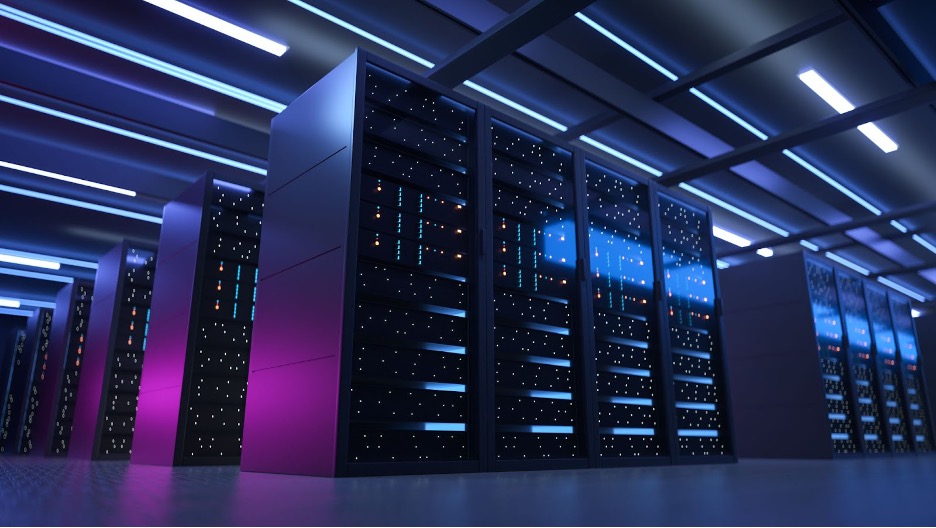
Supercomputers occupy large facilities filled with rows of computer cabinets connected by high-speed networks.
They require advanced cooling systems because the processors generate enormous amounts of heat.
Some consume electricity comparable to that used by small towns.
Despite their immense size, their true power lies not in any single processor but in the coordination of countless processors working together.
The Building Blocks of an HPC System
A High-Performance Computing system consists of several major components working together.
Powerful processors perform billions or even trillions of calculations every second.
Large amounts of memory allow programs to store and access enormous datasets rapidly.
High-speed storage systems provide quick access to scientific data.
Ultra-fast communication networks enable compute nodes to exchange information efficiently.
Specialized software coordinates the workload, ensuring that each processor contributes effectively.
Every component must operate efficiently because even a small bottleneck can reduce overall performance.
CPUs and GPUs in High-Performance Computing
Traditional HPC systems relied mainly on Central Processing Units (CPUs).
CPUs excel at handling a wide variety of computational tasks and remain essential for many scientific applications.
In recent years, Graphics Processing Units (GPUs) have become increasingly important.
Originally developed for rendering graphics in video games, GPUs contain thousands of smaller processing cores capable of performing many similar calculations simultaneously.
This architecture makes GPUs exceptionally effective for artificial intelligence, molecular simulations, climate modeling, and numerous other HPC applications.
Many modern supercomputers combine CPUs and GPUs to achieve extraordinary performance.
Measuring Computing Performance
The performance of High-Performance Computing systems is usually measured in floating-point operations per second, abbreviated as FLOPS.
Floating-point calculations involve numbers with decimal points and are common in scientific computing.
Performance scales across many orders of magnitude.
Millions of calculations per second are measured in megaflops.
Billions become gigaflops.
Trillions become teraflops.
Quadrillions become petaflops.
The world’s fastest supercomputers now operate in the exaflop range, meaning they can perform more than one quintillion floating-point operations every second.
This level of computational power would have seemed unimaginable only a few decades ago.
High-Performance Computing and Weather Forecasting
One of the most visible applications of HPC is weather prediction.
Weather systems evolve continuously and involve countless physical processes occurring simultaneously across Earth’s atmosphere.
Meteorologists use mathematical models based on the laws of physics to simulate atmospheric behavior.
These models require solving enormous numbers of equations repeatedly for millions of locations around the globe.
High-Performance Computing allows these simulations to be completed quickly enough to provide timely forecasts.
As computing power improves, weather predictions generally become more detailed and accurate.
Climate Science and Global Change
While weather forecasting focuses on days or weeks, climate science examines changes over decades and centuries.
Climate models simulate interactions among the atmosphere, oceans, land surfaces, glaciers, vegetation, and human activities.
These simulations involve immense datasets and highly complex physical processes.
HPC enables scientists to investigate how greenhouse gases, volcanic eruptions, solar activity, and land-use changes influence Earth’s climate.
These simulations help researchers understand possible future climate scenarios and improve scientific understanding of our changing planet.
High-Performance Computing in Medicine
Modern medicine increasingly depends on High-Performance Computing.
Researchers use HPC to analyze enormous collections of genetic information, helping identify genes associated with diseases.
Molecular simulations allow scientists to study how potential medicines interact with proteins inside the human body.
Instead of relying solely on laboratory experiments, researchers can first test millions of possible drug candidates using computer simulations.
This approach speeds biomedical research and helps focus laboratory efforts on the most promising compounds.
Medical imaging also benefits from HPC, enabling rapid processing of high-resolution scans used in diagnosis and treatment planning.
Artificial Intelligence and HPC
Artificial Intelligence has become one of the largest users of High-Performance Computing.
Training advanced AI models requires processing vast quantities of data while adjusting billions of mathematical parameters.
These computations would be impractical without HPC systems.
Thousands of CPUs and GPUs work together to train neural networks used in language models, image recognition, scientific research, autonomous vehicles, and many other applications.
As AI models continue growing in size and complexity, High-Performance Computing remains essential for their development.
Engineering Better Technologies
Engineers use High-Performance Computing to design safer, stronger, and more efficient products.
Instead of building countless physical prototypes, engineers often simulate designs on computers.
Aircraft manufacturers analyze airflow over wings.
Automobile companies study crash safety.
Bridge designers examine structural stability.
Energy companies simulate wind turbines and power plants.
These virtual experiments reduce costs while improving performance and safety.
Exploring Space Through HPC
Space exploration generates extraordinary amounts of scientific data.
Astronomers process observations from powerful telescopes to study distant galaxies, stars, planets, and black holes.
Space agencies simulate spacecraft trajectories, planetary atmospheres, and asteroid impacts.
High-Performance Computing allows scientists to reconstruct images from radio telescopes, analyze signals from distant spacecraft, and investigate how stars evolve over billions of years.
Without HPC, many modern discoveries about the universe would not be possible.
Understanding Earth
Earth itself is an incredibly complex system.
Geophysicists use High-Performance Computing to model earthquakes, volcanic eruptions, groundwater movement, and ocean circulation.
Seismic simulations improve understanding of how earthquake waves travel through Earth’s interior.
Ocean models help scientists study currents that influence weather and marine ecosystems.
Researchers also simulate floods, landslides, and other natural hazards to improve disaster preparedness.
Nuclear and Particle Physics
Some of the world’s largest scientific experiments produce enormous quantities of data.
Particle accelerators generate collisions involving fundamental particles at extremely high energies.
Analyzing these experiments requires immense computing resources.
High-Performance Computing helps physicists interpret experimental results, simulate particle interactions, and test theories about the fundamental laws governing matter and energy.
Financial Modeling
Banks, investment firms, and insurance companies also use High-Performance Computing.
Financial markets involve vast numbers of rapidly changing variables.
HPC enables large-scale risk analysis, market simulations, fraud detection, and portfolio optimization.
Although these applications differ greatly from scientific research, they rely on the same ability to process enormous quantities of data rapidly.
Challenges in High-Performance Computing
Building powerful HPC systems presents significant challenges.
Energy consumption is one of the largest concerns.
Powering hundreds of thousands of processors requires enormous amounts of electricity.
Cooling also becomes increasingly important because processors generate substantial heat during operation.
Software development presents another challenge.
Programs must be carefully designed to distribute work efficiently across thousands of processors.
If communication between processors becomes too slow, overall performance suffers.
Reliability is equally important.
With millions of hardware components operating simultaneously, failures become inevitable.
Engineers design HPC systems to continue functioning even when individual components fail.
High-Performance Computing and Big Data
Modern science produces unprecedented amounts of data.
Astronomical observatories collect petabytes of observations.
Genome sequencing projects generate enormous biological datasets.
Climate satellites continuously monitor Earth’s atmosphere.
Particle physics experiments record vast numbers of collisions.
High-Performance Computing enables researchers not only to store these datasets but also to analyze them efficiently.
The combination of HPC and big data is driving scientific discoveries across numerous fields.
The Future of High-Performance Computing
High-Performance Computing continues evolving rapidly.
Researchers are developing faster processors, improved memory technologies, more efficient cooling systems, and advanced networking hardware.
Energy efficiency has become a major priority as computing systems grow larger.
Future HPC systems will likely integrate traditional processors with specialized AI accelerators and other advanced computing architectures.
Scientists are also exploring the potential relationship between High-Performance Computing and quantum computing. While quantum computers are fundamentally different from conventional supercomputers, they may eventually complement HPC by solving certain specialized problems that are difficult for classical machines.
The future promises even greater computational capabilities, enabling scientific discoveries that are currently beyond our reach.
Why High-Performance Computing Matters
High-Performance Computing is far more than a collection of exceptionally fast computers. It is one of humanity’s most powerful tools for understanding the natural world and solving problems that would otherwise remain impossible. Whether forecasting severe storms, developing life-saving medicines, designing cleaner energy systems, exploring distant galaxies, or advancing artificial intelligence, HPC provides the computational foundation for modern scientific and technological progress.
As the world’s challenges become increasingly complex, the importance of High-Performance Computing will continue to grow. Every increase in computing power expands our ability to explore nature, improve human health, protect the environment, and deepen our understanding of the universe.
Ultimately, High-Performance Computing represents more than extraordinary speed. It represents the remarkable human drive to ask bigger questions, tackle greater challenges, and push the boundaries of knowledge. With every new generation of supercomputers, humanity gains a clearer view of a universe whose complexity is immense—but increasingly within our ability to understand.