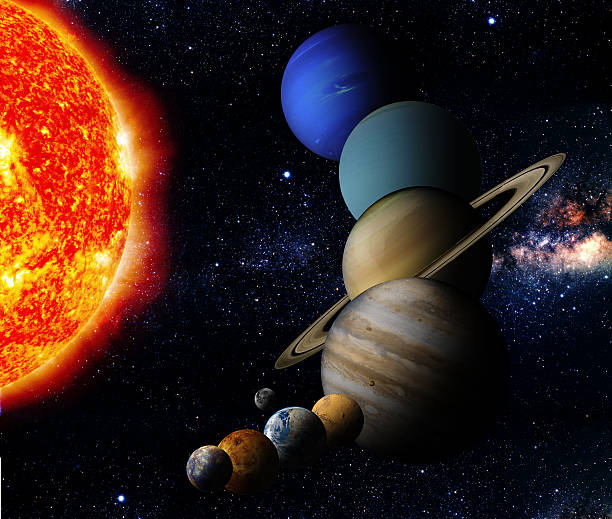
Every moment, an invisible force is quietly at work across the Solar System. It keeps the planets circling the Sun, holds the Moon in orbit around Earth, guides comets on journeys lasting thousands of years, sculpts the graceful rings of Saturn, and even determines the paths of spacecraft exploring distant worlds. Without this force, there would be no stable planets, no changing seasons, no eclipses, and perhaps no life as we know it.
That force is gravity.
Unlike lightning, volcanoes, or hurricanes, gravity cannot be seen directly. Yet its influence extends across billions of kilometers, connecting every object in the Solar System into one enormous, dynamic family. From tiny grains of dust to the giant planets, every object is constantly pulling on every other object through gravity.
The Solar System is not simply a collection of worlds floating randomly through space. It is a carefully choreographed system whose movements are governed almost entirely by gravity. Understanding this invisible force helps us understand why the Solar System exists, how it evolved, and why it continues to remain remarkably stable after more than 4.5 billion years.
What Is Gravity?
Gravity is one of the four fundamental forces of nature. It is the attractive force that exists between any two objects with mass.
Every object, whether it is a pebble, a planet, or a star, exerts a gravitational pull on every other object. The larger an object’s mass, the stronger its gravitational attraction becomes. Distance also matters. The farther apart two objects are, the weaker the gravitational force between them.
In the seventeenth century, Sir Isaac Newton described gravity as a universal force acting between masses. His theory successfully explained why apples fall to the ground and why planets orbit the Sun using the same mathematical laws.
More than two centuries later, Albert Einstein transformed our understanding through his theory of general relativity. Instead of viewing gravity as an invisible force pulling objects together, Einstein showed that massive objects bend the fabric of spacetime itself. Planets move along the curved paths created by the Sun’s enormous mass.
Although Einstein’s explanation is more complete, Newton’s laws remain extremely accurate for describing most motions within the Solar System.
The Birth of the Solar System Began with Gravity
Gravity played the leading role long before the planets even existed.
Around 4.6 billion years ago, the Solar System began as part of a giant cloud of gas and dust known as a molecular cloud. This cloud contained mostly hydrogen and helium, along with tiny amounts of heavier elements produced by earlier generations of stars.
Over time, gravity caused parts of this cloud to collapse inward. As the cloud shrank, it rotated faster, much like an ice skater spins more quickly by pulling in their arms. The collapsing material eventually formed a flattened disk surrounding a growing young Sun.
At the center, gravity compressed enormous amounts of hydrogen until temperatures became high enough for nuclear fusion to begin. The Sun was born.
Meanwhile, within the surrounding disk, countless particles collided and gradually stuck together. Gravity helped these growing clumps attract more material, eventually forming planetesimals, protoplanets, and finally the planets we see today.
Without gravity, none of these steps could have happened.
The Sun’s Gravity Holds Everything Together
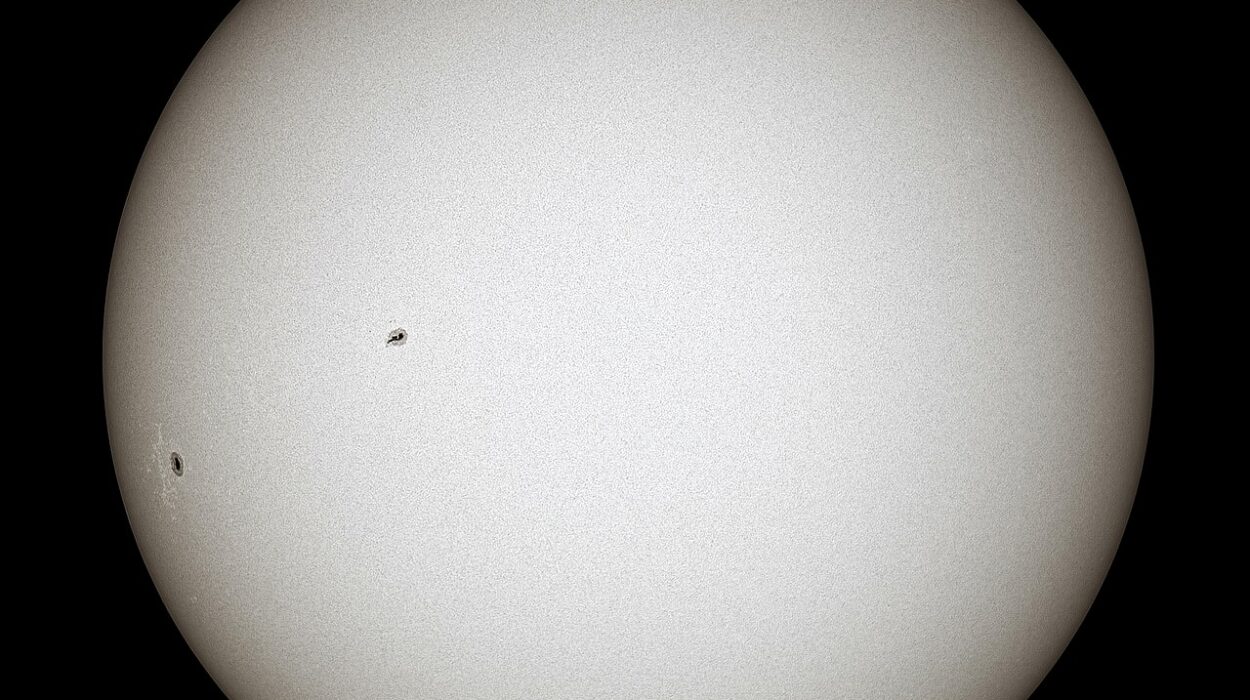
The Sun contains about 99.8 percent of the Solar System’s total mass. Because gravity depends strongly on mass, the Sun dominates the motions of nearly every object in the Solar System.
Each planet constantly experiences two kinds of motion.
One is its forward motion through space.
The other is the Sun’s inward gravitational pull.
These combine to produce stable orbits.
Rather than falling directly into the Sun, planets continuously “fall around” it. Their forward speed prevents them from crashing inward while gravity prevents them from flying away into interstellar space.
This delicate balance creates the elliptical orbits described by Johannes Kepler’s laws of planetary motion.
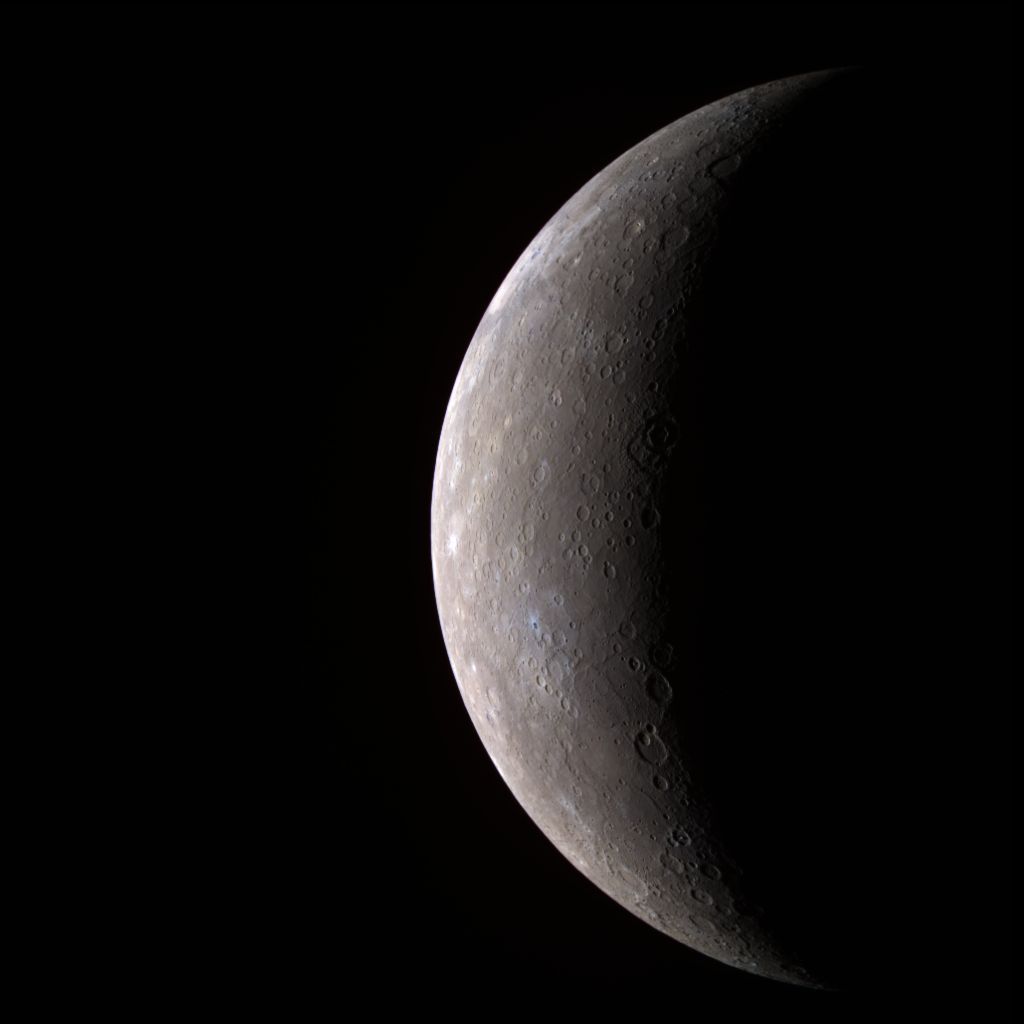
Each planet follows its own path, with Mercury completing an orbit in only 88 Earth days while Neptune requires about 165 Earth years.
Why Planets Stay in Their Orbits
At first glance, it may seem surprising that planets remain in nearly the same paths for billions of years.
The reason lies in orbital mechanics.
Imagine swinging a ball attached to a string. The string continually pulls the ball inward while the ball’s motion carries it forward.
Gravity plays the role of the string.
A planet moving too slowly would spiral inward toward the Sun.
A planet moving too quickly could escape the Solar System entirely.
The actual orbital speeds of the planets are almost perfectly balanced with the Sun’s gravitational pull.
Earth travels around the Sun at roughly 30 kilometers per second, or about 67,000 miles per hour. At this tremendous speed, gravity continuously bends Earth’s path into an orbit instead of allowing it to move in a straight line.
Gravity Creates Moons
Planets are not the only bodies controlled by gravity.
Many planets possess their own miniature systems.
Earth’s Moon remains in orbit because Earth’s gravity continually pulls it inward while its forward motion carries it around the planet.
The giant planets possess especially impressive collections of moons.
Jupiter alone has dozens of confirmed moons, including the volcanic world Io, icy Europa, giant Ganymede, and heavily cratered Callisto.
Each follows an orbit determined primarily by Jupiter’s immense gravitational field.
Some moons are so strongly affected by gravity that they experience tidal heating, where changing gravitational forces stretch and squeeze their interiors.
Europa and Enceladus, for example, likely contain global oceans beneath their icy surfaces partly because gravitational interactions generate internal heat.
Gravity Shapes Planetary Rings
One of the Solar System’s most beautiful sights is Saturn’s magnificent ring system.
These rings are not solid structures.
Instead, they consist of countless particles of ice and rock ranging from microscopic grains to objects several meters across.
Gravity controls every aspect of these rings.
Saturn’s enormous gravity keeps the particles in orbit.
Its many moons also influence the rings by creating gaps, waves, and delicate patterns.
Some small moons even act as “shepherd moons,” whose gravity helps maintain narrow ring structures.
The rings appear peaceful, but they are constantly changing under the influence of countless gravitational interactions.
Gravity Guides Asteroids
Between Mars and Jupiter lies the asteroid belt, containing millions of rocky bodies left over from the Solar System’s formation.
The asteroids do not wander randomly.
Each follows an orbit around the Sun determined by gravity.
Jupiter’s immense gravity has a particularly important influence on the asteroid belt.
Its powerful gravitational pull creates regions called orbital resonances, where repeated gravitational interactions gradually remove asteroids from certain locations.
These empty regions are known as the Kirkwood gaps.
Jupiter also deflects many asteroids, altering their paths throughout the Solar System.
Gravity Directs Comets
Comets are among the Solar System’s most dramatic travelers.
Many originate in distant reservoirs such as the Kuiper Belt and the Oort Cloud.
These icy bodies spend much of their time far from the Sun, where temperatures are extremely low.
When gravity sends a comet toward the inner Solar System, sunlight begins heating its icy surface.
Frozen gases transform directly into vapor, carrying dust into space and producing the glowing coma and spectacular tails that make comets so recognizable.
After passing the Sun, gravity sends many comets back toward the outer Solar System, where they may remain for decades, centuries, or even thousands of years before returning.
Gravity Creates Tides on Earth
One of the easiest ways to observe gravity is by watching Earth’s oceans.
The Moon’s gravity pulls on Earth, creating tidal bulges.
As Earth rotates, coastlines move through these bulges, producing the regular rise and fall of sea levels known as tides.
The Sun also contributes to tides.
When the Sun, Moon, and Earth align during new and full moons, their combined gravitational pull produces especially large spring tides.
When the Sun and Moon pull at right angles to one another, weaker neap tides occur.
These predictable rhythms have influenced coastal ecosystems and human civilizations for thousands of years.
Gravity Influences Earth’s Rotation
Gravity does more than create tides.
The interaction between Earth and the Moon gradually slows Earth’s rotation.
Tiny amounts of rotational energy are transferred to the Moon’s orbit.
As a result, Earth’s days become slightly longer over millions of years, while the Moon slowly moves farther away at a rate of about 3.8 centimeters (1.5 inches) per year.
Laser measurements made using reflectors left on the Moon during the Apollo missions have confirmed this gradual increase in distance with remarkable precision.
Gravity Helps Form Planets
Gravity never stopped working after the Solar System formed.
Young planets continued growing as their gravity attracted additional material.
Larger planets became increasingly effective at capturing nearby rocks, dust, and gas.
The giant planets accumulated enormous atmospheres because their powerful gravity could retain light gases such as hydrogen and helium.
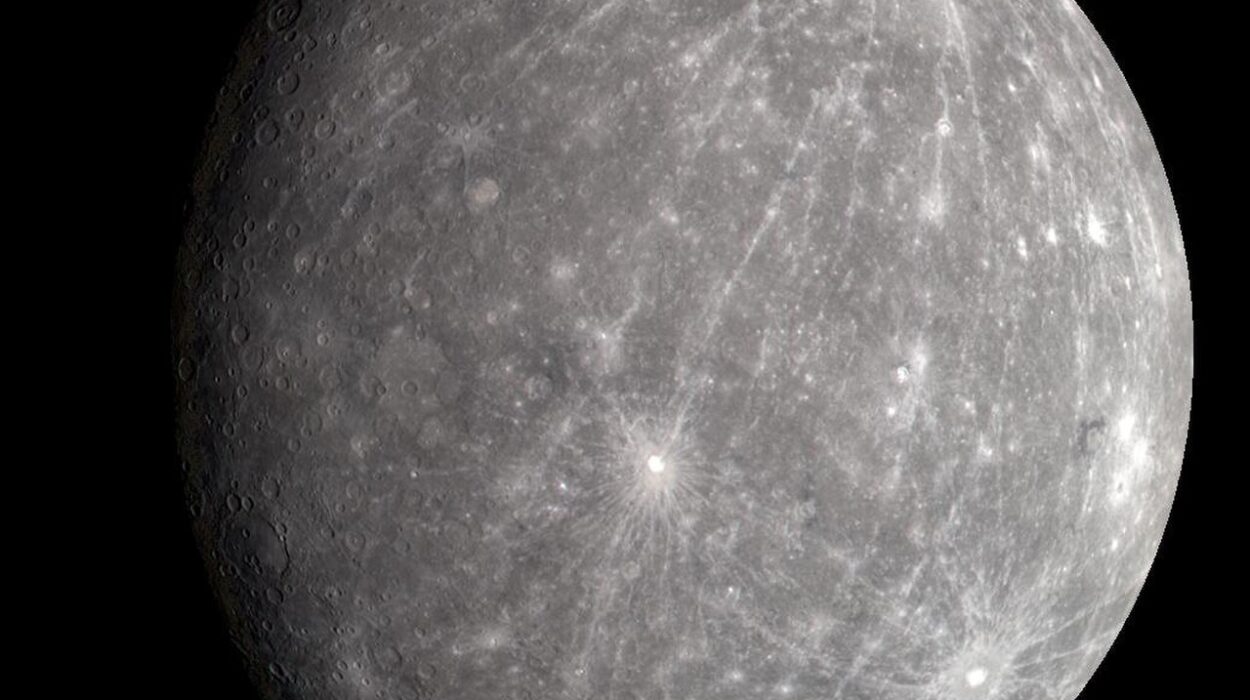
Smaller worlds, including Mercury and the Moon, lacked enough gravity to hold thick atmospheres for long periods.
Even today, gravity largely determines whether a planet can maintain an atmosphere.
Earth’s gravity is strong enough to retain air, while the Moon’s weaker gravity cannot.
Gravity Shapes Planetary Surfaces
The appearance of every planet is influenced by gravity.
Large planets become nearly spherical because gravity pulls material equally toward their centers.
Small asteroids often have irregular shapes because their gravity is too weak to overcome the strength of solid rock.
Gravity also influences volcanic activity, mountain heights, and the movement of materials beneath planetary crusts.
On Mars, lower gravity allows volcanoes such as Olympus Mons to grow much taller than any volcano on Earth.
Earth’s stronger gravity causes mountains to spread outward under their own weight, limiting their maximum height.
Gravity Controls Spacecraft
Every mission exploring the Solar System depends on gravity.
Scientists carefully calculate how spacecraft move through gravitational fields.
Instead of carrying enormous amounts of fuel, many spacecraft use gravity assists, sometimes called gravitational slingshots.
During a close flyby of a planet, a spacecraft gains or loses speed by exchanging a tiny amount of momentum with the planet.
This technique has enabled missions such as Voyager, Cassini, Galileo, and New Horizons to reach distant worlds that would otherwise have been extremely difficult to explore.
Gravity acts as an invisible engine helping spacecraft travel billions of kilometers.
Gravity and Planetary Stability
The Solar System appears peaceful, but its stability depends on countless gravitational interactions.
Every planet exerts a small gravitational pull on every other planet.
Over short periods these effects are tiny.
Over millions of years, however, they can slowly alter orbital shapes and orientations.
Despite these gradual changes, the Solar System has remained remarkably stable for billions of years.
Computer simulations show that gravity naturally produces an intricate but largely stable planetary arrangement, allowing life on Earth sufficient time to evolve.
Gravity Beyond the Planets
Gravity extends far beyond Neptune.
It holds together the distant Kuiper Belt.
It binds the vast Oort Cloud to the Sun despite its enormous distance.
The Sun itself orbits the center of the Milky Way under the galaxy’s gravitational pull, completing one galactic orbit approximately every 225 to 250 million years.
Even galaxies interact gravitationally.
The Milky Way and the Andromeda Galaxy are slowly moving toward one another because of their mutual gravitational attraction and are expected to merge billions of years in the future.
Gravity connects structures across the entire universe.
Can Objects Escape Gravity?
Although gravity extends infinitely, its strength decreases with distance.
An object can escape a planet if it reaches escape velocity, the minimum speed needed to move away without further propulsion.
Earth’s escape velocity is about 11.2 kilometers per second.
Rockets must exceed this speed to leave Earth’s gravitational influence.
However, escaping Earth does not mean escaping the Sun.
Spacecraft leaving Earth continue orbiting the Sun unless they gain enough speed to escape the Solar System altogether.
Even the Voyager spacecraft, now traveling through interstellar space, spent decades gradually overcoming the Sun’s gravitational influence.
Gravity Is Still Full of Mysteries
Despite centuries of research, gravity remains one of science’s greatest mysteries.
General relativity has passed every major experimental test and accurately explains gravity on large scales.
Yet it does not fit neatly with quantum mechanics, the theory describing the microscopic world.
Physicists continue searching for a theory of quantum gravity that would unite these two pillars of modern physics.
Dark matter and dark energy, which together appear to make up most of the universe, add even more unanswered questions.
Understanding gravity more completely may eventually reveal entirely new insights into the nature of reality.
The Invisible Architect of the Solar System
Gravity is the master architect of the Solar System. It gathered a cloud of gas and dust to create the Sun and planets, keeps every world faithfully following its orbit, guides comets across vast distances, shapes planetary rings, drives ocean tides, influences planetary evolution, and helps spacecraft journey to the outer reaches of our cosmic neighborhood.
Although invisible, gravity is the force that brings order to what might otherwise be chaos. Every sunrise, every eclipse, every orbit, and every season is part of a cosmic dance choreographed by gravity over billions of years.
The next time you look at the Moon, watch a planet shining in the night sky, or see breathtaking images from distant spacecraft, remember that behind every one of those wonders is the same quiet force that keeps your feet firmly planted on Earth. Gravity is not simply one feature of the Solar System—it is the invisible thread that holds the entire celestial family together.