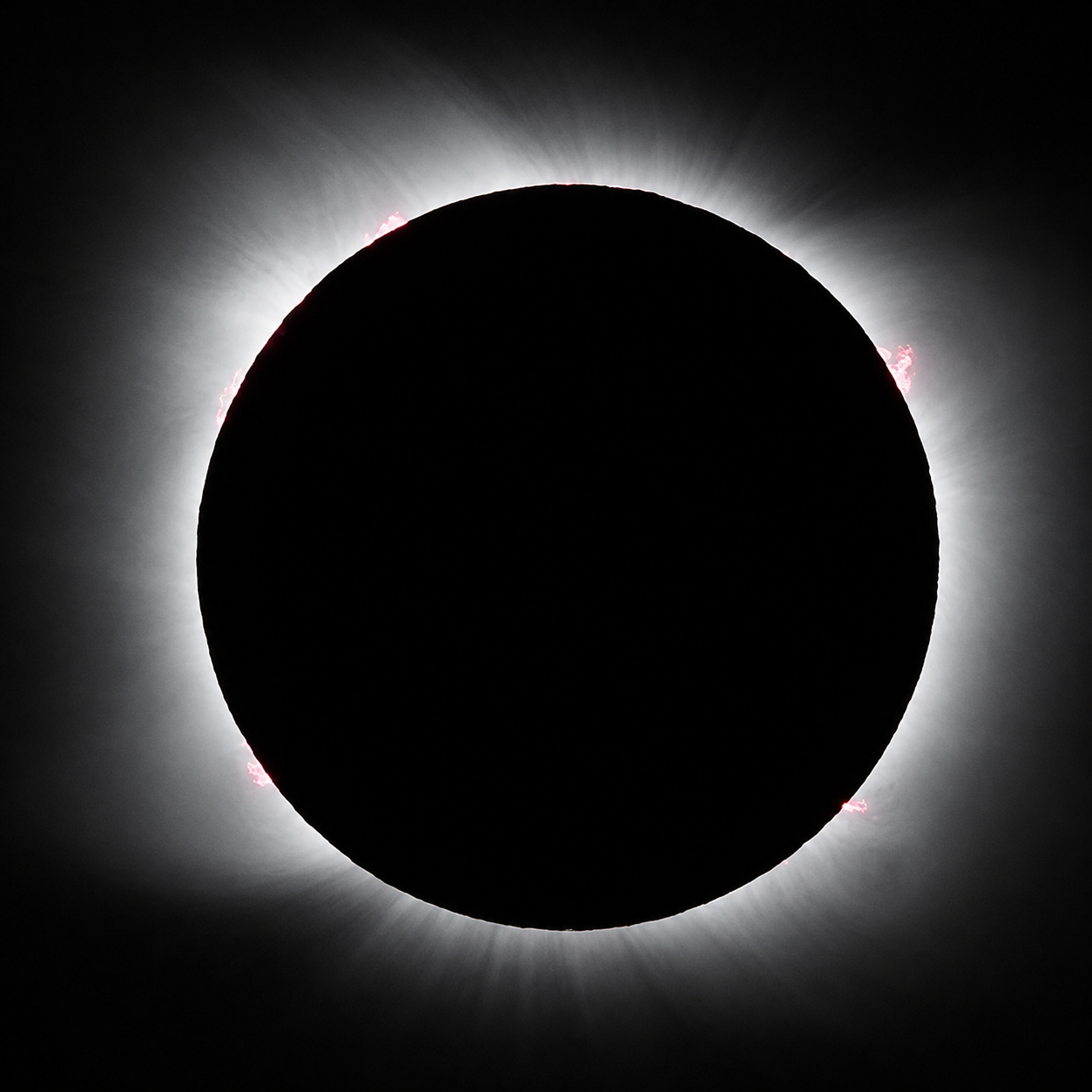
For a few breathtaking minutes, daytime turns into twilight. Birds grow quiet, temperatures begin to drop, and a brilliant ring of light appears around a dark circle hanging in the sky. Across history, these rare moments have inspired fear, wonder, myths, and scientific discovery. To ancient civilizations, a solar eclipse often seemed like a supernatural event. Today, we understand that it is one of the most beautiful demonstrations of the precise motions of the Earth, the Moon, and the Sun.
A solar eclipse is not magic. It is not a sign or an omen. It is a perfectly natural astronomical event that occurs when the Moon passes directly between the Earth and the Sun, temporarily blocking some or all of the Sun’s light.
Although this explanation sounds simple, the conditions required for a solar eclipse are surprisingly exact. The Earth orbits the Sun, the Moon orbits the Earth, and all three bodies are constantly moving through space. Yet total solar eclipses happen only occasionally because everything has to line up with extraordinary precision.
Understanding what causes solar eclipses reveals not only how our solar system works but also why these events remain among the most spectacular sights in nature.
Understanding the Sun, Earth, and Moon
To understand solar eclipses, it helps to picture the Earth and the Moon as dancers moving around a brilliant spotlight.
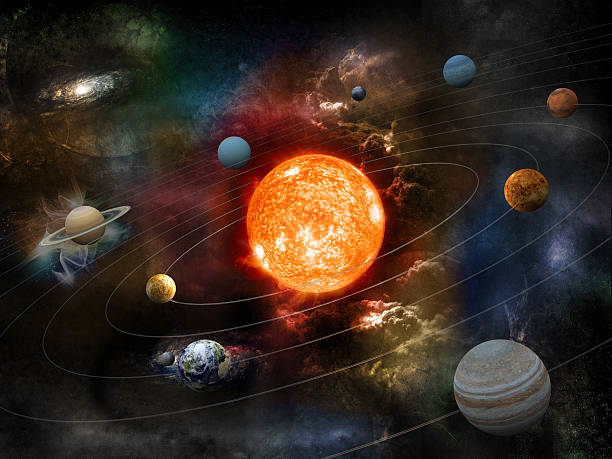
The Sun sits at the center of our solar system, producing enormous amounts of light and heat through nuclear fusion deep inside its core. The Earth travels around the Sun once every year, while the Moon circles the Earth approximately once every 27.3 days relative to the distant stars, or about every 29.5 days from one new moon to the next.
The Moon does not produce its own light. It shines because it reflects sunlight toward Earth. As the Moon moves around our planet, we see different portions of its sunlit half, creating the familiar phases of the Moon.
Most of the time, the Moon appears somewhere beside the Sun in our sky rather than directly in front of it. Only on rare occasions do their paths align perfectly enough for a solar eclipse to occur.
The Basic Cause of a Solar Eclipse
A solar eclipse happens when the Moon moves directly between the Earth and the Sun.
During this alignment, the Moon blocks sunlight from reaching part of the Earth’s surface. People standing inside the Moon’s shadow experience the eclipse.
The Moon may cover only a small portion of the Sun or it may hide the Sun almost completely, depending on the exact positions of the three bodies.
The key idea is remarkably simple: the Moon casts a shadow on Earth.
Just as your body creates a shadow when standing in sunlight, the Moon also casts a shadow as sunlight shines around it. Whenever that shadow falls on Earth, observers within it witness a solar eclipse.
Why Solar Eclipses Do Not Happen Every Month
Since the Moon passes between the Earth and the Sun during every new moon, many people wonder why solar eclipses are not monthly events.
The answer lies in the tilt of the Moon’s orbit.
The Moon’s orbital plane is tilted by about 5 degrees relative to Earth’s orbit around the Sun. This small angle makes a huge difference.
Most months, when the Moon reaches the new moon phase, it passes slightly above or slightly below the Sun from our perspective. Its shadow misses the Earth entirely.
Only when the new moon occurs near one of the two points where the Moon’s orbit crosses Earth’s orbital plane—called the orbital nodes—do the Sun, Moon, and Earth line up closely enough for a solar eclipse.
This precise alignment is why solar eclipses are relatively rare.
Why a New Moon Is Necessary
Every solar eclipse occurs during the new moon phase.
During a new moon, the side of the Moon facing Earth is not illuminated by the Sun, making the Moon difficult or impossible to see against the bright daytime sky.
This phase places the Moon roughly between the Earth and the Sun. However, being a new moon alone is not enough.
The Moon must also be positioned at exactly the right place in its tilted orbit so that its shadow reaches Earth.
Every solar eclipse is therefore a new moon, but not every new moon produces a solar eclipse.
The Moon’s Shadow
The Moon’s shadow is not uniform. It consists of different regions, each producing a different kind of eclipse.
The darkest central part of the shadow is called the umbra. Anyone standing inside the umbra experiences the Sun being completely hidden by the Moon during a total solar eclipse.
Surrounding the umbra is a lighter region called the penumbra. Observers inside the penumbra see only part of the Sun blocked, resulting in a partial solar eclipse.
There is also a region called the antumbra, where the Moon appears slightly too small to cover the Sun completely. Observers there see a bright ring of sunlight surrounding the Moon, producing an annular eclipse.
These different shadow regions explain why people in different locations on Earth see different versions of the same eclipse.
Why the Moon Can Cover the Sun
One of the most remarkable facts about nature is that the Moon can almost perfectly cover the Sun, even though the Sun is about 400 times wider than the Moon.
This seems impossible until distances are considered.
The Sun is also about 400 times farther from Earth than the Moon is.
Because of this extraordinary coincidence, the Sun and Moon appear almost the same size in Earth’s sky.
This allows the Moon to cover the Sun almost perfectly during total solar eclipses.
Few known places in the universe are thought to experience eclipses that look quite like those seen from Earth.
Total Solar Eclipses
A total solar eclipse is among the most awe-inspiring events in astronomy.
During totality, the Moon completely blocks the Sun’s bright surface, known as the photosphere.
The sky becomes dramatically darker, often resembling deep twilight.
Bright stars and planets may become visible.
The Sun’s outer atmosphere, called the corona, appears as delicate white streamers extending into space.
This glowing corona is usually hidden by the Sun’s intense brightness and can be seen clearly only during totality or with specialized instruments called coronagraphs.
Totality usually lasts only a few minutes, making every total solar eclipse an unforgettable experience.
Partial Solar Eclipses
In a partial solar eclipse, the Moon covers only part of the Sun.
The Sun appears as though someone has taken a bite from its edge.
The amount covered depends on the observer’s location relative to the Moon’s shadow.
Even if most of the Sun is covered, daylight usually remains surprisingly bright because the Sun is extraordinarily luminous.
Unlike a total eclipse, observers never see the corona during a partial eclipse because the uncovered portion of the Sun remains overwhelmingly bright.
Annular Solar Eclipses
The Moon’s orbit around Earth is not perfectly circular.
Sometimes the Moon is slightly farther away from Earth than usual.
When this happens, it appears slightly smaller in the sky.
If a solar eclipse occurs while the Moon is farther away, it cannot completely cover the Sun.
Instead, a brilliant ring of sunlight remains visible around the Moon.
This spectacular event is called an annular solar eclipse, often nicknamed the “Ring of Fire.”
Although visually stunning, an annular eclipse never becomes completely dark because part of the Sun always remains visible.
Hybrid Solar Eclipses
One of the rarest types of eclipses is the hybrid solar eclipse.
During these unusual events, Earth’s curved surface causes the eclipse to appear total in some locations and annular in others.
Hybrid eclipses are uncommon because they require extremely precise distances and alignments among the Earth, Moon, and Sun.
They beautifully demonstrate the complexity of orbital geometry.
Why Total Solar Eclipses Are So Rare in One Location
Although somewhere on Earth a solar eclipse occurs roughly every 18 months, seeing one from the same location is much less common.
The Moon’s umbra is relatively narrow, often only about 100 to 200 kilometers (60 to 125 miles) wide.
As the Earth rotates and the Moon moves in its orbit, this shadow races across Earth’s surface at tremendous speed.
Only people standing directly within the path of totality experience a total eclipse.
Outside that narrow path, observers see only a partial eclipse or no eclipse at all.
Because the path changes with every eclipse, a total solar eclipse may not revisit the same location for hundreds of years.
The Dance of Celestial Motion
A solar eclipse is the result of several simultaneous motions.
The Earth rotates on its axis.
The Earth orbits the Sun.
The Moon orbits the Earth.
Meanwhile, the entire solar system is moving through the Milky Way galaxy.
Despite all these motions, gravity keeps the system remarkably stable.
The predictable nature of these orbital movements allows astronomers to calculate eclipse dates centuries in advance with extraordinary accuracy.
Modern eclipse predictions can determine exactly where the Moon’s shadow will travel, often to within a fraction of a second.
Solar Eclipses and General Relativity
Solar eclipses have played an important role in scientific history.
During the total solar eclipse of 1919, astronomers measured how sunlight bent around the Sun because of gravity.
This observation confirmed one of the major predictions of Albert Einstein’s General Theory of Relativity.
The eclipse transformed Einstein into one of the world’s most famous scientists and fundamentally changed our understanding of gravity.
Solar eclipses have also helped scientists study the solar corona, discover new physical phenomena, and improve our understanding of the Sun.
How the Sun’s Corona Becomes Visible
The corona is the Sun’s outermost atmosphere.
Its temperature reaches millions of degrees Celsius, making it much hotter than the Sun’s visible surface—a mystery that scientists continue to investigate.
Normally, the bright photosphere overwhelms the faint light from the corona.
During a total solar eclipse, however, the Moon blocks the photosphere while leaving the corona visible.
The result is one of the most beautiful sights in nature: delicate glowing structures stretching far into space, shaped by the Sun’s magnetic field.
Scientists carefully study the corona because it is the source of the solar wind and many forms of space weather that can affect satellites, astronauts, and electrical power systems on Earth.
Why Solar Eclipses Are Safe Only with Proper Eye Protection
Looking directly at the Sun without proper protection can seriously damage the eyes, even during a partial eclipse.
The intense sunlight can injure the retina without causing immediate pain.
Only during the brief period of totality, when the Sun is completely covered during a total solar eclipse, is it safe to look directly at the eclipse with the naked eye. As soon as even a small portion of the Sun reappears, proper certified solar viewing glasses or other safe viewing methods must be used again.
Ordinary sunglasses do not provide adequate protection.
Safe observation is essential for enjoying these remarkable events.
How Often Do Solar Eclipses Occur?
On average, between two and five solar eclipses occur somewhere on Earth each year.
Not all of these are total eclipses.
Some are partial.
Others are annular.
Occasionally, one is hybrid.
Because most of Earth’s surface is covered by oceans, many eclipses are seen primarily over water rather than populated land.
This is another reason why witnessing a total solar eclipse can be a once-in-a-lifetime experience for many people.
Why Solar Eclipses Continue to Fascinate Us
Even in the age of satellites, powerful telescopes, and space exploration, solar eclipses remain deeply moving experiences.
They remind us that our planet is part of a dynamic cosmic system governed by precise physical laws.
For a few extraordinary moments, familiar daylight disappears, revealing a hidden face of the Sun that is usually invisible.
People who witness totality often describe it as one of the most unforgettable experiences of their lives—not because it is mysterious or supernatural, but because it allows us to see the mechanics of the universe unfolding before our eyes.
A Perfect Alignment in the Sky
Solar eclipses occur because the Moon, during its new moon phase, sometimes passes directly between the Earth and the Sun, casting its shadow onto our planet. This alignment requires remarkable precision, made possible by the tilt of the Moon’s orbit, the geometry of its shadow, and the nearly perfect apparent sizes of the Sun and Moon in Earth’s sky.
What appears to be a magical darkening of the daytime sky is, in reality, one of the most elegant demonstrations of celestial mechanics. It is a reminder that the universe operates according to consistent physical laws, where gravity, motion, light, and time combine to create events of extraordinary beauty.
Every solar eclipse tells the same timeless story—a story written not by chance, but by the graceful and predictable dance of the Earth, the Moon, and the Sun across the vastness of space.