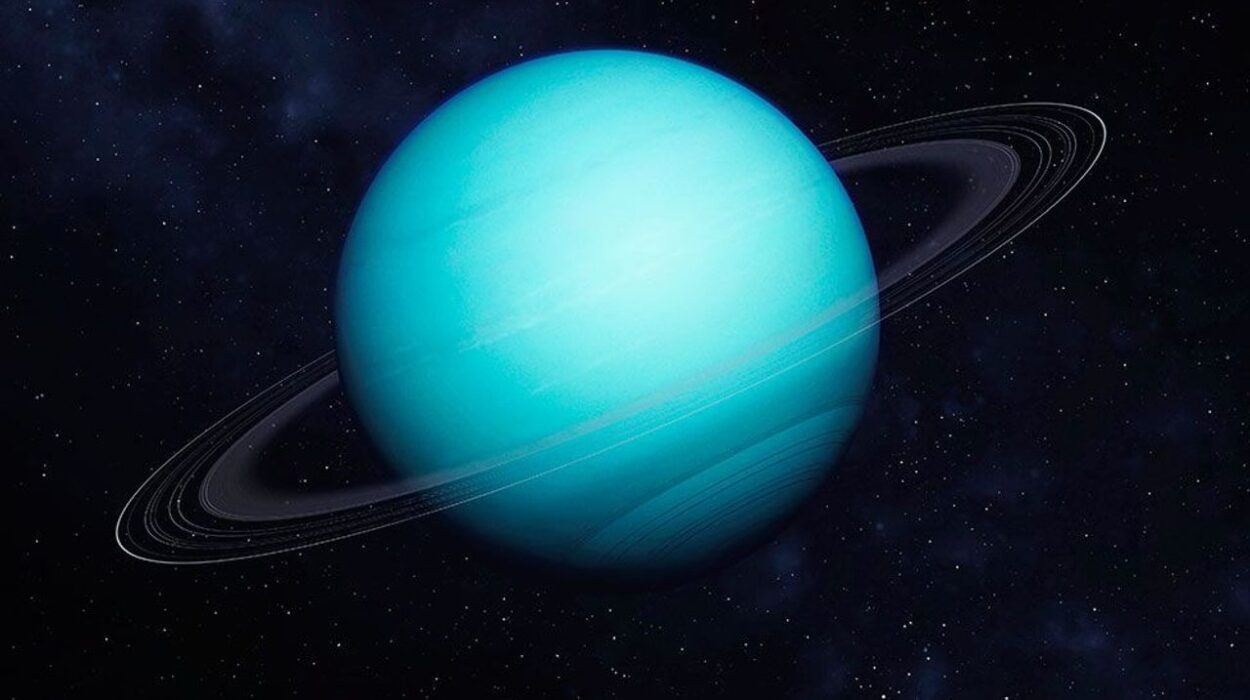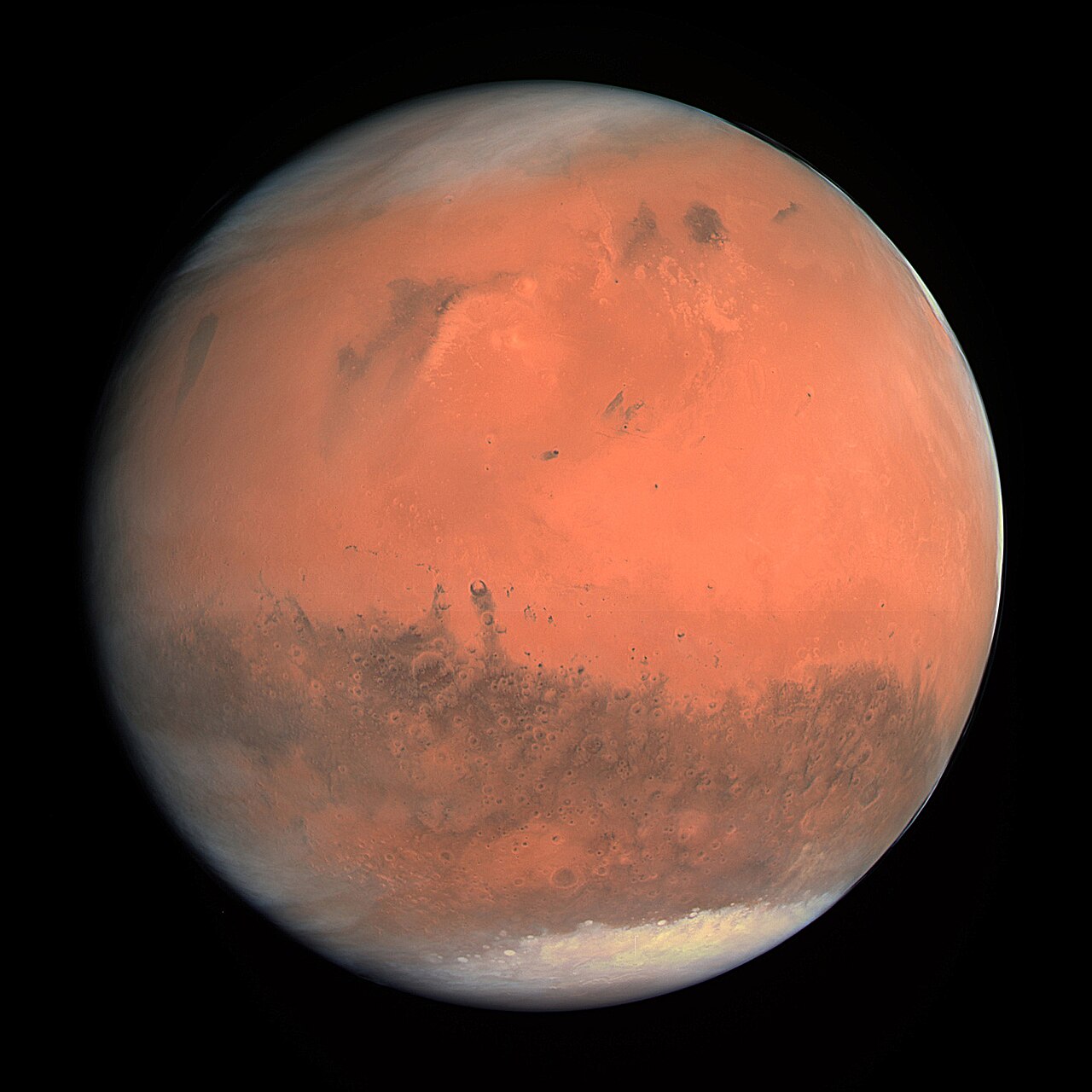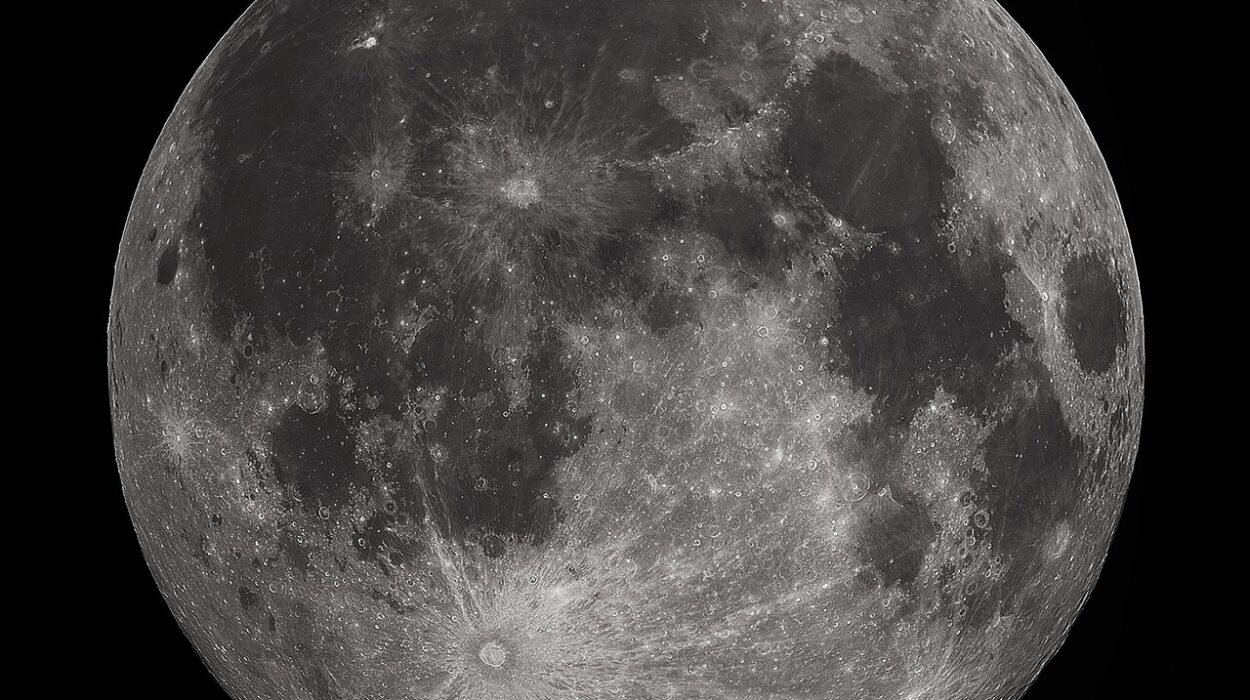
On any clear night, the sky looks calm and peaceful. The Moon quietly glows above us, stars sparkle in the distance, and a few bright planets slowly drift across the heavens. But hidden behind that peaceful view is a breathtaking reality. Every planet in our Solar System is racing through space at incredible speeds. Earth orbits the Sun at nearly 30 kilometers (18.5 miles) per second, while Mercury moves even faster, and the giant planets travel along enormous paths stretching billions of kilometers.
With so many worlds constantly moving, it is natural to wonder: Why don’t planets crash into each other?
At first glance, the Solar System may seem like a cosmic traffic jam waiting to happen. Yet for more than 4.5 billion years, the planets have continued their journeys without colliding. This remarkable stability is not due to luck. Instead, it is the result of the elegant laws of physics, especially gravity and motion, working together with astonishing precision.
Understanding why planets avoid collisions reveals not only how our Solar System works but also why life on Earth has had billions of years to evolve in a stable cosmic neighborhood.
The Solar System Is Much Bigger Than It Looks
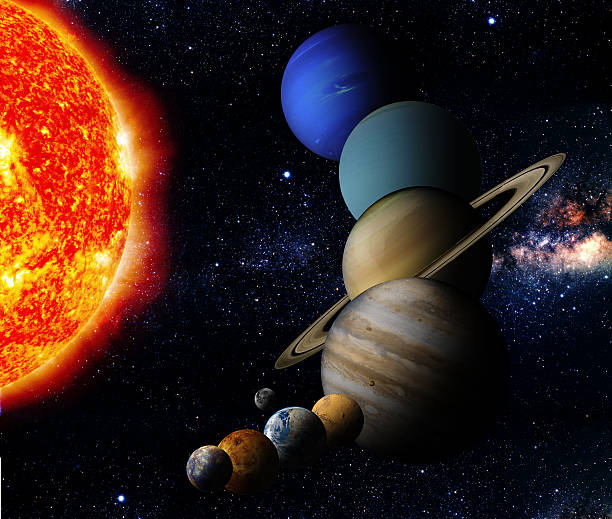
One reason people imagine planets crashing is that diagrams in books often show the Solar System as compact, with planets appearing close together.
In reality, space is almost unimaginably empty.
The distances between planets are enormous.
For example, Earth is about 150 million kilometers (93 million miles) from the Sun. Mars, our nearest planetary neighbor much of the time, is typically tens of millions of kilometers away from Earth. The giant planets lie even farther out, separated by hundreds of millions or even billions of kilometers.
If the Sun were the size of a basketball placed at the center of a large stadium, Earth would be roughly the size of a tiny peppercorn located dozens of meters away. Neptune would be several hundred meters from the Sun, and almost all the space between them would be empty.
This vast separation dramatically reduces the chance of planets coming anywhere near one another.
Gravity Is the Invisible Architect
Gravity is the force that holds the Solar System together.
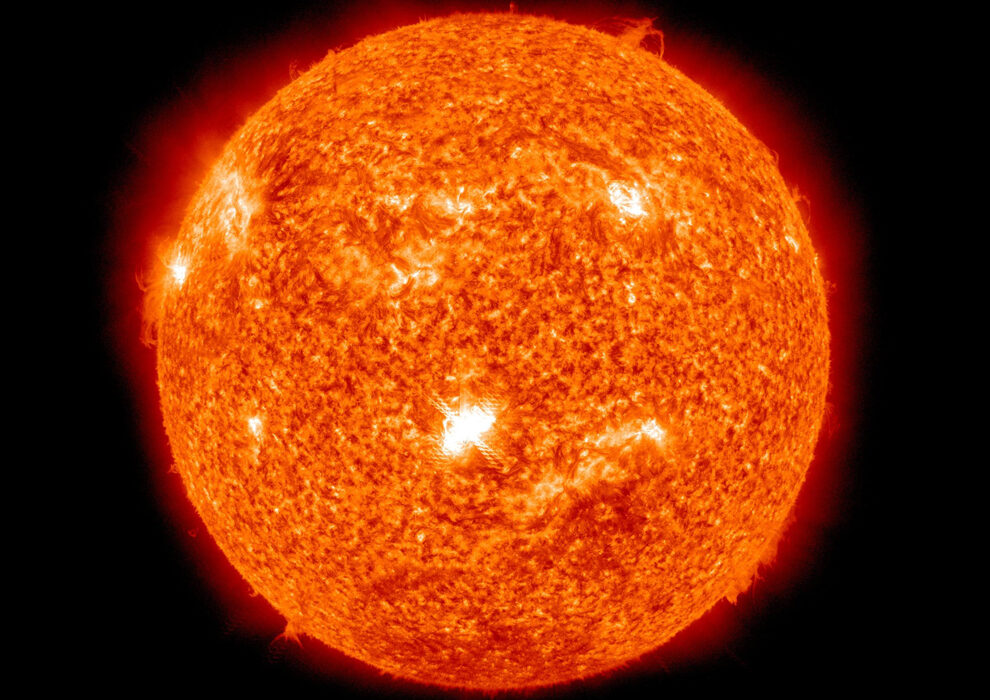
Every object with mass attracts every other object with mass. The Sun, containing about 99.8% of the Solar System’s total mass, has an overwhelming gravitational pull compared with any planet.
Instead of pulling planets toward one another, the Sun’s gravity dominates their motion.
Each planet is constantly falling toward the Sun, but because it is also moving sideways at tremendous speed, it continually misses the Sun. The result is an orbit.
This balance between forward motion and gravitational attraction keeps planets traveling around the Sun along stable paths.
Rather than wandering randomly through space, every planet follows a predictable route shaped primarily by the Sun’s gravity.
Planets Follow Stable Orbits
An orbit is not a random path.
Each planet moves along a carefully determined trajectory governed by the laws of motion and gravity.
These orbits are generally elliptical, meaning they are slightly stretched circles. This idea was first described accurately by the German astronomer Johannes Kepler in the early seventeenth century, using observations made by Tycho Brahe. Later, Isaac Newton explained why these orbits exist through his universal law of gravitation.
Because each planet has its own unique orbit, their paths do not normally cross.
Mercury remains closest to the Sun.
Venus circles farther out.
Earth follows its own orbit.
Mars travels beyond Earth.
The giant planets occupy even larger orbital paths.
Since these orbital tracks are separated, planets rarely come close enough to pose any collision risk.
Speed Keeps Planets in Balance
Motion is just as important as gravity.
Imagine tying a ball to a string and swinging it around your head. The string pulls inward while the ball’s motion keeps it moving around you.
Although planetary orbits are not exactly the same as a ball on a string, the comparison helps illustrate the balance.
Gravity pulls planets inward toward the Sun.
Their forward motion keeps them moving around it.
If Earth suddenly stopped moving sideways, it would begin falling toward the Sun.
If Earth’s speed became much greater, it could move into a different orbit or even escape the Sun’s gravitational influence.
The exact combination of gravity and velocity creates stable, long-lasting orbits.
Planetary Orbits Are Like Cosmic Lanes
One way to imagine the Solar System is to think of a giant racetrack.
Each planet has its own lane.
Cars traveling in separate lanes at different distances from the center generally do not collide because they remain within their designated paths.
Similarly, planets remain in their orbital “lanes.”
Although their speeds differ, their distances from the Sun remain remarkably consistent over long periods.
Earth never suddenly moves into Mars’ orbit, and Jupiter does not drift inward toward Venus.
The laws of gravity keep every planet following its own path.
Planets Do Influence One Another
Although the Sun dominates the Solar System, planets are not completely isolated from each other.
Every planet exerts gravitational forces on every other planet.
Jupiter, being the most massive planet, has particularly strong gravitational effects.
These interactions cause tiny changes in planetary orbits over long timescales.
Astronomers call these changes gravitational perturbations.
Fortunately, these perturbations are usually very small.
The Solar System has naturally settled into an arrangement where these gravitational influences generally maintain long-term stability rather than causing planets to collide.
Orbital Resonances Help Maintain Order
In some parts of the Solar System, gravity actually creates repeating patterns that help prevent close encounters.
These patterns are known as orbital resonances.
An orbital resonance occurs when two orbiting objects complete their orbits in a simple mathematical ratio.
For example, Neptune and Pluto are locked in a 3:2 orbital resonance.
Pluto completes two orbits around the Sun for every three completed by Neptune.
Although Pluto’s orbit crosses inside Neptune’s orbital distance, the resonance ensures that the two objects are never in the same place at the same time.
As a result, they cannot collide.
Orbital resonances are found throughout the Solar System and contribute to its long-term organization.
The Solar System Formed Into This Stable Arrangement
Today’s orderly Solar System did not always exist.
Around 4.6 billion years ago, the Solar System formed from a giant cloud of gas and dust called the solar nebula.
As gravity pulled material together, countless rocks, ice fragments, and young planetary bodies frequently collided.
These collisions were common during the Solar System’s infancy.
Some impacts built larger planets.
Others shattered smaller bodies.
The Moon itself is thought to have formed after a Mars-sized object collided with the young Earth.
Over millions of years, repeated collisions gradually cleared unstable orbits.
The remaining planets settled into configurations that could survive for billions of years.
In many ways, the Solar System became peaceful only after an early period of cosmic chaos.
Space Is Surprisingly Empty
Movies often portray spacecraft weaving through dense asteroid fields filled with giant rocks.
Reality is very different.
Even within the asteroid belt between Mars and Jupiter, objects are separated by vast distances.
Although millions of asteroids exist there, the average distance between large asteroids is often hundreds of thousands of kilometers.
Spacecraft have crossed the asteroid belt many times without difficulty.
The emptiness of space greatly reduces opportunities for large objects to collide.
The same principle applies to planets.
They are tiny compared with the immense volume of space they occupy.
Could Planetary Collisions Ever Happen?
Although planetary collisions are extremely unlikely today, they are not impossible in the universe.
Astronomers have observed evidence of collisions in young planetary systems around other stars.
Some exoplanetary systems appear far less stable than our own.
Within our Solar System, computer simulations suggest that the planets are likely to remain stable for billions of years.
However, over incredibly long timescales, gravitational interactions can slowly alter planetary orbits.
Some simulations indicate that Mercury’s orbit has a small chance of becoming unstable several billion years from now. If that happened, Mercury could potentially collide with Venus or even the Sun, though the probability is very low.
For Earth and the other major planets, current research indicates that the Solar System is expected to remain dynamically stable until long before the Sun reaches the end of its life as a main-sequence star.
What About Asteroids and Comets?
While planets rarely collide, smaller objects sometimes do.
Asteroids and comets can have more irregular orbits.
Occasionally, gravitational interactions with planets change their trajectories.
Some are redirected toward Earth.
Evidence of these impacts is preserved in craters across the Moon, Mars, Mercury, and many other worlds.
Earth’s atmosphere protects us from countless tiny meteoroids every day.
Larger impacts are much rarer, but they have played important roles in Earth’s history, including the asteroid impact about 66 million years ago that contributed to the mass extinction of non-avian dinosaurs.
Unlike planets, smaller bodies can have orbits that intersect those of planets.
Jupiter Acts as a Gravitational Giant
Jupiter plays an especially important role in shaping the Solar System.
With more than twice the mass of all the other planets combined, its enormous gravity influences countless asteroids and comets.
Sometimes Jupiter captures or redirects these objects.
Sometimes it ejects them entirely from the Solar System.
In other cases, its gravity can send objects inward toward the inner planets.
Overall, Jupiter has had a profound influence on the architecture and long-term evolution of the Solar System.
Its gravitational presence helps shape the motions of countless smaller bodies.
The Laws of Physics Keep Predicting Planetary Motion
One of the greatest achievements in science is the ability to predict where planets will be years, decades, or even centuries into the future.
Astronomers use the laws of gravity, motion, and advanced computer models to calculate planetary positions with extraordinary accuracy.
Space agencies rely on these calculations to send spacecraft across billions of kilometers.
Missions to Mars, Jupiter, Saturn, and beyond succeed because planetary motions are highly predictable.
If planetary orbits were chaotic, such missions would be nearly impossible.
Instead, the Solar System behaves with remarkable consistency.
Our Solar System Is Not Perfectly Static
Although the planets avoid collisions, the Solar System is constantly changing in subtle ways.
The Moon slowly moves away from Earth by about 3.8 centimeters (1.5 inches) each year due to tidal interactions.
Planetary rotations gradually change.
Asteroids occasionally collide.
Comets lose material as they pass near the Sun.
Even the Sun itself evolves over time.
These changes happen slowly, but they remind us that the Solar System is a dynamic place rather than a frozen snapshot.
Lessons From Other Planetary Systems
Since the 1990s, astronomers have discovered thousands of planets orbiting other stars.
Some of these planetary systems look very different from ours.
Scientists have found giant planets orbiting extremely close to their stars, planets with highly elongated orbits, and systems where gravitational interactions appear much more intense.
Studying these distant worlds helps researchers understand why our own Solar System became so stable.
It also reveals that stable planetary systems like ours are only one of many possible outcomes of planet formation.
Why Earth Has Been Safe for So Long
The long-term stability of Earth’s orbit has been essential for life.
Because Earth has remained in a relatively stable orbit around the Sun for billions of years, temperatures have stayed within a range that allows liquid water to exist on the planet’s surface.
This stable environment gave life enough time to evolve from simple microorganisms into the astonishing diversity of organisms we see today.
Had Earth’s orbit changed dramatically or if frequent planetary collisions occurred, the history of life might have been very different.
The calm cosmic neighborhood we enjoy today is one reason our planet has remained habitable for such an extraordinary span of time.
The Beautiful Balance of the Solar System
The Solar System may appear quiet, but it is actually a magnificent cosmic dance performed at extraordinary speeds. Every planet is constantly moving, guided by gravity, momentum, and the fundamental laws of physics. Each world follows its own carefully balanced orbit, separated by immense distances and governed by the Sun’s overwhelming gravitational influence.
Planets do not avoid collisions because they are somehow steering away from one another. They avoid collisions because the Solar System naturally settled into stable orbital arrangements after billions of years of evolution. Gravity, motion, orbital resonances, and the vast emptiness of space work together to create one of nature’s most elegant systems.
The next time you look up at the night sky, remember that every planet is racing through space faster than most of us can imagine. Yet despite these incredible speeds, they continue their graceful journeys with remarkable precision—a timeless celestial dance that has endured for billions of years and continues to unfold above us every single night.