Imagine being able to correct a spelling mistake in a book with incredible precision. Instead of rewriting the entire page, you find the exact letter that is wrong, erase it, and replace it with the correct one. This simple idea captures the essence of CRISPR technology, one of the most remarkable scientific breakthroughs of the twenty-first century. Often described as a revolutionary gene-editing tool, CRISPR allows scientists to make precise changes to the DNA of living organisms.
From treating inherited diseases to developing crops that can better withstand drought, CRISPR has opened possibilities that once belonged only to science fiction. Yet despite its extraordinary potential, the technology is built on a surprisingly natural process that evolved in bacteria billions of years ago. Understanding how CRISPR works begins with understanding the language of life itself.
Understanding DNA: The Instruction Manual of Life
Every living organism carries a set of instructions that tells its cells how to grow, function, and reproduce. These instructions are stored in deoxyribonucleic acid (DNA).
DNA is often compared to a blueprint or an instruction manual, but it is even more remarkable than either. Every human cell contains about two meters of DNA tightly packed inside a microscopic nucleus. This DNA is organized into chromosomes, which contain thousands of genes. Each gene carries instructions for making proteins, the molecules responsible for nearly every process in the body.
The DNA molecule has a famous double-helix structure, resembling a twisted ladder. The sides of the ladder are made of sugar and phosphate molecules, while the rungs consist of four chemical bases known by the letters A, T, C, and G. The specific order of these bases forms the genetic code.
Just as changing a single letter in a sentence can alter its meaning, changing a single DNA base can sometimes change how a gene functions. Some of these changes, known as mutations, are harmless, while others can lead to inherited diseases.
CRISPR technology gives scientists a way to find these changes and, in many cases, modify them.
What Is CRISPR?
CRISPR stands for Clustered Regularly Interspaced Short Palindromic Repeats. Although the name sounds highly technical, it refers to a specific pattern found in the DNA of many bacteria and archaea.
Scientists first noticed these unusual repeating DNA sequences in bacteria during the late twentieth century. At first, no one understood their purpose. Eventually, researchers discovered that these repeated sequences were part of a sophisticated immune system that bacteria use to defend themselves against viruses.
This discovery completely transformed biology.
Instead of relying on antibodies like humans do, bacteria keep tiny pieces of DNA from viruses that have previously attacked them. These viral DNA fragments act like molecular “memory cards,” allowing bacteria to recognize the same virus if it attacks again.
When the virus returns, the bacterial cell quickly identifies it and destroys its genetic material before the infection can spread.
This natural defense system became the foundation for modern CRISPR gene editing.
How Bacteria Defend Themselves
Viruses constantly attack bacteria. These viruses, called bacteriophages, inject their genetic material into bacterial cells and attempt to hijack them to produce more viruses.
To survive, bacteria evolved an extraordinary defense strategy.
When a bacterium survives an initial viral attack, it captures a small piece of the invading virus’s DNA and inserts it into its own genome within the CRISPR region.
These stored viral DNA fragments become a genetic record of past infections.
If the same virus attacks again, the bacterium copies one of these stored DNA sequences into a small RNA molecule known as CRISPR RNA (crRNA).
The crRNA then guides a specialized protein to the matching viral DNA.
Once the target is found, the protein cuts the viral DNA into pieces, preventing the virus from reproducing.
This process acts much like a biological security system that can recognize and eliminate familiar invaders.
The Discovery That Changed Modern Biology
The realization that bacteria possessed a programmable DNA-cutting system fascinated scientists.
Researchers wondered whether this natural mechanism could be adapted to edit genes in other organisms.
In 2012, scientists demonstrated that one version of the CRISPR system could be reprogrammed to target virtually any desired DNA sequence.
Instead of recognizing only viral DNA, researchers could design the system to locate almost any gene inside plants, animals, or human cells.
This breakthrough transformed CRISPR into one of the most powerful tools in modern biology.
Since then, laboratories around the world have adopted CRISPR for research in genetics, medicine, agriculture, and biotechnology.
Meet Cas9: The Molecular Scissors
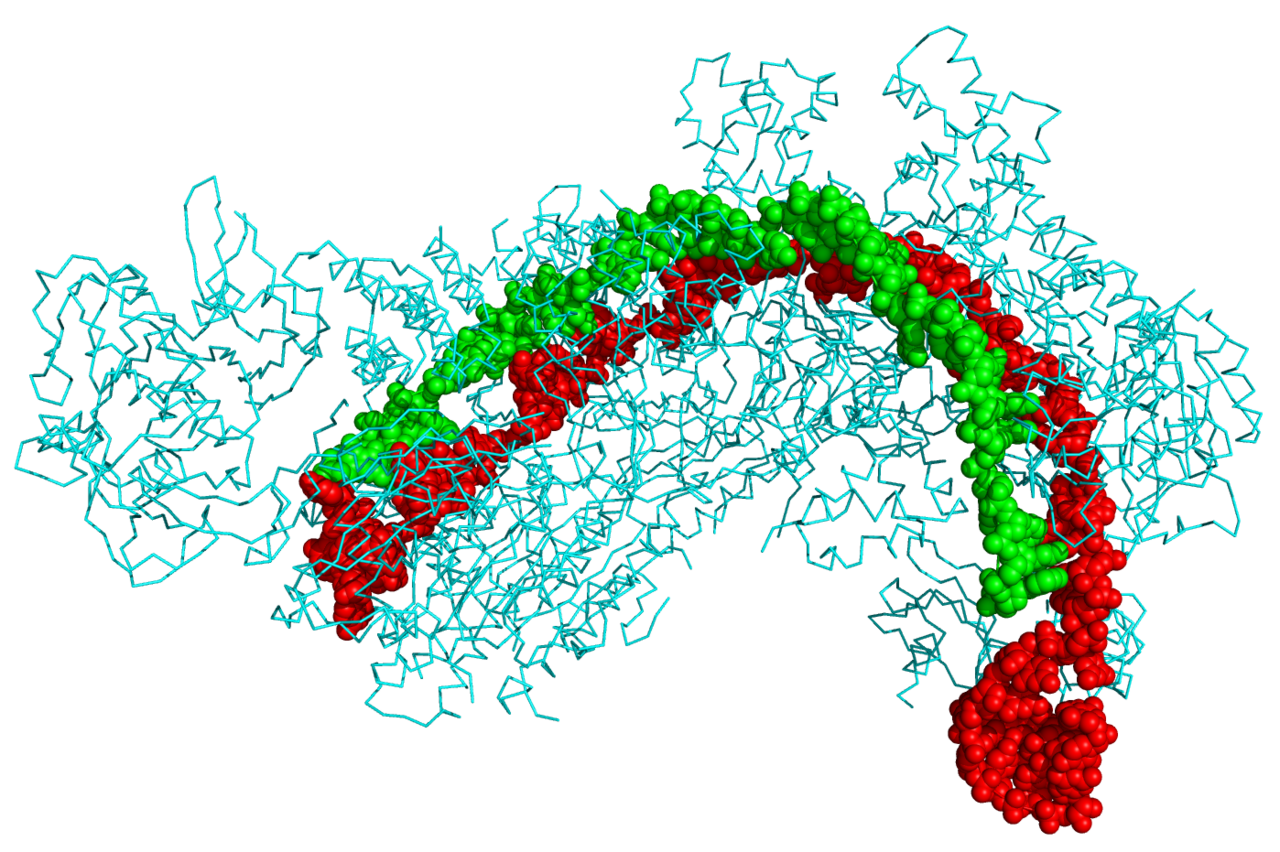
One of the most widely used CRISPR systems relies on a protein called Cas9.
Cas9 functions like a pair of molecular scissors.
On its own, Cas9 cannot identify which DNA to cut. It needs instructions.
Those instructions come from a specially designed piece of RNA called the guide RNA (gRNA).
The guide RNA contains a sequence that matches the target DNA scientists want to edit.
Together, the guide RNA and Cas9 form a powerful gene-editing machine.
The guide RNA directs Cas9 to the correct location in the genome, while Cas9 performs the actual cutting.
This partnership makes CRISPR both flexible and highly precise.
How Scientists Program CRISPR
One of the greatest strengths of CRISPR technology is its programmability.
Scientists first identify the DNA sequence they wish to modify.
Next, they design a guide RNA that matches that specific DNA sequence.
The guide RNA is then combined with the Cas9 protein.
When introduced into a cell, the guide RNA searches through billions of DNA letters until it finds the matching sequence.
Once the match is located, Cas9 attaches to the DNA and makes a cut across both strands of the DNA double helix.
This cut is the beginning—not the end—of the editing process.
What Happens After DNA Is Cut?
Cells cannot tolerate broken DNA for very long.
As soon as DNA is cut, the cell activates its natural repair systems.
Scientists take advantage of these repair mechanisms to edit genes.
One repair process simply reconnects the broken DNA ends. This repair is often imperfect and may insert or remove a few DNA bases. Such small changes can disable a gene, making this method useful for studying gene function or preventing harmful genes from working.
Another repair pathway can make more precise changes if scientists provide a DNA template containing the desired sequence. In this case, the cell may copy the new genetic information into the repaired DNA.
In this way, CRISPR can remove, replace, or insert specific genetic sequences.
Why Guide RNA Is So Important
The guide RNA determines where CRISPR works.
It acts much like a GPS navigation system.
Instead of directing a driver to a street address, the guide RNA directs Cas9 to a precise location within the genome.
Even though the human genome contains about 3.2 billion DNA base pairs, the guide RNA helps Cas9 locate the intended target with remarkable accuracy.
This targeting ability makes CRISPR far more efficient than earlier gene-editing technologies.
The Role of PAM Sequences
Cas9 does not cut every DNA sequence that matches the guide RNA.
Before cutting, Cas9 also looks for a short nearby DNA sequence called the Protospacer Adjacent Motif (PAM).
The PAM acts like a safety checkpoint.
If the PAM sequence is absent, Cas9 usually will not cut the DNA.
This extra requirement helps bacteria distinguish their own DNA from invading viral DNA and also improves the precision of CRISPR gene editing in laboratories.
Can CRISPR Make Mistakes?
Although CRISPR is highly accurate, it is not perfect.
Sometimes the guide RNA may bind to DNA sequences that closely resemble the intended target.
These unintended cuts are called off-target effects.
Scientists have worked extensively to reduce these errors by developing improved guide RNA designs and engineering more accurate versions of Cas proteins.
Modern CRISPR systems are significantly more precise than the earliest versions, but researchers continue refining the technology to improve safety, especially for medical treatments.
Beyond Cas9: New Gene-Editing Tools
Cas9 is only one member of a much larger family of CRISPR-associated proteins.
Scientists have discovered several alternatives with unique abilities.
Some proteins target RNA instead of DNA.
Others cut DNA in different ways or recognize different genetic sequences.
These newer tools provide researchers with greater flexibility for studying genes and developing therapies.
The expanding CRISPR toolbox continues to improve the accuracy and range of genetic editing.
Base Editing: Changing One Letter at a Time
Traditional CRISPR works by cutting DNA.
More recently, scientists developed base editing, which allows certain DNA letters to be changed without cutting both DNA strands.
Instead of breaking the DNA completely, base editors chemically convert one DNA base into another.
This approach is especially useful because many inherited diseases result from a single incorrect DNA letter.
By correcting only that one letter, scientists may someday treat certain genetic disorders while reducing unwanted changes elsewhere in the genome.
Prime Editing: A More Flexible Approach
Another important advance is prime editing.
Prime editing combines a modified Cas protein with additional molecular machinery that can write new genetic information directly into DNA.
Unlike standard CRISPR editing, prime editing can perform a wider variety of precise genetic corrections without requiring double-strand DNA breaks in many applications.
Because of its versatility, many researchers consider prime editing one of the most promising next-generation gene-editing technologies.
How CRISPR Is Transforming Medicine
Perhaps the most exciting application of CRISPR lies in medicine.
Many diseases result from mutations in a single gene.
If those mutations can be corrected, the disease itself may be treated at its source rather than merely managing its symptoms.
Researchers are investigating CRISPR-based approaches for inherited blood disorders, certain forms of blindness, immune disorders, and some cancers.
In some treatments, doctors remove a patient’s cells, edit them in the laboratory, carefully test them, and then return the modified cells to the patient.
This approach reduces risk because scientists can examine the edited cells before they are used.
Although not every disease can currently be treated with CRISPR, progress continues rapidly.
CRISPR and Cancer Research
Cancer develops when genetic changes allow cells to grow uncontrollably.
CRISPR helps scientists study these genetic changes with extraordinary precision.
Researchers can switch specific genes on or off to understand how tumors develop.
CRISPR is also being investigated as a way to improve immune cells so they can better recognize and attack cancer cells.
While many of these approaches remain under clinical investigation, they represent an exciting area of biomedical research.
Improving Agriculture
CRISPR is changing agriculture as well.
Scientists can edit crop genes to improve resistance to diseases, pests, drought, and extreme temperatures.
Some edited crops produce higher yields or require fewer chemical pesticides.
Others may have improved nutritional qualities.
Because CRISPR can make precise genetic changes, plant breeding that once required many years can sometimes be accelerated.
Researchers continue studying these crops carefully to ensure their safety and effectiveness.
Helping Protect the Environment
CRISPR may also contribute to environmental conservation.
Scientists are exploring ways to protect endangered species, reduce invasive organisms, and better understand ecosystems.
Researchers are studying how gene editing might help certain plants survive changing climates or make microorganisms better able to break down environmental pollutants.
These possibilities remain active areas of scientific investigation, and each application requires careful ecological assessment.
Ethical Questions Surrounding CRISPR
The power to edit DNA naturally raises important ethical questions.
Most scientists support using CRISPR to treat serious diseases when it can be done safely.
However, editing DNA that can be inherited by future generations raises additional scientific, ethical, and societal concerns.
Questions arise about safety, fairness, consent, and how the technology should be regulated.
International scientific organizations and governments continue developing guidelines for responsible research and clinical use.
Ethical discussions are considered an essential part of CRISPR’s future.
The Importance of Safety
Before any CRISPR-based treatment reaches patients, it undergoes years of laboratory research, animal studies, and carefully monitored clinical trials.
Scientists evaluate whether the editing works as intended, whether unintended changes occur, and whether the treatment provides meaningful health benefits.
Regulatory agencies review the evidence before approving new therapies.
This cautious process helps ensure that gene-editing technologies meet high standards of safety and effectiveness.
The Future of CRISPR Technology
CRISPR technology is advancing at an extraordinary pace.
Researchers continue discovering new Cas proteins, improving editing accuracy, and developing methods that are faster, safer, and more precise.
Future gene-editing systems may allow scientists to repair genetic diseases more efficiently, engineer crops that are more resilient to environmental challenges, and deepen our understanding of biology itself.
At the same time, responsible oversight will remain essential as society decides how best to use these powerful tools.
Why CRISPR Matters
CRISPR technology has fundamentally changed the way scientists study life. What began as a natural bacterial defense system has become one of the most influential tools in modern biology. By allowing researchers to edit DNA with remarkable precision, CRISPR has accelerated discoveries across genetics, medicine, agriculture, and biotechnology.
Although challenges remain, including improving precision and addressing ethical concerns, CRISPR represents a major step forward in our ability to understand and modify the genetic instructions that shape living organisms. Rather than simply treating symptoms, it offers the possibility of addressing certain diseases at their genetic roots.
The story of CRISPR is also a reminder that some of the greatest scientific breakthroughs come from studying nature itself. A simple defense mechanism evolved by microscopic bacteria has become a transformative technology with the potential to improve human health, strengthen food security, and expand our understanding of life. As research continues, CRISPR is likely to remain at the forefront of scientific innovation, opening new possibilities while challenging humanity to use this remarkable technology wisely and responsibly.