Imagine if scientists could correct a harmful genetic mutation the way a writer fixes a typo in a document. For decades, this idea belonged more to science fiction than reality. Today, thanks to a remarkable technology called CRISPR, editing DNA has become faster, more accurate, and more accessible than ever before. What once seemed impossible is now helping researchers better understand diseases, improve crops, develop new medicines, and explore treatments for inherited genetic disorders.
CRISPR has transformed biology in much the same way that the microscope transformed medicine centuries ago. It has opened a new chapter in science by giving researchers an unprecedented ability to study and modify genes with remarkable precision. Although much remains to be learned about its long-term applications and limitations, CRISPR has already become one of the most influential scientific breakthroughs of the 21st century.
Understanding CRISPR begins with understanding one of the most fundamental molecules in life: DNA.
Understanding DNA: The Blueprint of Life
Every living organism, from the smallest bacterium to the largest whale, carries genetic information in the form of DNA, or deoxyribonucleic acid. DNA acts as the biological instruction manual that tells cells how to grow, function, repair themselves, and reproduce.
Within DNA are thousands of genes, each containing instructions for making proteins. Proteins perform nearly every essential job in the body, from building muscles and transporting oxygen to fighting infections and regulating chemical reactions.
Although humans share more than 99% of their DNA with one another, tiny differences in genetic sequences contribute to the unique characteristics of every individual. Sometimes, however, changes called mutations occur in genes. Some mutations have little or no effect, while others can cause inherited diseases or increase the risk of certain medical conditions.
For many years, scientists dreamed of correcting harmful mutations directly within DNA. CRISPR has brought that dream much closer to reality.
What Does CRISPR Mean?
The word CRISPR stands for Clustered Regularly Interspaced Short Palindromic Repeats. Although the name sounds highly technical, it describes a unique pattern of repeated DNA sequences found in the genomes of many bacteria and archaea.
These repeating DNA segments were first noticed during genetic studies in the late 1980s, but their purpose remained a mystery for many years. Scientists eventually discovered that CRISPR is not simply an unusual genetic pattern—it is part of a sophisticated immune system that bacteria use to defend themselves against viruses.
This natural defense mechanism became the foundation of one of the most powerful tools ever developed for gene editing.
How Scientists Discovered CRISPR
The story of CRISPR is one of curiosity and unexpected discovery.
Researchers studying bacterial DNA noticed repeating genetic sequences separated by unique pieces of DNA. At first, these unusual patterns seemed to have no obvious purpose.
Over time, scientists realized that the unique DNA segments matched pieces of viral DNA. This surprising observation suggested that bacteria were storing genetic “memories” of viruses that had previously attacked them.
Further research revealed that bacteria use these stored viral sequences to recognize and destroy invading viruses during future infections. Instead of relying solely on chemical defenses, bacteria possess a molecular system capable of identifying and cutting viral DNA before it can cause harm.
This discovery revealed an elegant natural defense system that had evolved over billions of years.
CRISPR as Nature’s Immune System
When a virus infects a bacterium, the bacterium may survive the attack and capture a small fragment of the virus’s DNA.
This fragment is inserted into the bacterium’s own genome within the CRISPR region.
If the same virus attacks again, the bacterium produces short RNA molecules based on these stored viral sequences. These RNA molecules guide specialized proteins to recognize matching viral DNA.
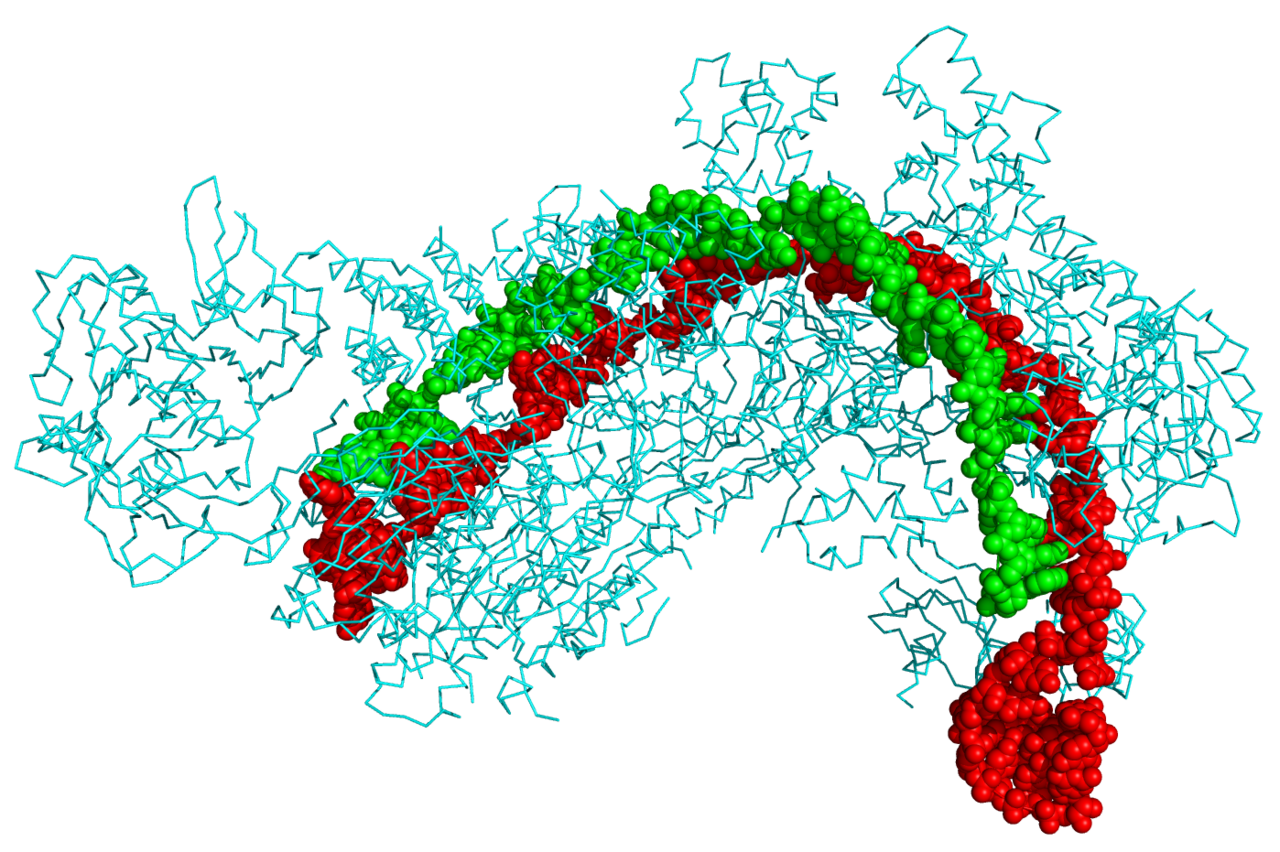
One of the most famous of these proteins is Cas9.
When Cas9 finds the matching viral DNA, it cuts the DNA, preventing the virus from reproducing and protecting the bacterium from infection.
Scientists realized that this naturally occurring system could be adapted to target almost any DNA sequence—not just viral DNA.
That realization transformed modern genetics.
What Is Gene Editing?
Gene editing refers to technologies that allow scientists to make specific changes to DNA.
Unlike older methods that often produced random changes, CRISPR enables researchers to target particular genes with remarkable precision.
Depending on the scientific goal, researchers may use CRISPR to remove a gene, disable it, repair a mutation, insert new genetic information, or study how genes function inside living cells.
Rather than changing every gene in an organism, CRISPR focuses on carefully selected DNA sequences.
This level of precision has made it an invaluable research tool.
How CRISPR-Cas9 Works
The most widely used CRISPR system combines two main components.
The first is a guide RNA, a short RNA molecule designed to match a specific DNA sequence.
The second is the Cas9 protein, an enzyme that functions like molecular scissors.
When introduced into a cell, the guide RNA directs Cas9 to the desired location within the DNA.
After locating the matching sequence, Cas9 cuts both strands of the DNA.
Once the DNA has been cut, the cell’s natural repair systems begin fixing the break.
Scientists can use this repair process in different ways. Sometimes the repair disrupts the targeted gene, effectively turning it off. In other situations, researchers provide a corrected DNA sequence that the cell can use while repairing the break, allowing a mutation to be replaced with a healthy version.
Although the process sounds straightforward, gene editing is carefully planned and tested to reduce unintended changes.
Why CRISPR Is Considered Revolutionary
Before CRISPR, gene editing technologies existed, but they were often expensive, technically difficult, and time-consuming.
CRISPR changed that dramatically.
It made gene editing faster, more flexible, and significantly easier for research laboratories around the world to use.
Because guide RNA molecules can be designed to recognize different DNA sequences, researchers can adapt the technology to investigate thousands of genes across many different organisms.
This flexibility has accelerated scientific discovery at an extraordinary pace.
CRISPR in Medical Research
One of the most exciting areas of CRISPR research involves medicine.
Many inherited diseases result from mutations in a single gene. Scientists are exploring whether correcting these mutations could treat or potentially cure certain genetic disorders.
Researchers are studying CRISPR in conditions such as sickle cell disease, beta-thalassemia, inherited eye diseases, and other genetic disorders. In some cases, CRISPR-based therapies have shown promising results in carefully designed clinical studies, although not every condition can be treated this way and long-term monitoring remains important.
CRISPR is also helping scientists better understand cancer by allowing them to investigate how specific genes influence tumor growth and responses to treatment.
Rather than replacing existing medical approaches, CRISPR is becoming an important addition to biomedical research.
Fighting Infectious Diseases
CRISPR is also being investigated as a tool against infectious diseases.
Scientists are studying ways to use CRISPR systems to detect viruses and bacteria with high sensitivity.
Some CRISPR-based diagnostic technologies can identify genetic material from pathogens quickly and accurately in laboratory settings.
Researchers are also exploring whether CRISPR might someday help combat certain viral infections by targeting viral genetic material, although these approaches remain under active investigation.
CRISPR and Agriculture
The impact of CRISPR extends far beyond medicine.
Agricultural scientists are using gene editing to develop crops with improved characteristics.
Researchers are studying plants that may better tolerate drought, resist certain diseases, or improve nutritional quality.
Gene editing may also help reduce crop losses caused by pests or changing environmental conditions.
Livestock research is also exploring genetic changes that could improve animal health or resistance to particular diseases, although such applications require careful scientific evaluation and regulatory oversight.
These advances have the potential to contribute to food security while reducing some agricultural challenges.
CRISPR in Basic Scientific Research
Perhaps the greatest contribution of CRISPR has been to scientific research itself.
Scientists routinely use CRISPR to investigate the function of genes.
By switching individual genes on or off, researchers can observe how cells respond and identify which genes contribute to normal biological processes or disease.
This approach has greatly expanded our understanding of genetics, development, neuroscience, immunology, microbiology, and many other fields.
Much of what scientists learn through CRISPR experiments lays the groundwork for future medical discoveries.
Can CRISPR Edit Human Embryos?
One of the most widely discussed aspects of CRISPR involves the possibility of editing human embryos.
Technically, CRISPR can alter DNA in embryos under certain research conditions. However, this raises complex scientific, ethical, and societal questions.
Changes made at this stage could potentially be inherited by future generations.
Because of these concerns, many countries have strict regulations governing or prohibiting the clinical use of heritable human genome editing. Scientific organizations generally emphasize that such applications require extensive evidence of safety, effectiveness, and broad ethical consideration before any clinical use.
The debate continues as technology advances.
Ethical Questions Surrounding CRISPR
Like many powerful technologies, CRISPR raises important ethical questions.
Scientists, physicians, ethicists, policymakers, and the public continue discussing how the technology should be used responsibly.
One important distinction is between editing somatic cells, which affects only the treated individual, and editing germline cells, where changes could be passed to future generations.
There are also concerns about fairness, access to treatments, unintended consequences, and the possibility of using gene editing for purposes beyond treating disease.
Responsible scientific research requires balancing innovation with careful ethical oversight.
Challenges and Limitations
Although CRISPR is remarkably powerful, it is not perfect.
One challenge involves off-target effects, where unintended sections of DNA may also be modified. Scientists have developed increasingly accurate versions of CRISPR to reduce this risk, but continued improvement remains an active area of research.
Another challenge is delivering CRISPR safely into the correct cells within the body.
Different tissues require different delivery methods, and ensuring efficient, targeted delivery remains a significant scientific challenge.
Some diseases also involve many genes or complex interactions between genes and the environment, making them much more difficult to address through gene editing alone.
These limitations remind us that CRISPR is a powerful tool, not a universal solution.
Beyond Cas9: New CRISPR Technologies
Since the development of CRISPR-Cas9, scientists have discovered and engineered additional CRISPR systems.
Some use different proteins that recognize DNA in unique ways.
Others can target RNA instead of DNA.
Researchers have also developed advanced techniques known as base editing and prime editing.
Base editing allows certain individual DNA letters to be changed without cutting both strands of DNA.
Prime editing offers another approach that can make a wider variety of precise genetic changes while reducing some types of unwanted alterations.
These innovations continue expanding the possibilities of gene editing.
CRISPR and Personalized Medicine
As scientists learn more about human genetics, CRISPR may contribute to more personalized approaches to healthcare.
Because every person’s genetic makeup is unique, future treatments may increasingly be designed around an individual’s specific mutations.
Researchers envision a future in which some therapies are tailored to the precise genetic cause of a disease rather than treating only its symptoms.
Although many challenges remain before this vision becomes widespread, CRISPR has become an important part of ongoing research in personalized medicine.
How CRISPR Is Changing Biology
Few scientific discoveries have spread through research laboratories as rapidly as CRISPR.
Scientists studying plants, animals, bacteria, fungi, viruses, and human cells all use CRISPR to answer questions that were once extremely difficult to investigate.
The technology has shortened research timelines, expanded experimental possibilities, and accelerated discoveries across countless fields of biology.
Many young scientists now learn CRISPR techniques as a routine part of modern genetic research.
Its influence continues to grow every year.
The Scientists Behind CRISPR’s Development
CRISPR emerged through the contributions of many researchers over several decades.
Important advances came from scientists studying bacterial genetics, molecular biology, microbiology, and biochemistry.
Among the researchers whose work was central to adapting CRISPR as a gene-editing tool are Jennifer Doudna and Emmanuelle Charpentier, who shared the 2020 Nobel Prize in Chemistry for their pioneering work on CRISPR-Cas9.
Their achievement built upon years of discoveries by many scientists around the world who helped reveal how the bacterial CRISPR system functions.
The story of CRISPR demonstrates how fundamental research into seemingly simple microorganisms can lead to breakthroughs with global impact.
The Future of CRISPR
The future of CRISPR is filled with possibility, but also with responsibility.
Scientists continue developing safer, more accurate, and more versatile versions of gene-editing technologies. Researchers are investigating treatments for additional genetic diseases, improving methods for delivering gene-editing tools into cells, and exploring new ways to understand biology at the molecular level.
At the same time, governments, scientific organizations, and international experts continue working to establish ethical guidelines that encourage innovation while protecting patients and society.
As research progresses, careful testing, transparency, and long-term monitoring will remain essential.
Why CRISPR Matters
CRISPR represents one of the most significant advances in modern biology because it gives scientists an unprecedented ability to study and modify genes with remarkable precision. By transforming a natural bacterial defense system into a versatile research tool, scientists have accelerated discoveries in genetics, medicine, agriculture, and biotechnology.
Although many medical applications are still under investigation and important ethical questions remain, CRISPR has already reshaped the way researchers explore the living world. It offers new opportunities to understand disease, improve crops, develop innovative therapies, and deepen our knowledge of the genetic instructions that guide every living organism.
The story of CRISPR also reminds us that extraordinary scientific breakthroughs often begin with simple curiosity. What started as an effort to understand unusual DNA sequences in bacteria has become a technology with the potential to influence medicine, agriculture, and biology for generations to come. As scientists continue to refine CRISPR and expand its capabilities, this remarkable tool will remain at the forefront of one of humanity’s greatest scientific journeys—the quest to understand and responsibly shape the code of life itself.