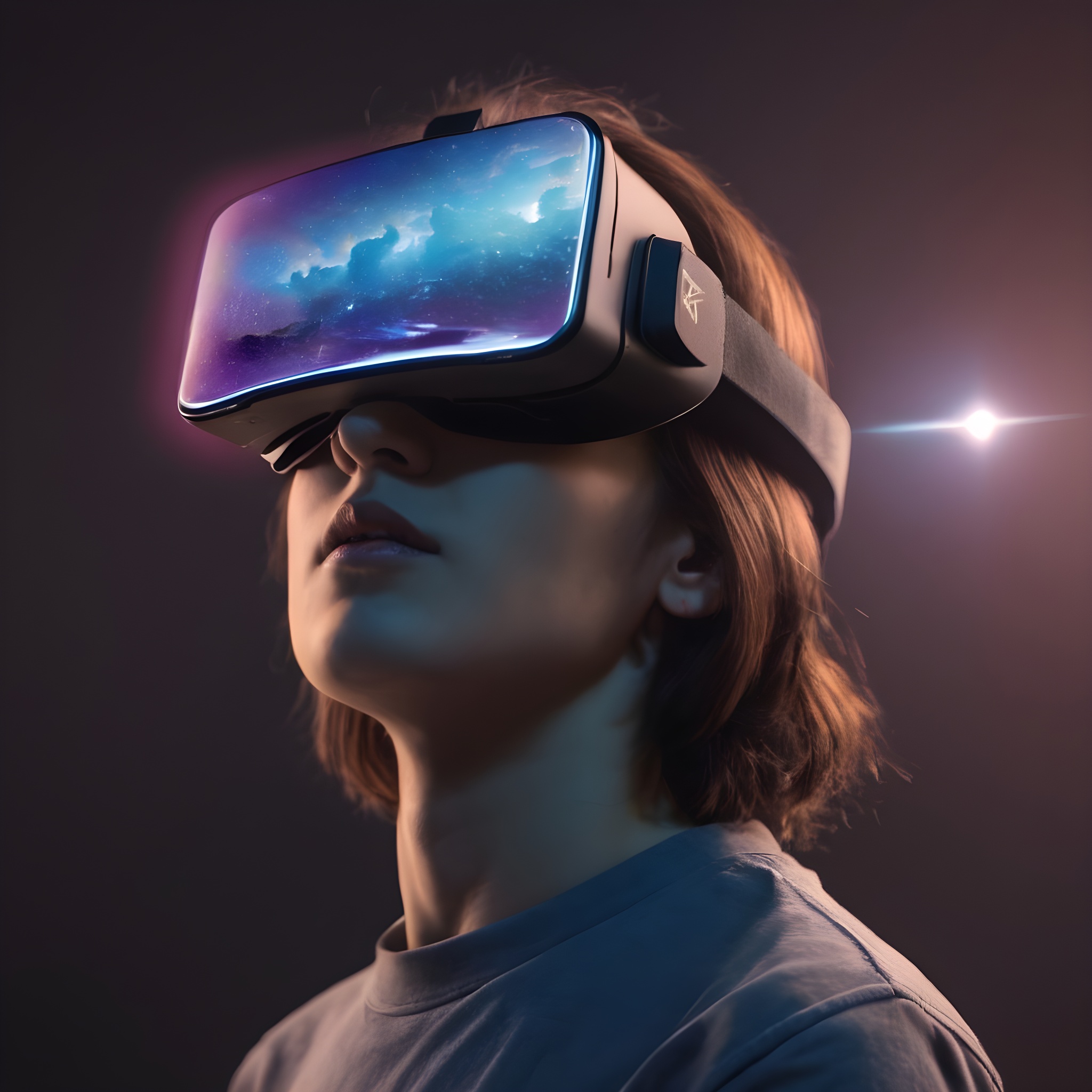
Imagine putting on a lightweight headset and suddenly standing inside an ancient Egyptian pyramid, walking across the surface of Mars, attending a business meeting with people from different continents, or learning human anatomy by examining a beating 3D heart floating in front of you. Although you may still be standing in your living room or classroom, your senses tell a completely different story. This remarkable ability to merge digital experiences with the real world is made possible by Extended Reality (XR).
Extended Reality, commonly known as XR, is transforming the way people work, learn, communicate, play, and explore information. It is no longer limited to science fiction or video games. Today, XR is being used in hospitals, factories, universities, architecture firms, military training, museums, retail stores, and even space research.
As computers become more powerful and digital displays more realistic, XR is rapidly becoming one of the most exciting technologies of the 21st century. It promises a future where digital information is not confined to flat screens but becomes part of the world around us.
What Is Extended Reality (XR)?
Extended Reality (XR) is a broad term that refers to technologies that combine or replace the physical world with computer-generated environments and digital objects. Rather than describing a single technology, XR serves as an umbrella term that includes Virtual Reality (VR), Augmented Reality (AR), and Mixed Reality (MR).
These technologies differ in how much of the real world they show and how digital content interacts with it. Some create completely virtual environments, while others add digital information to the physical world or blend the two in highly interactive ways.
The goal of XR is to create immersive experiences that make users feel connected to digital content in natural and meaningful ways.
Why Is It Called “Extended” Reality?
The word “extended” refers to extending human perception beyond ordinary reality.
Normally, we experience the world only through our natural senses. XR expands these experiences by adding virtual objects, digital information, or entirely simulated environments.
Instead of simply looking at a computer monitor or smartphone screen, users become part of the experience. They can move around, interact with digital objects, manipulate virtual tools, and communicate with others inside immersive digital spaces.
This creates experiences that feel far more realistic and engaging than traditional displays.
Understanding the Three Main Forms of XR
Extended Reality includes three closely related technologies.
Virtual Reality (VR) creates a fully digital environment that replaces the user’s view of the physical world. By wearing a VR headset, users are surrounded by computer-generated images and sounds that respond to their movements, creating the sensation of being inside another place.
Augmented Reality (AR) keeps the real world visible while placing digital objects or information on top of it. For example, a smartphone or smart glasses may display virtual directions, educational labels, or animated characters that appear to exist in the real environment.
Mixed Reality (MR) goes a step further by allowing digital objects to interact with the physical world. Virtual objects can appear attached to real tables, walls, or floors, respond to user actions, and remain in place as users move around.
Although these technologies differ, they all belong to the broader category of Extended Reality.
How Does Extended Reality Work?
Creating an immersive XR experience requires several advanced technologies working together in real time.
An XR device first collects information about the user’s surroundings or movements. Cameras, depth sensors, motion sensors, accelerometers, gyroscopes, and sometimes eye-tracking systems continuously monitor both the user and the environment.
Powerful computer processors analyze this information almost instantly.
The system then generates digital images that change according to the user’s movements. If the user turns their head, the displayed scene changes naturally. If they walk forward, the virtual environment responds accordingly.
This rapid feedback is essential. Even tiny delays between movement and visual updates can reduce realism and may cause discomfort for some users.
Modern XR systems perform these calculations many times every second to create smooth, convincing experiences.
The Hardware Behind XR
Extended Reality depends on specialized hardware designed to create immersive experiences.
Head-mounted displays are among the most recognizable XR devices. These headsets place high-resolution screens directly in front of the user’s eyes while tracking head movements.
Some systems also include handheld controllers that allow users to interact with virtual objects through buttons, triggers, and motion tracking.
Advanced devices may include hand-tracking cameras that eliminate the need for controllers entirely.
Eye-tracking technology measures where users are looking, making interactions more natural while improving graphics performance through techniques such as foveated rendering, where the highest image quality is concentrated where the eyes are focused.
Microphones capture voice commands, while speakers create realistic three-dimensional sound that changes depending on the user’s position.
Together, these components help create convincing digital experiences.
The Science Behind Immersion
One of the most fascinating aspects of XR is immersion.
Immersion refers to the feeling of being surrounded by and engaged with a digital environment.
The human brain continuously combines information from vision, hearing, balance, and movement to understand the world.
XR systems take advantage of this process by providing coordinated sensory information.
When visual images, sounds, and movements remain synchronized, the brain often accepts the virtual environment as temporarily real.
This psychological effect is sometimes called presence, meaning the feeling of actually “being there.”
Although users know intellectually that the experience is digital, their brains respond as though the environment is genuine.
Computer Graphics Make XR Possible
Modern XR depends heavily on computer graphics.
Every virtual object, building, landscape, and character must be generated by computer software.
Powerful graphics processors calculate lighting, shadows, reflections, textures, and movement in real time.
Many XR applications now use advanced rendering techniques that simulate how light behaves in the real world, producing highly realistic scenes.
Artificial intelligence is increasingly being used to generate environments, improve object recognition, enhance speech interaction, and create intelligent virtual assistants inside XR experiences.
Sensors Help XR Understand the World
Sensors are the eyes and ears of XR systems.
Cameras identify objects and recognize physical surroundings.
Depth sensors estimate distances between objects.
Motion sensors detect changes in movement.
Gyroscopes measure rotation.
Accelerometers detect acceleration and orientation.
Some devices also use LiDAR sensors, which emit laser pulses to build detailed three-dimensional maps of nearby environments.
These technologies allow digital objects to appear stable and accurately positioned within the physical world.
Without precise sensing, immersive XR experiences would not be possible.
The Role of Artificial Intelligence
Artificial intelligence plays an increasingly important role in Extended Reality.
AI helps computers recognize faces, hands, voices, gestures, furniture, and other real-world objects.
Machine learning algorithms improve speech recognition, language translation, object tracking, and environmental understanding.
Virtual assistants inside XR environments can answer questions, guide users through training exercises, and personalize educational experiences.
As AI continues advancing, XR systems are becoming smarter, more responsive, and easier to use.
Extended Reality in Education
Education is one of the fastest-growing applications of XR.
Traditional textbooks often require students to imagine concepts from diagrams and descriptions.
XR allows learners to experience these concepts directly.
Students can walk through the solar system, observe volcanic eruptions safely, explore ancient civilizations, examine molecular structures, or travel inside the human body.
Medical students can practice surgical procedures using realistic virtual patients before treating real ones.
Engineering students can assemble virtual machines.
History students can visit reconstructed archaeological sites.
These immersive experiences improve understanding by making learning more visual and interactive.
Research suggests that carefully designed immersive learning environments can enhance engagement and improve retention for many educational tasks, although their effectiveness depends on instructional design and the specific learning objectives.
Healthcare and Medicine
Hospitals and medical schools increasingly use XR technologies.
Surgeons can practice complex operations using realistic simulations before entering the operating room.
Medical imaging can be displayed as interactive three-dimensional models, helping doctors better understand patient anatomy.
Patients undergoing rehabilitation can perform therapeutic exercises within engaging virtual environments.
Psychologists also study XR as a tool that may support treatments for certain conditions, including specific phobias and anxiety-related disorders, when used under appropriate clinical supervision.
Healthcare professionals continue exploring new ways XR can improve patient care while reducing training risks.
XR in Engineering and Manufacturing
Engineers often work with highly complex designs.
XR allows them to visualize machines, buildings, and industrial systems before construction begins.
Instead of examining two-dimensional blueprints, designers can walk around full-scale digital models, inspect components from every angle, and identify potential problems early.
Factory workers can receive step-by-step assembly instructions displayed directly within their field of view.
Maintenance technicians can view hidden internal components while repairing equipment.
These capabilities improve efficiency and reduce costly mistakes.
Architecture and Construction
Architects use XR to help clients experience buildings before construction even begins.
People can walk through future homes, offices, hospitals, or museums while they still exist only as digital designs.
This allows architects to adjust room layouts, lighting, furniture placement, and building features before construction starts.
Construction companies also use XR to compare completed work with digital building plans, improving quality control.
Entertainment and Gaming
Gaming has played a major role in the growth of XR.
Virtual reality games allow players to physically move, interact, and explore digital worlds rather than simply controlling characters with a keyboard or controller.
Augmented reality games combine physical locations with digital challenges.
Beyond gaming, XR is transforming concerts, movies, museums, live sports, and interactive storytelling.
Audiences can experience performances from entirely new perspectives, creating richer forms of entertainment.
Business and Remote Collaboration
Modern workplaces increasingly rely on remote communication.
XR introduces new possibilities for virtual collaboration.
Instead of appearing in small video windows, coworkers can meet inside shared virtual workspaces.
Three-dimensional models, digital whiteboards, and interactive presentations create a greater sense of presence than traditional video conferencing.
Engineers, architects, scientists, and designers can collaborate on complex projects regardless of geographic distance.
As remote work continues evolving, immersive collaboration may become increasingly common.
Retail and Shopping
Shopping experiences are also changing with XR.
Customers can virtually try on clothing, glasses, jewelry, or makeup before making purchases.
Furniture retailers allow shoppers to place digital sofas, tables, or beds inside their homes using augmented reality.
Automobile manufacturers offer virtual vehicle demonstrations that customers can explore from every angle.
These experiences help consumers make more informed purchasing decisions while reducing uncertainty.
Tourism and Museums
Extended Reality is opening new opportunities for tourism and cultural preservation.
Museums use XR to recreate ancient civilizations, extinct animals, historical events, and archaeological sites.
Visitors can experience locations that no longer exist or are difficult to access.
Tourists can explore famous landmarks with digital guides providing historical information directly within their field of view.
Even people unable to travel can visit famous destinations through immersive virtual experiences.
Space Exploration
Space agencies also benefit from XR technology.
Astronauts train using virtual simulations that recreate spacecraft and planetary environments.
Scientists visualize enormous amounts of space data in three dimensions.
Mission planners can simulate spacecraft operations before launch.
Public outreach programs use XR to allow people to explore planets, moons, and galaxies in ways that traditional images cannot fully convey.
Challenges Facing XR
Despite its enormous potential, Extended Reality still faces several challenges.
Some users experience motion sickness or discomfort during immersive experiences, particularly when visual movement does not perfectly match the body’s sense of balance.
High-quality XR equipment can still be expensive, limiting accessibility.
Battery life, display resolution, processing power, and device weight continue improving but remain areas of active development.
Privacy also represents an important concern.
XR devices collect large amounts of information, including movement patterns, eye tracking, voice recordings, and environmental data.
Protecting this sensitive information requires careful security and ethical practices.
The Future of Extended Reality
Technology continues advancing rapidly.
Future XR systems are expected to become lighter, faster, and more comfortable.
Displays will likely offer higher resolution, wider fields of view, and more realistic graphics.
Artificial intelligence will make virtual environments increasingly responsive and personalized.
Advances in haptic technology may allow users to feel the texture, weight, or resistance of digital objects through wearable devices.
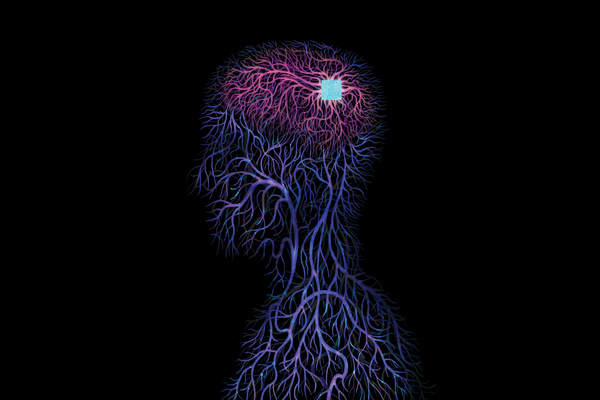
Researchers are also exploring brain-computer interfaces that could one day enable more direct interaction between humans and digital environments, although such technologies remain largely experimental.
As internet speeds improve through technologies such as high-speed fiber networks and advanced wireless communication, cloud-based XR experiences may become more accessible worldwide.
How XR Could Change Daily Life
Over the coming decades, Extended Reality may become as common as smartphones are today.
Students may attend immersive classrooms from home.
Doctors may consult specialists using shared three-dimensional medical models.
Families separated by great distances may gather inside realistic virtual spaces.
Workers may replace many computer monitors with digital workspaces visible through lightweight glasses.
Navigation instructions could appear directly on roads and sidewalks.
Interactive translations could float beside conversations.
Digital information may become seamlessly integrated into our everyday surroundings.
While traditional screens will remain important, XR has the potential to make computing far more natural and immersive.
Why Extended Reality Matters
Extended Reality represents far more than a new entertainment technology. It marks a significant shift in how humans interact with digital information. Instead of observing data through flat displays, XR allows people to step inside information, explore it from every angle, and interact with it as though it were part of the real world.
By combining advances in computer graphics, artificial intelligence, sensors, optics, and human-computer interaction, XR is reshaping education, healthcare, engineering, manufacturing, communication, scientific research, and countless other fields. Although challenges related to cost, comfort, privacy, and accessibility remain, continuous technological progress is steadily overcoming these limitations.
As XR evolves, the boundary between the physical and digital worlds will likely become increasingly seamless. The result will not be a replacement for reality but an extension of it—one that enhances how we learn, create, solve problems, and connect with one another. Extended Reality is helping build a future where digital experiences are no longer confined to screens but become integrated into the spaces where we live, work, and explore the world.