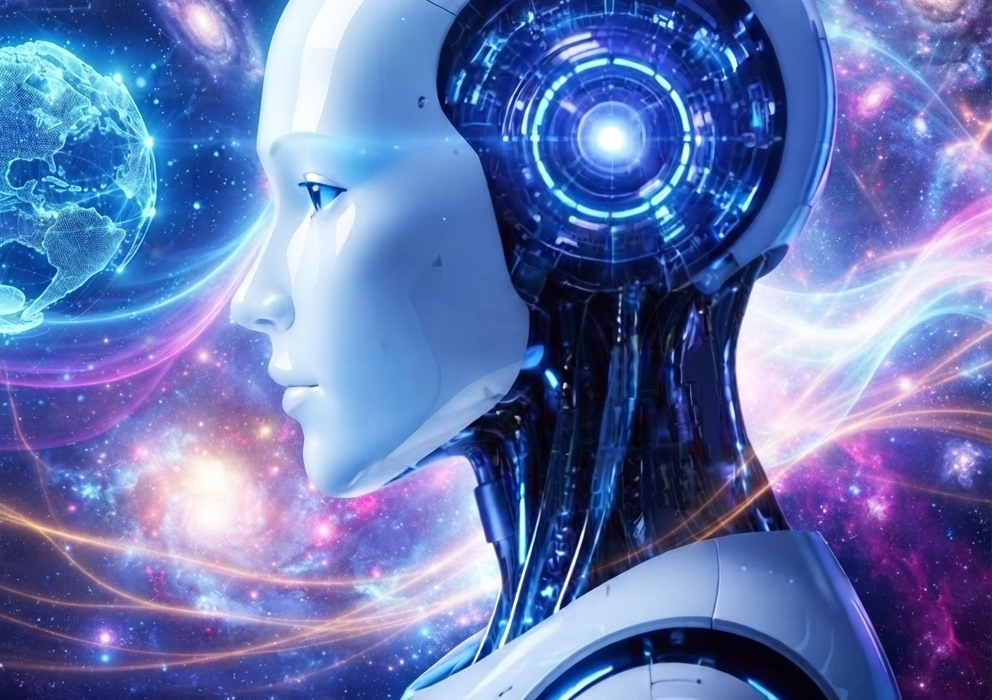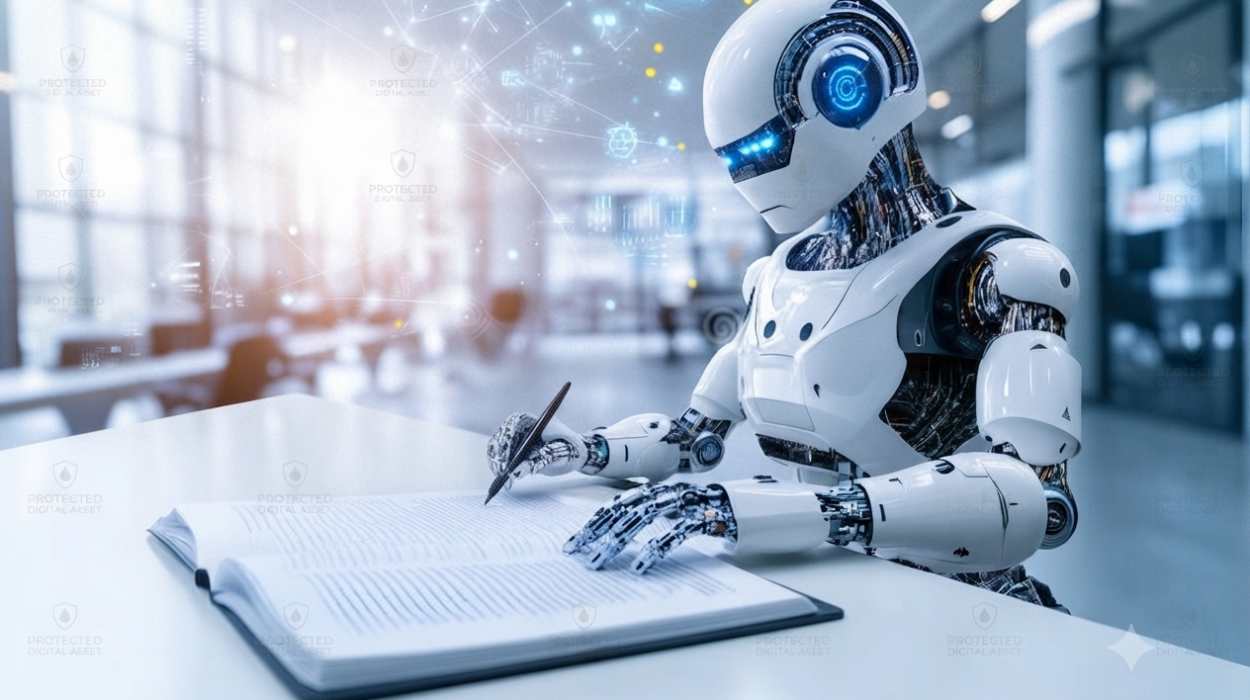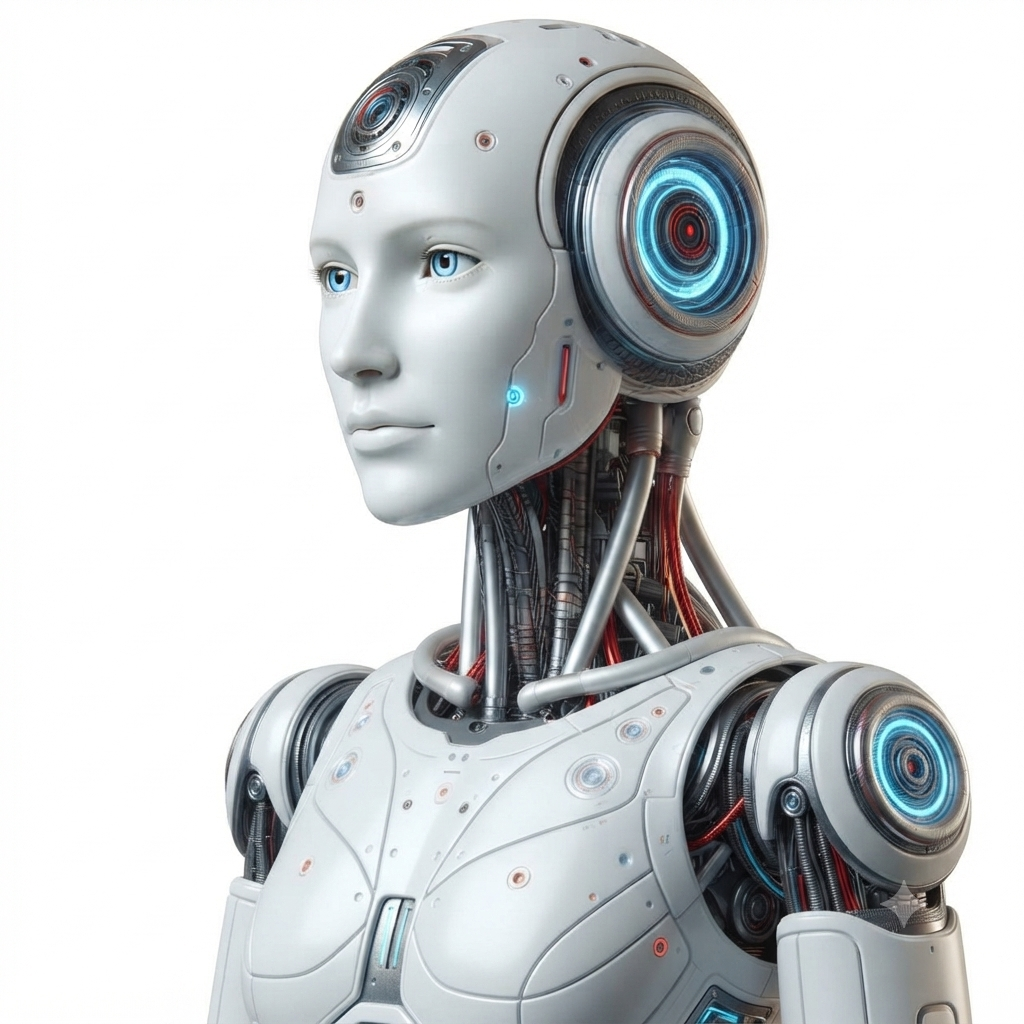
Artificial intelligence is no longer a futuristic idea found only in science fiction. It has quietly become part of everyday life, helping people search the internet, recommend movies, translate languages, recognize faces, answer customer questions, and even assist doctors in diagnosing diseases. Now, this powerful technology is transforming another important part of our lives: business.
Across the world, companies of every size are discovering new ways to use AI to work faster, make smarter decisions, reduce costs, improve customer experiences, and create products that were once impossible to imagine. From small family-owned shops to multinational corporations, AI is changing how businesses operate and compete.
Yet AI is not simply about replacing human workers with machines. Its greatest strength lies in helping people solve problems more efficiently, uncover hidden patterns in data, and make better decisions. Businesses that learn how to use AI responsibly may gain significant advantages, while those that ignore it could find it increasingly difficult to keep up in a rapidly changing economy.
The rise of AI marks one of the biggest technological transformations since the arrival of the internet. Understanding how it will reshape business is becoming essential not only for entrepreneurs and executives but also for employees, students, and consumers.
Understanding Artificial Intelligence in Business
Artificial intelligence refers to computer systems designed to perform tasks that normally require human intelligence. These tasks include recognizing images, understanding language, learning from experience, identifying patterns, making predictions, and solving complex problems.
Unlike traditional computer programs that follow fixed instructions, many modern AI systems improve their performance by learning from large amounts of data. This ability allows AI to adapt to changing situations and discover relationships that humans might overlook.
In business, AI serves as a powerful tool rather than an independent decision-maker. It analyzes information, identifies trends, generates recommendations, automates repetitive work, and supports human judgment.
Companies increasingly use AI to improve operations, serve customers, develop products, manage finances, and reduce risks.
A New Era of Smarter Decision-Making
Every business makes countless decisions every day. Managers decide how much inventory to order. Marketing teams choose which advertisements to run. Financial departments evaluate investments. Customer service teams determine how to respond to complaints.
Many of these decisions depend on analyzing enormous amounts of information.
Humans can process only limited data at one time, but AI can examine millions of records within seconds. It can detect hidden patterns, recognize unusual events, and predict future outcomes with remarkable speed.
For example, a retailer can use AI to forecast which products customers are likely to buy next month. A manufacturer can predict when machines may fail before they actually break. A bank can identify suspicious financial transactions that may indicate fraud.
Rather than replacing human judgment, AI often provides better information that helps people make more informed choices.
Automating Repetitive Work
Many business tasks involve repetitive activities that consume valuable time without requiring much creativity.
Employees often spend hours entering data, organizing documents, processing invoices, answering common customer questions, scheduling appointments, or generating reports.
AI can automate many of these routine tasks.
By handling repetitive work, AI allows employees to focus on activities that require creativity, critical thinking, emotional intelligence, and complex problem-solving.
This shift may improve productivity while also making many jobs more satisfying.
Automation does not necessarily eliminate jobs. Instead, it often changes the kinds of work people perform, creating demand for new skills and responsibilities.
Transforming Customer Service
Customers increasingly expect fast, accurate, and personalized service.
AI is helping businesses meet these expectations.
Modern AI-powered chatbots can answer common questions at any time of day, reducing waiting times and providing immediate assistance.
Virtual assistants can help customers track orders, reset passwords, recommend products, and solve simple problems without requiring human intervention.
When situations become more complicated, AI can quickly direct customers to the most appropriate human representative.
Beyond answering questions, AI analyzes customer interactions to identify common concerns, measure satisfaction, and suggest improvements.
As AI becomes more advanced, customer experiences are likely to become increasingly personalized and efficient.
Personalization at an Unprecedented Scale
Every customer is different.
People have different interests, preferences, budgets, and shopping habits.
AI allows businesses to better understand these differences.
Instead of offering identical products or advertisements to everyone, companies can recommend items based on individual preferences, previous purchases, browsing behavior, and other relevant information.
Streaming services recommend movies based on viewing history.
Online stores suggest products that customers may find useful.
Music platforms create personalized playlists.
News websites organize articles based on readers’ interests.
This level of personalization helps customers discover relevant products while helping businesses improve customer satisfaction and loyalty.
Improving Marketing Strategies
Marketing has always depended on understanding customers.
AI is making this process far more sophisticated.
Instead of relying solely on broad demographic groups, AI analyzes detailed patterns of customer behavior.
Businesses can better understand which advertisements perform well, which audiences respond positively, and which marketing strategies generate the greatest returns.
AI also helps businesses test multiple advertising campaigns quickly, optimize pricing strategies, and predict future consumer demand.
Marketing becomes less dependent on guesswork and more driven by evidence.
Smarter Supply Chains
Every product passes through a complex journey before reaching customers.
Raw materials must be sourced.
Factories must manufacture goods.
Warehouses must store inventory.
Transportation systems must deliver products.
Retailers must manage stock.
Any disruption can create shortages, delays, or unnecessary costs.
AI helps businesses monitor these complex supply chains more effectively.
By analyzing historical data, weather forecasts, transportation conditions, market demand, and supplier performance, AI can predict potential problems before they occur.
Businesses can respond more quickly, reduce waste, improve inventory management, and maintain smoother operations.
Enhancing Manufacturing
Factories are becoming increasingly intelligent.
AI-powered systems monitor production lines, inspect product quality, detect equipment problems, and optimize manufacturing processes.
Computer vision systems can identify tiny defects that may be difficult for human inspectors to notice consistently.
Predictive maintenance allows machines to be repaired before failures occur, reducing costly downtime.
AI can also optimize energy consumption, production schedules, and resource allocation.
These improvements help manufacturers produce higher-quality products while reducing waste and operating costs.
Revolutionizing Financial Management
Managing finances requires careful planning and accurate analysis.
AI assists businesses by processing financial data rapidly and identifying important trends.
Companies use AI to forecast revenue, estimate expenses, manage cash flow, detect fraud, evaluate investment opportunities, and assess financial risks.
Banks increasingly use AI to identify unusual transaction patterns that may indicate fraudulent activity.
Accounting departments automate many repetitive financial processes, reducing human error while improving efficiency.
Financial professionals remain responsible for interpreting results and making final decisions, but AI provides valuable analytical support.
Helping Small Businesses Compete
AI is not limited to large corporations.
Cloud computing has made advanced AI tools increasingly accessible to small businesses and startups.
A local bakery can use AI to predict customer demand.
An online clothing store can personalize recommendations.
A small law firm can organize documents more efficiently.
Independent creators can use AI to generate marketing ideas or improve customer communication.
Access to affordable AI tools allows smaller businesses to compete more effectively with larger organizations.
This broader availability may encourage innovation across many industries.
Accelerating Product Development
Creating successful products requires understanding customer needs, testing ideas, and responding quickly to changing markets.
AI speeds up many parts of this process.
Businesses analyze customer reviews, survey responses, social media discussions, and sales data to identify unmet needs.
Engineers use AI to explore design possibilities.
Scientists use AI to accelerate research.
Software developers employ AI-assisted programming tools to improve productivity.
Although human creativity remains essential, AI helps teams explore ideas more efficiently.
Innovation cycles may become faster than ever before.
Changing the Nature of Work
Perhaps one of AI’s most significant impacts will be its influence on the workforce.
Some routine tasks will become increasingly automated.
At the same time, new types of jobs will emerge.
History shows that technological revolutions often transform work rather than simply eliminating it.
The Industrial Revolution reduced many forms of manual labor while creating entirely new industries.
The computer revolution changed office work and generated millions of technology-related careers.
Similarly, AI is expected to reshape employment.
Workers may spend less time performing repetitive activities and more time solving problems, collaborating with others, making strategic decisions, and creating new ideas.
Continuous learning will become increasingly important throughout people’s careers.
Human Creativity Will Remain Essential
Despite impressive advances, AI has important limitations.
It does not possess human consciousness, emotions, personal experiences, or genuine understanding.
It cannot replace empathy, ethical judgment, leadership, imagination, or meaningful human relationships.
Successful businesses will likely combine AI’s analytical capabilities with uniquely human strengths.
Creative thinking, communication, teamwork, negotiation, emotional intelligence, and innovation will remain highly valuable.
Rather than competing against AI, many professionals will increasingly work alongside it.
AI and Business Ethics
As AI becomes more widespread, businesses must use it responsibly.
AI systems learn from data, and if that data contains biases or errors, AI can produce unfair or inaccurate outcomes.
Companies must carefully evaluate AI systems to ensure they treat people fairly.
Protecting customer privacy is equally important.
Businesses collect large amounts of personal information, making responsible data management essential.
Transparency also matters.
Customers should understand when they are interacting with AI rather than a human representative.
Ethical AI development requires ongoing monitoring, accountability, and clear human oversight.
Responsible use of AI builds trust with customers and society.
Cybersecurity in the Age of AI
Businesses face growing cybersecurity challenges.
AI plays an increasingly important role in protecting digital systems.
It can monitor networks continuously, identify unusual behavior, detect potential cyberattacks, and respond more quickly than traditional security methods.
However, cybercriminals are also beginning to use AI to create more sophisticated attacks.
This creates an ongoing technological competition between defenders and attackers.
Businesses will need both advanced AI tools and skilled cybersecurity professionals to protect sensitive information.
AI Across Different Industries
Nearly every industry is being influenced by AI.
Healthcare organizations use AI to support medical imaging analysis, assist diagnosis, and improve hospital operations.
Agriculture employs AI to monitor crops, optimize irrigation, and identify plant diseases.
Transportation companies improve logistics and route planning through AI.
Retail businesses personalize shopping experiences.
Insurance companies assess risks more efficiently.
Construction firms optimize project planning.
Education providers develop personalized learning systems.
Scientific research increasingly relies on AI to analyze massive datasets and accelerate discoveries.
The impact of AI extends far beyond technology companies.
Challenges Businesses Must Overcome
Although AI offers tremendous opportunities, implementation is rarely simple.
Developing effective AI systems requires high-quality data.
Poor data can produce unreliable results.
Businesses also need skilled employees who understand both technology and business operations.
Integrating AI into existing systems may require significant investment.
Employees may need training to work effectively with AI tools.
Organizations must also address legal, ethical, and regulatory considerations.
Successful AI adoption depends not only on technology but also on thoughtful planning and responsible leadership.
The Future Workplace
The workplace of the future will likely look different from today’s offices.
Employees may work alongside intelligent software assistants that help organize schedules, summarize meetings, analyze documents, and generate reports.
Managers may rely on AI to identify business opportunities and monitor organizational performance.
Scientists may accelerate research using AI-powered analysis.
Designers may collaborate with AI during creative processes.
Rather than replacing human expertise, AI will often act as a powerful partner that enhances productivity.
Human workers will continue making strategic decisions while AI handles large-scale data analysis and routine tasks.
AI and Global Competition
Businesses around the world are investing heavily in AI because they recognize its economic potential.
Countries are supporting AI research, education, and innovation to strengthen their competitiveness.
Organizations that successfully integrate AI into their operations may develop products more quickly, serve customers more effectively, and operate more efficiently.
At the same time, international cooperation will remain important for developing shared standards regarding AI safety, ethics, and governance.
The future of business will increasingly depend on both technological innovation and responsible management.
The Importance of Human Leadership
No matter how advanced AI becomes, businesses will still require human leadership.
Leaders define organizational goals, inspire employees, build company culture, resolve conflicts, and make ethical decisions that extend beyond data analysis.
AI can provide valuable recommendations, but it cannot determine a company’s values or long-term vision.
The most successful organizations will likely view AI as a tool that strengthens human decision-making rather than replacing it.
Leadership will become even more important as businesses navigate rapid technological change.
Looking Ahead
Artificial intelligence is transforming business in ways that were once difficult to imagine. It is making organizations more efficient, improving customer experiences, accelerating innovation, enhancing decision-making, and opening new opportunities across nearly every industry.
At the same time, AI introduces important responsibilities. Businesses must protect privacy, reduce bias, ensure transparency, and maintain meaningful human oversight. Technology alone cannot guarantee success. The greatest benefits will come from combining AI’s computational power with human creativity, empathy, ethical judgment, and leadership.
The future of business is unlikely to be defined by humans versus machines. Instead, it will be shaped by collaboration between people and intelligent technologies. Organizations that embrace this partnership thoughtfully and responsibly will be better prepared to adapt to changing markets, solve increasingly complex challenges, and create lasting value for customers and society.
Artificial intelligence is not simply changing how businesses operate. It is changing how businesses think, innovate, and imagine the future. As this transformation continues, one thing becomes increasingly clear: the companies that learn to work intelligently with AI will play a central role in shaping the next chapter of the global economy.