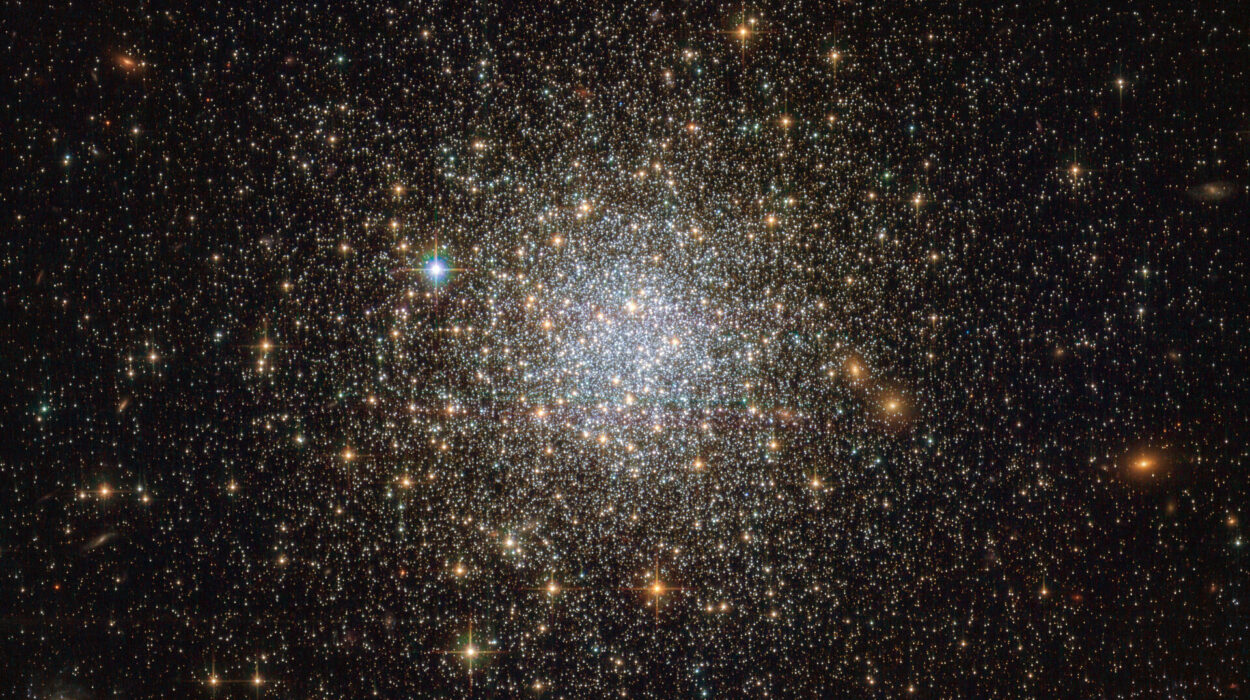
The night sky looks peaceful and familiar. Thousands of stars seem scattered across a dark canvas, as if they are only a little farther away than the Moon. But this impression is an illusion created by our eyes. In reality, space is unimaginably vast. Even the nearest star beyond the Sun is so far away that the fastest spacecraft humanity has ever built would need tens of thousands of years to reach it.
When astronomers study the universe, one of their greatest challenges is answering a surprisingly simple question: How far away is it? Whether they are observing a nearby asteroid, a distant galaxy, or one of the earliest objects in the universe, accurately measuring distance is essential. Without knowing how far something is, scientists cannot reliably determine its true size, brightness, mass, or even its place in the history of the cosmos.
Over centuries, astronomers have developed ingenious methods for measuring cosmic distances. They use geometry, the speed of light, the predictable behavior of certain stars, and even the expansion of the universe itself. Together, these methods form what astronomers call the cosmic distance ladder, allowing humanity to measure distances from our own neighborhood in space to galaxies billions of light-years away.
Why Measuring Distance in Space Is So Difficult
Measuring distance on Earth is relatively straightforward. We can use rulers, measuring tapes, laser rangefinders, radar, or GPS satellites. Even the distance between continents can be measured with remarkable precision.
Space is entirely different.
There are no physical measuring tools long enough to stretch between planets or stars. We cannot simply fly to every celestial object and measure the distance directly. Many stars are far beyond the reach of any spacecraft, and countless galaxies are so distant that their light has traveled for billions of years before reaching Earth.
Because of these enormous distances, astronomers must rely on indirect methods based on mathematics, physics, and careful observations.
Every technique has a range where it works best, and scientists combine these methods to gradually build an accurate map of the universe.
The Astronomical Unit: Measuring Within the Solar System
The first step in measuring cosmic distances begins close to home.
Inside our Solar System, astronomers commonly use the Astronomical Unit, abbreviated as AU.
One Astronomical Unit is defined as the average distance between Earth and the Sun, approximately 149.6 million kilometers, or about 93 million miles.
Using the AU makes Solar System distances much easier to understand.
Mercury orbits at about 0.39 AU from the Sun.
Earth is 1 AU away.
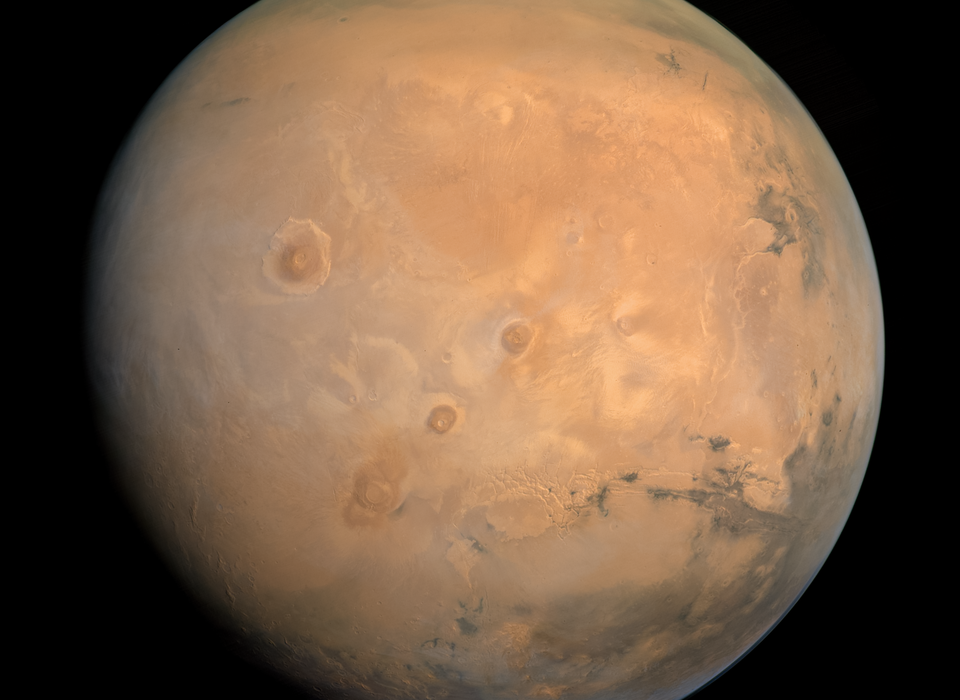
Mars averages about 1.52 AU.
Jupiter orbits around 5.2 AU from the Sun.
Neptune, the most distant major planet, circles the Sun at roughly 30 AU.
Even many icy objects beyond Neptune are measured using Astronomical Units.
Scientists determine these distances with extraordinary precision using radar signals sent toward nearby planets and spacecraft tracking. Because radio waves travel at the speed of light, measuring how long the signals take to return allows astronomers to calculate distances with remarkable accuracy.
Measuring Distance Using the Speed of Light
Light travels incredibly fast—about 299,792 kilometers per second (186,282 miles per second) in a vacuum.
Because light has a constant speed, astronomers can use it as a natural measuring tape.
Instead of thinking only in kilometers, scientists often measure how far light travels over certain periods.
A light-second is the distance light travels in one second.
A light-minute is the distance light travels in one minute.
A light-hour is the distance light travels in one hour.
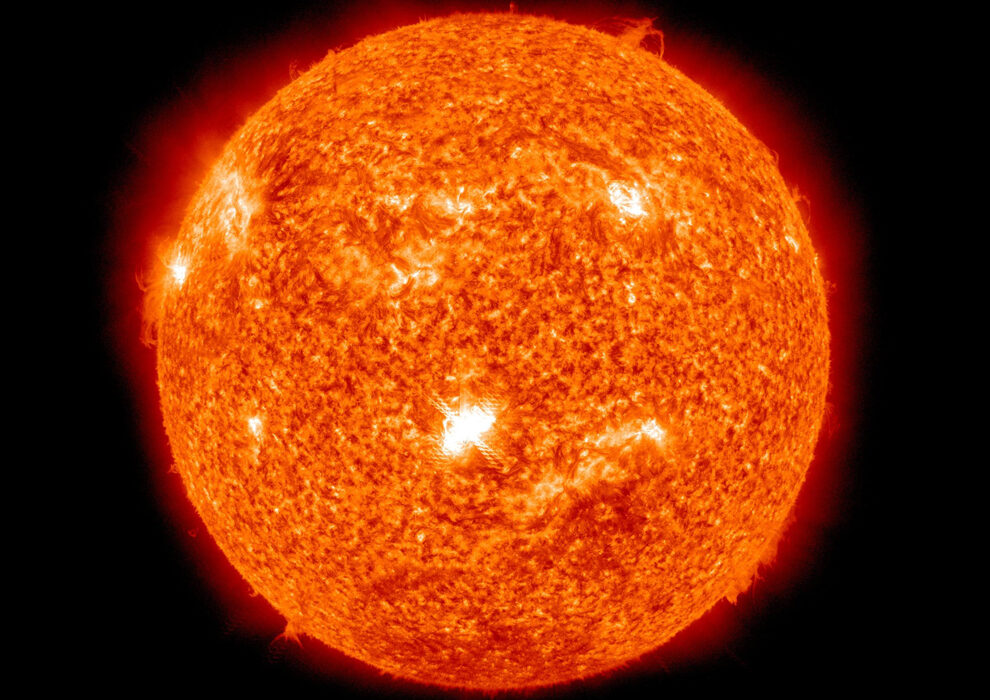
The Sun is about 8 minutes and 20 seconds away from Earth. This means the sunlight warming your face actually left the Sun more than eight minutes earlier.
When astronauts looked back at Earth from the Moon during the Apollo missions, they saw our planet as it had appeared about 1.3 seconds earlier, because that is how long light takes to travel between Earth and the Moon.
Even within our Solar System, the speed of light becomes an important way of describing distance.
The Light-Year: Measuring the Distance to Stars
As distances become larger, kilometers become impractical.
Imagine writing the distance to a nearby star in kilometers. The number would contain so many digits that it would be difficult to read.
Instead, astronomers use the light-year.
A light-year is not a unit of time. It is a unit of distance.
It represents the distance light travels in one year through the vacuum of space.
One light-year equals approximately 9.46 trillion kilometers, or about 5.88 trillion miles.
The nearest star system beyond our Sun, Alpha Centauri, lies about 4.37 light-years away.
This means the light reaching Earth from Alpha Centauri tonight began its journey more than four years ago.
When astronomers observe a star 500 light-years away, they are actually seeing that star as it existed 500 years in the past.
Looking farther into space also means looking farther back in time.
Space Is a Time Machine
One of the most fascinating consequences of light’s finite speed is that telescopes function as time machines.
The Moon appears as it was just over one second ago.
The Sun appears as it was eight minutes ago.
Jupiter appears as it was roughly 30 to 50 minutes ago, depending on its position relative to Earth.
Nearby stars appear as they were years ago.
Distant galaxies appear as they existed millions or billions of years ago.
The most distant galaxies observed by modern telescopes reveal the universe during its earliest stages, only a few hundred million years after the Big Bang.
Astronomers are therefore not only measuring distances—they are studying the history of the universe.
Stellar Parallax: Nature’s Geometric Ruler
For nearby stars, astronomers use one of the oldest and most reliable techniques known as stellar parallax.
This method relies on Earth’s orbit around the Sun.
As Earth moves from one side of its orbit to the other over six months, nearby stars appear to shift slightly against the much more distant background stars.
This tiny apparent movement is called parallax.
You can observe the same effect yourself. Hold your finger in front of your face and look at it with one eye, then the other. Your finger appears to move against the background even though it has not actually changed position.
Nearby stars behave similarly because Earth’s position changes during its yearly orbit.
The closer the star, the larger the apparent shift.
The farther away the star, the smaller the shift.
By measuring this tiny angle and applying geometry, astronomers can calculate the star’s distance with remarkable precision.
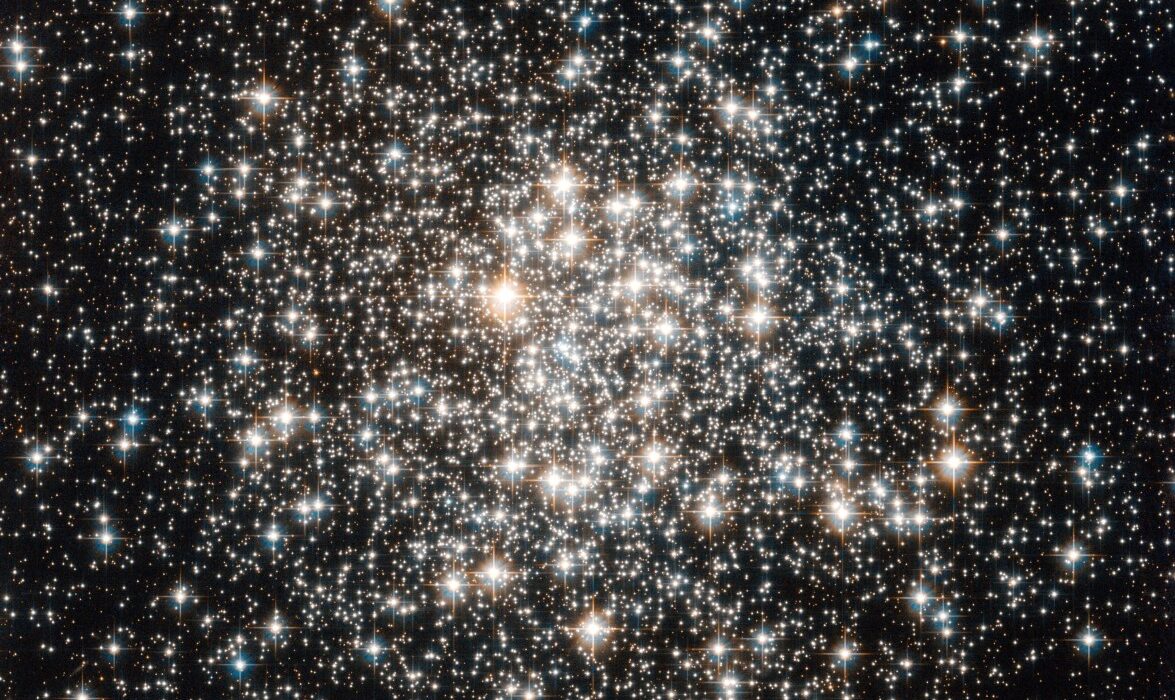
Modern space telescopes such as the European Space Agency’s Gaia mission have measured parallaxes for more than a billion stars, creating the most accurate three-dimensional map of our region of the Milky Way.
The Parsec: A Favorite Unit for Astronomers
Although light-years are popular in books and documentaries, professional astronomers often use another unit called the parsec.
The parsec is directly related to stellar parallax.
One parsec equals approximately 3.26 light-years.
Many astronomical catalogs, research papers, and scientific databases express distances in parsecs because they naturally connect with parallax measurements.
Large distances are often written as kiloparsecs, meaning one thousand parsecs, or megaparsecs, meaning one million parsecs.
These units become especially useful when studying galaxies and galaxy clusters.
Measuring Distances Beyond Nearby Stars
Parallax works extremely well for relatively nearby stars, but eventually the apparent shift becomes too small to detect accurately.
For much greater distances, astronomers need other methods.
Fortunately, the universe provides certain stars whose true brightness is known.
If scientists know how bright a star actually is, they can compare it with how bright it appears from Earth.
Just as a nearby streetlight looks brighter than one far away, a distant star appears dimmer than an identical nearby star.
By comparing actual brightness with observed brightness, astronomers can calculate the distance.
These stars serve as standard candles, objects with predictable intrinsic brightness.
Cepheid Variable Stars: Cosmic Distance Markers
One of the most important standard candles is the Cepheid variable star.
These stars brighten and dim in a regular cycle.
More importantly, the length of the cycle is directly related to the star’s true brightness.
Astronomers simply measure how long the brightness changes take, determine the star’s actual luminosity, compare it with its observed brightness, and calculate the distance.
This discovery transformed astronomy.
Cepheid variables allowed scientists to measure distances to nearby galaxies for the first time.
They played a crucial role in proving that many fuzzy objects in the sky are actually entire galaxies located far beyond the Milky Way.
Type Ia Supernovae: Measuring Across the Universe
For even greater distances, astronomers use exploding stars known as Type Ia supernovae.
These explosions occur under specific conditions involving white dwarf stars.
Because they reach nearly the same maximum brightness each time they explode, Type Ia supernovae serve as extremely reliable standard candles.
They are bright enough to be seen across billions of light-years.
By comparing their known brightness with their observed brightness, astronomers determine distances to extremely distant galaxies.
Observations of these supernovae led to one of the greatest discoveries in modern cosmology: the universe is expanding at an accelerating rate, likely driven by a mysterious phenomenon called dark energy.
Redshift and the Expanding Universe
The farther astronomers look into space, the more they observe galaxies moving away from us.
This movement stretches the wavelength of light, shifting it toward the red end of the electromagnetic spectrum.
This phenomenon is called redshift.
The greater the redshift, the faster a galaxy is receding.
According to Hubble’s Law, more distant galaxies generally move away faster than nearby ones because space itself is expanding.
By measuring a galaxy’s redshift, astronomers can estimate its distance.
For the most distant observable galaxies, redshift has become one of the primary tools for measuring how far away they are and how early they existed in cosmic history.
Combining Methods Into the Cosmic Distance Ladder
No single technique can measure every distance in the universe.
Instead, astronomers carefully connect different methods together.
Radar precisely measures nearby planets.
The Astronomical Unit defines the scale of the Solar System.
Parallax measures nearby stars.
Cepheid variable stars extend measurements to nearby galaxies.
Type Ia supernovae reach distant galaxies.
Redshift helps measure the largest scales of the observable universe.
Each method is calibrated using the previous one, creating the cosmic distance ladder.
This layered approach allows scientists to measure distances spanning more than thirteen billion light-years with remarkable accuracy.
Modern Space Telescopes Improve Distance Measurements
Today’s observatories have dramatically improved our understanding of cosmic distances.
The Gaia spacecraft measures stellar positions with extraordinary precision, producing the most accurate parallax measurements ever achieved.
The Hubble Space Telescope refined measurements of Cepheid variable stars and helped determine the expansion rate of the universe.
The James Webb Space Telescope extends these measurements even farther by observing extremely distant galaxies whose light has traveled for over 13 billion years.
Together, these observatories continue improving the accuracy of the cosmic distance ladder and helping astronomers understand how the universe has evolved over time.
Why Accurate Distance Measurements Matter
Knowing the distance to an object unlocks many other scientific discoveries.
Distance allows astronomers to calculate a star’s true luminosity, determine the size of galaxies, estimate the masses of black holes, measure the age of star clusters, and trace the expansion history of the universe.
Accurate distances also help scientists search for exoplanets, study dark matter, investigate dark energy, and refine models of cosmic evolution.
Without reliable distance measurements, much of modern astronomy would become uncertain.
Distance is one of the most fundamental pieces of information scientists need to understand the universe.
The Challenge of Measuring the Vastness of Space
Even with today’s advanced technology, measuring cosmic distances remains one of astronomy’s greatest challenges.
Tiny uncertainties can grow into significant differences when measuring objects billions of light-years away. For this reason, astronomers constantly improve telescopes, refine mathematical models, and compare multiple methods to ensure their measurements are as accurate as possible.
Each improvement sharpens our map of the universe and reveals new details about its structure and history.
Conclusion
Measuring distances in space is far more complex than measuring distances on Earth, yet it is one of the greatest achievements of modern science. By combining geometry, the constant speed of light, the predictable behavior of stars, and the expansion of the universe, astronomers have developed reliable methods for mapping the cosmos across unimaginable scales.
From the Astronomical Unit used within our Solar System to light-years, parsecs, stellar parallax, Cepheid variable stars, Type Ia supernovae, and redshift, each technique reveals another layer of the universe. Together they form a powerful toolkit that allows humanity to measure objects ranging from nearby planets to galaxies whose light began its journey billions of years ago.
Every time astronomers determine the distance to a star or galaxy, they do more than measure space—they uncover another chapter in the story of the universe. With every new observation, our picture of the cosmos becomes clearer, reminding us that even across the greatest distances imaginable, the laws of physics allow us to explore places we may never physically reach.