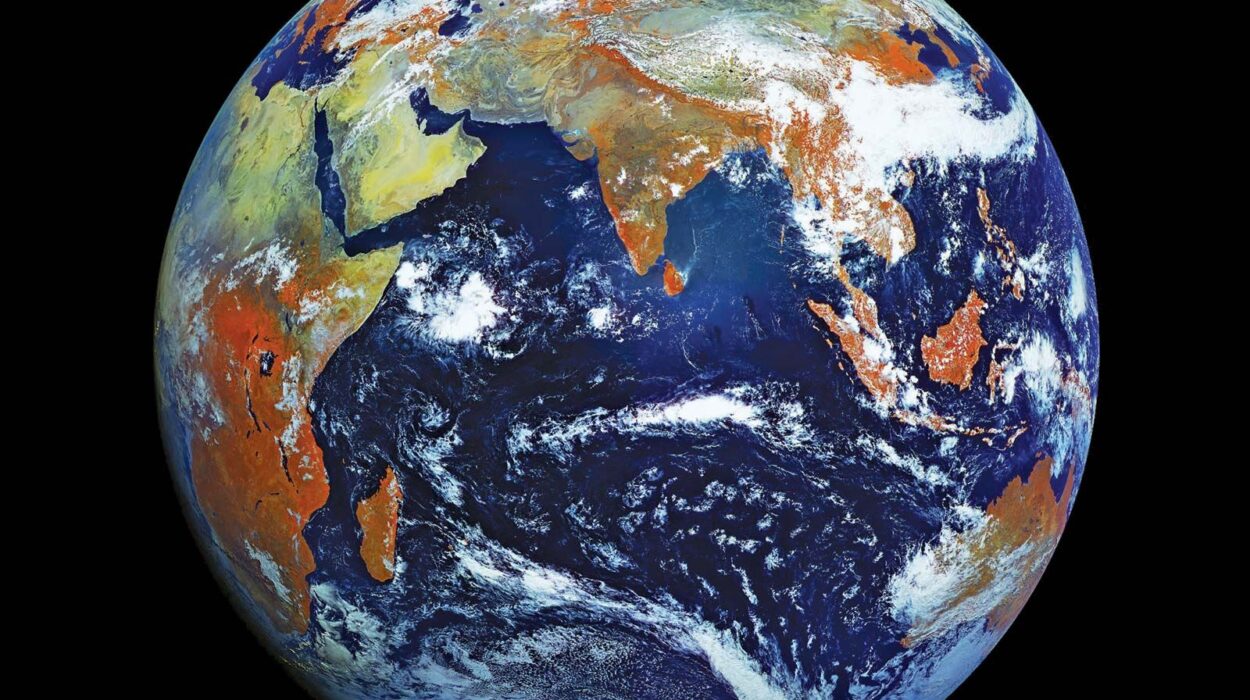
Every morning, without fail, the Sun rises over the horizon and fills the world with light and warmth. Its golden rays wake forests, oceans, deserts, cities, and every living creature on Earth. Birds begin to sing, flowers open their petals, and the air slowly warms after the coolness of night. It is such a familiar part of our lives that we rarely stop to ask one of the most fascinating questions in science:
Why does the Sun shine?
For thousands of years, people believed the Sun was a giant fire burning in the sky. It certainly looks like one. Flames produce heat and light, and the Sun does the same—but on a much grander scale.
The truth, however, is even more extraordinary.
The Sun is not burning like wood, coal, or gasoline. Instead, it shines because an incredible process called nuclear fusion is taking place deep inside its core. Every second, this process releases an enormous amount of energy—enough to light the entire Solar System and sustain life on Earth.
Understanding why the Sun shines is one of humanity’s greatest scientific achievements. It connects astronomy, physics, chemistry, and even the story of our own existence.
The Sun Is a Star
The first step toward understanding why the Sun shines is realizing what it actually is.
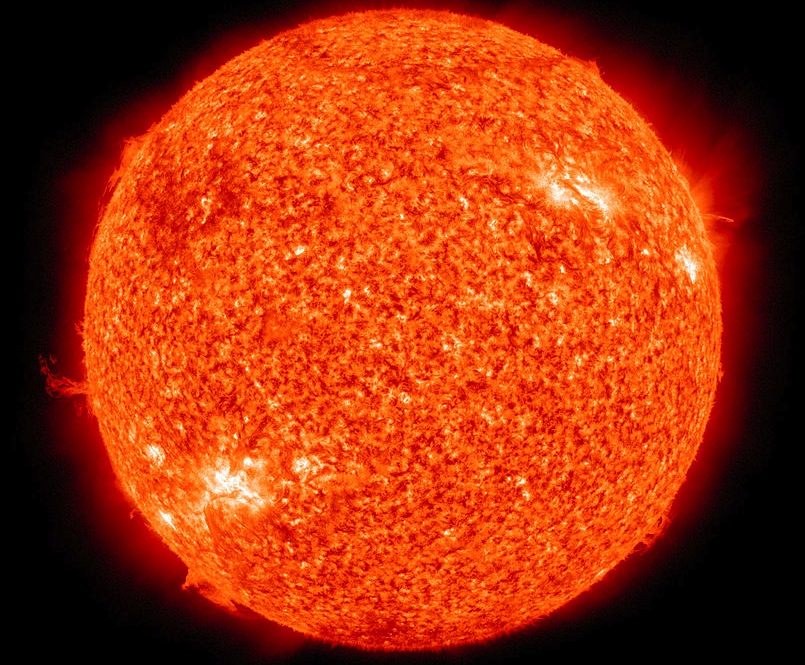
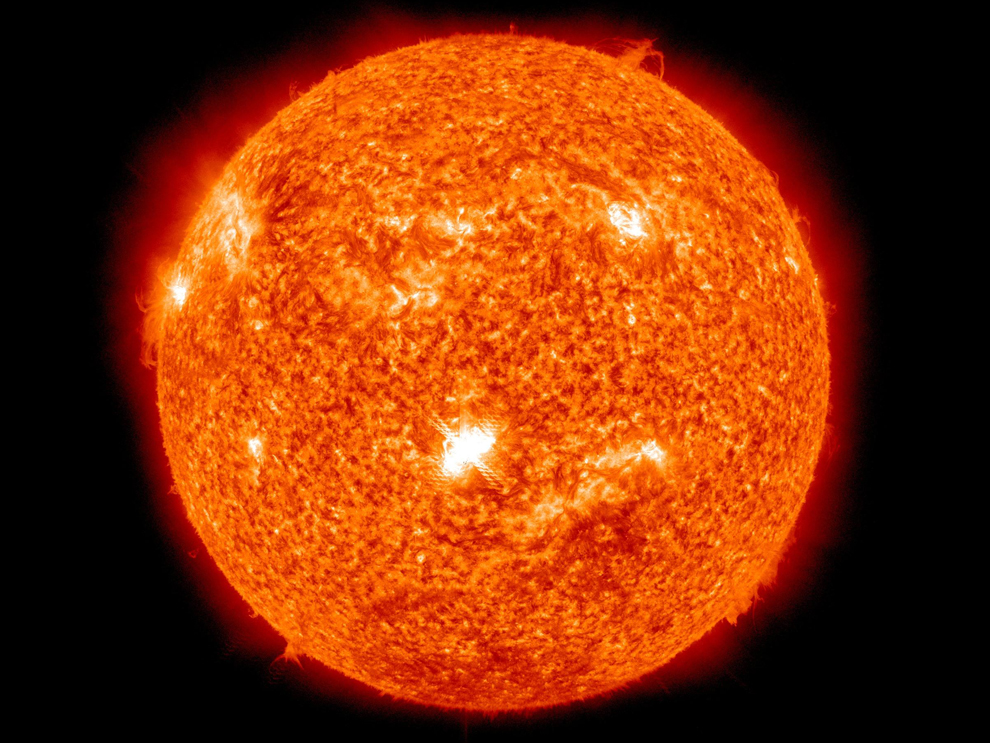
The Sun is a star—a massive, glowing sphere of extremely hot gas and plasma held together by its own gravity. Although it looks much larger than the stars we see at night, that is only because it is much closer to us.
Located about 150 million kilometers (93 million miles) from Earth, the Sun is our nearest star. Light from its surface takes about 8 minutes and 20 seconds to reach our planet.
The Sun contains about 99.8% of all the mass in the Solar System. Its enormous gravity keeps every planet, asteroid, comet, and dwarf planet in orbit.
Without the Sun, there would be no Earth as we know it. There would be no warmth, no weather, no liquid water, no plants, and no animals. Life itself depends on the steady stream of energy flowing from this remarkable star.
What Is the Sun Made Of?
The Sun is not a solid object.
If you could somehow travel to it, you would never find a rocky surface to stand on. Instead, you would encounter hotter and denser layers of glowing gas and plasma.
Most of the Sun consists of hydrogen, the simplest and most abundant element in the universe. About three-quarters of the Sun’s mass is hydrogen.
Most of the remaining mass is helium, the second-lightest element.
Tiny amounts of heavier elements such as oxygen, carbon, neon, iron, silicon, magnesium, and sulfur are also present, but together they account for only a small fraction of the Sun’s composition.
Hydrogen is the key ingredient that allows the Sun to shine.
Gravity Creates an Enormous Pressure
The Sun’s immense size creates a powerful gravitational force.
Gravity pulls all of the Sun’s material inward toward its center. Because the Sun contains so much mass, this inward pull is incredibly strong.
As hydrogen gas falls toward the center, it becomes squeezed into an ever-smaller space.
This compression dramatically increases both pressure and temperature.
Deep inside the Sun’s core, temperatures reach about 15 million degrees Celsius (27 million degrees Fahrenheit).
The pressure there is almost unimaginable.
Under these extreme conditions, ordinary atoms begin behaving in extraordinary ways.
The Secret Is Nuclear Fusion
The Sun shines because of nuclear fusion.
Fusion is the process in which light atomic nuclei combine to form heavier nuclei.
Inside the Sun’s core, hydrogen nuclei—which are simply single protons—move at tremendous speeds because of the extremely high temperature.
Normally, positively charged protons repel one another.
However, inside the Sun’s core, the enormous pressure forces many protons close enough together for the strong nuclear force to overcome their electrical repulsion.
When this happens, hydrogen nuclei fuse together through a sequence of reactions that ultimately produce helium.
This process releases a tremendous amount of energy.
That energy is what powers the Sun.
Why Fusion Releases Energy
At first glance, combining atoms might not seem like something that would produce so much energy.
The explanation lies in one of the most famous discoveries in physics.
Albert Einstein showed that mass and energy are equivalent, summarized by the equation:
E = mc²
During fusion, the helium nucleus produced has slightly less mass than the four hydrogen nuclei that originally combined.
The “missing” mass has not disappeared.
Instead, it has been converted into energy.
Although the amount of mass lost in each individual fusion reaction is tiny, the Sun performs an astonishing number of these reactions every second.
The result is an unimaginable release of energy.
Every second, the Sun converts roughly 600 million tons of hydrogen into helium.
About 4 million tons of mass are transformed directly into energy every single second.
Even at this incredible rate, the Sun has enough hydrogen fuel to continue shining for billions more years.
The Journey of Energy From the Core
The energy produced by nuclear fusion does not immediately escape into space.
Instead, it begins an incredibly long journey.
Fusion reactions create tiny packets of light called photons.
These photons constantly collide with particles inside the Sun.
Every collision changes their direction.
Instead of traveling straight outward, photons bounce around randomly.
This process is so slow that a photon produced in the Sun’s core may take tens of thousands to hundreds of thousands of years, and possibly even longer according to some models, before finally reaching the Sun’s visible surface.
Once the energy reaches the surface, everything changes.
The photons are free to travel through space at the speed of light.
Only about 8 minutes and 20 seconds later, some of those photons reach Earth.
The sunlight warming your face today may have begun its journey inside the Sun long before modern humans even existed.
The Layers of the Sun
The Sun is made up of several distinct layers, each playing an important role.
At the center lies the core, where nuclear fusion takes place.
Surrounding the core is the radiative zone, where energy slowly moves outward through countless photon interactions.
Beyond that lies the convective zone.
Here, hot plasma rises toward the surface while cooler plasma sinks back down, much like boiling water circulating inside a pot.
The visible “surface” of the Sun is called the photosphere.
This is the layer that emits most of the sunlight we see from Earth.
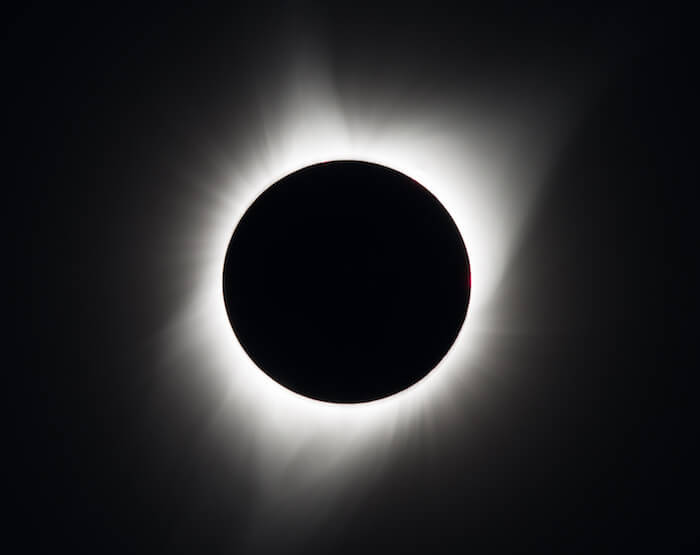
Above the photosphere lies the chromosphere, followed by the corona, the Sun’s outer atmosphere.
Surprisingly, the corona is much hotter than the visible surface, reaching temperatures of more than a million degrees. Scientists continue studying exactly why this happens.
Sunlight Is More Than Visible Light
The light we see with our eyes represents only a small part of the energy leaving the Sun.
The Sun emits radiation across the entire electromagnetic spectrum.
This includes radio waves, microwaves, infrared radiation, visible light, ultraviolet radiation, X-rays, and gamma rays.
Earth’s atmosphere blocks most of the Sun’s harmful high-energy radiation while allowing much of the visible light to reach the surface.
This natural protection makes life possible.
Without our atmosphere, the Sun’s ultraviolet radiation would be far more dangerous.
How Sunlight Reaches Earth
Space is often described as empty, but it allows light to travel remarkably well.
Unlike sound, which requires air or another material to move through, light is an electromagnetic wave.
It can travel through the vacuum of space without any difficulty.
After leaving the Sun, sunlight races across the Solar System at approximately 300,000 kilometers (186,000 miles) per second.
In just over eight minutes, it reaches Earth, where it illuminates everything from mountain peaks to deep forests.
Every sunrise marks the arrival of photons that have traveled millions of kilometers across space.
Why the Sun Feels Warm
Sunlight carries energy.
When it strikes Earth’s surface, buildings, roads, oceans, plants, and even your skin absorb part of that energy.
The absorbed energy increases the motion of atoms and molecules.
As these particles move faster, their temperature rises.
This is why standing in direct sunlight feels warmer than standing in the shade.
The Sun itself is not sending “heat” through space in the same way a stove heats nearby air.
Instead, it sends electromagnetic radiation.
Objects that absorb this radiation become warmer.
The Sun Makes Life Possible
Nearly every form of life on Earth depends directly or indirectly on sunlight.
Plants capture sunlight through photosynthesis.
Using light energy, they convert carbon dioxide and water into sugars while releasing oxygen.
These plants become food for animals.
Animals become food for other animals.
In this way, almost every food chain begins with energy from the Sun.
The oxygen we breathe also owes its existence to billions of years of photosynthesis powered by sunlight.
Even fossil fuels such as coal and oil represent ancient solar energy stored by plants that lived hundreds of millions of years ago.
The Sun Controls Earth’s Climate
The Sun is the primary source of energy driving Earth’s climate.
Its energy warms land and oceans.
Differences in heating create winds.
Solar heating causes water to evaporate, forming clouds and rain.
Ocean currents transport heat around the globe.
Without sunlight, Earth’s atmosphere would freeze, weather would stop, and the planet would become an icy world.
The changing angle of sunlight throughout the year also produces the seasons.
Does the Sun Burn Like Fire?
It is common to say the Sun is “burning.”
Scientifically, however, this is not correct.
Fire is a chemical reaction involving oxygen.
Wood burns because oxygen reacts chemically with carbon-rich material.
The Sun contains almost no oxygen in the amounts needed for ordinary combustion.
Instead, the Sun shines through nuclear fusion, which is millions of times more efficient than chemical burning.
If the Sun relied on ordinary fire, it could shine for only a few thousand years.
Instead, nuclear fusion allows it to shine steadily for about 10 billion years.
How Long Will the Sun Continue Shining?
The Sun formed approximately 4.6 billion years ago from a giant cloud of gas and dust.
Today, it is about halfway through its stable lifetime.
Scientists estimate that it has enough hydrogen fuel to continue shining for another 5 billion years.
During this period, it will remain a relatively stable main-sequence star.
Eventually, as hydrogen in the core becomes depleted, the Sun will begin changing dramatically.
Its outer layers will expand, transforming it into a red giant.
During this stage, it will become much larger and brighter than it is today.
After shedding its outer layers, the remaining core will become a white dwarf, a dense, hot stellar remnant that will slowly cool over billions of years.
How Scientists Learned Why the Sun Shines
For centuries, the source of the Sun’s energy remained one of science’s greatest mysteries.
In the nineteenth century, some scientists suggested the Sun might shine by slowly shrinking under its own gravity.
While gravitational contraction does release energy, calculations showed it could power the Sun for only millions—not billions—of years.
This conflicted with geological evidence showing Earth was much older.
The breakthrough came during the twentieth century.
Advances in atomic physics revealed the existence of nuclear fusion.
Scientists realized that hydrogen could fuse into helium under the extreme conditions found inside stars.
This explanation perfectly matched observations of stellar lifetimes and energy output.
Today, measurements of solar neutrinos—tiny particles produced during fusion—provide direct evidence that nuclear fusion is actively occurring inside the Sun.
Every Star Shines for the Same Basic Reason
The Sun is only one of hundreds of billions of stars in the Milky Way.
Most stars shine because nuclear fusion takes place in their cores.
Massive stars burn through their fuel much faster than the Sun.
Some live only a few million years before exploding as supernovae.
Smaller stars, especially red dwarfs, consume their hydrogen much more slowly.
Some are expected to shine for trillions of years—far longer than the current age of the universe.
Despite differences in size, temperature, and brightness, the same fundamental process powers nearly every normal star.
The Sun Is Constantly Changing
Although the Sun appears calm from Earth, it is an active and dynamic star.
Its magnetic field twists and shifts continuously.
Dark regions called sunspots appear on its surface.
Powerful solar flares release bursts of energy.
Sometimes enormous clouds of charged particles erupt into space in events known as coronal mass ejections.
These eruptions can interact with Earth’s magnetic field, producing beautiful auroras near the poles and occasionally affecting satellites, radio communication, and electrical power systems.
Even these dramatic events are fueled by the energy generated through nuclear fusion deep inside the Sun.
We Are Connected to the Sun
Every breath you take, every meal you eat, every tree that grows, and every cloud that drifts across the sky exists because the Sun has been shining steadily for billions of years.
The warmth you feel on your skin began as nuclear fusion in the Sun’s core. The light entering your eyes started its journey as energy released when tiny hydrogen nuclei combined under unimaginable pressure. Every green leaf, every flowing river powered by evaporation, and every living cell on Earth ultimately depends on this continuous stream of solar energy.
The Sun is far more than a bright object in the sky. It is the engine of our Solar System, the source of nearly all the energy that sustains life on Earth, and a reminder of the extraordinary power hidden within the laws of physics.
The next time you watch a sunrise or feel sunlight on your face, remember that you are witnessing one of the universe’s greatest wonders—a star whose brilliant light is created not by ordinary fire, but by the incredible process of nuclear fusion, silently transforming hydrogen into helium and filling space with the energy that has made our world possible.