For thousands of years, people have looked up at the night sky with wonder. The stars, planets, the Moon, and mysterious lights in the darkness have inspired stories, legends, and beliefs in nearly every culture. Long before telescopes existed, ancient civilizations tried to explain what they saw using imagination, philosophy, and mythology. Some of those ideas were remarkably creative. Others became myths that survived for centuries.
Today, astronomy has transformed our understanding of the universe. Powerful telescopes, robotic spacecraft, satellites, and space probes have revealed a cosmos far more fascinating than our ancestors could have imagined. Yet many misconceptions about space still persist. Some are harmless misunderstandings, while others are repeated so often that they are widely accepted as facts.
The truth is that the real universe is often much more astonishing than the myths. Understanding what astronomy actually tells us not only corrects common misunderstandings but also deepens our appreciation for the incredible universe we live in.
Myth: The Sun Is a Giant Ball of Fire
One of the most common misconceptions is that the Sun is simply a huge ball of fire.
In everyday language, fire is produced when substances such as wood or natural gas react with oxygen through combustion. The Sun is nothing like this. There is almost no oxygen available for ordinary fire to burn in the Sun.
Instead, the Sun shines because of nuclear fusion occurring deep within its core. Temperatures there reach about 15 million degrees Celsius (27 million degrees Fahrenheit). Under these extreme conditions, hydrogen atoms are squeezed together to form helium. This process releases enormous amounts of energy, which slowly travels outward before eventually escaping into space as sunlight and heat.
Every second, the Sun converts about 600 million tons of hydrogen into helium, producing the energy that supports life on Earth. The Sun is therefore a giant sphere of hot plasma powered by nuclear fusion—not a ball of ordinary fire.
Myth: The Moon Produces Its Own Light
The Moon often appears brilliantly bright in the night sky, leading many people to assume it generates its own light.
In reality, the Moon is completely dark on its own.
The light we see is simply sunlight reflecting off the Moon’s rocky surface. Much like a mirror reflects light, the Moon reflects only about 12% of the sunlight that reaches it. Despite being a relatively poor reflector, its closeness to Earth makes it appear dazzling against the dark night sky.
The changing phases of the Moon also result from sunlight. As the Moon orbits Earth, we see different portions of its sunlit half, creating the familiar crescent, quarter, gibbous, and full Moon phases.
Myth: The Dark Side of the Moon Never Gets Sunlight
The phrase “the dark side of the Moon” has become famous in popular culture, but it creates a misleading impression.
The Moon rotates on its axis at almost exactly the same rate that it orbits Earth. Because of this synchronized motion, the same side of the Moon always faces Earth.
However, both the near side and the far side receive sunlight. As the Moon travels around Earth, every location on its surface experiences day and night, just as places on Earth do.
The far side is not permanently dark—it is simply the side we cannot normally see from Earth.
Myth: The Great Wall of China Is Visible From Space
This claim has appeared in textbooks, television programs, and conversations for decades.
The reality is quite different.
From low Earth orbit, astronauts can see many human-made structures under favorable lighting conditions. However, the Great Wall is narrow and often blends into the surrounding landscape, making it extremely difficult to distinguish with the naked eye.
Astronauts aboard the International Space Station have repeatedly explained that cities, roads, airports, and agricultural patterns are often easier to see than the Great Wall.
From the Moon, no individual human-made structure is visible without powerful telescopes.
Myth: Earth Is Closer to the Sun During Summer
Many people naturally assume that summer occurs because Earth is closer to the Sun.
If this were true, both hemispheres would experience summer at the same time.
Instead, when it is summer in the Northern Hemisphere, it is winter in the Southern Hemisphere.
The real reason for the seasons is Earth’s 23.5-degree axial tilt.
As Earth orbits the Sun, each hemisphere alternately tilts toward or away from the Sun. During summer, a hemisphere receives more direct sunlight and enjoys longer daylight hours. During winter, sunlight arrives at a lower angle, and days become shorter.
Interestingly, Earth is actually closest to the Sun in early January, when much of the Northern Hemisphere experiences winter.
Myth: There Is No Gravity in Space
Astronauts aboard the International Space Station appear to float effortlessly, leading many people to believe there is no gravity in space.
Gravity is actually present almost everywhere in the universe.
The International Space Station orbits only about 400 kilometers (250 miles) above Earth’s surface. At that altitude, Earth’s gravity remains about 90% as strong as it is on the ground.
Astronauts float because they are continuously falling around Earth while moving forward at tremendous speed. This creates a state called free fall, producing the sensation of weightlessness.
The same principle keeps the Moon orbiting Earth and Earth orbiting the Sun.
Myth: Black Holes Suck Everything Like Giant Cosmic Vacuum Cleaners
Black holes are often portrayed as unstoppable monsters that swallow everything nearby.
While black holes have incredibly strong gravity, they do not pull objects from great distances any more than any other object with the same mass.
If the Sun were magically replaced by a black hole of identical mass, Earth would continue orbiting exactly as it does today. The only difference would be that there would be no sunlight.
Objects are only in danger if they travel extremely close to a black hole, crossing its event horizon—the point beyond which nothing, not even light, can escape.
Myth: The Moon Causes People to Behave Strangely
For centuries, people believed that full Moons triggered unusual human behavior, increased crime, caused accidents, or even led to mental illness.
The very word “lunatic” comes from the Latin word for Moon.
However, extensive scientific studies have found no convincing evidence that the Moon significantly influences human behavior in these ways.
The Moon’s gravity certainly affects Earth’s oceans, creating tides. But its gravitational pull on individual people is tiny compared with the gravitational influence of nearby objects.
The persistence of this myth likely comes from confirmation bias. People tend to remember unusual events occurring during a full Moon while forgetting the countless ordinary nights.
Myth: Shooting Stars Are Actually Stars
Seeing a “shooting star” is one of the most beautiful experiences in astronomy.
But these glowing streaks have nothing to do with stars.
Most shooting stars are tiny fragments of rock or dust called meteoroids entering Earth’s atmosphere at tremendous speeds. As they collide with air molecules, friction and compression heat the surrounding gases, producing the bright streak of light we call a meteor.
Most meteors completely burn up before reaching the ground.
If a fragment survives and lands on Earth, it becomes a meteorite.
Actual stars are enormous glowing spheres located light-years away and cannot suddenly streak across our sky.
Myth: Polaris Is the Brightest Star in the Sky
Because Polaris is known as the North Star, many assume it must be the brightest.
It is not.
Polaris ranks only around the 48th brightest star visible from Earth.
Its importance comes from its position rather than its brightness. Polaris lies almost directly above Earth’s north rotational axis, causing it to appear nearly stationary while other stars seem to rotate around it during the night.
The brightest star visible in Earth’s night sky is Sirius, located in the constellation Canis Major.
Myth: Space Is Completely Empty
Outer space certainly contains much less matter than Earth’s atmosphere, but it is not completely empty.
Space contains atoms, molecules, plasma, cosmic rays, dust clouds, magnetic fields, radiation, and mysterious dark matter.
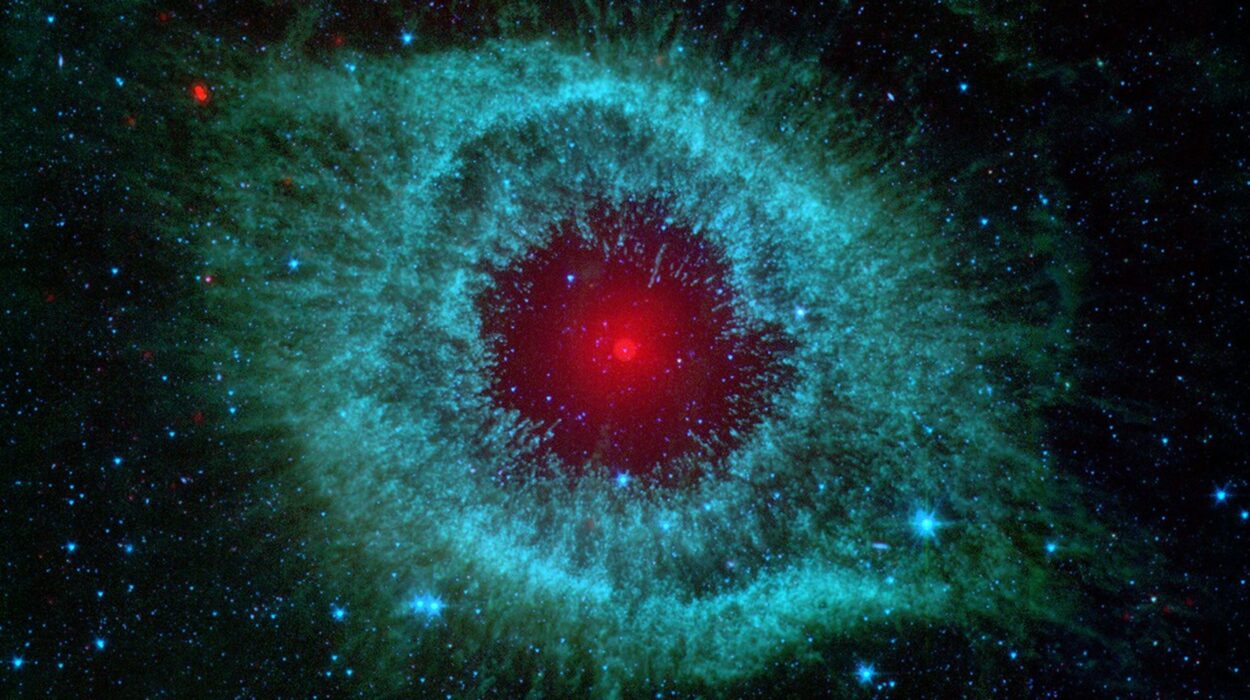
Huge clouds of gas and dust called nebulae give birth to new stars.
Even the seemingly empty regions between galaxies contain scattered particles and radiation.
The universe is incredibly sparse compared with Earth, but true emptiness is extraordinarily rare.
Myth: The Sun Is Yellow
Children often draw the Sun as a bright yellow circle.
From space, however, the Sun appears essentially white.
Sunlight contains all visible wavelengths mixed together. Earth’s atmosphere scatters shorter blue wavelengths more efficiently, making the Sun appear yellow or orange when viewed from the ground.
Near sunrise and sunset, even more blue light is scattered away, allowing red and orange colors to dominate.
Astronauts outside Earth’s atmosphere see a white Sun against the blackness of space.
Myth: Mercury Is the Hottest Planet
Mercury is the closest planet to the Sun, so it seems logical that it would be the hottest.
Surprisingly, it is not.
Venus holds that distinction.
Mercury has almost no atmosphere, allowing heat to escape rapidly during its long nights. Daytime temperatures can exceed 430°C (800°F), while nighttime temperatures plunge below –180°C (–290°F).
Venus, however, possesses a thick atmosphere composed mainly of carbon dioxide. This creates an intense greenhouse effect that traps heat extremely efficiently.
As a result, Venus maintains average surface temperatures around 465°C (870°F), making it the hottest planet in the Solar System.
Myth: All Stars Are the Same
At first glance, stars may appear nearly identical.
In reality, stars vary enormously.
Some are small red dwarfs with only a fraction of the Sun’s mass.
Others are giant blue stars dozens of times more massive.
Some stars are only a few million years old, while others have existed for more than 13 billion years.
Stars differ in color, size, temperature, brightness, chemical composition, lifespan, and evolutionary stage.
The diversity of stars is one of the most fascinating aspects of astronomy.
Myth: The Universe Revolves Around Earth
For much of human history, people believed Earth occupied the center of the universe.
This idea seemed reasonable because the Sun, Moon, planets, and stars all appeared to move across the sky.
The work of Nicolaus Copernicus, Galileo Galilei, Johannes Kepler, and Isaac Newton gradually revealed a different picture.
Earth orbits the Sun.
The Sun is just one ordinary star among hundreds of billions in the Milky Way.
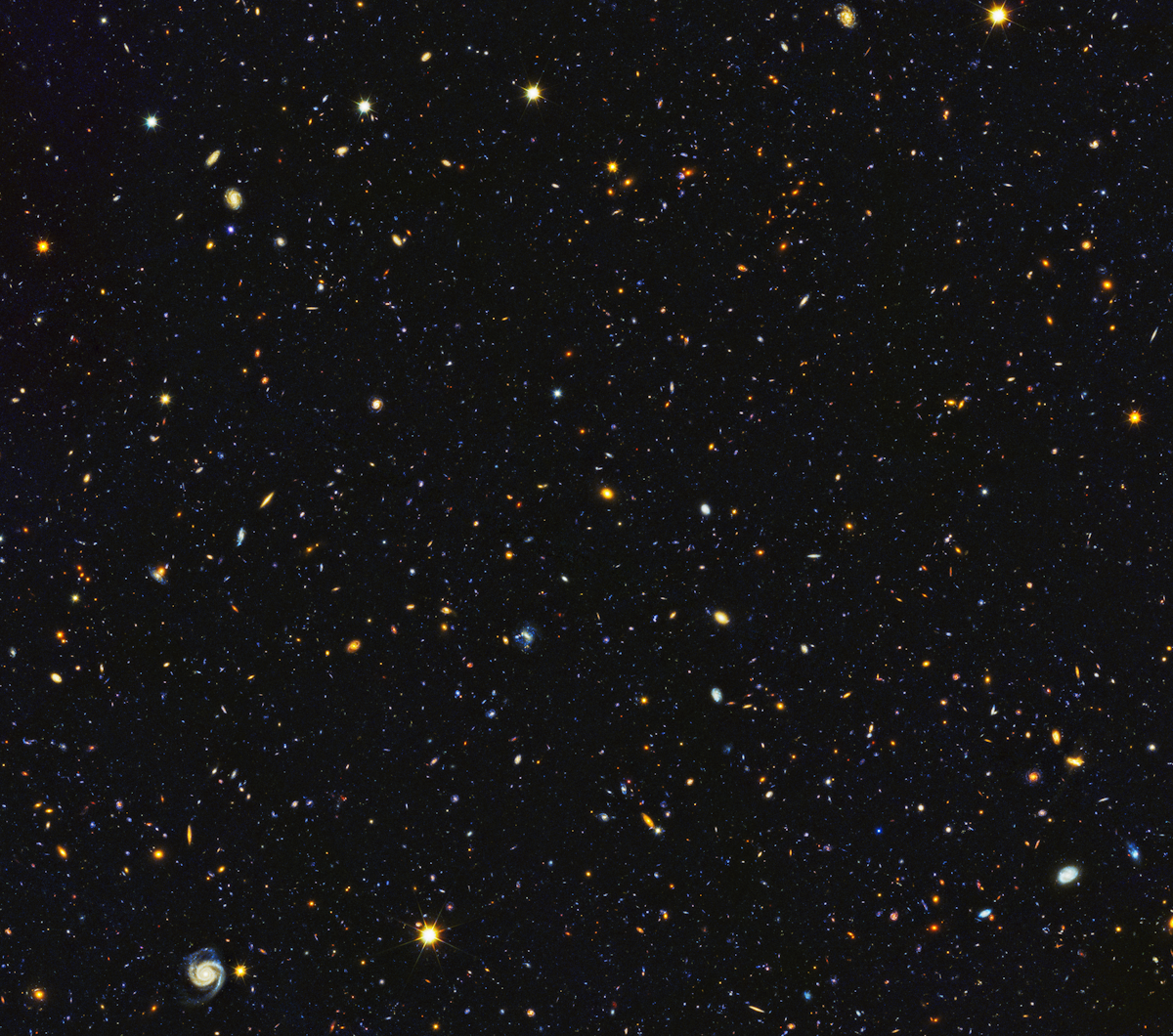
The Milky Way itself is only one galaxy among hundreds of billions of galaxies in the observable universe.
Far from occupying the center, Earth resides on a small rocky planet orbiting an average star in an ordinary galaxy.
Myth: Astronauts Float Because They Are Far From Earth
Many imagine astronauts drifting because they have traveled beyond Earth’s gravity.
In fact, astronauts aboard the International Space Station remain relatively close to Earth.
Their floating results from continuous orbital free fall rather than distance.
Even astronauts traveling to the Moon still experienced significant gravitational forces from both Earth and the Moon throughout their journey.
Gravity’s influence extends infinitely, although it weakens with distance.
Myth: Pluto Is No Longer Part of the Solar System
When Pluto was reclassified as a dwarf planet in 2006, many people believed it had somehow been removed from the Solar System.
Nothing could be further from the truth.
Pluto still orbits the Sun exactly as it always has.
The change simply reflects a more precise scientific definition of what qualifies as a planet.
Pluto remains one of the Solar System’s most fascinating worlds, featuring mountains of water ice, nitrogen glaciers, and a surprisingly complex geology revealed by NASA’s New Horizons spacecraft.
Myth: Every Galaxy Looks Like the Milky Way
The Milky Way is a beautiful spiral galaxy, but galaxies come in many forms.
Some are elegant spirals with sweeping arms.
Others are smooth elliptical galaxies containing mostly older stars.
Irregular galaxies have chaotic shapes without clear structure.
Some galaxies are tiny dwarfs containing only a few million stars, while giant elliptical galaxies may contain trillions.
Each galaxy reflects its unique history of star formation, mergers, and gravitational interactions.
Myth: Space Exploration Is Only About Visiting Other Planets
Many people think astronomy and space missions exist mainly to send astronauts into space.
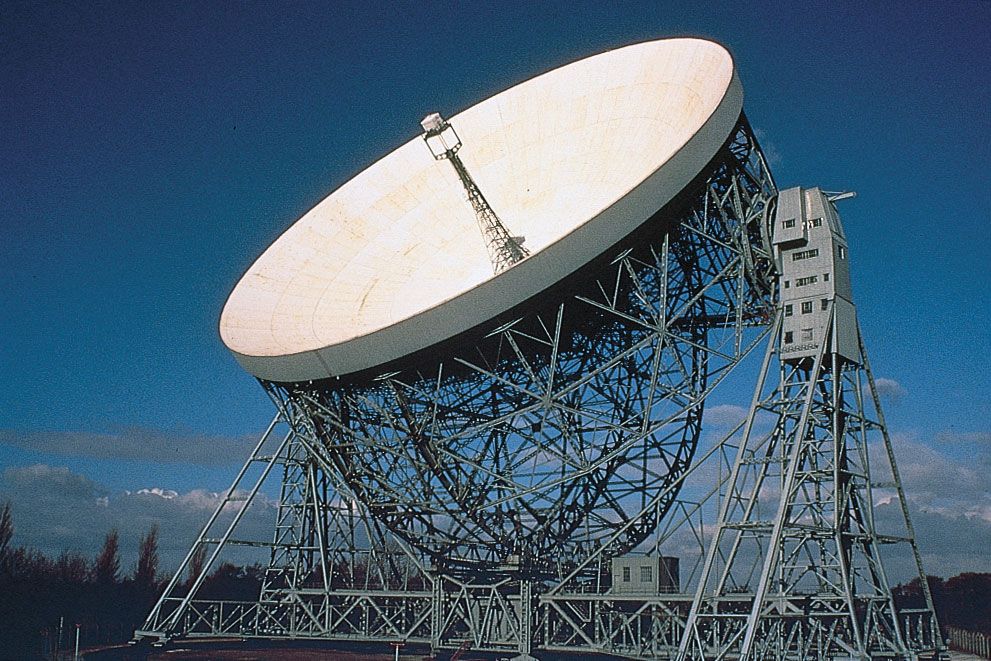
In reality, much of astronomy happens from Earth using powerful telescopes that observe radio waves, infrared light, visible light, ultraviolet radiation, X-rays, and gamma rays.
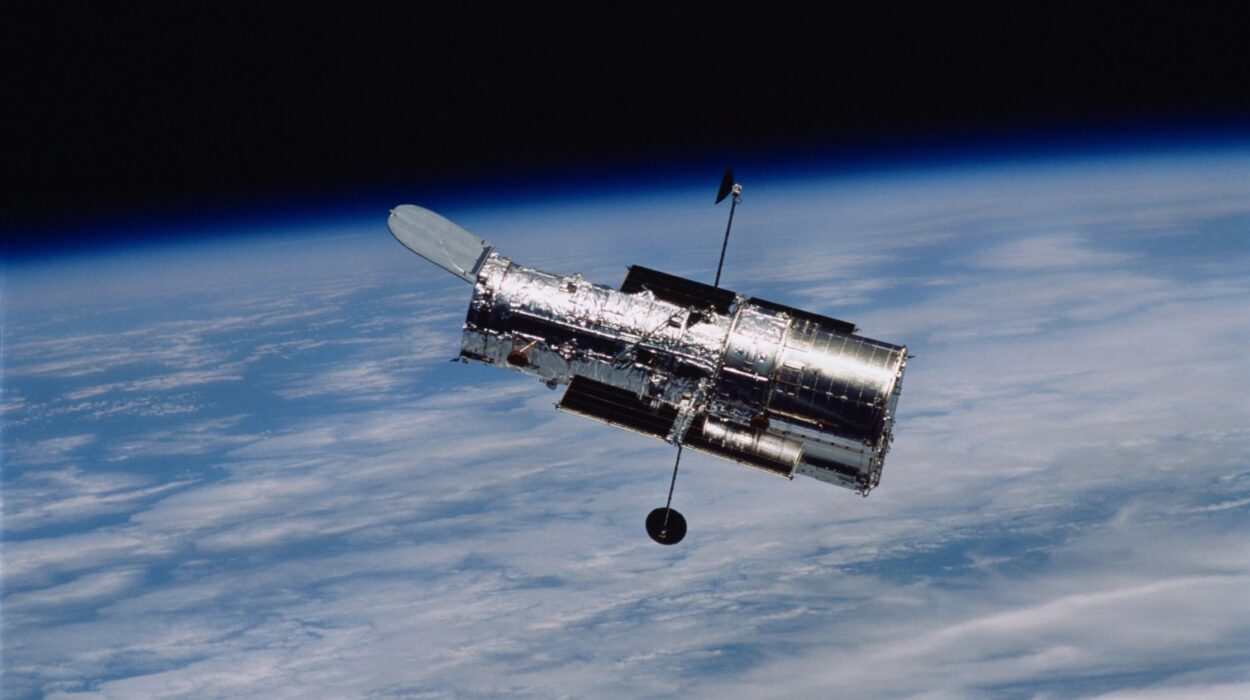
Spacecraft also investigate asteroids, comets, planets, moons, the Sun, and distant galaxies without carrying human crews.
These missions help scientists understand Earth’s climate, monitor dangerous asteroids, discover exoplanets, investigate black holes, and explore the origins of the universe.
Space exploration benefits everyday life through advances in technology, communications, weather forecasting, navigation, and scientific knowledge.
Why Astronomy Myths Continue to Spread
Many astronomy myths survive because they sound intuitive or are repeated in popular culture. Movies, television, social media, and even old textbooks sometimes present simplified or outdated ideas. Human intuition also evolved for life on Earth, not for understanding the enormous scales and unusual physics of the cosmos.
Science, however, constantly tests ideas against evidence. New observations from telescopes, spacecraft, and experiments allow astronomers to replace misconceptions with increasingly accurate explanations. This willingness to revise our understanding is one of science’s greatest strengths.
The Real Universe Is Even More Amazing
Correcting astronomy myths does not make the universe less magical—it makes it far more extraordinary.
The real Sun is not a simple fire but a gigantic nuclear fusion reactor. The Moon does not glow on its own, yet it beautifully reflects sunlight across hundreds of thousands of kilometers. Black holes are not mythical monsters but remarkable predictions of Einstein’s theory of gravity. Space is not an empty void but a dynamic realm filled with galaxies, invisible matter, energetic radiation, and the ingredients for new stars and planets.
Every myth replaced by scientific understanding reveals a deeper truth about the cosmos. As our knowledge continues to grow, the universe becomes not smaller or less mysterious, but richer, more beautiful, and more awe-inspiring than imagination alone could ever create.