Nearly 2,000 years after Mount Vesuvius buried Pompeii, archaeologists have used artificial intelligence to create a digital reconstruction of a man who died while trying to escape the eruption, turning skeletal and archaeological evidence into an image of what he may have looked like.
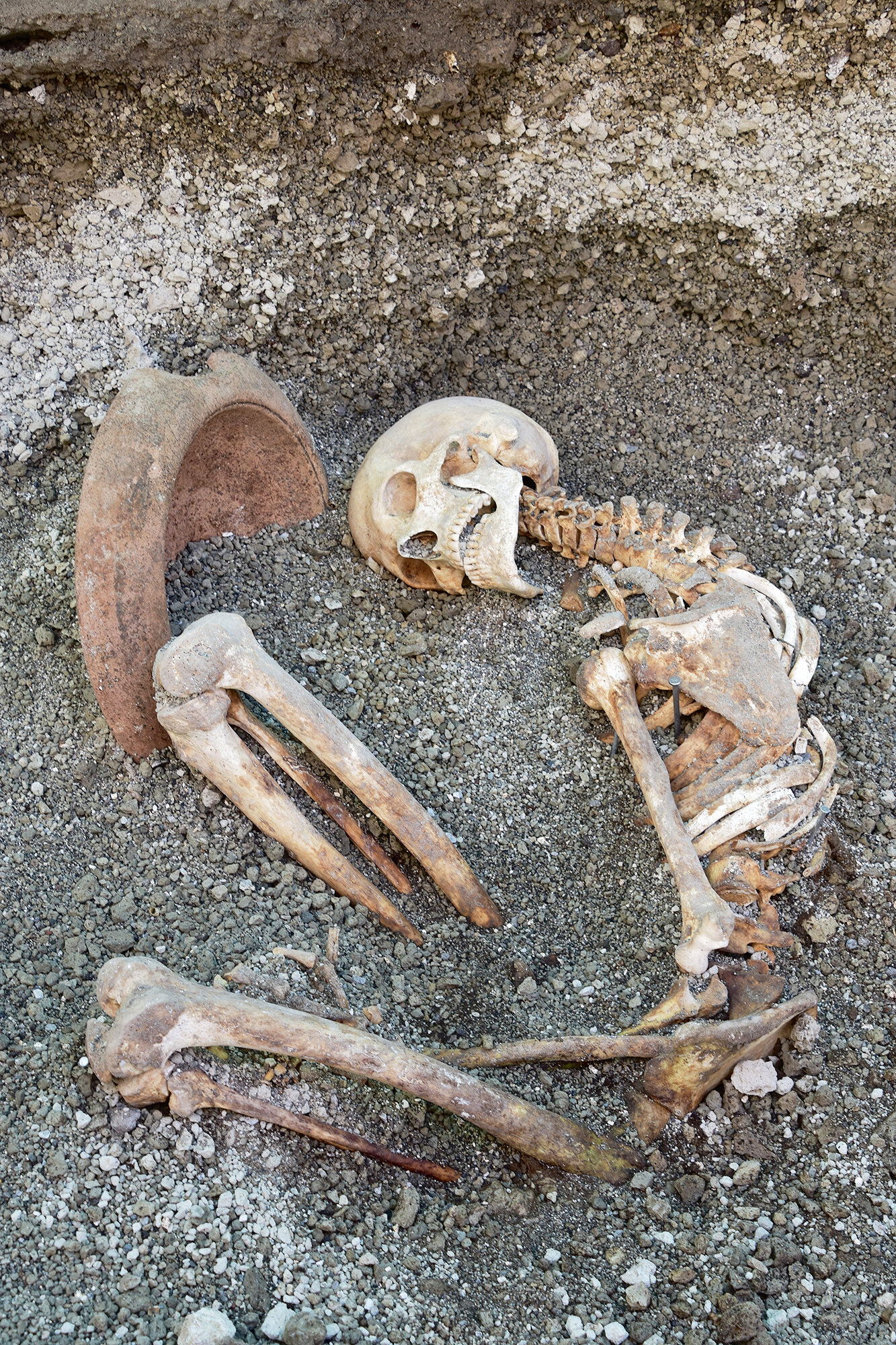
The man’s remains were found with those of another person near the Porta Stabia necropolis, just outside Pompeii’s ancient walls. Archaeologists believe the two were trying to flee toward the coast of what is now Italy when the eruption struck.
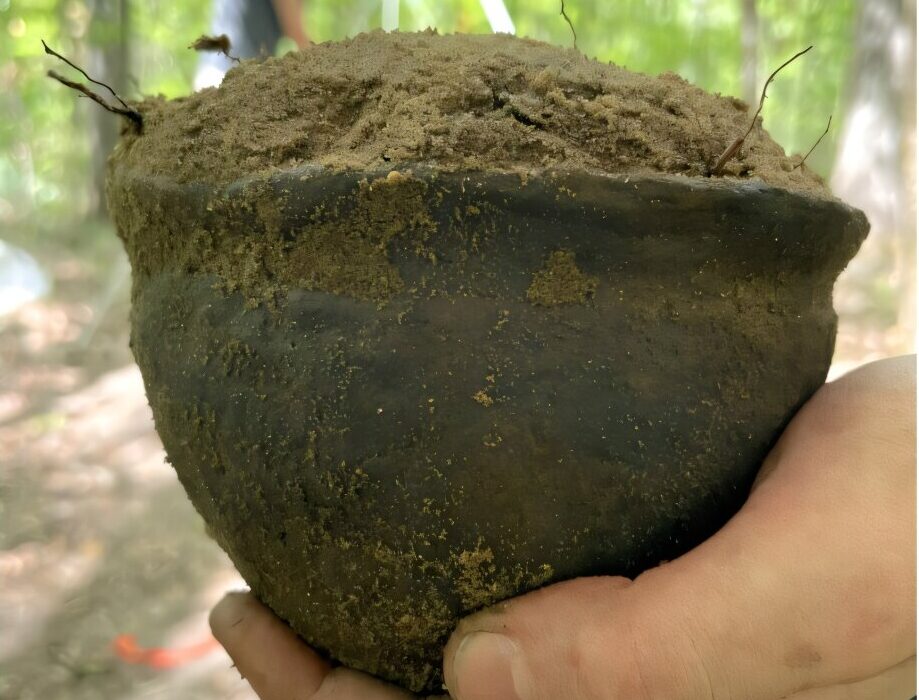
The man is thought to have died early in the disaster, during a heavy fall of volcanic debris. Among the objects found with him was a terracotta mortar. Archaeologists interpreted it as an improvised shield, used to protect his head from the small volcanic stones falling around him.
The AI-generated reconstruction depicts him running along a rough road covered with debris. He holds a large, shallow bowl over his head while Vesuvius erupts behind him.
The image is not a photograph of the man. It is a digital likeness created from archaeological and skeletal evidence using AI and photo-editing techniques.
Objects found with the remains
The man’s belongings provide additional details about his final moments. He was carrying an oil lamp, a small iron ring and 10 bronze coins.
Ancient accounts, including those written by the Roman author Pliny the Younger, describe people in Pompeii using objects to protect themselves as ash and debris covered the city.
Pompeii’s unusual preservation has allowed archaeologists to recover the remains of thousands of people along with extensive evidence of life in the ancient city. The settlement was buried by ash and pumice during the eruption of Mount Vesuvius in AD 79.
Turning archaeological data into a likeness
The reconstruction was developed by the Pompeii Archaeological Park in collaboration with the University of Padua. It was based on archaeological survey data from excavations near the Porta Stabia necropolis.
Pompeii Archaeological Park director Gabriel Zuchtriegel said artificial intelligence could help researchers work with the large volume of archaeological information now available and contribute to the study of classical antiquity.
Researchers also said the project was intended to make archaeological research more accessible and engaging to the public while keeping the reconstruction grounded in scientific evidence.