An underwater burial site in what is now southern Sweden contains the remains of at least 11 Mesolithic adults, most represented only by skulls, with evidence of repeated blows to the head and unusual treatment after death. The findings have left researchers uncertain about why these people were buried in such a striking way.
The remains were found near Kanaljorden, an archaeological site in southern Sweden where archaeologists have worked since 2009. Animal remains were uncovered first, but human remains were not found until 2011.
At the time the burial site was used, the location would have been the bottom of a shallow lake. The lakebed was covered with tightly packed stones, and human remains had been placed on top of them.
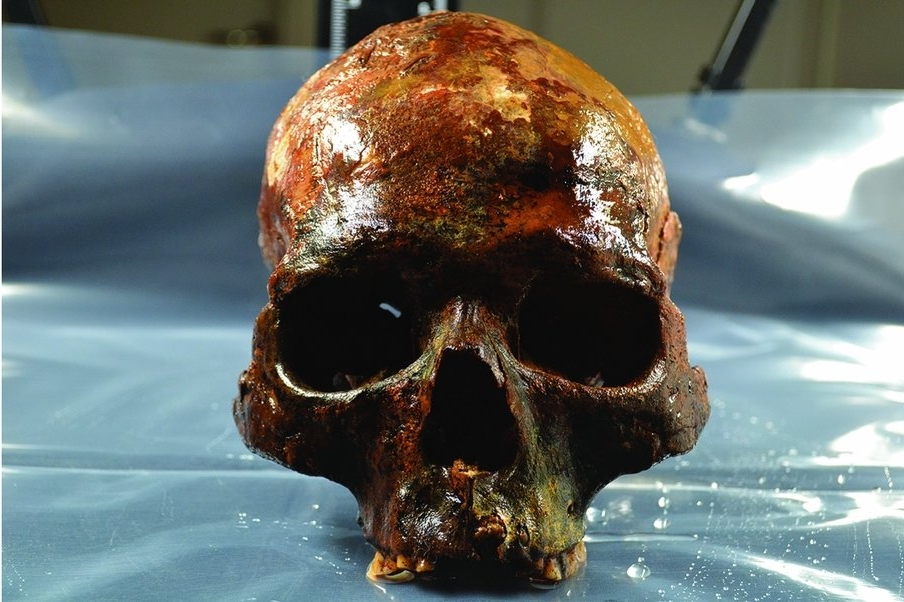
So far, researchers have identified the remains of 11 adults. With one exception, the adult remains consisted of skulls without their jawbones. The site also contained the remains of one infant.
The unusual arrangement is difficult to explain from the remains alone. The researchers note that Mesolithic people were hunter-gatherers and were generally known for disposing of their dead in simple, respectful ways. The treatment of the skulls at Kanaljorden does not fit easily into that picture.
Every adult skull had signs of head trauma
The skulls provide another unusual detail. All of the adult skulls showed evidence of trauma, with each having been struck in the head multiple times.
The injuries also differed according to sex. The males had been struck on the top or toward the front of the head, while the females were typically struck from behind.
None of the injuries appeared to have been life-threatening. Because the researchers recovered only the skulls rather than the complete bodies, they could not determine what ultimately caused the deaths.
At least two skulls had another unusual feature. Evidence suggests that a stick had been pushed through an opening at the base of the skull and out through the top. Such treatment is normally associated with posting a skull, a practice linked to displaying skulls to frighten enemies.
That makes the finds particularly difficult to interpret because hunter-gatherers were not known for posting skulls or for similarly gruesome funeral practices.
The researchers cannot yet explain the treatment
The evidence does not establish exactly how the people died or why their remains were placed at the underwater site.
One possibility raised by the researchers is that the people died or were killed somewhere else and were later transported to the burial location. They suggest that the individuals may have been regarded as exceptional in some way, although the findings do not provide an explanation for what that distinction might have been.
For now, the unusual combination of head injuries, missing jawbones, skull treatment and underwater burial remains unresolved.
The study was published in Antiquity.