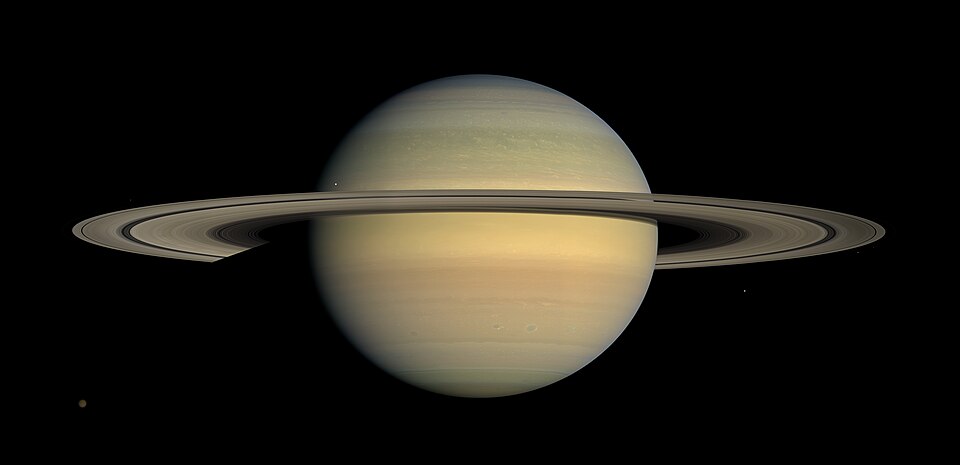
When people imagine the beauty of the Solar System, one planet almost always comes to mind first: Saturn. With its breathtaking rings stretching across space like a giant cosmic crown, Saturn is one of the most recognizable and fascinating worlds ever discovered. It has inspired astronomers, artists, storytellers, and space enthusiasts for centuries.
Yet Saturn is far more than just a beautiful planet. Beneath its stunning rings lies a gigantic world made mostly of hydrogen and helium, with fierce storms, powerful winds, mysterious moons, and a magnetic field that stretches millions of kilometers into space. It is a planet of extremes, where weather behaves unlike anything on Earth and where some of the Solar System’s most intriguing mysteries continue to unfold.
As the sixth planet from the Sun and the second-largest planet in the Solar System, Saturn has helped scientists better understand how giant planets form, how planetary rings evolve, and even where life might exist beyond Earth. Every new mission and every new observation reveals another piece of Saturn’s incredible story.
Saturn at a Glance
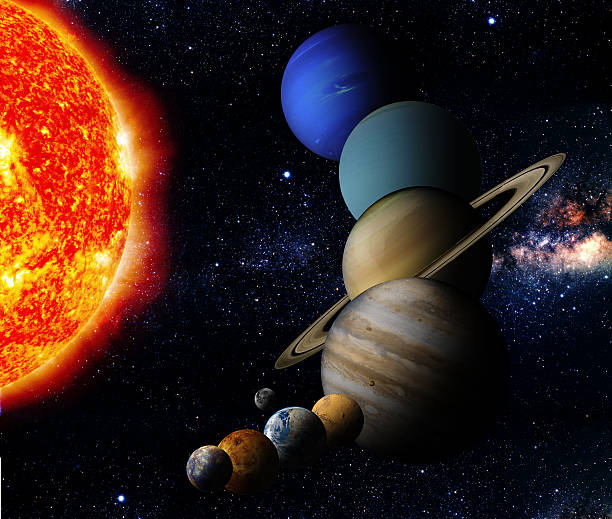
Saturn is the sixth planet from the Sun, located between Jupiter and Uranus. It belongs to a group known as the gas giants, along with Jupiter, Uranus, and Neptune. These planets are much larger than the rocky inner planets—Mercury, Venus, Earth, and Mars—and are composed primarily of gases and fluids rather than solid rock.
Saturn orbits the Sun at an average distance of about 1.4 billion kilometers (886 million miles), which means sunlight takes roughly 80 minutes to reach it. At this distance, the Sun appears much smaller and dimmer than it does from Earth.
Despite being so far away, Saturn has been known since ancient times because it is bright enough to be seen with the naked eye. Early civilizations watched it slowly move across the night sky without realizing it was an enormous world nearly ten times wider than Earth.
Why Is Saturn Called Saturn?
The name Saturn comes from Roman mythology. Saturn was the Roman god of agriculture, wealth, and time. He was considered the father of Jupiter, the king of the Roman gods.
The Romans named the planet after Saturn because it moved slowly across the sky. Even today, Saturn remains one of the slowest-moving planets visible without a telescope, taking nearly 30 Earth years to complete one journey around the Sun.
How Big Is Saturn?
Saturn is truly enormous.
Its average diameter is about 120,500 kilometers (74,900 miles), making it more than nine times wider than Earth. If Saturn were hollow, more than 760 Earth-sized planets could fit inside its volume.
Even though Saturn is smaller than Jupiter, it is still the second-largest planet in the Solar System.
Standing on Saturn would be impossible because it does not have a solid surface like Earth. Instead, its atmosphere gradually becomes denser with depth until it transitions into layers of liquid hydrogen and other exotic forms of matter.
What Is Saturn Made Of?
Saturn is composed mostly of hydrogen and helium, the same elements that make up the Sun.
The upper atmosphere consists mainly of hydrogen gas with smaller amounts of helium, methane, ammonia, and water vapor. As scientists look deeper into the planet, increasing pressure compresses the hydrogen into a liquid.
Far below the visible clouds, hydrogen may become metallic hydrogen—a remarkable state in which hydrogen behaves like an electrically conducting metal. This layer is thought to help generate Saturn’s powerful magnetic field.
At the center lies a dense core that likely contains rock, metals, and various types of ice. Although scientists have learned much about Saturn’s interior, many details remain uncertain because no spacecraft has ever traveled deep inside the planet.
Why Does Saturn Have Rings?
Saturn’s rings are its most famous feature and one of the greatest wonders of the Solar System.
Although several planets have rings, none compare with Saturn’s in size, brightness, or complexity.
The rings consist of countless pieces of ice, rock, and dust orbiting the planet. Some particles are no larger than grains of sand, while others are as large as mountains.
Most of the ring material is made of water ice, which reflects sunlight extremely well and gives the rings their brilliant appearance.
Scientists believe the rings may have formed when a moon, comet, or asteroid wandered too close to Saturn and was torn apart by the planet’s powerful gravity. Another possibility is that they formed from leftover material that never combined into a moon during the Solar System’s early history.
Research suggests that Saturn’s current bright rings may be relatively young compared with the age of the Solar System, though scientists continue to debate exactly when they formed.
How Many Rings Does Saturn Have?
From Earth, Saturn’s rings often appear as one continuous structure.
In reality, they are divided into thousands of smaller ringlets grouped into several major rings. The largest are known as the A, B, and C rings, while several fainter rings lie farther from the planet.
Between some rings are large gaps created by the gravitational influence of Saturn’s moons. One of the best known is the Cassini Division, a broad dark region separating the A and B rings.
Far from being static, Saturn’s rings are constantly changing as particles collide, drift, and interact with nearby moons.
What Is the Weather Like on Saturn?
Saturn’s atmosphere is one of the most dynamic in the Solar System.
Powerful winds race around the planet at speeds exceeding 1,800 kilometers per hour (1,100 miles per hour) near the equator. These winds are far stronger than the most intense hurricanes on Earth.
The atmosphere displays bands of clouds made from different chemicals, including ammonia ice and water deeper below.
Massive storms periodically erupt across Saturn. Some grow so large they can wrap around much of the planet before fading away.
One of Saturn’s most remarkable weather features is a gigantic hexagon-shaped jet stream surrounding the north pole. This six-sided pattern is unlike anything found on Earth and has remained stable for decades. Scientists continue studying how such an unusual atmospheric structure forms and persists.
How Cold Is Saturn?
Because Saturn is so far from the Sun, it receives much less solar energy than Earth.
The average temperature near the tops of its clouds is about minus 178 degrees Celsius (minus 288 degrees Fahrenheit).
At these temperatures, water freezes solid, and ammonia can form icy clouds.
Despite the intense cold at the cloud tops, temperatures increase dramatically deep inside the planet because pressure becomes enormous and Saturn generates additional heat from its interior.
Does Saturn Produce Its Own Heat?
One surprising fact about Saturn is that it emits more energy than it receives from the Sun.
Scientists believe this extra heat comes from the planet’s slow gravitational contraction and from helium droplets sinking deeper into the interior. As helium falls through liquid hydrogen, gravitational energy is converted into heat.
This internal heat helps power Saturn’s weather and contributes to its active atmosphere.
How Long Is a Day on Saturn?
Saturn spins incredibly fast.
One rotation takes about 10.5 hours, meaning a day on Saturn is less than half the length of an Earth day.
This rapid rotation causes the planet to bulge at its equator. Instead of being perfectly round, Saturn is slightly flattened from pole to pole.
How Long Is a Year on Saturn?
Although Saturn rotates quickly, it moves much more slowly around the Sun.
One complete orbit takes about 29.5 Earth years.
This means that someone born during one Saturn year would celebrate their first birthday nearly three decades after birth on Earth.
The long orbit also means each season on Saturn lasts more than seven Earth years.
Saturn’s Powerful Magnetic Field
Saturn possesses a strong magnetic field generated deep within its interior.
The magnetic field traps charged particles from the Sun, creating radiation belts surrounding the planet.
It also produces beautiful auroras near Saturn’s poles. Similar to Earth’s northern and southern lights, these glowing displays occur when energetic particles interact with gases high in the atmosphere.
Studying Saturn’s magnetic field helps scientists understand planetary interiors and the behavior of giant planets throughout the universe.
The Amazing Moons of Saturn
Saturn has an extraordinary family of moons. Thanks to ongoing discoveries, astronomers have identified well over one hundred confirmed moons orbiting the planet.
These moons vary enormously in size, appearance, and composition. Some are tiny irregular objects only a few kilometers across, while others are large enough to be considered worlds in their own right.
Each moon tells a different story about the formation and evolution of the Saturnian system.
Titan: A World Like No Other
Among Saturn’s moons, Titan stands out as one of the most fascinating places in the Solar System.
Titan is larger than the planet Mercury and is the only moon known to possess a thick atmosphere.
Its atmosphere is composed mainly of nitrogen, much like Earth’s, although it also contains methane and other hydrocarbons.
Instead of water lakes, Titan has lakes and seas filled with liquid methane and ethane.
Rain falls from methane clouds.
Rivers carve channels across the landscape.
Sand dunes made of frozen organic materials stretch across vast regions.
Beneath Titan’s icy crust, scientists believe a global ocean of liquid water may exist.
Because Titan contains complex organic chemistry and a hidden water ocean, it is considered one of the most promising places to study the ingredients necessary for life.
Enceladus and the Search for Life
Another extraordinary moon is Enceladus.
Although much smaller than Titan, Enceladus has become one of the most important targets in the search for extraterrestrial life.
Spacecraft observations revealed enormous geysers erupting from fractures near its south pole. These plumes spray water vapor, ice particles, salts, and organic compounds into space.
The evidence indicates that a global liquid-water ocean exists beneath Enceladus’s icy shell.
Scientists have also detected chemicals that suggest hydrothermal activity on the ocean floor, where hot water interacts with rock.
On Earth, similar environments support thriving ecosystems without sunlight.
While no evidence of life has been found on Enceladus, it possesses many of the key ingredients considered necessary for life as we know it.
Other Interesting Moons
Saturn’s moon Mimas resembles the fictional Death Star because of its enormous impact crater.
Iapetus has one hemisphere that is remarkably dark while the other is unusually bright.
Hyperion has an irregular shape and a sponge-like surface covered with deep craters.
Rhea, Dione, Tethys, and several other icy moons continue to reveal clues about the early Solar System.
Together, Saturn’s moons create one of the richest and most diverse planetary systems known.
Can Humans Stand on Saturn?
No.
Saturn has no solid surface on which a person or spacecraft could stand.
As an object descended through the atmosphere, it would encounter increasing pressure and temperature. Eventually, these conditions would become so extreme that any known spacecraft would be crushed and destroyed long before reaching the deep interior.
For this reason, scientists study Saturn using orbiting spacecraft and remote observations rather than landers.
How Has Saturn Been Explored?
For centuries, astronomers observed Saturn through telescopes.
The invention of better telescopes revealed the rings and gradually uncovered many of its moons.
During the Space Age, robotic spacecraft transformed our understanding of the planet.
NASA’s Pioneer 11 became the first spacecraft to fly past Saturn in 1979.
The Voyager 1 and Voyager 2 missions followed, sending back stunning images and valuable scientific data during the early 1980s.
The greatest leap came with the Cassini-Huygens mission, a collaboration between NASA, the European Space Agency (ESA), and the Italian Space Agency (ASI).
Launched in 1997, Cassini arrived at Saturn in 2004 and spent more than 13 years studying the planet, its rings, and its moons.
The Huygens probe detached from Cassini and landed on Titan in 2005, becoming the first spacecraft ever to land in the outer Solar System.
Cassini discovered new moons, studied the ring system in remarkable detail, observed giant storms, investigated Titan’s methane lakes, and revealed the water plumes erupting from Enceladus.
To prevent contaminating potentially habitable moons, the mission ended in 2017 with Cassini intentionally diving into Saturn’s atmosphere, where it transmitted scientific data until the final moments before being destroyed.
Could Saturn Support Life?
Saturn itself is almost certainly incapable of supporting life as we know it.
Its atmosphere lacks a solid surface, temperatures and pressures become extreme with depth, and its environment is hostile to living organisms.
However, some of Saturn’s moons are different.
Titan and Enceladus have become major focuses in the search for life beyond Earth because they possess environments that may contain liquid water, organic molecules, and energy sources.
Future missions will continue exploring these intriguing worlds.
Can You See Saturn From Earth?
Yes.
Saturn is one of the brightest planets in the night sky and can often be seen without any optical aid.
To the naked eye, it appears as a steady golden point of light that does not twinkle as much as nearby stars.
Even a small telescope reveals its magnificent rings, making Saturn one of the most rewarding objects for amateur astronomers.
For many people, seeing Saturn through a telescope for the first time is an unforgettable experience that inspires a lifelong interest in astronomy.
Why Saturn Is So Important to Science
Saturn is much more than a beautiful planet.
It serves as a natural laboratory where scientists study planetary formation, atmospheric physics, ring dynamics, magnetic fields, and the evolution of moons.
Research on Saturn helps astronomers understand not only our own Solar System but also the many giant planets discovered orbiting distant stars.
Its diverse collection of moons provides valuable clues about where life might exist elsewhere in the universe.
Every discovery at Saturn expands our understanding of how planets and planetary systems evolve.
Conclusion
Saturn is one of the most extraordinary worlds ever known. Its brilliant rings, immense size, powerful storms, intricate magnetic field, and remarkable family of moons make it unlike any other planet in the Solar System. Although it appears peaceful from afar, Saturn is a place of constant motion, shaped by gravity, ice, gas, and powerful natural forces.
As scientists continue to study this magnificent giant, Saturn reminds us that the universe is filled with beauty, mystery, and endless opportunities for discovery. Every observation brings new questions, every mission uncovers new surprises, and every glimpse of its shining rings inspires us to look farther into the cosmos and wonder what other remarkable worlds are waiting to be explored.