Every year, something extraordinary happens without us even noticing. Trees burst into bloom, summer sunshine warms the land, colorful leaves drift to the ground, and winter blankets parts of the world with snow. These changes happen so reliably that people have built calendars, festivals, farming traditions, and entire cultures around them.
But have you ever wondered why Earth has seasons?
At first glance, the answer seems obvious. Many people believe that Earth experiences summer because it is closer to the Sun and winter because it is farther away. It sounds reasonable, but it is actually incorrect.
The real reason is even more fascinating.
Earth’s seasons are created by the way our planet is tilted as it travels around the Sun. A slight tilt in Earth’s axis changes the angle and duration of sunlight throughout the year, transforming landscapes, weather, ecosystems, and life itself.
Understanding why Earth has seasons reveals one of the most elegant examples of how a simple physical principle shapes the entire living world.
What Are the Seasons?
A season is a period of the year characterized by changing weather patterns, daylight hours, and temperatures.
In many parts of the world, people recognize four seasons: spring, summer, autumn (or fall), and winter.
Spring is often associated with warming temperatures and new plant growth.
Summer usually brings the longest days and the warmest weather.
Autumn marks the gradual cooling of temperatures and the changing colors of leaves.
Winter is generally the coldest season, with the shortest days and, in many regions, snow and ice.
Although these seasonal patterns are familiar, they are not the same everywhere on Earth. Some regions experience only wet and dry seasons, while others remain warm throughout the year with relatively little seasonal temperature change.
The reason for these differences lies in Earth’s position and orientation in space.
Earth Travels Around the Sun
Earth orbits the Sun once every year, completing one full journey in about 365.25 days.
Its orbit is slightly elliptical, meaning it is not a perfect circle. However, the orbit is nearly circular, and the difference in Earth’s distance from the Sun during the year is relatively small.
During early January, Earth is actually closest to the Sun, a point known as perihelion.
During early July, Earth is farthest from the Sun, a point called aphelion.
This fact surprises many people because January is winter in the Northern Hemisphere while July is summer.
If distance from the Sun determined the seasons, both hemispheres would experience the same seasons at the same time. Instead, they experience opposite seasons.
This tells us that Earth’s distance from the Sun is not the main cause of the seasons.
Earth’s Axis Is Tilted
The true reason Earth has seasons is its axial tilt.
Earth spins around an imaginary line called its axis. This axis passes through the North Pole and South Pole.
Instead of standing perfectly upright, Earth’s axis is tilted by about 23.5 degrees relative to the plane of its orbit around the Sun.
This tilt remains nearly constant as Earth travels around the Sun.
Imagine carrying a spinning globe around a lamp while keeping the globe tilted in the same direction. As the globe moves, different parts receive sunlight from different angles.
This is exactly what happens with Earth.
That small tilt changes everything.
How Sunlight Changes Throughout the Year
Sunlight does not strike every part of Earth equally.
When sunlight shines directly overhead, its energy is concentrated into a smaller area, making it much more effective at warming the surface.
When sunlight arrives at a lower angle, the same amount of energy is spread over a larger area. As a result, the surface receives less energy and stays cooler.
During summer in one hemisphere, that hemisphere is tilted toward the Sun.
The Sun appears higher in the sky.
Sunlight arrives more directly.
The days become longer.
More solar energy reaches the ground.
Temperatures gradually rise.
Six months later, that same hemisphere is tilted away from the Sun.
The Sun appears lower in the sky.
Sunlight arrives at a much shallower angle.
Days become shorter.
Less solar energy reaches the surface.
Temperatures gradually fall.
This yearly change in sunlight is what creates the seasons.
Longer Days Mean More Heating
Another important reason for seasonal changes is the length of daylight.
During summer, the Sun remains above the horizon for more hours each day.
The land and oceans receive sunlight for a longer time, allowing them to absorb more energy.
Although some heat escapes during the night, the long days provide enough additional energy for temperatures to rise.
During winter, daylight becomes much shorter.
There are fewer hours for the Sun to warm the surface and longer nights during which the ground loses heat.
The combination of weaker sunlight and shorter days produces colder conditions.
Why Summer Is Not the Hottest Day of the Year
An interesting feature of Earth’s climate is that the longest day of the year is usually not the hottest.
Likewise, the shortest day is usually not the coldest.
This delay happens because Earth’s surface and oceans store enormous amounts of heat.
Land, water, and the atmosphere continue absorbing more energy than they lose for several weeks after the summer solstice, causing temperatures to keep rising.
Similarly, after the winter solstice, Earth continues losing more heat than it gains for some time, allowing temperatures to keep falling before gradually warming again.
This phenomenon is known as seasonal lag.
Opposite Seasons in the Two Hemispheres
Because Earth’s axis remains tilted in the same direction throughout its orbit, the Northern and Southern Hemispheres experience opposite seasons.
When the Northern Hemisphere is tilted toward the Sun, it enjoys summer.
At exactly the same time, the Southern Hemisphere is tilted away from the Sun and experiences winter.
Six months later, the situation reverses.
When people are enjoying sunny beaches in Europe, North America, or northern Asia, people in Australia, New Zealand, Argentina, and parts of South Africa are experiencing winter.
This opposite pattern is one of the strongest pieces of evidence that Earth’s tilt—not its distance from the Sun—creates the seasons.
The Solstices
Twice each year, Earth reaches positions where one hemisphere is tilted as much as possible toward or away from the Sun.
These moments are called the solstices.
Around June 20 or 21, the Northern Hemisphere experiences the summer solstice.
This is the longest day of the year there.
At the same time, the Southern Hemisphere experiences its winter solstice and its shortest day.
Around December 21 or 22, the opposite occurs.
The Northern Hemisphere has its winter solstice with the year’s shortest day, while the Southern Hemisphere experiences its summer solstice and longest day.
The word “solstice” comes from Latin words meaning “Sun stands still,” reflecting the fact that the Sun’s apparent movement north or south in the sky briefly pauses before reversing direction.
The Equinoxes
Between the solstices come two important moments called the equinoxes.
Around March 20 or 21, the March equinox occurs.
Around September 22 or 23, the September equinox takes place.
During an equinox, neither hemisphere is tilted significantly toward or away from the Sun.
Day and night are nearly equal in length across much of the world.
These dates mark the beginning of spring and autumn in many countries, although meteorological seasons may use different starting dates based on temperature records.
Why the Tropics Have Smaller Seasonal Changes
People living near the equator often notice that seasonal temperature changes are much smaller than those experienced farther north or south.
This happens because the equator receives relatively direct sunlight throughout the entire year.
The angle of sunlight changes only slightly.
Day length also remains close to 12 hours year-round.
As a result, temperatures stay fairly consistent.
Instead of four distinct seasons, many tropical regions experience alternating wet and dry seasons caused mainly by changing rainfall patterns rather than large temperature differences.
Why Polar Regions Have Extreme Seasons
Near the North Pole and South Pole, seasonal changes become much more dramatic.
During summer, the Sun may remain above the horizon for weeks or even months.
This phenomenon is called the midnight Sun.
During winter, the opposite occurs.
The Sun may remain below the horizon continuously, creating the polar night.
Although the Sun never rises during polar winter, it eventually returns as Earth continues its journey around the Sun.
These extreme changes result directly from Earth’s tilted axis.
The Role of the Atmosphere
Earth’s atmosphere influences how seasons are experienced.
Air absorbs, reflects, and scatters sunlight.
Clouds affect how much solar energy reaches the ground.
Winds move warm and cold air across continents.
Ocean currents transport enormous amounts of heat around the globe.
Because of these factors, places at similar latitudes can experience very different climates.
For example, western Europe is generally milder during winter than parts of eastern Canada located at similar latitudes because warm Atlantic Ocean currents help moderate temperatures.
Physics explains the changing sunlight, while the atmosphere and oceans shape the weather people actually experience.
Mountains and Elevation
Elevation also affects seasonal temperatures.
As altitude increases, air pressure decreases, and the atmosphere becomes thinner.
Higher elevations generally have lower temperatures throughout the year.
This is why mountain peaks may remain snow-covered even during summer while nearby valleys experience warm weather.
Seasonal changes still occur, but temperatures begin from a colder baseline.
Why Seasons Differ Around the World
Not every place experiences the seasons in the same way.
Deserts may become extremely hot during summer but surprisingly cold during winter nights.
Coastal regions often have milder seasonal changes because nearby oceans warm and cool more slowly than land.
Continental interiors usually experience larger seasonal temperature differences because land responds more quickly to changes in sunlight.
Rainfall patterns, altitude, ocean currents, vegetation, and local geography all influence how each season feels.
Although Earth’s tilt is the underlying cause everywhere, local conditions produce tremendous variety.
Seasons and Life on Earth
The changing seasons shape nearly every form of life.
Plants respond to changing daylight by producing flowers, fruits, and seeds.
Many trees shed their leaves before winter to conserve water and survive freezing temperatures.
Animals migrate to warmer regions or areas with more abundant food.
Some mammals enter hibernation, slowing their metabolism during cold months.
Birds often travel thousands of kilometers between breeding and wintering grounds.
Insects adjust their life cycles to seasonal temperatures.
Humans have also adapted their activities to seasonal changes for thousands of years.
Agriculture depends on understanding planting and harvesting seasons.
Traditional celebrations around the world often coincide with seasonal events such as solstices, equinoxes, harvests, and the arrival of spring.
Without Earth’s seasons, ecosystems and human civilization would look very different.
Would Seasons Exist Without Earth’s Tilt?
If Earth’s axis were not tilted at all, seasons would almost disappear.
Every location would receive nearly the same amount of sunlight throughout the year.
Day length would remain close to 12 hours everywhere.
The Sun would follow almost identical paths across the sky every day.
Weather would still vary because of storms, ocean currents, and other factors, but the familiar cycle of spring, summer, autumn, and winter would largely vanish.
Many plants and animals that rely on seasonal changes might never have evolved in their present forms.
What If Earth’s Tilt Were Larger?
Earth’s 23.5-degree tilt produces moderate seasons.
If the tilt were much larger, seasonal differences would become far more extreme.
Summers would be much hotter.
Winters would become much colder.
Polar regions could receive even longer periods of continuous sunlight and darkness.
Large seasonal swings would affect weather, ecosystems, and agriculture in profound ways.
Conversely, if Earth’s tilt were much smaller, seasonal differences would become weaker.
Do Other Planets Have Seasons?
Earth is not the only planet with seasons.
Mars also has seasons because its axis is tilted by about 25 degrees, very similar to Earth’s.
However, because Mars takes nearly two Earth years to orbit the Sun, each Martian season lasts much longer.
Saturn experiences seasons as well because its axis is tilted by about 27 degrees.
Since Saturn requires nearly 30 Earth years to complete one orbit, each season lasts more than seven Earth years.
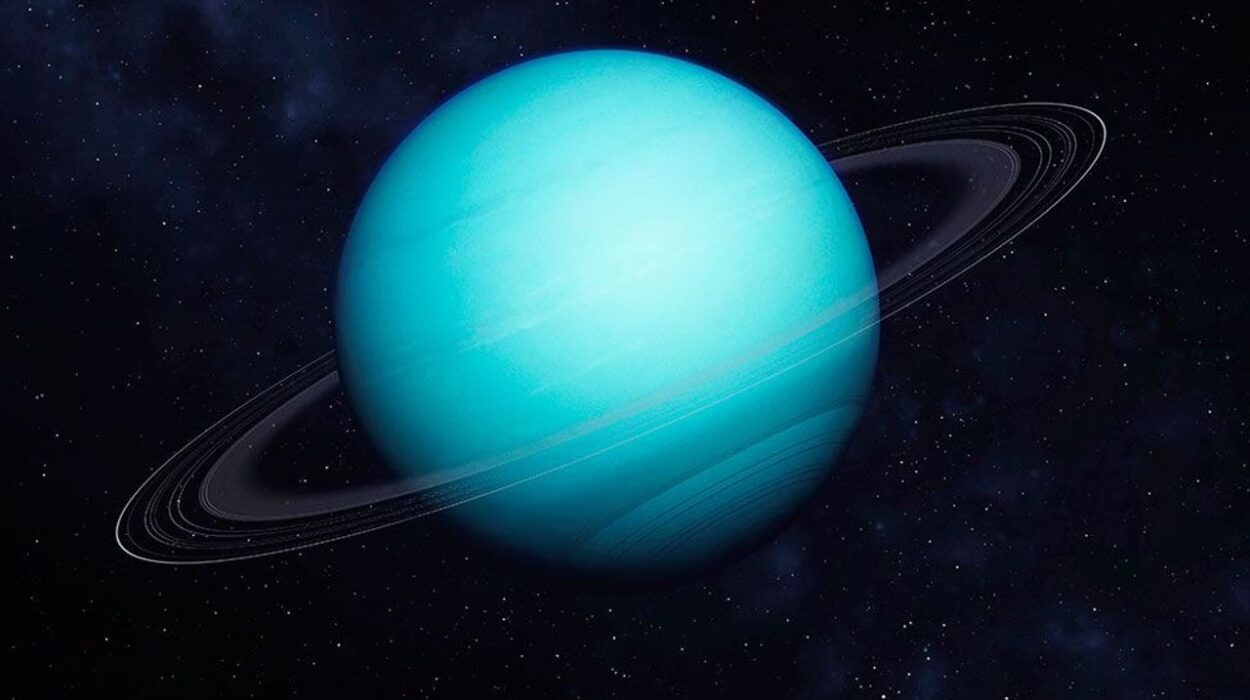
Uranus presents one of the most extraordinary cases.
Its axis is tilted by about 98 degrees, meaning the planet essentially rotates on its side.
As Uranus orbits the Sun, each pole experiences about 42 years of continuous daylight followed by about 42 years of darkness.
These examples show that seasons are a natural consequence of planetary tilt, not a feature unique to Earth.
Common Misconceptions About the Seasons
One of the most widespread misconceptions is that Earth has summer because it moves closer to the Sun.
In reality, Earth is closest to the Sun during early January, when the Northern Hemisphere is experiencing winter.
The small change in Earth’s distance from the Sun affects the amount of incoming solar energy only slightly and is far too small to explain the dramatic seasonal differences observed across the globe.
The angle of sunlight and the length of daylight are the true drivers of the seasons.
This understanding is supported by centuries of astronomical observations and modern measurements.
The Remarkable Balance of Earth’s Seasons
Earth’s seasons are more than changes in weather—they are a reflection of our planet’s graceful journey through space.
A tilt of just 23.5 degrees, maintained over billions of years as Earth circles the Sun, creates the changing rhythms that shape forests, oceans, wildlife, agriculture, and human life itself.
Every blooming flower in spring, every long summer evening, every colorful autumn landscape, and every quiet winter snowfall tells the story of a planet moving through space with remarkable precision.
The changing seasons remind us that even a small tilt can transform an entire world. Through the elegant laws of physics and astronomy, Earth’s yearly journey creates one of nature’s most beautiful and familiar cycles—a cycle that has inspired wonder, guided civilizations, and sustained life for millions of years.