Imagine standing on a world where one side can become hot enough to melt lead, while the other side can plunge to temperatures colder than Antarctica’s coldest winter. A place where a single day lasts longer than an entire year. A world covered in ancient craters that have remained almost unchanged for billions of years. This extraordinary place is Mercury, the smallest planet in our Solar System and the closest planet to the Sun.
Although Mercury is often overshadowed by larger and more colorful planets like Jupiter, Saturn, and Mars, it is one of the most fascinating worlds astronomers have ever studied. Beneath its gray, heavily cratered surface lies a planet that has challenged scientific understanding for centuries. From its enormous iron core to mysterious ice hidden inside permanently shadowed craters, Mercury continues to surprise scientists and reveal important clues about how rocky planets form and evolve.
Mercury may seem like a quiet, lifeless world, but it has an incredible story to tell.
Mercury at a Glance
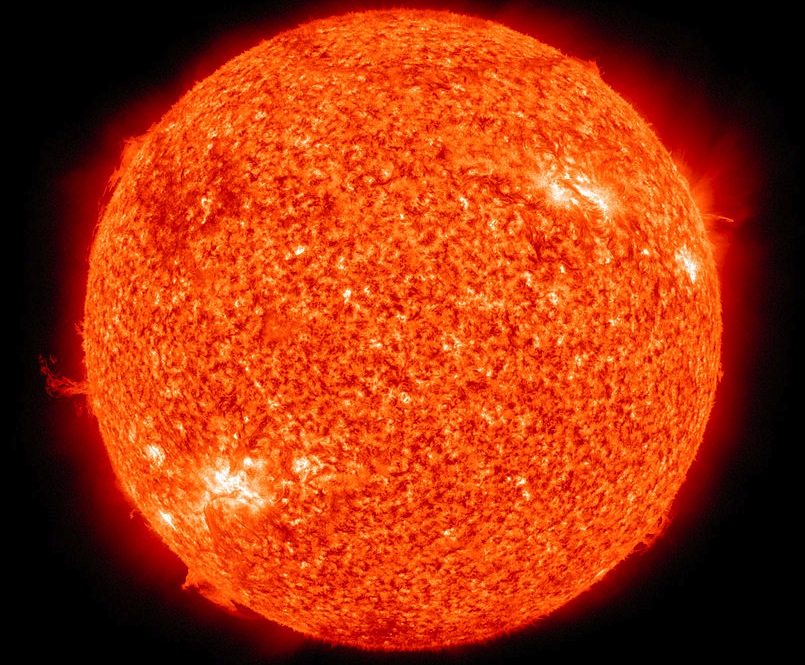
Mercury is the first planet from the Sun and the smallest of the eight planets in our Solar System. It orbits the Sun at an average distance of about 58 million kilometers (36 million miles), making it much closer to our star than Earth.
Because of its close orbit, Mercury races around the Sun faster than any other planet. It completes one orbit in only about 88 Earth days. In other words, a Mercurian year lasts less than three months on Earth.
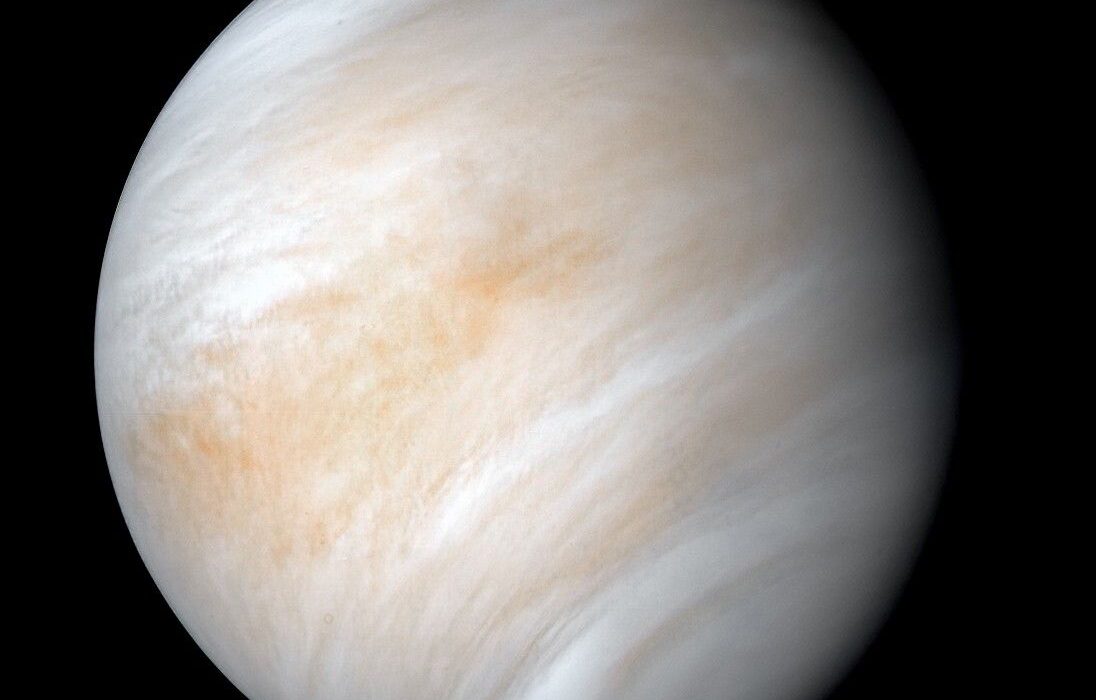
Despite being so close to the Sun, Mercury is not the hottest planet. That title belongs to Venus, whose thick atmosphere traps enormous amounts of heat through an extreme greenhouse effect. Mercury has almost no atmosphere to retain heat, allowing temperatures to swing dramatically between day and night.
Why Is It Called Mercury?
The planet is named after Mercury, the swift-footed messenger god in Roman mythology.
Ancient astronomers noticed that this bright object moved across the sky faster than other visible planets. Since Mercury completes its orbit more quickly than any other planet, the Romans named it after their fastest deity.
Many cultures observed Mercury long before modern astronomy existed. Ancient civilizations in Mesopotamia, Egypt, China, India, Greece, and the Americas all recorded its movements and recognized it as one of the wandering “stars” that moved differently from the fixed stars.
How Big Is Mercury?
Mercury is surprisingly small.
Its diameter is about 4,880 kilometers (3,032 miles), making it only slightly larger than Earth’s Moon.
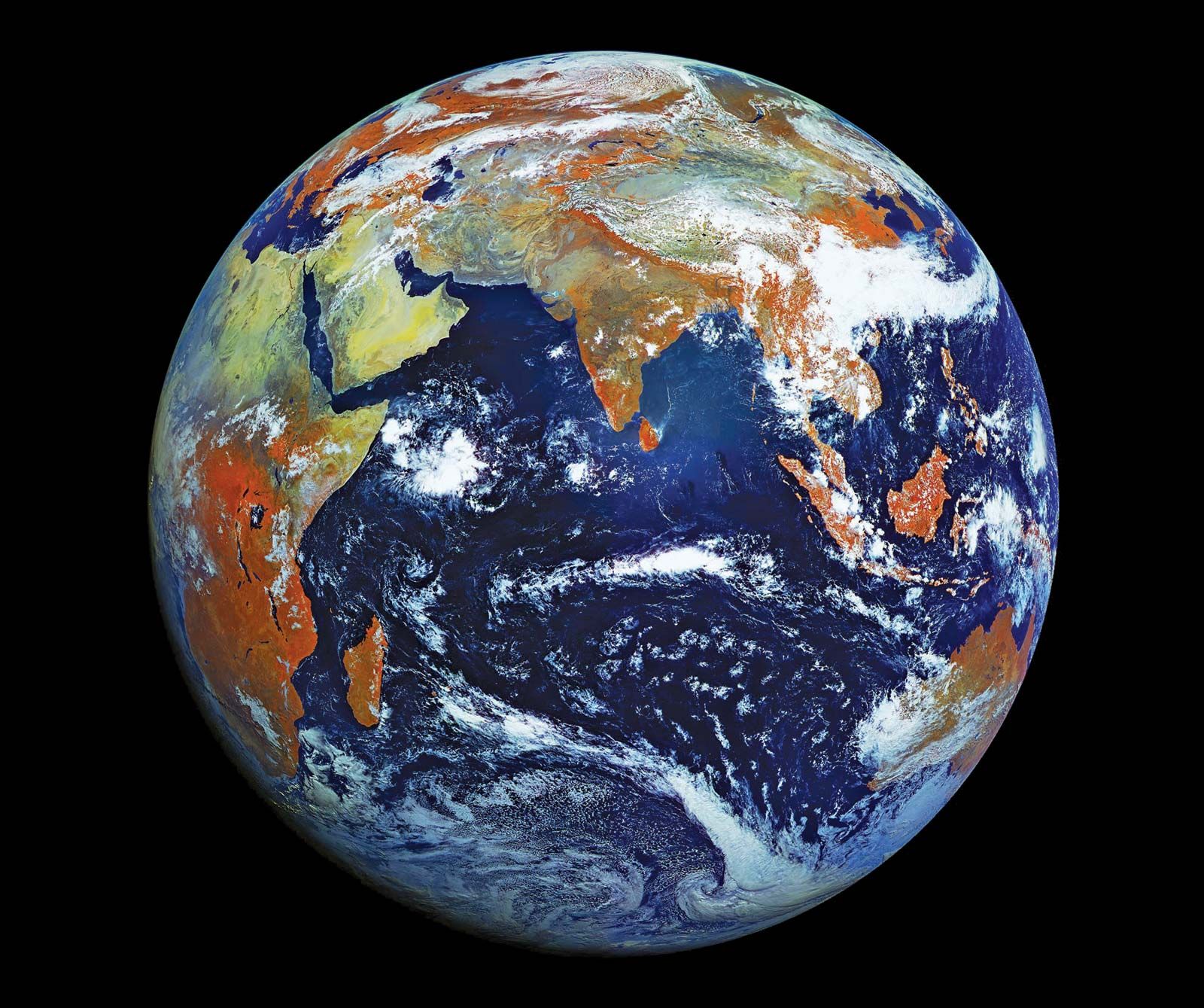
If Earth were the size of a basketball, Mercury would be about the size of a tennis ball.
Mercury’s small size means its gravity is much weaker than Earth’s. A person who weighs 70 kilograms on Earth would effectively weigh about 26 kilograms on Mercury, although their mass would remain the same.
Even though Mercury is the smallest planet today, it is still much larger than dwarf planets like Pluto.
Where Is Mercury in the Solar System?
Mercury occupies the innermost position in the Solar System.
Its orbit lies entirely inside that of Venus.
Because it stays so close to the Sun, Mercury is difficult to observe from Earth. It never strays very far from the Sun in the sky and is usually visible only shortly before sunrise or just after sunset.
This limited visibility explains why Mercury remained mysterious for much of human history.
Unlike Mars or Jupiter, which can dominate the night sky, Mercury often appears as a small bright point low on the horizon.
Mercury’s Orbit Around the Sun
Mercury follows an unusual orbit.
It has the most elongated orbit of any major planet in the Solar System. This means its distance from the Sun changes significantly throughout its year.
At its closest point, Mercury comes within about 46 million kilometers of the Sun.
At its farthest point, it reaches nearly 70 million kilometers away.
This changing distance influences the amount of solar energy reaching the planet.
Mercury also travels incredibly fast.
Its average orbital speed is nearly 47 kilometers per second (about 29 miles per second), making it the fastest-moving planet around the Sun.
A Day That Lasts Longer Than a Year
One of Mercury’s most astonishing features is the relationship between its rotation and its orbit.
Mercury rotates very slowly on its axis.
It takes about 59 Earth days to complete one rotation.
However, because Mercury is also moving rapidly around the Sun, the interval from one sunrise to the next on Mercury—a solar day—lasts about 176 Earth days.
This means one day on Mercury is twice as long as one Mercurian year.
If you could somehow stand safely on Mercury, you would experience an incredibly slow sunrise, followed by months of daylight before the Sun finally set.
Mercury’s Extreme Temperatures
Mercury experiences the greatest temperature variations of any planet in the Solar System.
During the day, temperatures near the equator can reach approximately 430°C (800°F).
At night, temperatures can fall to around –180°C (–290°F).
The difference between day and night temperatures exceeds 600 degrees Celsius.
This dramatic contrast occurs because Mercury has almost no atmosphere to trap heat.
On Earth, our atmosphere acts like a blanket, slowing temperature changes between day and night.
Mercury lacks this protective layer, allowing heat to escape rapidly after sunset.
Does Mercury Have an Atmosphere?
Mercury does not have a true atmosphere like Earth.
Instead, it has an extremely thin layer of particles called an exosphere.
An exosphere is so sparse that its atoms rarely collide with one another.
Mercury’s exosphere contains atoms such as sodium, potassium, calcium, helium, oxygen, and hydrogen.
These particles originate from several sources.
Some are released from the planet’s surface by sunlight.
Others are knocked free by tiny meteoroid impacts.
Some come from the solar wind—a stream of charged particles flowing outward from the Sun.
Because the exosphere is so thin, it offers almost no protection against incoming meteoroids or intense solar radiation.
What Is Mercury Made Of?
Mercury is a rocky terrestrial planet, similar in basic composition to Earth, Venus, and Mars.
Its surface consists mainly of silicate rocks.
However, what makes Mercury truly remarkable is what lies beneath.
Scientists believe Mercury possesses an enormous metallic core composed mostly of iron.
This core occupies roughly 85 percent of the planet’s radius, making it proportionally the largest core of any planet in the Solar System.
Around the core lies a rocky mantle and a relatively thin crust.
The unusually large core suggests that Mercury either formed differently from other rocky planets or lost much of its original outer rock layer early in Solar System history, possibly through a giant impact or processes occurring during planetary formation.
The Surface of Mercury
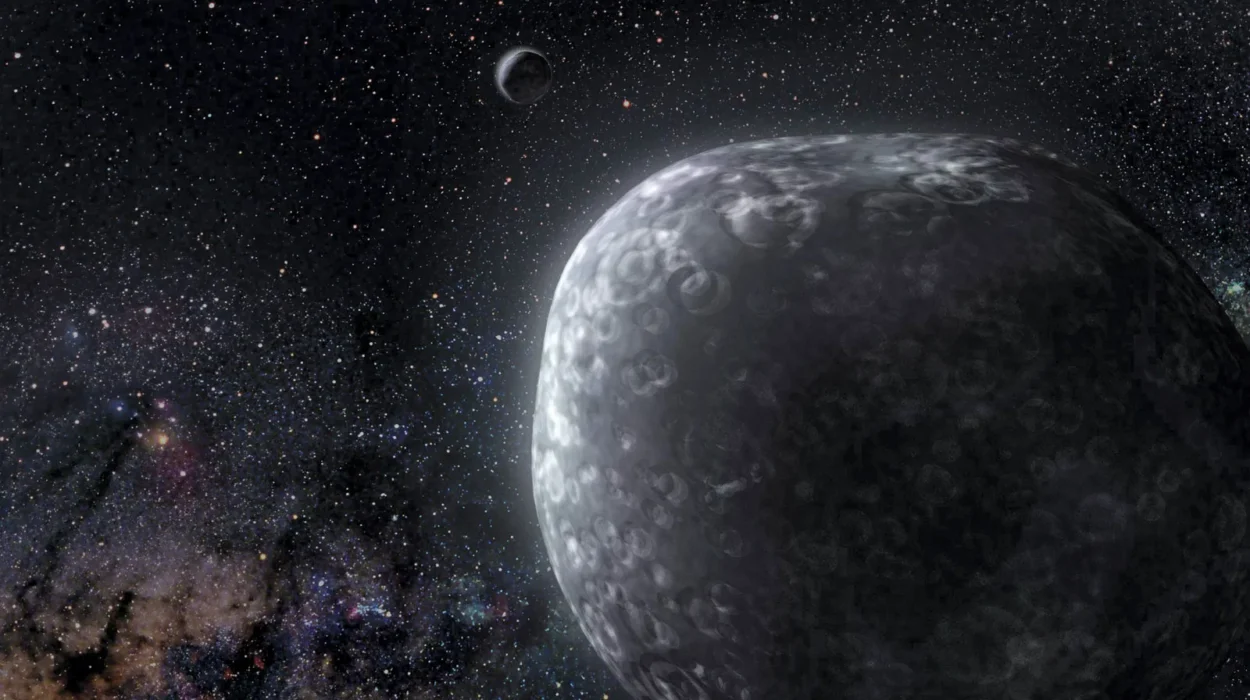
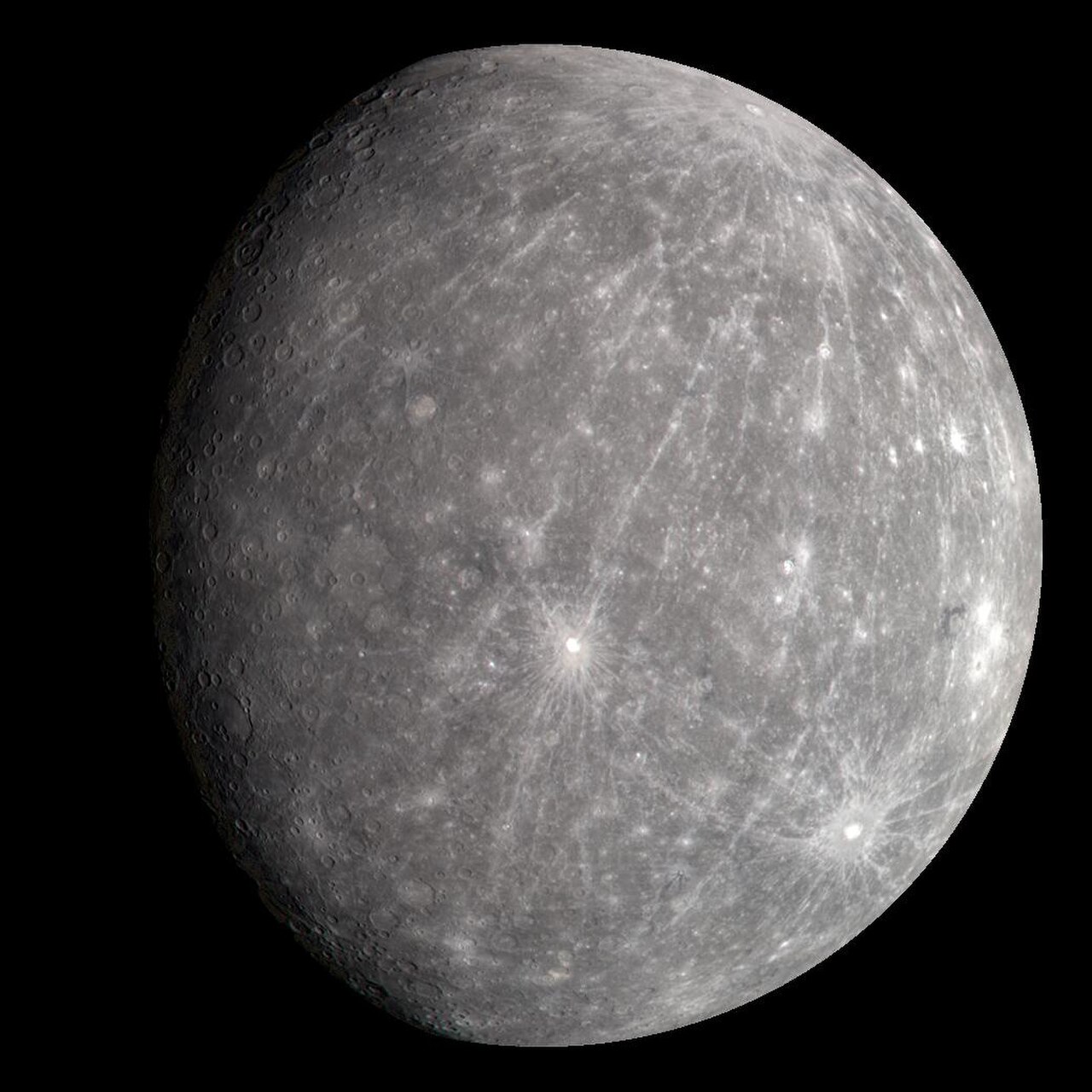
Mercury’s surface resembles Earth’s Moon more than any other planet.
It is covered with countless craters formed by billions of years of asteroid and comet impacts.
Because Mercury has almost no atmosphere, incoming space rocks rarely burn up before striking the surface.
Many of these impact scars have remained preserved for billions of years.
The surface also contains cliffs hundreds of kilometers long.
These cliffs, known as scarps, formed as Mercury gradually cooled over billions of years.
As the enormous iron core cooled, the entire planet slowly shrank.
The shrinking caused the crust to wrinkle and crack, producing towering cliffs that stretch across the landscape.
Scientists estimate that Mercury has contracted by several kilometers since its formation.
Giant Impact Basins
Among Mercury’s most spectacular features is the Caloris Basin.
This enormous impact basin spans about 1,550 kilometers (960 miles) across.
It formed when a massive asteroid slammed into Mercury early in the Solar System’s history.
The impact released energy equivalent to billions of nuclear bombs.
The collision reshaped much of the surrounding landscape and produced mountains, fractures, and lava-filled plains.
On the opposite side of the planet, the shock waves from the impact appear to have disrupted the surface, creating unusual terrain that scientists call “chaotic terrain.”
Volcanoes on Mercury
For many years, scientists believed Mercury was a completely inactive world.
Spacecraft observations changed that view.
Evidence now shows that volcanic activity played a major role in shaping Mercury’s surface.
Billions of years ago, lava erupted across large regions, filling impact basins and creating smooth volcanic plains.
Although Mercury’s volcanoes appear to have become inactive long ago, these ancient eruptions reveal that the planet once possessed a surprisingly dynamic interior.
Water Ice on the Hottest Planet?
One of Mercury’s greatest scientific surprises is the discovery of water ice.
At first, this seems impossible.
How could a planet so close to the Sun contain ice?
The answer lies near Mercury’s poles.
Some deep craters are permanently shadowed because the Sun never rises high enough to illuminate their floors.
These regions remain incredibly cold, with temperatures low enough for water ice to survive for billions of years.
Radar observations from Earth first hinted at the presence of ice.
Later, NASA’s MESSENGER spacecraft confirmed extensive deposits of water ice hidden inside these permanently dark craters.
Scientists think much of this ice was delivered by comets and water-rich asteroids.
Mercury’s Magnetic Field
Mercury possesses another surprising feature.
Despite its small size and slow rotation, it has a global magnetic field.
This magnetic field is much weaker than Earth’s but is strong enough to interact with the solar wind.
Scientists believe the magnetic field is generated by the movement of molten iron inside Mercury’s outer core through a process known as the dynamo effect.
Mercury is the only rocky planet besides Earth known to currently generate a global magnetic field in this way.
The Solar Wind and Mercury
Because Mercury is so close to the Sun, it experiences an intense bombardment from the solar wind.
Charged particles constantly strike the planet’s surface and magnetic field.
These interactions gradually erode surface materials and contribute to the creation of Mercury’s exosphere.
The solar wind also produces dynamic magnetic storms around Mercury that scientists continue to study.
Understanding these processes helps researchers better understand how planets interact with their space environments.
Can Humans Live on Mercury?
Mercury is one of the least hospitable places in the Solar System.
The intense solar radiation, extreme temperature changes, almost complete lack of atmosphere, and frequent exposure to high-energy particles make survival extraordinarily difficult.
Humans would require highly advanced protective habitats capable of shielding against radiation while maintaining comfortable temperatures.
Even robotic missions face significant engineering challenges due to the planet’s harsh environment.
Although future exploration is possible, Mercury is not considered a realistic candidate for permanent human settlement using current technology.
How We Explore Mercury
Mercury remained one of the least explored planets for many decades because reaching it is surprisingly difficult.
A spacecraft traveling toward the Sun must lose enormous amounts of orbital energy rather than simply speeding up.
This makes missions to Mercury more complex than missions to Mars or Jupiter.
NASA’s Mariner 10 became the first spacecraft to visit Mercury during flybys in the 1970s.
It photographed about half the planet’s surface and made many important discoveries, including confirming Mercury’s magnetic field.
Decades later, NASA’s MESSENGER spacecraft became the first mission to orbit Mercury.
From 2011 to 2015, MESSENGER mapped the entire planet in remarkable detail.
It discovered evidence of water ice, studied Mercury’s geology, measured its magnetic field, and transformed scientific understanding of the planet.
Today, the European Space Agency and the Japan Aerospace Exploration Agency are jointly conducting the BepiColombo mission.
Launched in 2018, the spacecraft is traveling toward Mercury and is expected to begin orbiting the planet in the coming years. Its scientific instruments will provide the most detailed investigation of Mercury ever conducted, helping answer long-standing questions about its interior, magnetic field, surface composition, and geological history.
What Makes Mercury So Unique?
Mercury stands apart from every other planet in several remarkable ways.
It has the largest metallic core relative to its size.
It experiences the greatest temperature differences between day and night.
Its year is shorter than its rotation period.
Its solar day lasts twice as long as its year.
It contains ancient water ice despite orbiting closest to the Sun.
It possesses a global magnetic field despite being so small.
These extraordinary characteristics make Mercury one of the most scientifically valuable planets for understanding how rocky worlds evolve.
What Mercury Teaches Us About Planetary Formation
Mercury serves as a natural laboratory for studying the earliest history of the Solar System.
Its ancient surface preserves evidence from a time when planets were still forming.
Its oversized iron core offers clues about the violent collisions and processes that shaped the inner planets.
By comparing Mercury with Earth, Venus, Mars, and the Moon, scientists gain a better understanding of how rocky planets develop different interiors, surfaces, and magnetic fields.
Each new discovery on Mercury improves our understanding not only of our own Solar System but also of rocky planets orbiting distant stars throughout the Milky Way.
Conclusion
Mercury may be the smallest planet in the Solar System, but its scientific importance is enormous. This tiny world, scorched by the nearby Sun and scarred by billions of years of cosmic impacts, continues to challenge assumptions about how planets form and evolve. Its giant iron core, fragile exosphere, hidden polar ice, ancient volcanic plains, and active magnetic field reveal a planet far more complex than its gray appearance suggests.
As new missions continue exploring Mercury, scientists expect even more discoveries that will deepen our understanding of the Solar System’s earliest history. Mercury reminds us that even the smallest worlds can hold some of the biggest mysteries, and that every planet has a unique story waiting to be uncovered through the power of scientific exploration.