On a clear night, the sky puts on one of nature’s most beautiful performances. Tiny stars sparkle like scattered diamonds, constantly changing in brightness as they shimmer across the darkness. But if you look closely, you’ll notice something curious. A few bright objects shine with a calm, steady light. They hardly seem to flicker at all.
Those steady lights are often planets.
This simple difference has fascinated skywatchers for centuries. Ancient astronomers noticed it long before telescopes existed, and today it remains one of the easiest ways to tell a planet from a star with the naked eye.
But why do stars twinkle while planets usually do not?
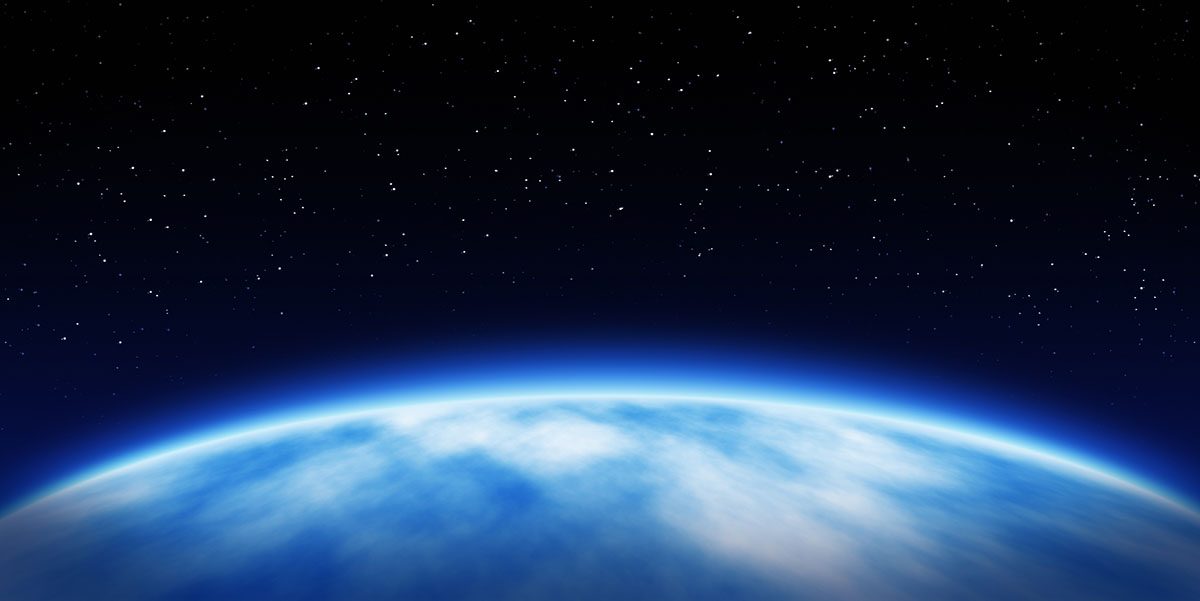
The answer lies not in the stars or planets themselves, but in the ever-changing blanket of air surrounding our world.
What Is Twinkling?
The scientific name for the twinkling of stars is astronomical scintillation.
Twinkling is the rapid change in a star’s apparent brightness and sometimes even its color as its light passes through Earth’s atmosphere. To us, it looks as though the star is blinking or sparkling.
If you could observe the same star from space, however, it would not twinkle at all. It would shine with a perfectly steady light.
This tells us something important: twinkling is caused by Earth’s atmosphere, not by the stars themselves.
Earth’s Atmosphere Is Never Completely Still
Although the sky often looks calm, Earth’s atmosphere is constantly moving.
Warm air rises.
Cool air sinks.
Winds blow at different speeds and in different directions.
Air of different temperatures has slightly different densities, and this changes how light travels through it.
As starlight enters Earth’s atmosphere, it passes through many layers of moving air. Each layer bends, or refracts, the light by a tiny amount.
Because these layers are always changing, the path of the light changes from moment to moment.
As a result, the star appears to shift slightly in position and brightness many times every second.
To our eyes, this constant change becomes the familiar sparkle we call twinkling.
Why Stars Twinkle So Easily
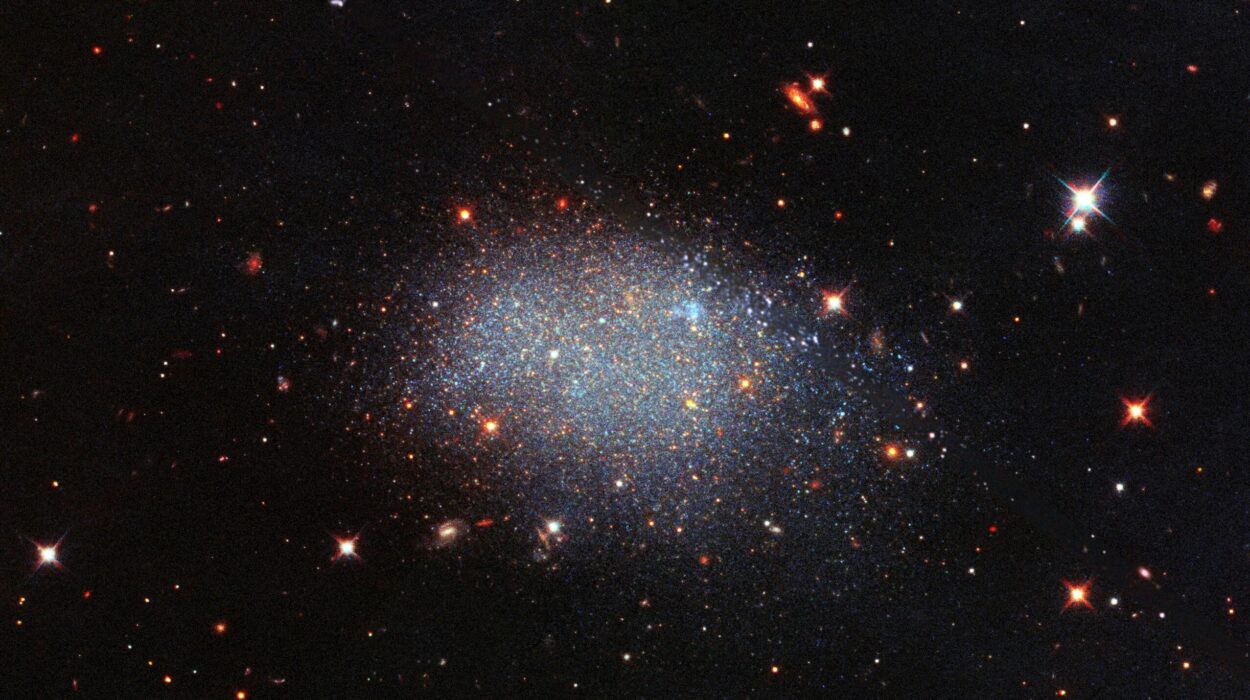
The key reason stars twinkle is that they are incredibly far away.
Even the nearest star beyond the Sun, Proxima Centauri, is more than four light-years away. Most stars visible in the night sky are much farther.
Because of these enormous distances, every star appears as an extremely tiny point of light, even through powerful telescopes.
Imagine looking at a distant lighthouse from hundreds of kilometers away. Its light would appear almost like a single tiny dot.
Now imagine that tiny dot shining through waves of hot air rising from a road on a summer day. The light would seem to dance and shimmer.
The same thing happens with starlight, except Earth’s atmosphere creates the distortion.
Since the star is only a tiny point, even very small changes in the atmosphere can noticeably affect its brightness.
Planets Are Much Closer to Earth
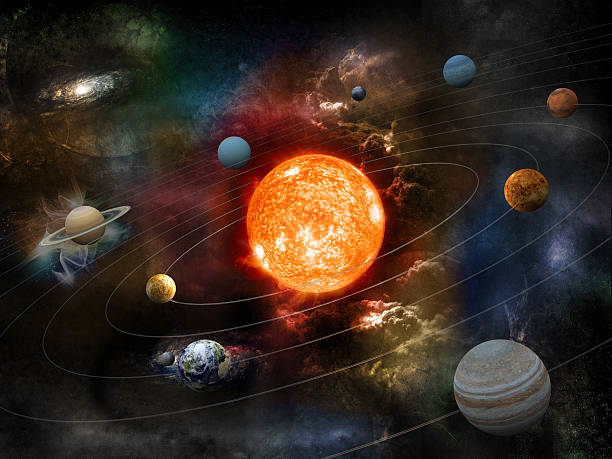
Planets are also bright objects in the sky, but they are far closer than stars.
For example, Mars may come as close as about 54 million kilometers (34 million miles) from Earth during favorable oppositions. Jupiter is hundreds of millions of kilometers away, while Saturn is more than a billion kilometers away.
These distances are enormous by everyday standards, but they are tiny compared with the trillions of kilometers separating us from the stars.
Because planets are much closer, they do not appear as perfect points of light. Instead, they appear as tiny disks, even though our eyes cannot usually distinguish their shape.
This small difference makes all the difference.
A Planet Sends Light From Many Points
Imagine holding a flashlight behind a sheet of moving water.
If the flashlight were replaced by a tiny glowing dot, any distortion in the water would strongly affect the light.
But if the flashlight had a broad glowing surface, different parts of the light would be distorted differently, and those distortions would average out.
Something similar happens with planets.
Since a planet appears as a tiny disk rather than a single point, light reaches us from many slightly different parts of its visible surface.
As atmospheric turbulence bends some rays one way and others another way, the overall light remains much more stable.
The tiny fluctuations cancel one another out.
Instead of sparkling dramatically like a star, the planet shines with a steadier glow.
Do Planets Ever Twinkle?
Although planets usually do not twinkle, they can sometimes appear to flicker.
This is especially true when they are close to the horizon.
Near the horizon, light must pass through much more of Earth’s atmosphere than when an object is overhead.
The longer journey means the light encounters more turbulent air.
Under these conditions, even planets can shimmer slightly.
However, their twinkling is usually much weaker than that of nearby stars.
Most of the time, a bright planet still looks noticeably steadier.
Why Objects Near the Horizon Twinkle More
Have you ever noticed that stars near the horizon twinkle much more intensely?
This happens because their light travels through a thicker layer of atmosphere.
When a star is directly overhead, its light takes the shortest possible path through the atmosphere.
Near the horizon, the same light must pass through several times more air before reaching your eyes.
Each additional layer introduces more turbulence and more opportunities for the light to be bent.
As a result, stars close to the horizon often sparkle dramatically.
They may even flash different colors.
Why Stars Sometimes Change Color
On some nights, bright stars seem to flash red, blue, green, or yellow.
This colorful flickering is another effect of atmospheric turbulence.
Different colors of light have slightly different wavelengths.
Earth’s atmosphere bends these wavelengths by slightly different amounts.
As turbulent air shifts rapidly, different colors may briefly become more visible than others.
The result is a star that appears to sparkle with changing colors.
Planets generally show this effect much less because their light is spread over a small disk instead of coming from a single point.
Looking Through a Telescope
A telescope reveals another interesting difference.
Even with a modest telescope, planets show tiny disks.
Jupiter’s cloud bands may become visible.
Saturn’s rings can often be seen.
Mars may reveal dark surface markings during favorable viewing conditions.
Stars, however, remain tiny points even in very large telescopes.
The telescope can make them brighter, but it cannot usually reveal a visible surface because they are simply too far away.
This is another reason atmospheric turbulence affects stars much more strongly.
Why Astronomers Care About Twinkling
While twinkling is beautiful for skywatchers, it creates a serious challenge for astronomers.
The constantly changing atmosphere blurs astronomical images.
Instead of producing perfectly sharp pictures, telescopes on Earth’s surface must look through moving air that distorts incoming light.
This limits the level of detail they can capture.
To overcome this problem, astronomers have developed remarkable technologies.
One solution is placing telescopes above Earth’s atmosphere.
Space telescopes such as the Hubble Space Telescope observe stars and galaxies without atmospheric interference, producing incredibly sharp images.
Another solution is adaptive optics.
These systems use flexible mirrors that change shape hundreds or even thousands of times every second.
Computers continuously measure atmospheric distortion and adjust the mirrors to cancel much of the blurring.
As a result, ground-based telescopes can produce images approaching the clarity of those taken from space.
The Atmosphere Acts Like Shifting Glass
A useful way to imagine Earth’s atmosphere is as a huge window made from moving, uneven glass.
If the glass constantly changes shape, anything viewed through it appears to shimmer.
For distant point-like stars, the effect is dramatic.
For nearby planets with visible disks, the distortions become averaged over their apparent size.
The result is a smooth, steady appearance.
The atmosphere itself has not changed.
Only the type of object you are observing has.
Can You Identify Planets by Their Steady Light?
One of the simplest ways to recognize a bright planet is by watching how steadily it shines.
If a bright object glows with little or no twinkling while nearby stars sparkle, it is very likely a planet.
This method is especially useful for identifying Venus, Jupiter, Saturn, or Mars when they are visible.
Venus often becomes the brightest object in the night sky after the Moon. It usually shines with a brilliant, unwavering white light.
Jupiter is also extremely bright and typically appears much steadier than neighboring stars.
Of course, using a star map or astronomy app provides the most reliable identification, but noticing whether an object twinkles is an excellent first clue.
Does the Moon Twinkle?
Like planets, the Moon does not twinkle.
Its large apparent size means that light comes from millions of different points across its surface.
Atmospheric distortions affecting one part of the Moon are averaged out by light arriving from countless other parts.
Instead of twinkling, the Moon may appear slightly wavy or distorted when it is close to the horizon because of atmospheric turbulence.
What About the Sun?
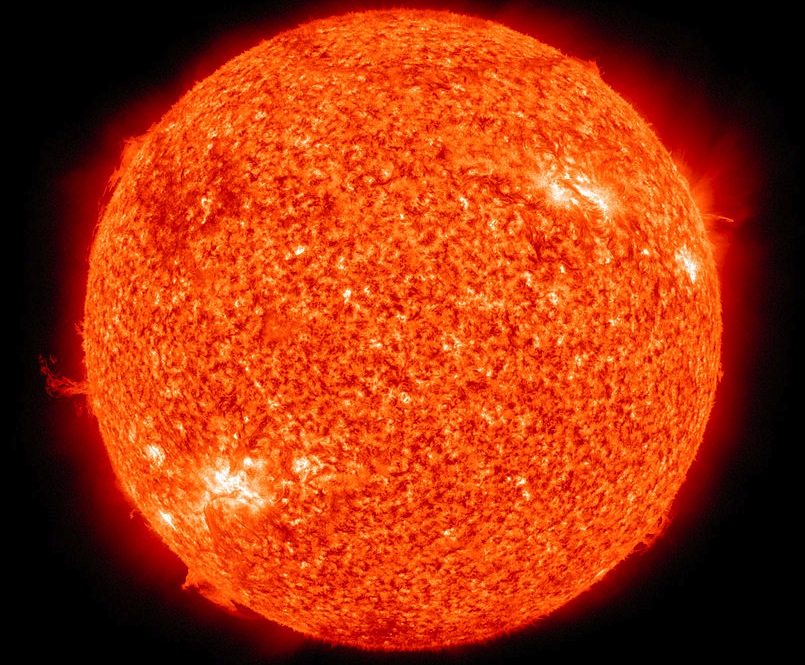
The Sun also does not twinkle for the same basic reason.
Although it is a star, it is extraordinarily close compared with every other star.
Its apparent disk is large in our sky, so atmospheric distortions average out.
The Sun may seem to shimmer slightly when viewed through hot air rising from the ground, but it does not sparkle like distant stars.
Seeing the Difference Yourself
The next time you step outside on a clear evening, look carefully at the brightest objects overhead.
Notice how most stars sparkle continuously.
Then find a bright planet.
Its light will likely appear calm and steady, almost as though it refuses to join the glittering dance of the stars around it.
Without any telescope or special equipment, you will be witnessing a fascinating demonstration of atmospheric physics.
The stars and planets are both sending light across vast distances, yet Earth’s atmosphere affects them in different ways simply because one appears as a tiny point while the other appears as a small disk.
A Beautiful Lesson Hidden in the Night Sky
The difference between a twinkling star and a steady planet may seem like a small detail, but it reveals an important truth about our universe. It reminds us that what we see is shaped not only by distant celestial objects but also by the thin layer of air surrounding our own planet.
Every sparkling star is showing us the restless motion of Earth’s atmosphere. Every steady planet quietly demonstrates how distance and apparent size influence the behavior of light.
The next time you gaze upward, you will know that the stars are not really blinking at all. Their light has traveled for years, centuries, or even thousands of years across space without flickering. Only during the final fraction of a second, as it passes through Earth’s constantly moving atmosphere, does it begin to dance.
And the planets? They shine with quiet confidence, reminding us that sometimes the most remarkable discoveries begin simply by noticing what appears different in the night sky.