Modern smartphones have become astonishingly intelligent. They can recognize your face in an instant, remove unwanted objects from photos, translate conversations in real time, predict the next word you want to type, filter spam calls, enhance videos, and even summarize documents—all while fitting comfortably in your pocket.
What makes these remarkable abilities possible? The answer lies in a tiny but incredibly powerful piece of technology known as an AI chip.
Unlike the processors that powered smartphones a decade ago, today’s devices include specialized hardware designed specifically to run artificial intelligence efficiently. These AI chips work silently behind the scenes, making your phone faster, smarter, more secure, and surprisingly energy efficient.
Although most people never see or think about them, AI chips have become one of the most important innovations in modern mobile technology. They are transforming smartphones from simple communication devices into intelligent personal assistants capable of understanding speech, images, language, and even human behavior.
What Is an AI Chip?
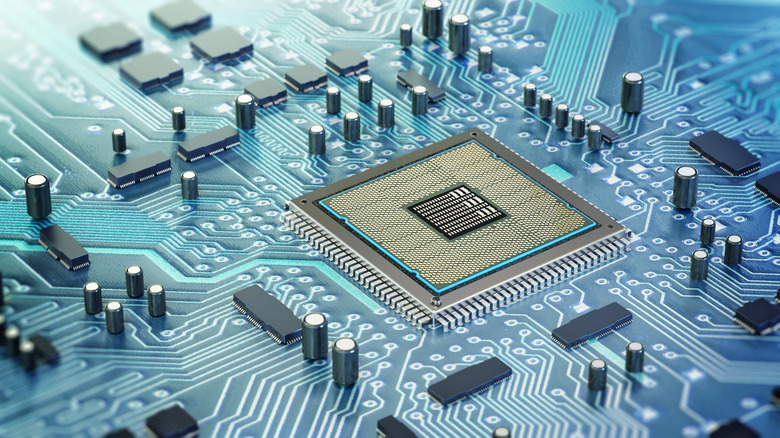
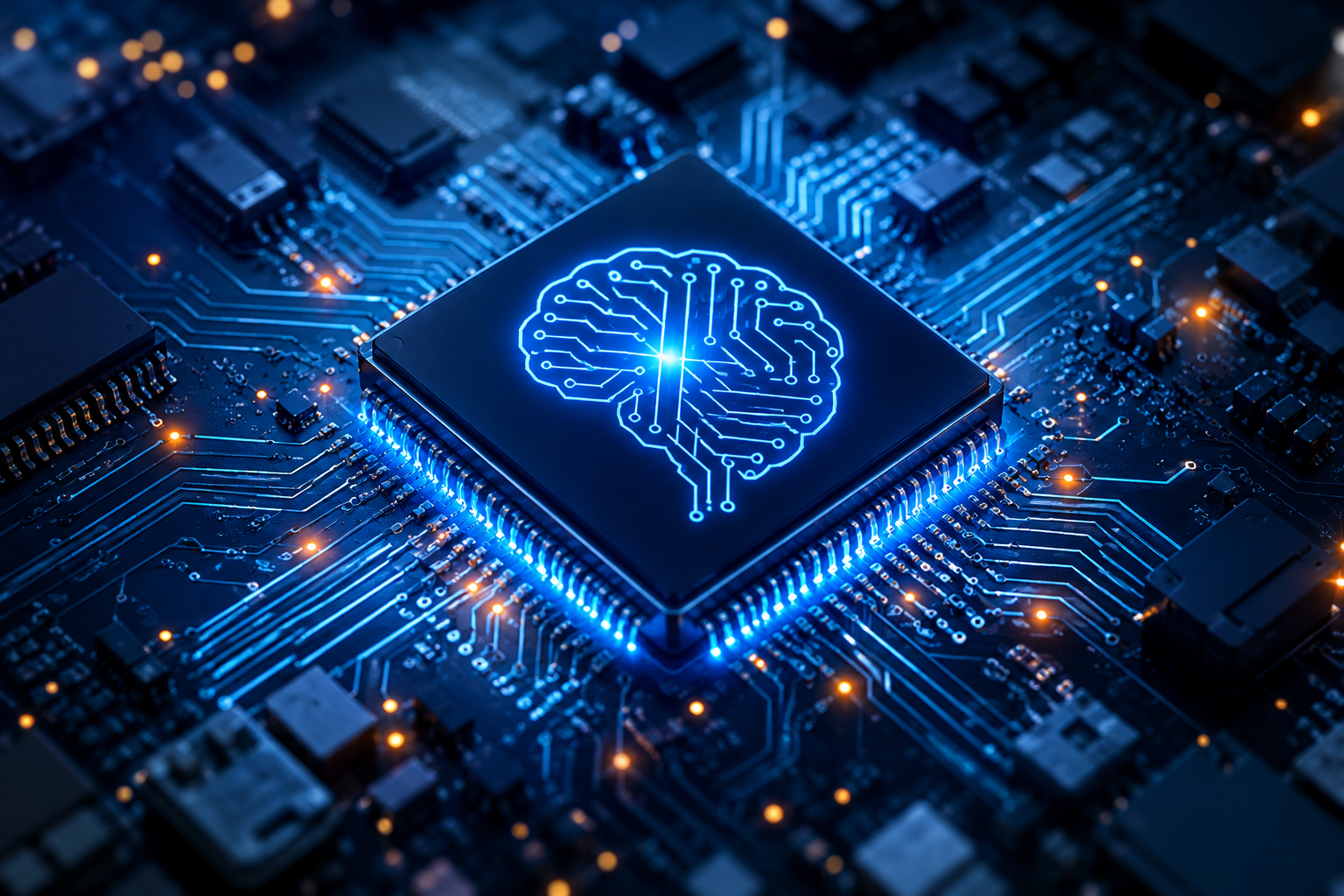
An AI chip is a specialized processor designed to perform the mathematical operations required for artificial intelligence and machine learning.
Traditional processors, known as CPUs (Central Processing Units), are excellent at handling general computing tasks. They manage everything from opening apps to browsing the web and running operating systems.
However, artificial intelligence involves enormous numbers of calculations performed simultaneously. Tasks like recognizing faces, interpreting spoken language, or analyzing photographs require billions—or even trillions—of mathematical operations.
Running these workloads only on a CPU would consume too much power and take longer to complete.
To solve this challenge, smartphone manufacturers include dedicated AI hardware, often called a Neural Processing Unit (NPU), AI Engine, or Neural Engine, depending on the company.
These processors are specifically optimized for AI algorithms, allowing them to perform complex calculations much faster while using much less electricity.
Why Smartphones Need AI Chips
Artificial intelligence has become deeply integrated into nearly every smartphone feature.
When you unlock your phone using facial recognition, AI is identifying your face.
When your camera automatically improves a photo, AI is analyzing the image.
When your keyboard predicts the next word, AI is studying language patterns.
When your voice assistant understands your question, AI is processing speech.
Without dedicated AI hardware, many of these features would either work much more slowly or require sending your data to cloud servers for processing.
AI chips allow these tasks to happen directly on your device, often in just milliseconds.
This makes smartphones more responsive while also improving privacy because sensitive information can stay on the phone instead of being transmitted across the internet.
The Different Processors Inside a Smartphone
Modern smartphones contain several different processors, each designed for specific jobs.
The CPU handles general-purpose computing.
The GPU (Graphics Processing Unit) renders graphics, games, animations, and videos.
The ISP (Image Signal Processor) processes data coming from the camera sensors.
The DSP (Digital Signal Processor) manages audio, voice processing, and signal-related tasks.
The AI chip or NPU accelerates machine learning and artificial intelligence operations.
Rather than replacing these processors, the AI chip works alongside them.
When you take a photograph, for example, the camera sensor captures light, the ISP processes the image, the CPU coordinates the system, the GPU may assist with graphical effects, and the AI chip enhances the final result using machine learning.
This teamwork happens so quickly that users notice only the finished image.
How AI Chips Learn Patterns
AI chips themselves do not “learn” in the same way humans do.
Most learning occurs before the software reaches your phone.
Researchers train AI models using enormous datasets inside powerful data centers equipped with specialized AI hardware.
For example, an image recognition model may be trained using millions of photographs containing people, animals, landscapes, food, vehicles, and countless other objects.
Through training, the AI model gradually learns patterns.
After training is complete, the finished model is compressed and installed on smartphones.
The AI chip then performs what scientists call inference, meaning it applies what the model has already learned to new situations.
When you photograph your pet, the AI chip compares the image with learned patterns and identifies the subject almost instantly.
AI Chips Make Smartphone Cameras Smarter
Perhaps the most visible application of AI chips is smartphone photography.
Modern smartphone cameras rely on far more than high-quality lenses.
Artificial intelligence analyzes every image before you even press the shutter.
As soon as the camera opens, the AI chip begins recognizing scenes.
It can distinguish between landscapes, food, pets, flowers, sunsets, buildings, or people.
Based on what it recognizes, it automatically adjusts exposure, contrast, color balance, sharpness, white balance, and dynamic range.
When taking portraits, AI identifies the subject while separating it from the background.
This allows smartphones to create realistic background blur even though their camera sensors are much smaller than those in professional cameras.
Night photography also depends heavily on AI.
Instead of capturing a single photograph, smartphones often combine multiple images taken at different exposures.
The AI chip aligns these images, reduces noise, restores details, and improves brightness, producing clear pictures even in very dark environments.
AI Improves Video Recording
Artificial intelligence extends beyond photography.
Modern smartphones analyze video frame by frame.
AI stabilizes shaky footage by predicting camera movement.
It tracks faces automatically during recording.
Some phones intelligently adjust exposure while moving between bright and dark scenes.
Others reduce wind noise or separate voices from background sounds.
Newer AI models can even improve video resolution or remove unwanted noise during recording.
All these improvements happen in real time because dedicated AI hardware performs the necessary calculations extremely quickly.
Face Unlock Uses AI
Facial recognition is one of the most widely used AI features.
When you look at your phone, the camera captures your facial features.
The AI chip analyzes hundreds or even thousands of facial characteristics, including distances between the eyes, nose shape, jawline, and other unique features.
Instead of storing an ordinary photograph, smartphones create mathematical representations of your face.
When unlocking the phone, the AI chip compares the newly scanned face with the securely stored template.
If the match is sufficiently accurate, the phone unlocks.
This process typically takes less than a second.
Advanced systems can even recognize users wearing glasses, hats, or different hairstyles while resisting attempts to unlock the device using photographs.
AI Makes Voice Assistants Understand You
Voice assistants have improved dramatically over the past decade.
This improvement is largely due to AI chips.
When you speak into your smartphone, your voice first becomes digital audio.
The AI chip removes background noise, identifies spoken words, interprets sentence structure, and determines your intended meaning.
Many smartphones can perform basic speech recognition directly on the device.
This allows voice commands to work more quickly and improves privacy because recordings do not always need to be sent to remote servers.
Offline voice recognition has become increasingly capable thanks to more powerful AI hardware.
AI Powers Real-Time Translation
One of the most impressive applications of smartphone AI is language translation.
Modern AI models can recognize spoken language, convert it into text, translate it into another language, and even generate natural-sounding speech.
Many smartphones now perform portions of this process directly on the device.
This enables faster translations and allows some features to work even without an internet connection.
Travelers, students, and international businesses benefit enormously from this technology.
AI Helps You Type Faster
Every time your keyboard predicts your next word, artificial intelligence is working behind the scenes.
The AI chip analyzes grammar, spelling, sentence structure, and your typing habits.
Rather than simply guessing random words, it predicts which words are statistically most likely based on context.
Modern keyboards also recognize multiple languages, correct spelling mistakes, and suggest complete phrases.
Over time, these predictions become increasingly accurate as the software adapts to your writing style.
AI Makes Battery Life Longer
Artificial intelligence does not only perform visible tasks.
It also helps smartphones manage power more efficiently.
AI studies how you use your device.
It notices which apps you open frequently and which remain unused.
Apps you rarely use may receive fewer background resources.
Meanwhile, apps you use regularly can remain ready for faster launching.
AI also helps regulate processor speeds, display brightness, charging behavior, and network activity.
Many smartphones even learn your daily charging routine.
If you usually unplug your phone at seven in the morning, the battery may pause charging overnight and finish reaching full capacity shortly before you wake up.
This reduces battery aging and extends long-term battery health.
AI Enhances Mobile Gaming
Gaming has become another major application for AI chips.
Artificial intelligence predicts player behavior, optimizes graphics settings, reduces input delay, and manages system resources.
Some smartphones intelligently balance CPU, GPU, and AI workloads to maintain smooth gameplay while minimizing battery consumption.
AI can also improve frame interpolation, image upscaling, and graphics quality without requiring additional hardware power.
These techniques allow games to appear smoother and sharper than would otherwise be possible.
AI Protects Your Privacy
One of the greatest advantages of dedicated AI chips is on-device processing.
Instead of uploading every photograph, voice recording, or document to cloud servers, many AI tasks can be completed locally.
This significantly improves privacy.
Sensitive information such as biometric data, facial scans, voice recognition, and personal photos often remain on the device.
Many smartphones combine AI chips with secure hardware components that isolate sensitive information from the rest of the operating system.
Even if malware compromises ordinary software, these protected areas help safeguard important personal data.
AI Detects Spam and Fraud
Modern smartphones increasingly use AI to identify unwanted calls and fraudulent messages.
Machine learning models analyze communication patterns, suspicious wording, and known scam characteristics.
Potential spam calls may be identified before you answer.
Text messages containing phishing attempts can also be flagged automatically.
Because these AI models continuously improve, smartphones become increasingly effective at recognizing new forms of digital fraud.
AI Makes Search More Intelligent
Searching inside your smartphone has become much smarter thanks to AI.
Instead of relying solely on file names, AI understands image content, documents, emails, messages, and notes.
You might search for “beach,” and your phone finds vacation photos without those words appearing anywhere in the filenames.
Similarly, searching for “birthday” may locate photographs of cakes, balloons, and celebrations because AI recognizes visual content rather than only text.
AI Improves Accessibility
Artificial intelligence has made smartphones significantly more accessible for people with disabilities.
AI-powered screen readers describe images aloud for users with visual impairments.
Speech recognition converts spoken words into text for people who are deaf or hard of hearing.
Live captions appear automatically during videos and phone calls.
Object recognition helps users identify everyday items.
Some smartphones even recognize currency, doors, stairs, and other important surroundings through AI-powered computer vision.
These technologies continue making smartphones more inclusive for millions of people worldwide.
AI Enables Generative Features
Recent smartphones include increasingly powerful generative AI capabilities.
These systems can summarize long documents, rewrite messages, generate email drafts, translate conversations naturally, organize notes, and answer questions using information stored on the device.
Some AI features can remove unwanted objects from photographs, expand image backgrounds, reduce distracting reflections, or improve image quality.
These tasks require advanced neural networks that perform billions of calculations almost instantly.
Dedicated AI chips make such capabilities practical without dramatically reducing battery life.
Why AI Chips Save Energy
At first glance, AI appears computationally expensive.
However, specialized AI hardware is actually much more energy efficient than performing the same tasks on general-purpose processors.
AI chips contain architectures specifically designed for neural network calculations.
Because they perform fewer unnecessary operations, they consume less electricity while completing AI workloads much faster.
This efficiency is essential for battery-powered smartphones.
Without dedicated AI hardware, many modern features would either drain the battery rapidly or require constant internet connectivity.
AI Chips Continue Becoming More Powerful
Every new smartphone generation introduces faster and more capable AI processors.
Engineers improve semiconductor manufacturing techniques, allowing billions of transistors to fit onto increasingly smaller chips.
At the same time, AI models become more efficient.
Rather than relying only on larger hardware, researchers develop algorithms that require fewer calculations while delivering better results.
Together, these advances allow smartphones to perform increasingly sophisticated AI tasks entirely on the device.
The Future of AI in Smartphones
The role of AI chips is expanding rapidly.
Future smartphones are expected to become even better at understanding natural language, recognizing images, predicting user needs, and providing personalized assistance.
Real-time language translation will likely become nearly seamless.
Photo and video editing may approach professional quality with minimal user effort.
Health monitoring could become more intelligent by analyzing movement, sleep patterns, heart activity, and other sensor data while preserving user privacy through on-device processing.
Generative AI assistants may eventually understand documents, schedules, conversations, and personal preferences well enough to help organize daily life in more meaningful ways.
Importantly, future AI chips are expected to perform these increasingly advanced tasks while consuming even less energy.
Tiny Chips, Extraordinary Intelligence
The remarkable intelligence of today’s smartphones does not come from magic or science fiction. It comes from highly specialized AI chips that perform complex mathematical calculations at extraordinary speed and efficiency. Working alongside CPUs, GPUs, image processors, and other components, these tiny processors allow smartphones to recognize faces, understand speech, enhance photographs, protect privacy, optimize battery life, translate languages, and power countless other intelligent features.
As artificial intelligence continues to evolve, AI chips will become even more central to the smartphone experience. They are quietly transforming our mobile devices into powerful computing companions capable of understanding the world in ways that once seemed impossible. Hidden beneath the sleek glass and metal of every modern smartphone is a remarkably sophisticated brain—one that grows smarter with every new generation of technology.