For thousands of years, people have looked up at the night sky and dreamed of visiting the stars. Ancient civilizations created stories about the Moon and the planets, while later generations imagined rockets carrying people beyond Earth’s atmosphere. For most of history, these dreams belonged only to storytellers and scientists. Then, in the twentieth century, spaceflight became a reality—but only for highly trained astronauts.
Today, that is beginning to change.
A new era has emerged in which ordinary people, not just professional astronauts, can travel into space. This exciting development is known as space tourism. Although still in its early stages and available only to a small number of people, space tourism is transforming how humanity thinks about exploring the cosmos.
What does it feel like to float in weightlessness? How does Earth appear from hundreds of kilometers above its surface? Could vacations in space someday become as common as international travel?
The answers lie in one of the most fascinating fields of modern science and engineering.
What Is Space Tourism?
Space tourism is the practice of traveling into space for recreation, leisure, or personal experience rather than for scientific research, military missions, or government operations.
Unlike astronauts, whose missions often involve months of intensive training and complex scientific tasks, space tourists travel primarily to experience space itself. Their goals may include seeing Earth from above, experiencing weightlessness, witnessing the darkness of space, or simply fulfilling a lifelong dream.
Most space tourists today travel aboard spacecraft developed by private aerospace companies. These missions are carefully planned, highly regulated, and supported by teams of engineers, pilots, flight controllers, and medical professionals.
Although space tourism is still expensive and relatively rare, it represents an important milestone in the commercialization of human spaceflight.
The Dream of Visiting Space
For much of human history, reaching space seemed impossible.
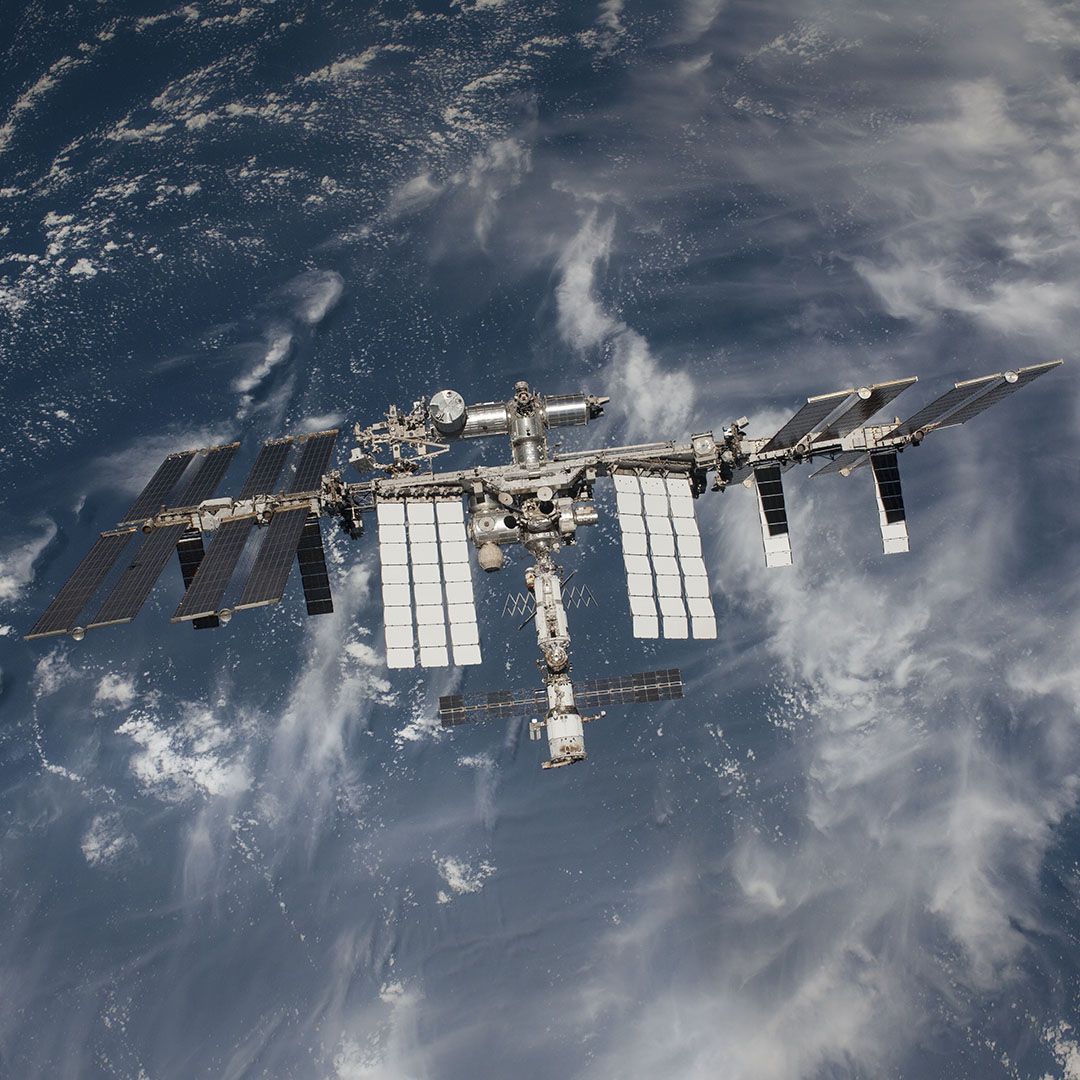
The first successful human spaceflight occurred in 1961, proving that people could survive beyond Earth’s atmosphere. Over the following decades, astronauts traveled to the Moon, lived aboard space stations, repaired satellites, and conducted scientific experiments in orbit.
These achievements inspired millions of people around the world.
As technology advanced, scientists and entrepreneurs began asking an exciting question.
Could space eventually become a destination not only for astronauts but also for ordinary travelers?
This question laid the foundation for today’s space tourism industry.
Where Does Space Begin?
One of the first questions people ask is where space actually starts.
There is no perfectly sharp boundary between Earth’s atmosphere and outer space because the atmosphere gradually becomes thinner with increasing altitude.
However, many scientists and organizations use an altitude of about 100 kilometers (62 miles) above sea level, known as the Kármán line, as a practical boundary for space. Some organizations use slightly different definitions for specific purposes.
Crossing this region means entering an environment where the atmosphere is extremely thin, aerodynamic flight becomes ineffective, and spacecraft rely on rocket propulsion and orbital mechanics rather than airplane wings.
How Do Space Tourists Reach Space?
Unlike airplanes, spacecraft cannot rely on wings alone.
To escape Earth’s powerful gravity, spacecraft use rockets.
Rocket engines burn fuel and oxidizer, producing extremely hot gases that are expelled downward at high speed. According to Newton’s Third Law of Motion, pushing gases downward produces an equal and opposite force that pushes the rocket upward.
As the rocket climbs, it accelerates until reaching enormous speeds.
For orbital missions, spacecraft must reach a velocity of approximately 7.8 kilometers per second while in low Earth orbit. This tremendous speed allows the spacecraft to continuously fall around Earth instead of falling directly back to the ground.
Suborbital tourist flights do not reach orbital speed. Instead, they briefly travel into space before descending back to Earth.
Different Types of Space Tourism
Not every space journey is the same.
Some tourist flights are suborbital.
These missions rise above the edge of space, allowing passengers to experience several minutes of weightlessness before returning to Earth. The entire journey usually lasts much less time than an orbital mission.
Other missions are orbital.
These spacecraft travel fast enough to circle Earth. Passengers may spend several days in orbit, observing our planet from hundreds of kilometers above the surface.
Future concepts include commercial space stations, extended stays in orbit, and even tourist missions around the Moon, though these remain limited and continue to require significant technological development.
Experiencing Weightlessness
One of the greatest attractions of space tourism is experiencing weightlessness.
Many people mistakenly believe astronauts float because there is no gravity in space.
In reality, gravity remains strong even in low Earth orbit.
Astronauts and spacecraft float because they are in continuous free fall around Earth. As they move forward at extremely high speed, Earth’s curved surface falls away beneath them at the same rate that gravity pulls them downward.
The result is the sensation of weightlessness, often called microgravity.
Passengers can gently float through the cabin, perform slow somersaults, and watch objects drift effortlessly through the air.
For many travelers, this experience is unforgettable.
Seeing Earth from Space
Perhaps the most powerful moment during a space journey is looking back at Earth.
From space, national borders disappear.
The atmosphere appears as an incredibly thin blue layer surrounding the planet.
Cloud systems stretch across continents.
Oceans shine deep blue beneath the sunlight.
At night, cities sparkle with countless lights.
Many astronauts describe viewing Earth as a profoundly emotional experience. Seeing our planet suspended in the darkness of space often inspires a stronger appreciation for its beauty, fragility, and interconnected ecosystems.
This perspective is sometimes referred to as the Overview Effect, although experiences vary from person to person.
The Science Behind Rocket Launches
Launching into space requires overcoming one of nature’s strongest forces: gravity.
Earth’s gravity constantly pulls every object toward its center.
To climb higher, rockets must produce thrust greater than their own weight.
As fuel burns, the rocket becomes lighter, making continued acceleration easier.
Most rockets use multiple stages.
After one stage exhausts its fuel, it separates from the vehicle, allowing the remaining spacecraft to continue climbing with less mass.
This staging process greatly improves efficiency.
Modern launch systems represent decades of progress in physics, engineering, chemistry, materials science, and computer technology.
Life Inside a Spacecraft
Spacecraft are carefully designed to support human life.
The cabin contains breathable air with controlled oxygen and carbon dioxide levels.
Temperature remains comfortable despite the harsh conditions outside.
Electronic systems monitor air pressure, humidity, and environmental quality.
Seats protect passengers during the intense acceleration of launch and landing.
Windows allow breathtaking views of Earth and space.
Every system is designed with safety and reliability as the highest priorities.
Training Before the Journey
Although space tourists do not usually receive the same extensive preparation as career astronauts, they still undergo important training before launch.
They learn how the spacecraft operates.
They practice safety procedures.
They receive medical evaluations to help determine whether they can safely tolerate the physical demands of spaceflight.
Passengers also learn how to move in weightlessness and how to communicate effectively with the flight crew.
Training helps reduce risks and increases confidence during the mission.
How the Human Body Changes in Space
Space affects the human body in fascinating ways.
In microgravity, body fluids shift toward the head because gravity no longer pulls them downward as strongly as on Earth.
Many people experience a feeling of facial fullness during the first part of a mission.
Some travelers may experience space motion sickness, which resembles motion sickness on Earth but often improves after the body adapts.
During long-duration missions, muscles and bones can weaken because they no longer support body weight in the usual way. Astronauts on space stations therefore exercise regularly to maintain their health.
Short tourist missions generally expose passengers to these effects for much less time.
The Challenges of Returning to Earth
Returning home is just as demanding as launching.
For spacecraft returning from orbit, reentry into Earth’s atmosphere generates enormous heat because the vehicle compresses the air in front of it while traveling at very high speeds. This compressed air becomes extremely hot, and the spacecraft’s thermal protection system is designed to withstand these conditions.
Heat shields protect the spacecraft from these extreme temperatures.
As the spacecraft slows, parachutes or other landing systems help ensure a controlled descent.
Engineers carefully calculate every stage of reentry to maximize safety.
Why Space Tourism Is Expensive
One reason space tourism remains limited is cost.
Building rockets requires advanced materials, precision manufacturing, and years of research.
Every launch consumes large amounts of specialized fuel or propellant.
Spacecraft undergo extensive testing before carrying passengers.
Highly trained engineers, pilots, technicians, medical teams, and mission controllers support each flight.
Because relatively few flights occur each year, the cost per passenger remains very high.
As technology improves and launch frequency increases, some experts expect costs to decrease, although space travel is likely to remain technically demanding.
Reusable Rockets Are Reducing Costs
One of the biggest advances in modern spaceflight is the development of reusable rockets.
For decades, many rockets were used only once.
After launching a spacecraft, much of the rocket was discarded.
Today, some launch vehicles are designed so major components can return safely to Earth, undergo inspection, and be used again.
Reusability reduces manufacturing costs and increases the efficiency of space transportation.
This innovation is considered one of the key technologies supporting the future growth of commercial spaceflight.
Safety Comes First
Space remains one of the most challenging environments humans have ever entered.
Extreme temperatures, vacuum, radiation, high speeds, and powerful rocket forces all create significant engineering challenges.
For this reason, every passenger mission undergoes careful planning.
Engineers build redundant systems that provide backup capabilities if one component fails.
Computers constantly monitor spacecraft performance.
Ground control teams observe every phase of the mission.
Even with these precautions, spaceflight still carries risks, and safety remains the highest priority for both government agencies and private companies.
The Environmental Questions
As space tourism grows, scientists are studying its environmental effects.
Rocket launches produce emissions and can influence the atmosphere in different ways depending on the type of propellant and launch system.
Researchers are working to better understand these impacts and to develop technologies that improve efficiency and reduce environmental effects.
Future advances in propulsion systems, reusable vehicles, and sustainable engineering may help make space transportation more environmentally responsible.
Could Hotels Exist in Space?
The idea of staying in an orbiting hotel has fascinated people for generations.
Several companies have proposed commercial space stations where visitors could spend days or even weeks experiencing life in orbit.
These facilities could include sleeping areas, observation windows, dining spaces, research laboratories, and recreational activities designed for microgravity.
Although such projects are still under development, they demonstrate how rapidly commercial spaceflight is evolving.
Could Space Tourism Reach the Moon?
The Moon has always captured humanity’s imagination.
Future tourist missions may eventually carry private passengers around the Moon or even support temporary visits to its surface.
Such journeys would require much more powerful spacecraft than current suborbital tourist flights.
Traveling to the Moon involves greater distances, longer mission durations, and more complex engineering.
Although these missions remain technically challenging, continued advances in space technology may make them possible for future generations.
How Space Tourism Could Benefit Science
While tourism focuses on personal experience, it can also contribute to scientific progress.
Private investment encourages the development of better rockets, safer spacecraft, and more efficient life-support systems.
Technologies originally created for commercial spaceflight may later support scientific research, satellite deployment, planetary exploration, and even future missions to Mars.
In this way, tourism and science can sometimes advance together.
The Future of Space Tourism
Space tourism today resembles the early years of commercial aviation.
A century ago, flying across countries seemed extraordinary and was accessible to very few people.
Over time, improvements in engineering, safety, and manufacturing transformed air travel into an everyday experience for millions.
Whether space tourism will follow a similar path remains uncertain, but technological progress continues rapidly.
Future spacecraft may become safer, quieter, more efficient, and more affordable.
Commercial space stations could expand opportunities for longer visits.
New propulsion systems may enable even more ambitious journeys deeper into the Solar System.
Although many challenges remain, the future holds exciting possibilities.
Conclusion
Space tourism represents a remarkable new chapter in humanity’s relationship with the cosmos. It allows people outside the traditional astronaut corps to experience the wonder of space, witness Earth from an extraordinary perspective, and feel the unique sensation of weightlessness. Powered by advances in rocket technology, reusable spacecraft, computer systems, and engineering, space tourism is transforming an age-old dream into a growing reality.
While it remains expensive and technically demanding, every successful mission brings valuable experience that can improve future spacecraft and expand opportunities for exploration. As science and technology continue to advance, the dream of traveling beyond Earth’s atmosphere may gradually become more accessible, inspiring new generations to look up at the night sky not only with curiosity, but also with the possibility that one day they might visit it themselves.