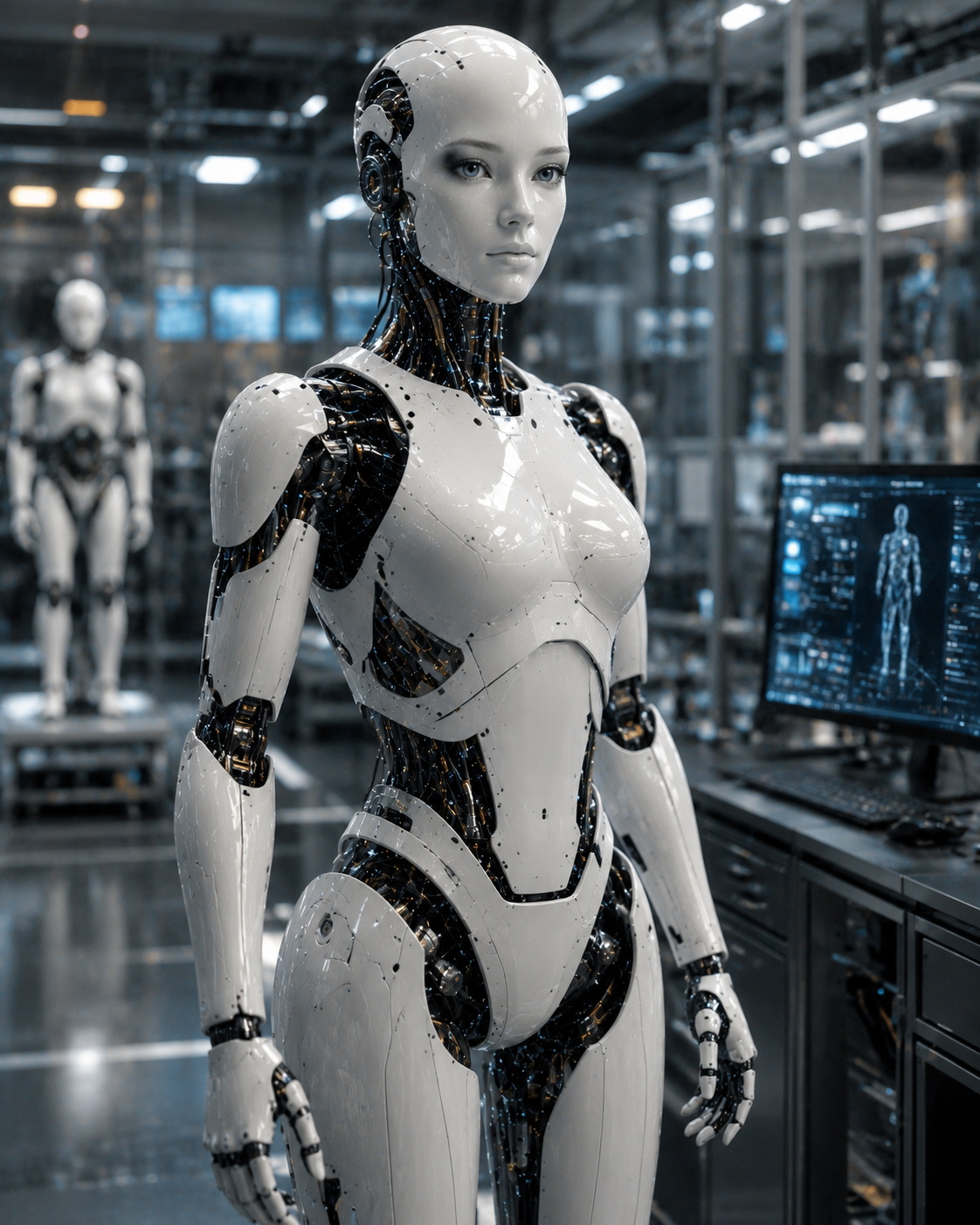
Imagine shaking hands with a robot that smiles, walks across the room, recognizes your face, answers your questions, and carefully hands you a glass of water without spilling a drop. Just a few decades ago, such a machine belonged only to science fiction. Today, humanoid robots are becoming a reality. They can walk, run, dance, communicate, solve problems, and even assist people in homes, hospitals, factories, and research laboratories.
Although today’s humanoid robots are still far from matching the flexibility and intelligence of humans, they represent one of the most exciting achievements in modern engineering. These remarkable machines combine mechanical engineering, electronics, computer science, artificial intelligence, and robotics into a single system designed to imitate human movement and behavior.
But how do humanoid robots actually work? How can a machine balance on two legs, recognize people, understand speech, and perform complex tasks? The answer lies in the careful integration of many advanced technologies working together.
What Is a Humanoid Robot?
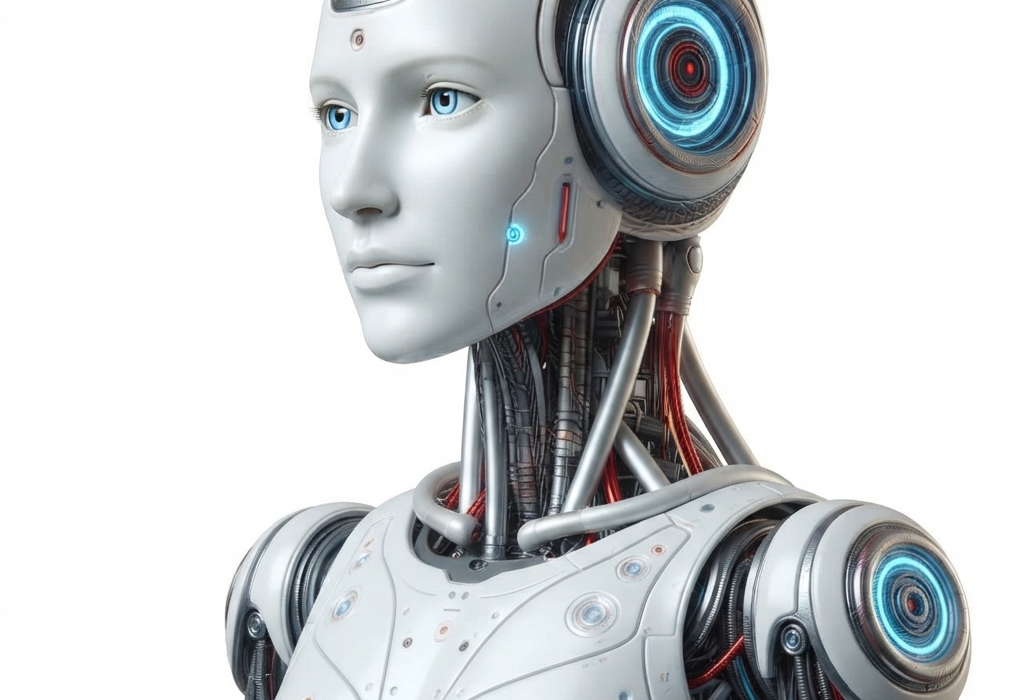
A humanoid robot is a robot designed to resemble the structure of the human body. While different humanoid robots have different appearances, most share common features such as a head, torso, two arms, and two legs. Some models also include hands with movable fingers, expressive faces, cameras that function as eyes, and microphones that serve as ears.
Not every humanoid robot looks exactly like a person. Some have simple metallic frames, while others are covered with synthetic materials that resemble human skin. Their appearance depends on their intended purpose. A robot built for industrial work may prioritize strength and durability, while one designed to assist elderly people may have a friendlier and more human-like appearance.
The goal of a humanoid robot is not simply to look like a human but to interact effectively in environments that were originally designed for people.
Why Build Robots That Look Like Humans?
Most homes, offices, hospitals, factories, and public buildings are built around the human body. Doors, stairs, furniture, tools, elevators, and vehicles are all designed for human size and movement.
A robot with two legs can potentially climb stairs instead of requiring ramps. Arms with human-like joints can operate tools already made for people. Hands with flexible fingers can grasp objects that humans use every day.
By giving robots a human-like body, engineers hope to create machines that can work alongside people without requiring major changes to existing environments.
Humanoid robots are especially useful in places where human workers face danger, such as disaster zones, nuclear facilities, deep mines, or even future missions to the Moon and Mars.
The Body of a Humanoid Robot
The body of a humanoid robot is built from lightweight but strong materials such as aluminum alloys, steel, titanium, and carbon fiber composites.
Inside the body is a metal framework that acts like a human skeleton. This frame supports motors, electronics, batteries, sensors, and computers.
Each part of the robot is carefully engineered to balance strength, flexibility, and weight. Engineers try to make the robot light enough to move efficiently while remaining strong enough to carry loads and withstand repeated movement.
The shape of each body part is chosen not only for appearance but also to protect internal components and improve balance.
Joints That Mimic Human Movement
Humans have over 200 bones connected by joints that allow smooth and flexible movement. Humanoid robots use mechanical joints to achieve similar motion.
The shoulders rotate in several directions. Elbows bend. Wrists twist. Hips rotate. Knees bend. Ankles adjust continuously to maintain balance.
Each joint contains one or more actuators, which are devices that generate movement.
The number of movable joints varies greatly between robots. Simpler humanoid robots may have only a few dozen movable joints, while advanced research robots can have many more, allowing highly realistic movements.
The greater the number of joints, the more naturally the robot can move. However, additional joints also make control much more complicated.
Muscles Made of Motors
Humans rely on muscles to move their bodies. Humanoid robots replace muscles with actuators.
The most common actuators are electric motors. These motors rotate gears that move robotic joints with great precision.
Some robots use hydraulic actuators, which rely on pressurized fluids to generate powerful movements. Hydraulic systems produce tremendous strength and are useful for heavy lifting.
Others use pneumatic actuators powered by compressed air. These systems can create smooth and lightweight movement but often provide less precise control.
Researchers are also developing artificial muscles made from advanced materials that contract when electricity is applied. These technologies may eventually allow robots to move more naturally than traditional motors.
The Importance of Balance
Walking on two legs is surprisingly difficult.
Humans rarely think about maintaining balance because our brains perform countless calculations automatically every second.
A humanoid robot must constantly monitor its position, predict future movements, and adjust its posture before falling.
Every step changes the robot’s center of gravity.
Every uneven surface creates new challenges.
If the robot encounters a slippery floor or unexpected obstacle, it must react almost instantly.
Keeping balance is one of the greatest engineering challenges in humanoid robotics.
Advanced robots make hundreds or even thousands of balance adjustments every second while walking.
Sensors Give Robots Awareness
A robot cannot understand its surroundings without sensors.
Sensors act like the robot’s senses, collecting information about both the environment and the robot itself.
Cameras function as eyes, capturing images and video.
Microphones detect sound.
Touch sensors measure contact with objects.
Force sensors determine how firmly an object is being held.
Temperature sensors detect heat.
Pressure sensors monitor weight and contact forces.
Joint position sensors continuously report the angle of every moving part.
Together, these sensors provide the information the robot needs to make intelligent decisions.
Cameras Help Robots See
Vision is one of the most important abilities of a humanoid robot.
Instead of biological eyes, robots usually rely on digital cameras.
Some robots use two cameras positioned like human eyes. This arrangement allows stereo vision, helping the robot estimate depth and distance.
Computer vision software analyzes images to identify people, furniture, doors, stairs, tools, and countless other objects.
Modern artificial intelligence allows robots to recognize faces, read printed text, detect gestures, and even understand simple human emotions through facial expressions.
Although robot vision has improved dramatically, it remains far less capable than human vision in many real-world situations.
Hearing and Understanding Speech
Microphones allow humanoid robots to hear sounds.
Speech recognition software converts spoken words into digital text.
Natural language processing systems then interpret the meaning of those words.
When someone asks a question, the robot searches for an appropriate response before generating speech through built-in speakers.
Modern AI has made conversations with robots much more natural than in the past.
However, understanding accents, background noise, sarcasm, humor, and complex conversations remains a challenging task.
Artificial Intelligence Is the Robot’s Brain
The mechanical body allows movement, but artificial intelligence (AI) gives a humanoid robot the ability to make decisions.
AI analyzes information from cameras, microphones, and other sensors.
It identifies objects.
It recognizes people.
It plans movements.
It avoids obstacles.
It learns from previous experiences.
Machine learning algorithms enable robots to improve certain tasks over time by analyzing large amounts of data.
Instead of following only fixed instructions, advanced robots can adapt to changing situations.
This adaptability makes humanoid robots far more useful in complex environments.
The Computer Inside the Robot
Every humanoid robot contains powerful computers.
These computers process enormous amounts of information every second.
They receive data from sensors, calculate movement, monitor balance, recognize objects, understand speech, and coordinate every motor throughout the body.
Many operations happen simultaneously.
For example, while walking, the computer may also recognize faces, avoid obstacles, listen to spoken instructions, and adjust arm movements.
Without fast computing power, such coordination would be impossible.
Planning Every Movement
Even simple actions require careful planning.
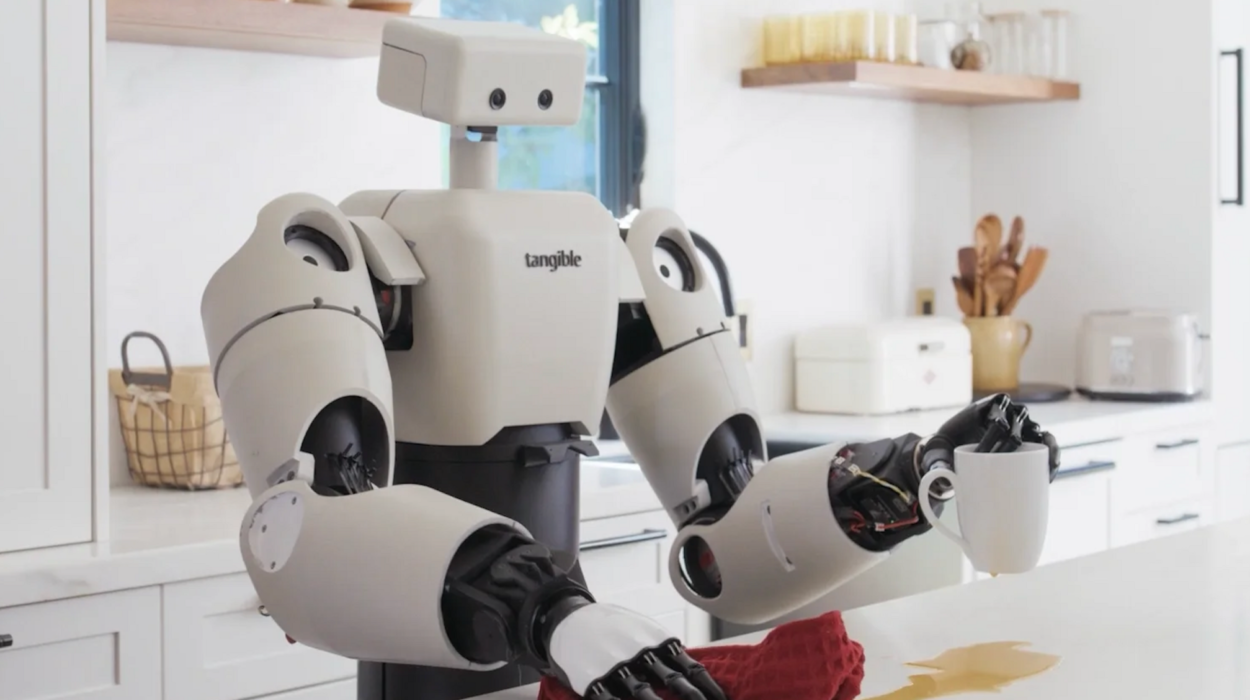
Suppose a robot wants to pick up a coffee cup.
It must first locate the cup.
Then it estimates the cup’s size and position.
Next, it calculates the movement of the shoulder, elbow, wrist, fingers, and body.
It must ensure the hand approaches from the correct direction.
The fingers close gently to avoid crushing the cup.
If the cup begins slipping, force sensors detect the change, allowing the robot to adjust its grip.
What humans accomplish almost automatically requires thousands of calculations inside the robot.
Learning From Experience
Modern humanoid robots increasingly use machine learning.
Instead of relying entirely on pre-programmed instructions, they analyze data from previous experiences.
If the robot repeatedly performs the same task, it can gradually improve efficiency and accuracy.
Researchers also train robots using massive datasets containing millions of images, videos, speech samples, and movement examples.
Some robots even learn by observing humans perform tasks.
Although current learning systems remain limited compared to human learning, they continue improving rapidly.
Powering a Humanoid Robot
Every robot requires energy.
Most humanoid robots use rechargeable lithium-ion batteries similar to those found in electric vehicles and laptops, although often much larger.
These batteries power motors, computers, sensors, cameras, communication systems, and cooling equipment.
Battery life depends on the robot’s size and activity.
Walking, lifting heavy objects, or performing continuous movements consumes significant energy.
One of the major challenges facing humanoid robotics is increasing battery life while reducing weight.
Communication With Humans
Humanoid robots are designed to interact naturally with people.
They can recognize faces.
Remember names.
Respond to spoken questions.
Display information on screens.
Use gestures while speaking.
Some robots move their eyes, eyebrows, and mouths to create more expressive communication.
Social interaction helps people feel more comfortable working alongside robots.
Researchers continue studying how robots can communicate more effectively while respecting cultural differences and social expectations.
Safety Comes First
Humanoid robots often work near people.
Because of this, safety is a critical design priority.
Robots continuously monitor the force they apply during movement.
If unexpected contact occurs, they can immediately stop or reduce motor power.
Vision systems detect nearby people and obstacles.
Software limits dangerous movements.
Emergency stop buttons allow operators to instantly shut down the robot if necessary.
These safety measures reduce the risk of accidents during human-robot interaction.
Where Humanoid Robots Are Used
Humanoid robots are gradually finding roles in many industries.
In factories, they assist with repetitive tasks.
In hospitals, they help transport supplies and support healthcare workers.
In research laboratories, they test new technologies.
Some serve as educational tools in classrooms.
Others greet visitors in museums, airports, hotels, and shopping centers.
Researchers are also exploring their use in disaster response, where robots could enter dangerous environments that are unsafe for humans.
Future space missions may rely on humanoid robots to construct habitats before astronauts arrive.
Can Humanoid Robots Feel Emotions?
Humanoid robots can recognize certain emotional signals and respond in ways that appear empathetic.
For example, a robot may detect a smiling face and respond with a cheerful greeting.
It may notice a sad tone of voice and offer comforting words.
However, these behaviors do not mean the robot actually experiences emotions.
Unlike humans, robots do not possess consciousness, subjective feelings, or emotional experiences.
They process data and generate responses based on algorithms.
The appearance of emotion should not be confused with genuine emotional experience.
Scientists continue to study consciousness, but there is currently no scientific evidence that today’s humanoid robots are conscious or self-aware.
The Biggest Challenges
Despite impressive progress, humanoid robots still face many challenges.
Walking across uneven ground remains difficult.
Manipulating delicate objects is often slower than human performance.
Understanding complex conversations is still limited.
Battery life restricts operating time.
Building advanced robots is expensive.
Robots also struggle with unexpected situations that humans solve effortlessly using common sense and years of life experience.
Researchers around the world continue working to overcome these limitations.
The Future of Humanoid Robots
The future of humanoid robotics is filled with exciting possibilities.
Advances in artificial intelligence, batteries, sensors, materials science, and computing are making robots increasingly capable.
Future humanoid robots may become valuable assistants in homes, hospitals, schools, construction sites, farms, and scientific research.
They may help care for aging populations, support people with disabilities, perform hazardous jobs, and assist astronauts exploring other worlds.
Even so, experts generally expect humanoid robots to work alongside humans rather than completely replace them. Human creativity, judgment, empathy, and social understanding remain difficult to replicate with machines.
A Remarkable Blend of Science and Engineering
Humanoid robots are among the most sophisticated machines humanity has ever created. Every step they take, every object they grasp, and every conversation they hold results from the seamless cooperation of mechanics, electronics, sensors, software, artificial intelligence, and advanced mathematics.
Their ability to resemble human movement is not magic. It is the product of decades of scientific research and engineering innovation. Thousands of tiny calculations happen every second, allowing these machines to maintain balance, perceive their surroundings, plan actions, and interact with people in meaningful ways.
Although today’s humanoid robots are still learning to navigate the complexities of the real world, their capabilities continue to grow at an extraordinary pace. As technology advances, these machines may become trusted partners that help solve difficult problems, perform dangerous work, and improve people’s daily lives.
The story of humanoid robots is still being written. With each new breakthrough, they offer a glimpse of a future where intelligent machines and humans work together—not as competitors, but as collaborators—expanding what is possible through science, innovation, and imagination.