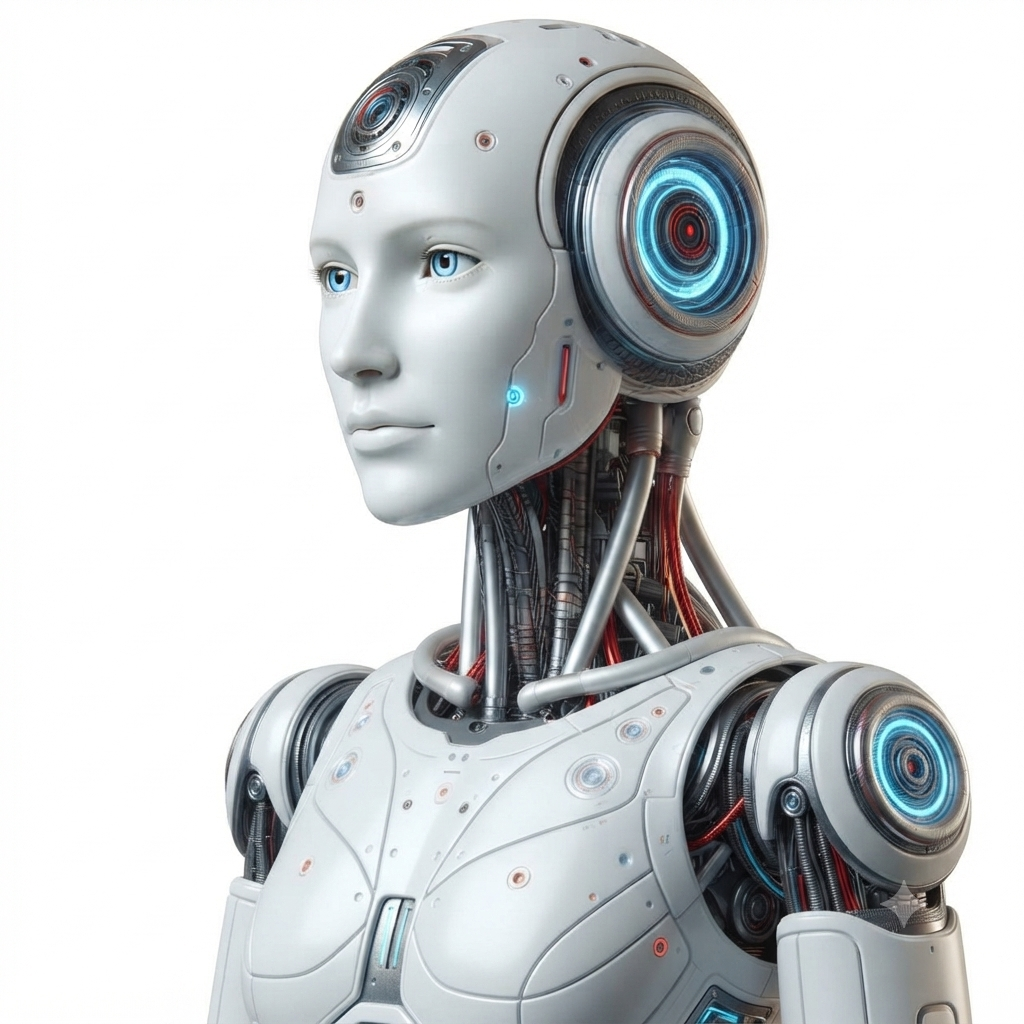
Walk into a modern factory today, and you might notice something remarkable. Robotic arms move with incredible precision, cameras inspect products faster than the human eye, machines quietly monitor their own health, and computer systems constantly analyze thousands of pieces of information every second. While skilled workers remain at the heart of manufacturing, a powerful new partner is transforming how factories operate—artificial intelligence (AI).
For more than two centuries, manufacturing has evolved through waves of innovation. The Industrial Revolution introduced mechanized production powered by steam. Electricity enabled mass production, while computers and automation brought factories into the digital age. Today, AI represents the next major step in this journey. Unlike traditional machines that simply follow pre-programmed instructions, AI systems can recognize patterns, learn from data, make predictions, and help people make better decisions.
From building cars and smartphones to producing medicines and food, AI is changing manufacturing in ways that improve quality, reduce waste, increase efficiency, and make workplaces safer. Although AI has become one of the most talked-about technologies of the modern era, its role in manufacturing is not about replacing every human worker. Instead, it is increasingly being used to assist people, automate repetitive tasks, and solve problems that would otherwise require enormous amounts of time and effort.
Understanding how AI works in manufacturing reveals not only the future of factories but also the future of many products we use every day.
Understanding Artificial Intelligence in Manufacturing
Artificial intelligence refers to computer systems that can perform tasks typically associated with human intelligence. These tasks include recognizing images, understanding language, finding patterns in data, making predictions, and learning from experience.
In manufacturing, AI combines information from many different sources. Machines equipped with sensors collect data about temperature, pressure, vibration, speed, energy consumption, and product dimensions. Cameras capture detailed images of products moving along production lines. Computer systems gather information from inventory records, supply chains, and production schedules.
AI analyzes all this information much faster than humans could. Instead of simply recording data, AI searches for meaningful patterns. It identifies problems before they become serious, recommends improvements, and sometimes automatically adjusts manufacturing processes to maintain optimal performance.
This ability to transform enormous amounts of data into useful knowledge is one of AI’s greatest strengths in modern manufacturing.
The Rise of Smart Factories
The idea of a “smart factory” has become increasingly important in manufacturing. A smart factory uses connected machines, sensors, robotics, cloud computing, and AI to improve production continuously.
Unlike traditional factories where machines often operate independently, smart factories allow equipment to communicate with one another. Information flows across the entire production process in real time.
If one machine begins slowing down, AI can recognize the change immediately. It may adjust nearby equipment, notify maintenance teams, or recommend production changes before delays spread throughout the factory.
This constant flow of information allows factories to become more flexible, efficient, and responsive to changing conditions.
AI Helps Maintain Machines Before They Break
One of the most valuable uses of AI in manufacturing is predictive maintenance.
Every machine gradually experiences wear and tear. Bearings wear out, motors become less efficient, and moving parts slowly deteriorate. In traditional maintenance systems, equipment might be serviced according to a fixed schedule or only after it fails.
Both approaches have disadvantages. Servicing machines too early wastes time and money, while waiting until failure can cause expensive production delays.
AI offers a smarter solution.
Sensors continuously measure vibrations, temperatures, electrical currents, sounds, and other operating conditions. AI compares this information with data collected from healthy and damaged machines over long periods.
If subtle changes suggest that a component is beginning to fail, AI can alert engineers before a breakdown occurs.
This approach reduces unexpected downtime, lowers maintenance costs, extends equipment life, and helps factories operate more reliably.
Improving Product Quality Through AI
Every manufacturer wants to produce products that meet high quality standards.
Traditionally, quality inspection often relied on human workers visually examining products. While skilled inspectors are highly capable, people naturally become tired during long shifts, and some tiny defects may be difficult to detect consistently.
AI-powered vision systems have greatly improved quality inspection.
High-resolution cameras photograph products as they move through production lines. AI algorithms analyze these images almost instantly.
The system can detect scratches, cracks, missing components, incorrect colors, surface imperfections, alignment problems, and many other defects that may be nearly invisible to the human eye.
Because AI performs inspections consistently throughout the day, manufacturers can identify problems earlier, reduce defective products, and improve customer satisfaction.
Importantly, human inspectors continue to play a critical role by reviewing unusual cases, verifying AI decisions, and handling complex quality assessments.
AI Makes Robots More Flexible
Industrial robots have been used in manufacturing for decades, especially for repetitive tasks such as welding, painting, packaging, and assembly.
Traditional robots usually follow fixed instructions. If production changes significantly, engineers often need to reprogram them.
AI is making robots much more adaptable.
Using cameras, sensors, and machine learning, robots can better recognize objects, adjust to slight variations in product positions, and respond to changing environments.
For example, instead of requiring every object to be placed in exactly the same location, an AI-enabled robot can identify the object’s position and adjust its movements accordingly.
This flexibility allows manufacturers to produce a wider variety of products without extensive reprogramming.
Human Workers and AI Working Together
One common misconception is that AI aims to replace all human workers.
In reality, manufacturing increasingly focuses on collaboration between people and intelligent machines.
Humans remain exceptionally skilled at creativity, judgment, communication, problem-solving, and adapting to unexpected situations.
AI excels at processing enormous amounts of information, recognizing patterns, performing repetitive calculations, and monitoring systems continuously.
Together, these strengths complement one another.
For example, AI may detect an unusual pattern in machine performance and alert an engineer. The engineer then investigates the situation, considers additional factors, and decides the best course of action.
Similarly, AI may assist workers by providing instructions, suggesting production improvements, or identifying potential safety risks.
Rather than replacing human expertise, AI often enhances it.
Reducing Manufacturing Waste
Waste reduction has become an important goal for manufacturers around the world.
Every defective product represents wasted materials, energy, labor, and time.
AI helps reduce waste in several ways.
By monitoring production in real time, AI detects process changes before large numbers of defective products are produced.
It optimizes cutting patterns in manufacturing to minimize leftover materials.
It adjusts machine settings to reduce excess energy consumption.
It helps factories use raw materials more efficiently.
These improvements not only reduce production costs but also contribute to environmental sustainability.
Optimizing Energy Consumption
Manufacturing requires significant amounts of electricity, fuel, steam, and cooling.
Energy costs often represent a substantial portion of factory operating expenses.
AI helps manufacturers understand exactly where energy is being used.
By analyzing equipment performance, production schedules, weather conditions, and historical energy consumption, AI identifies opportunities to improve efficiency.
For example, AI may recommend operating certain equipment during periods of lower electricity demand or adjusting heating and cooling systems to reduce unnecessary energy use.
These improvements can lower operating costs while reducing greenhouse gas emissions associated with energy production.
AI Strengthens Supply Chains
Manufacturing depends on complex supply chains involving raw materials, transportation, warehouses, suppliers, and customers.
Unexpected disruptions—such as severe weather, transportation delays, equipment failures, or changing customer demand—can affect production.
AI helps companies manage these challenges.
By analyzing historical trends and real-time information, AI forecasts future demand more accurately.
It predicts when materials should be ordered.
It helps optimize warehouse inventories.
It identifies potential supply chain risks before they become major problems.
These capabilities allow manufacturers to respond more quickly to changing market conditions.
AI Helps Design Better Products
The influence of AI extends beyond factory floors.
During product development, engineers increasingly use AI to explore new design possibilities.
AI can analyze thousands of potential designs, considering factors such as strength, weight, manufacturing cost, durability, and material usage.
Instead of evaluating only a few designs manually, engineers can compare many more possibilities.
This process often leads to lighter, stronger, more efficient, and less expensive products.
Engineers still make the final decisions, but AI significantly expands the range of options available during design.
Digital Twins Transform Manufacturing
One of the most exciting developments in modern manufacturing is the use of digital twins.
A digital twin is a virtual computer model of a real machine, production line, or entire factory.
AI continuously updates this virtual model using real-world sensor data.
Engineers can then simulate changes before making them in the physical factory.
They can test new production methods, evaluate maintenance schedules, predict equipment performance, and identify potential problems without interrupting actual manufacturing.
This reduces risk while improving decision-making.
AI Improves Workplace Safety
Manufacturing environments often involve heavy machinery, high temperatures, moving equipment, and potentially hazardous materials.
Safety remains a top priority.
AI contributes to safer workplaces in many ways.
Computer vision systems monitor work areas and identify unsafe situations.
AI can detect when workers enter restricted zones or fail to wear required protective equipment.
It monitors machinery for unusual operating conditions that could indicate safety risks.
Wearable sensors may even detect signs of worker fatigue or heat stress in certain environments.
By identifying hazards early, AI helps reduce workplace accidents.
AI in Automotive Manufacturing
The automotive industry has become one of the largest users of AI.
Modern automobile factories use AI throughout production.
Robots assemble vehicle components with exceptional precision.
Vision systems inspect paint quality.
Predictive maintenance reduces equipment downtime.
AI coordinates thousands of parts arriving from suppliers.
Machine learning helps optimize production schedules based on customer demand.
Many vehicle manufacturers also use AI during vehicle design, crash simulation, and testing.
As electric and autonomous vehicles continue developing, AI’s role in automotive manufacturing is expected to grow even further.
AI in Electronics Manufacturing
Electronics manufacturing demands extraordinary precision.
Microchips, circuit boards, and smartphones contain tiny components measured in fractions of a millimeter.
AI-powered inspection systems detect microscopic defects that humans may struggle to see consistently.
Machine learning helps optimize semiconductor manufacturing processes.
Robotic systems assemble delicate components with high accuracy.
AI also assists manufacturers in improving yields, meaning a greater percentage of products successfully meet quality standards.
AI in Food Manufacturing
Food production requires careful attention to quality, hygiene, and consistency.
AI helps monitor food processing, packaging, and storage conditions.
Vision systems inspect fruits, vegetables, baked goods, and packaged foods for defects.
AI predicts equipment maintenance needs to avoid production interruptions.
It also helps optimize production schedules based on seasonal demand and consumer purchasing patterns.
Food safety benefits from AI’s ability to monitor production continuously and detect unusual conditions early.
AI in Pharmaceutical Manufacturing
Producing medicines requires extremely precise manufacturing processes.
AI helps pharmaceutical companies monitor production conditions, analyze laboratory data, optimize manufacturing, and improve quality control.
Machine learning supports researchers during drug development by identifying promising compounds more efficiently.
During manufacturing, AI helps ensure products consistently meet strict quality standards.
Human scientists, engineers, and regulatory experts remain essential throughout these processes.
Challenges of Using AI in Manufacturing
Although AI offers many advantages, implementing it successfully is not always simple.
Factories must collect accurate, high-quality data. Poor data can lead to unreliable AI predictions.
Older equipment may require upgrades before AI systems can use it effectively.
Developing AI solutions often requires significant investment in technology, infrastructure, and employee training.
Cybersecurity also becomes increasingly important as connected factories rely on digital systems.
Manufacturers must protect sensitive production data and prevent unauthorized access to critical equipment.
In addition, AI systems require ongoing monitoring. Human experts must verify that AI recommendations remain accurate and appropriate under changing conditions.
The Importance of Skilled Workers
As AI becomes more common, manufacturing jobs are evolving rather than disappearing altogether.
Many repetitive tasks are becoming increasingly automated.
At the same time, demand is growing for workers who can operate, maintain, supervise, and improve AI-powered systems.
Engineers, technicians, programmers, maintenance specialists, quality experts, and data analysts all play important roles in modern manufacturing.
Training and education help workers develop the skills needed for these changing workplaces.
Rather than replacing human knowledge, AI often increases the value of technical expertise.
The Future of AI in Manufacturing
Artificial intelligence continues advancing rapidly.
Future factories may become even more connected, adaptive, and efficient.
Robots may work more naturally alongside people.
AI systems may become better at predicting customer demand, reducing energy consumption, improving recycling, and designing environmentally sustainable products.
Advances in machine learning, robotics, sensors, and computing power are likely to create manufacturing systems that respond more quickly to changing conditions while maintaining high quality and safety.
At the same time, responsible development will remain essential. Manufacturers will need to ensure AI systems are transparent, reliable, secure, and used in ways that support workers and society.
AI Is Shaping the Next Generation of Manufacturing
Manufacturing has always reflected humanity’s ability to solve problems through innovation. From the first hand tools to steam engines, assembly lines, industrial robots, and today’s intelligent factories, each technological leap has transformed the way products are made.
Artificial intelligence represents the latest chapter in this remarkable journey. By analyzing vast amounts of information, recognizing patterns, predicting future events, and supporting better decisions, AI helps manufacturers build higher-quality products more efficiently while reducing waste, improving safety, and conserving resources.
Yet the true strength of AI in manufacturing does not lie in replacing people. Its greatest value comes from working alongside human creativity, experience, and judgment. Engineers, technicians, factory workers, and AI systems each contribute unique strengths that together create smarter, more resilient manufacturing processes.
As industries continue to evolve, AI will likely become an even more important partner in designing, producing, and delivering the products that shape everyday life. From the vehicles we drive and the medicines we rely on to the electronics we use and the food we eat, AI is quietly helping build the future—one carefully manufactured product at a time.