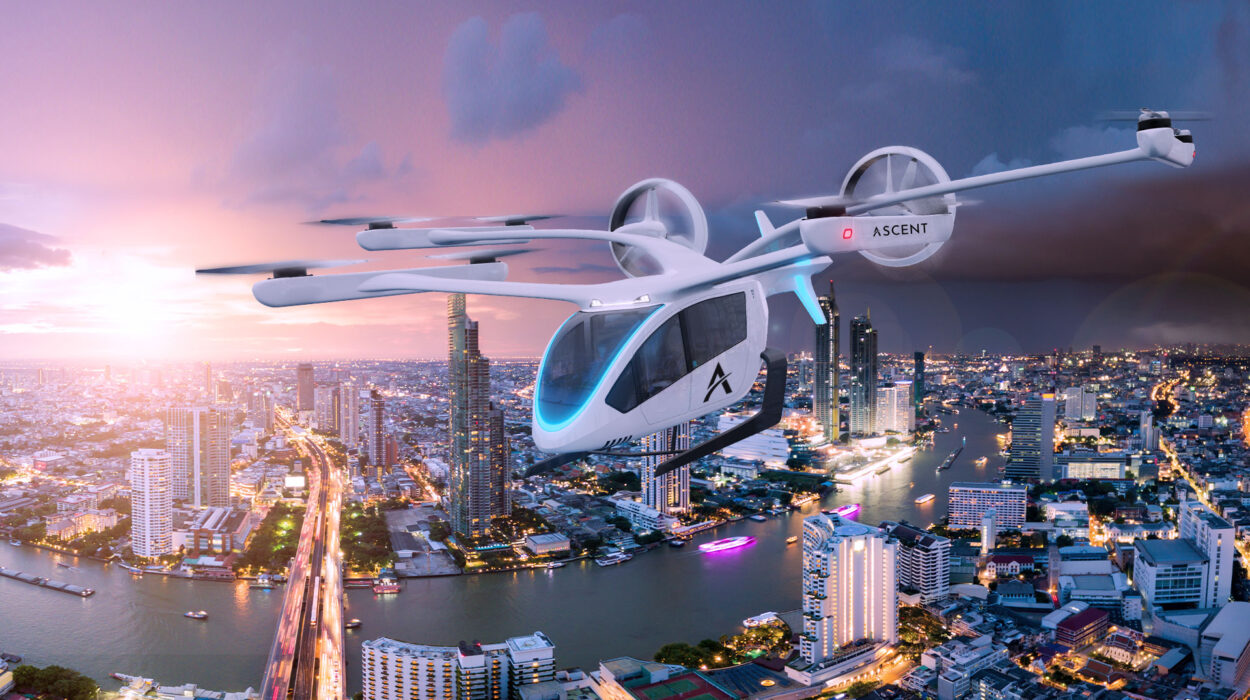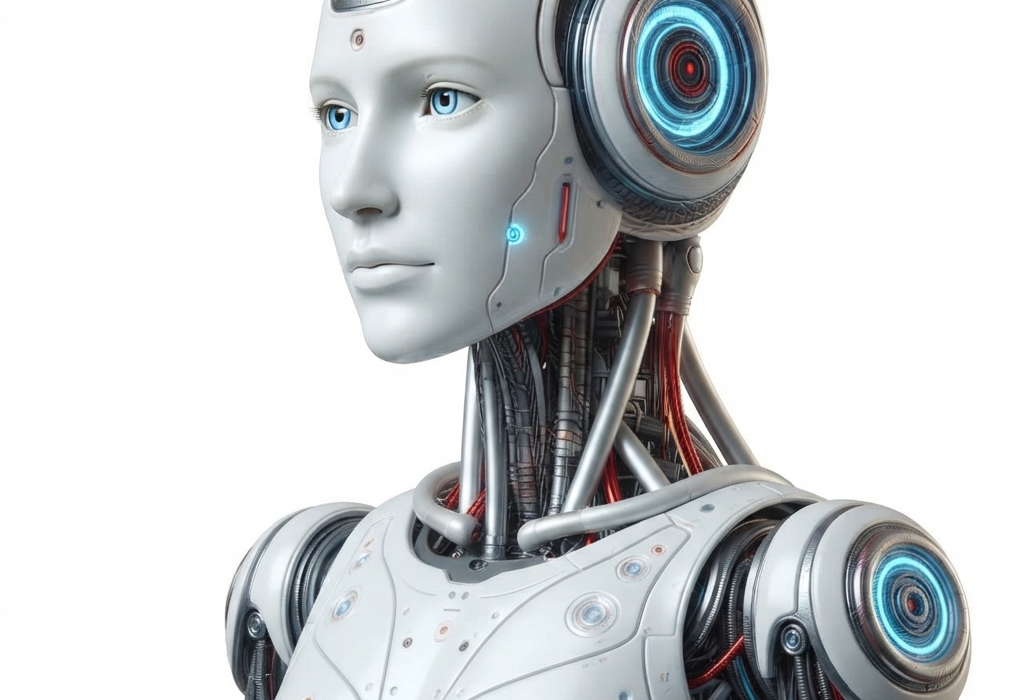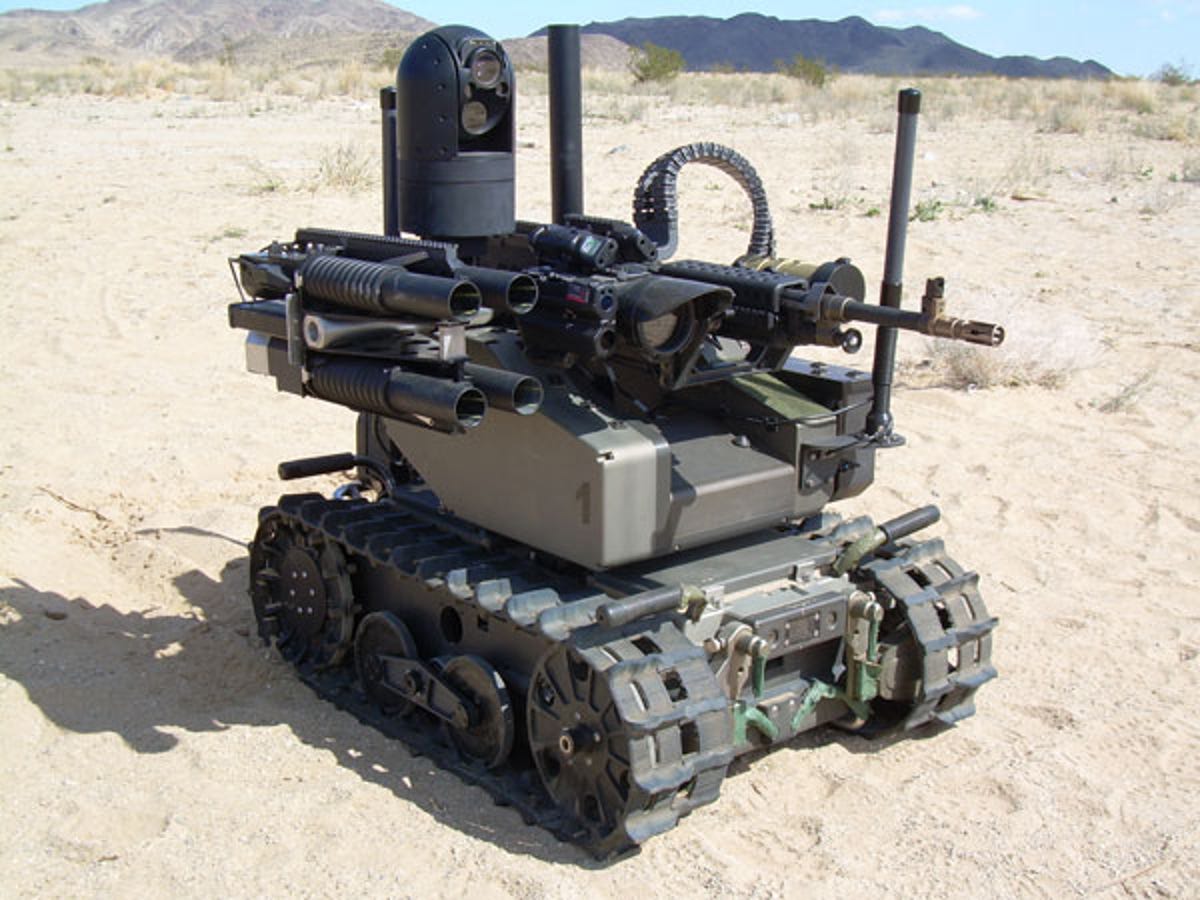
Imagine a robot moving silently through a dangerous battlefield. It scans the area with cameras that can see in darkness, detects hidden explosives beneath the ground, sends live video back to soldiers, and carefully carries supplies across rough terrain. Nearby, another robotic aircraft circles high above the clouds, gathering intelligence from hundreds of kilometers away. Beneath the ocean, an unmanned underwater vehicle searches for naval mines, while autonomous ground vehicles transport equipment without placing human drivers in danger.
This is no longer science fiction. Military robots have become an important part of modern defense forces around the world. They are helping soldiers perform dangerous missions, improving battlefield awareness, reducing risks to human life, and making military operations more efficient.
Although they are often portrayed in movies as fully independent fighting machines, the reality is much more complex. Most military robots are designed to assist humans rather than replace them. Many require direct human control, while others can perform certain tasks autonomously under carefully programmed conditions.
Understanding how military robots work requires exploring several fields of science and engineering, including robotics, artificial intelligence (AI), computer vision, electronics, mechanical engineering, wireless communication, and control systems. Together, these technologies allow machines to perceive their surroundings, make limited decisions, move through complex environments, and carry out specific military tasks.
What Are Military Robots?
Military robots are machines designed to perform tasks that support military operations without requiring a person to be physically present at the location where the task occurs.
Some military robots travel on wheels or tracks across the ground. Others fly through the air as drones, operate beneath the ocean, or move on the water’s surface. Each type is built for a particular mission.
Their responsibilities vary widely. Some gather intelligence using cameras and sensors. Others detect explosives, transport supplies, inspect dangerous areas, patrol borders, assist in search-and-rescue missions, or help maintain military equipment. Certain systems are equipped with weapons, although the level of human control over these systems depends on national policies, operational requirements, and legal frameworks.
Rather than functioning as “robot soldiers,” most military robots serve as advanced tools that extend human capabilities while reducing exposure to dangerous environments.
Why Militaries Use Robots
Modern battlefields can be extremely hazardous. Hidden landmines, improvised explosive devices (IEDs), chemical hazards, collapsing buildings, and enemy fire create situations where sending a human may be extremely risky.
Military robots help reduce these dangers.
A robot can inspect a suspicious package without risking a bomb disposal technician’s life. An aerial drone can monitor enemy activity from high above without placing a pilot in immediate danger. An underwater robot can inspect a harbor for mines before ships enter.
Robots can also work continuously for long periods, enter environments that would be unsafe for people, and collect valuable information more quickly than traditional methods in certain situations.
Their greatest advantage is often not replacing soldiers but keeping them farther away from immediate danger.
The Main Components of a Military Robot
Every military robot combines several interconnected systems that work together.
Its mechanical structure forms the body, providing strength and mobility. Electric motors, hydraulic systems, or other actuators generate movement.
A computer serves as the robot’s “brain,” processing information from sensors and determining appropriate actions based on software instructions.
Power systems, usually batteries or fuel-powered generators depending on the robot’s size and mission, provide energy for all onboard equipment.
Communication systems connect the robot to human operators or command centers.
Sensors allow the robot to observe its surroundings.
Together, these components enable the robot to function effectively in demanding environments.
Sensors: Helping Robots Understand Their Environment
Just as humans rely on their senses, robots depend on sensors.
Different sensors provide different kinds of information.
High-resolution cameras capture visible images.
Infrared cameras detect heat, allowing robots to operate at night or identify warm objects against cooler backgrounds.
Thermal imaging can reveal people, vehicles, or equipment that may be difficult to see with ordinary cameras under certain conditions.
Laser-based systems such as LiDAR (Light Detection and Ranging) measure distances by sending out laser pulses and analyzing the reflected light. This allows robots to build detailed three-dimensional maps of their surroundings.
Radar systems use radio waves to detect distant objects and can often operate effectively through fog, rain, smoke, or darkness.
Microphones detect sound, while chemical sensors may identify hazardous gases or other substances in specialized missions.
GPS receivers help determine position outdoors, although military systems may also use alternative navigation methods when GPS signals are unavailable or disrupted.
The robot continuously combines data from multiple sensors to develop an accurate understanding of its environment.
Computer Vision: Giving Robots the Ability to “See”
Simply collecting images is not enough.
Military robots use computer vision software to interpret visual information.
Algorithms identify roads, buildings, vehicles, obstacles, and terrain features.
Some systems can detect movement, recognize patterns, estimate distances, or classify objects.
Modern computer vision often incorporates artificial intelligence techniques that improve recognition performance using large datasets collected during development and testing.
Even so, visual recognition is not perfect. Weather, lighting conditions, camouflage, smoke, dust, or unexpected situations can reduce accuracy.
For this reason, human oversight remains essential for many military operations.
Artificial Intelligence Inside Military Robots
Artificial intelligence enables robots to perform certain tasks with greater independence.
Instead of requiring constant instructions for every movement, AI allows robots to analyze sensor data, plan routes, avoid obstacles, and adapt to changing environments.
Machine learning algorithms can improve object recognition, navigation, and data analysis after being trained on carefully prepared datasets.
However, current military AI is typically specialized rather than possessing general intelligence.
A robot designed to detect mines cannot suddenly learn medical treatment or strategic planning on its own.
Most military AI focuses on solving specific problems rather than thinking like a human.
Human Control Remains Central
Despite advances in automation, humans remain responsible for many important decisions involving military robots.
Many systems operate through remote control.
An operator views live video from the robot and issues commands using a control station that may include screens, joysticks, keyboards, or specialized interfaces.
Some robots are semi-autonomous. They can navigate to a specified location, avoid obstacles, or perform routine scanning while humans supervise their activities.
In many countries, decisions involving the use of lethal force remain under human control, although policies and levels of autonomy vary among different military systems and nations.
Maintaining meaningful human oversight is a major topic of international discussion in military ethics and law.
Communication Systems
Reliable communication is essential.
Military robots exchange information with operators through secure radio systems, satellite communications, fiber-optic cables in certain situations, or other specialized communication technologies.
They continuously transmit video, sensor readings, location information, and system status.
Operators send navigation commands, mission updates, or instructions in return.
Because communication links may be vulnerable to interference, cyberattacks, or signal loss, many military robots include backup communication methods or autonomous safety behaviors that activate if contact is interrupted.
Navigation and Movement
Moving safely across complex environments is one of robotics’ greatest engineering challenges.
Ground robots may use wheels, tracks, or multiple legs depending on their intended missions.
Tracked vehicles often perform well on rough terrain.
Wheeled robots generally move faster on roads and smoother surfaces.
Legged robots can potentially climb stairs, cross rocky landscapes, and navigate uneven ground more effectively, although they are mechanically more complex.
Flying military robots use rapidly spinning propellers or jet engines to generate lift.
Onboard sensors continuously monitor speed, altitude, orientation, wind conditions, and acceleration to maintain stable flight.
Underwater robots rely on propellers, buoyancy control systems, sonar, and pressure sensors to navigate beneath the sea.
Each environment presents unique engineering challenges.
Ground Military Robots
Ground robots perform a wide variety of missions.
Bomb disposal robots are among the most widely recognized examples.
These machines often include robotic arms capable of carefully manipulating suspicious objects while operators remain at a safe distance.
Reconnaissance robots enter buildings, tunnels, caves, or hazardous areas to provide real-time video before soldiers advance.
Logistics robots transport ammunition, food, water, medical supplies, and equipment across difficult terrain.
Some experimental systems are designed to accompany military units while carrying heavy loads that would otherwise burden soldiers.
Ground robots reduce physical strain and improve operational safety in many situations.
Military Drones
Unmanned aerial vehicles, commonly called drones, have transformed modern military operations.
Small drones provide close-range reconnaissance for ground units.
Larger drones can remain airborne for many hours, monitoring wide regions using advanced cameras, radar, and infrared sensors.
Because they operate without onboard pilots, drones eliminate the immediate risk to flight crews during hazardous missions.
Military drones support surveillance, border security, disaster assessment, search-and-rescue operations, communication relay, environmental monitoring, and, in some cases, armed missions depending on their design and operational role.
Advances in battery technology, lightweight materials, satellite navigation, and artificial intelligence continue improving drone capabilities.
Underwater Military Robots
The oceans present unique challenges.
Human divers face pressure limits, cold temperatures, darkness, and dangerous currents.
Unmanned underwater vehicles help overcome many of these obstacles.
These robots inspect ship hulls, map the seafloor, detect underwater mines, survey pipelines, and gather scientific or military information.
Sonar systems replace ordinary vision in many underwater environments because sound travels efficiently through water.
Autonomous underwater vehicles can travel long distances while collecting valuable data for naval operations.
Explosive Ordnance Disposal Robots
One of the safest applications of military robotics is bomb disposal.
Improvised explosive devices remain a serious hazard in many conflict zones.
Bomb disposal robots approach suspicious objects while operators remain at a secure distance.
Robotic arms manipulate wires, cameras inspect hidden areas, and specialized tools may disrupt explosive devices under controlled conditions.
These robots have saved countless lives by reducing the need for humans to approach dangerous explosives directly.
Power Systems
Every robot requires energy.
Small robots often rely on rechargeable lithium-ion batteries.
Larger systems may use diesel engines, hybrid power systems, fuel cells, or combinations of different energy sources.
Power management software carefully balances energy consumption among motors, sensors, communication equipment, onboard computers, and mission payloads.
Efficient power use directly influences how long a robot can operate before requiring recharging or refueling.
Researchers continue developing lighter batteries and more efficient energy systems to extend operational endurance.
Military Robot Software
Hardware alone cannot make a robot useful.
Software coordinates every function.
Programs process incoming sensor information, control motors, maintain communication links, monitor battery levels, manage navigation, detect faults, and execute mission instructions.
Advanced software also supports mapping, object recognition, route planning, obstacle avoidance, and data encryption.
Engineers spend enormous effort testing software because even small programming errors could have serious consequences in military environments.
Reliability is essential.
Cybersecurity
Because military robots rely heavily on digital systems, protecting them against cyber threats is critically important.
Encrypted communication helps prevent unauthorized interception.
Authentication systems verify that commands originate from legitimate operators.
Secure software updates reduce vulnerabilities.
Engineers also design systems to resist electronic interference, hacking attempts, and signal disruption whenever possible.
Cybersecurity has become one of the fastest-growing aspects of military robotics.
Advantages of Military Robots
Military robots provide many valuable capabilities.
They reduce risks to personnel by entering dangerous environments.
They can operate continuously for long periods without fatigue.
Their sensors often detect details invisible to the human eye.
Robots collect precise information that supports better decision-making.
They improve surveillance, logistics, disaster response, and explosive disposal.
Many missions become safer, faster, and more efficient when robots assist human teams.
Rather than replacing soldiers entirely, they expand what military personnel can safely accomplish.
Limitations and Challenges
Despite impressive technology, military robots have important limitations.
Artificial intelligence remains imperfect.
Unexpected situations, complex terrain, severe weather, damaged sensors, or communication failures can reduce performance.
Battery life limits operating time for many systems.
Robots may struggle with tasks requiring human judgment, creativity, empathy, or understanding of complex social situations.
Ethical concerns also surround increasing military automation, particularly regarding autonomous weapons and accountability for decisions made during armed conflict.
International organizations, governments, scientists, engineers, and legal experts continue debating how military AI should be developed and used responsibly.
The Future of Military Robotics
Military robotics continues advancing rapidly.
Future systems may become more autonomous in navigation, better at collaborating with human teams, and more capable of operating in difficult environments.
Artificial intelligence will likely improve perception, planning, and coordination while still requiring appropriate human oversight depending on mission requirements and legal standards.
Robotic swarms—groups of many small robots working together—are being actively researched for surveillance, communication, and other specialized tasks.
Advances in lightweight materials, energy storage, sensors, quantum technologies, and machine learning may further expand robotic capabilities.
At the same time, researchers and policymakers are working to ensure these technologies are developed responsibly, balancing military effectiveness with ethical principles and international humanitarian law.
Understanding the Machines That Support Modern Defense
Military robots represent one of the most advanced applications of modern science and engineering. By combining robotics, artificial intelligence, mechanical engineering, computer vision, electronics, wireless communication, and sensor technology, these machines can perform tasks that would otherwise expose people to significant danger.
They inspect explosives, gather intelligence, patrol difficult terrain, assist in rescue operations, monitor vast areas from the air, and explore the depths of the ocean. Yet despite their growing sophistication, they remain tools created and operated by humans. Their effectiveness depends not only on advanced technology but also on careful design, rigorous testing, responsible operation, and informed human decision-making.
As technology continues to evolve, military robots will almost certainly become more capable and more common. Understanding how they work helps us appreciate both the remarkable scientific achievements behind these machines and the important ethical responsibilities that accompany their use in an increasingly technological world.