Imagine watching a machine carefully assemble a car, explore the surface of Mars, perform a delicate surgery, or vacuum your living room without anyone touching it. Just a few decades ago, these ideas seemed like scenes from science fiction. Today, they are part of everyday life. Around the world, robots are helping doctors save lives, assisting farmers in growing food, supporting astronauts in space, and making dangerous jobs safer for humans.
But what exactly is a robot? Can robots think like humans? Are they controlled by people, or can they make decisions on their own? How do they see, move, and interact with the world around them?
The answers to these fascinating questions lie in the field of robotics.
Robotics is one of the fastest-growing areas of science and technology. It combines engineering, computer science, artificial intelligence, electronics, mathematics, and physics to design, build, program, and operate robots. As technology advances, robots are becoming smarter, more capable, and increasingly integrated into our daily lives.
From tiny robotic devices that travel through the human body to giant robotic arms building spacecraft, robotics is transforming industries and changing how people live and work. Understanding robotics is not only about learning how machines function—it is about exploring how humans create intelligent tools that can solve real-world problems.
What Is Robotics?
Robotics is the branch of science and engineering that focuses on the design, construction, operation, and application of robots. It also involves developing the software, sensors, control systems, and artificial intelligence that allow robots to perform useful tasks.
A robot is a machine designed to carry out actions automatically or semi-automatically. Unlike ordinary machines that perform only a single fixed function, many robots can sense their surroundings, process information, make decisions based on programmed instructions, and respond to changing conditions.
Some robots are completely controlled by humans, while others can perform tasks independently after receiving instructions.
Robotics brings together many scientific disciplines because creating a functional robot requires knowledge from several different fields. Engineers design the robot’s body and mechanical parts. Electronics specialists develop circuits and sensors. Computer scientists write software that controls the robot. Artificial intelligence researchers create systems that allow robots to recognize objects, understand environments, and make decisions.
This combination of multiple sciences makes robotics one of the most interdisciplinary fields in modern technology.
What Is a Robot?
A robot is much more than a moving machine. It is a programmable device capable of carrying out actions by following instructions or making decisions based on information from its environment.
Although robots come in many different shapes and sizes, most share several common characteristics.
They can sense their surroundings using devices such as cameras, microphones, temperature sensors, pressure sensors, or laser scanners. They process this information using computers or microcontrollers. Finally, they perform actions using motors, wheels, robotic arms, legs, or other mechanical components.
Some robots resemble humans, while others look nothing like people. A robotic vacuum cleaner, an industrial robotic arm, an underwater exploration vehicle, and a Mars rover are all robots, even though they have completely different appearances.
A robot’s appearance depends on the task it is designed to perform.
The History of Robotics
The idea of mechanical beings is surprisingly old. Ancient civilizations imagined self-moving statues and mechanical servants in myths and stories. Inventors throughout history built simple automated devices powered by water, gears, or springs.
However, modern robotics began to develop during the twentieth century as advances in electricity, electronics, computing, and engineering made more sophisticated machines possible.
The word robot first appeared in 1920 in the play R.U.R. (Rossum’s Universal Robots) by Czech writer Karel Čapek Karel Čapek. In the play, robots were artificial workers created to serve humans.
Later, science fiction writer Isaac Asimov Isaac Asimov introduced the term robotics and proposed his famous Three Laws of Robotics. Although these laws are fictional rather than scientific rules, they influenced public thinking about the relationship between humans and intelligent machines.
As computers became more powerful during the second half of the twentieth century, robotics advanced rapidly. Today, robots perform tasks that early engineers could only imagine.
How Robots Work
Although robots vary greatly in complexity, most operate through a similar process.
First, they gather information about their surroundings using sensors. These sensors act like the robot’s senses.
Cameras provide visual information similar to human eyes.
Microphones detect sounds.
Touch sensors recognize physical contact.
Temperature sensors measure heat.
Laser scanners create detailed maps of the environment.
GPS receivers determine location.
Once information is collected, the robot’s computer processes the data using software and algorithms. It determines what action should be taken based on its programming or learned behavior.
Finally, actuators convert electronic commands into physical movement. Motors rotate wheels, move robotic arms, operate tools, or control legs.
This continuous cycle of sensing, processing, deciding, and acting allows robots to interact with the world.
The Main Parts of a Robot
Every robot contains several essential components working together.
The mechanical structure forms the robot’s body. This includes its frame, joints, wheels, tracks, arms, or legs.
Sensors collect information about the environment.
Controllers act as the robot’s brain by processing information and running software.
Actuators produce movement by converting electrical energy into mechanical motion.
Power supplies provide the energy needed for operation. Some robots use rechargeable batteries, while larger industrial robots may receive power directly from electrical systems.
Software coordinates every action, from simple movements to advanced decision-making.
Without these components working together, a robot cannot function effectively.
Robotics and Artificial Intelligence
People often confuse robotics with artificial intelligence (AI), but they are not the same.
Robotics focuses on building machines that can perform physical tasks.
Artificial intelligence focuses on creating computer systems capable of learning, reasoning, recognizing patterns, solving problems, and making decisions.
Many modern robots use AI, but not all robots are intelligent.
For example, a factory robot that repeatedly welds car parts follows carefully programmed instructions. It performs its task accurately but does not truly understand what it is doing.
In contrast, an autonomous robot equipped with AI can recognize obstacles, identify objects, plan routes, and adapt to changing environments.
As AI continues to improve, robots are becoming increasingly capable of handling complex and unpredictable situations.
Different Types of Robots
Robots come in many forms because different jobs require different designs.
Industrial robots are among the most common. They assemble vehicles, weld metal, paint products, package goods, and perform highly repetitive manufacturing tasks with exceptional precision.
Service robots assist people in homes, hospitals, hotels, restaurants, and offices. Robotic vacuum cleaners, delivery robots, and hotel assistants are examples.
Medical robots help surgeons perform delicate operations with improved precision. Some robotic systems also assist in rehabilitation therapy and patient care.
Space robots explore environments too dangerous or distant for humans. Robotic spacecraft and planetary rovers investigate the Moon, Mars, and other parts of the Solar System.
Agricultural robots help farmers plant crops, monitor fields, remove weeds, and harvest produce.
Military robots assist with reconnaissance, bomb disposal, surveillance, and other hazardous operations that reduce risks to human personnel.
Underwater robots explore oceans, inspect pipelines, study marine ecosystems, and investigate shipwrecks at depths humans cannot safely reach.
Educational robots help students learn programming, engineering, and problem-solving through hands-on activities.
Humanoid robots resemble humans in appearance or movement. They are often used for research, education, customer interaction, and demonstrations of advanced robotics technologies.
Robotics in Everyday Life
Many people interact with robots every day without realizing it.
Robot vacuum cleaners automatically clean floors.
Automated lawn mowers maintain gardens.
Warehouse robots organize and transport packages.
Self-checkout systems use robotic mechanisms.
Automatic doors detect approaching people and open without physical contact.
Modern cars may include robotic systems that assist with parking, braking, and maintaining safe distances from other vehicles.
Hospitals use robots to transport medicine and supplies.
Restaurants increasingly employ robots to deliver food to customers.
As robotics technology becomes more affordable, robots are appearing in more homes, schools, businesses, and public spaces.
Robotics in Manufacturing
Manufacturing has been transformed by robotics.
Industrial robots can perform repetitive tasks continuously with remarkable accuracy.
They weld, paint, assemble, inspect, package, and transport products.
Because robots do not become tired in the same way humans do, they can improve productivity while maintaining consistent quality.
Importantly, robots also make workplaces safer by handling hazardous materials, operating in extreme temperatures, lifting heavy objects, and performing dangerous tasks.
Human workers increasingly supervise, maintain, and collaborate with robots rather than simply replacing manual labor.
Robotics in Healthcare
Healthcare is one of the most exciting applications of robotics.
Robotic surgical systems allow surgeons to perform delicate procedures with greater precision and smaller incisions in many types of operations.
Robotic rehabilitation devices help patients recover movement after injuries or strokes.
Hospital robots transport supplies, disinfect rooms using ultraviolet light, and reduce the workload of healthcare staff.
Scientists are also developing microscopic robots capable of delivering medicines directly to specific parts of the human body. Although many of these technologies remain under development, they represent promising areas of medical research.
Robotics in Space Exploration
Space is an extremely hostile environment for humans.
Extreme temperatures, intense radiation, and vast distances make robotic exploration essential.
Robotic spacecraft have visited every major planet in our Solar System.
Mars rovers have explored the Martian surface, analyzed rocks, searched for evidence of ancient environments, and transmitted valuable scientific data back to Earth.
Robotic arms aboard spacecraft repair satellites, collect samples, and assist astronauts aboard space stations.
Without robotics, much of modern space exploration would be impossible.
Robotics in Agriculture
Agriculture is becoming increasingly automated.
Robots help monitor crop health using cameras and sensors.
Autonomous tractors can navigate fields with high precision.
Harvesting robots carefully pick fruits and vegetables.
Drones equipped with advanced imaging systems inspect crops, identify pests, monitor irrigation, and assess plant health.
These technologies help improve efficiency while reducing waste and supporting sustainable farming practices.
Robotics in Disaster Response
Natural disasters often create environments that are too dangerous for rescue workers.
Robots can enter collapsed buildings, search for survivors, inspect unstable structures, and detect hazardous gases.
Underwater robots investigate flooded areas.
Flying drones quickly survey disaster zones from above.
By entering dangerous environments first, robots reduce risks for emergency responders and improve rescue operations.
Humanoid Robots
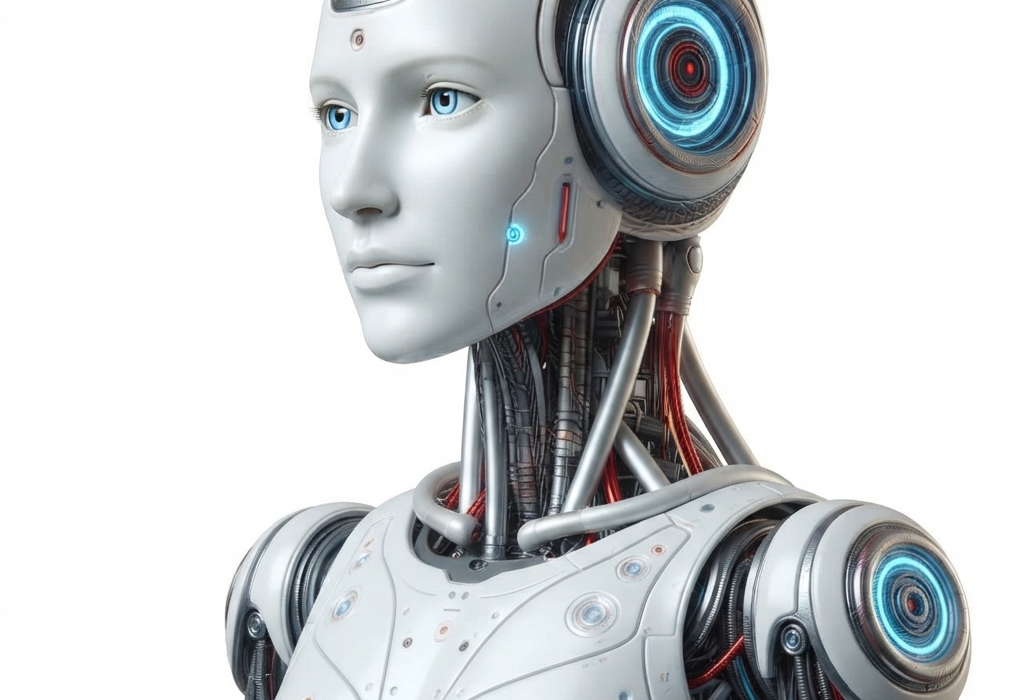
Humanoid robots are designed to resemble the human body.
Some have two arms, two legs, cameras positioned like eyes, and microphones that function like ears.
These robots are especially useful in environments built for humans because they can potentially use existing tools, open doors, climb stairs, and interact naturally with people.
Although humanoid robots attract significant public attention, they represent only a small portion of the robotics field. Most practical robots are designed specifically for their intended tasks rather than to look like humans.
Challenges in Robotics
Despite remarkable progress, robotics still faces many challenges.
Real-world environments are often unpredictable.
Recognizing objects under changing lighting conditions remains difficult.
Walking safely across uneven terrain is far more complex than it appears.
Handling delicate objects without causing damage requires sophisticated sensing and control.
Battery life limits the operating time of many mobile robots.
Engineers continue working to improve robot intelligence, energy efficiency, safety, reliability, and adaptability.
Creating robots that can match the flexibility and versatility of humans remains one of engineering’s greatest challenges.
The Ethics of Robotics
As robots become more advanced, important ethical questions arise.
How should robots interact safely with humans?
Who is responsible if an autonomous robot causes harm?
How should robots protect personal privacy when collecting data?
How will increased automation affect employment?
These questions involve technology, law, philosophy, economics, and public policy.
Scientists, engineers, governments, and society continue working together to ensure robotics develops responsibly and benefits humanity.
Robotics and the Future of Work
Robotics is changing the workplace rather than simply replacing human workers.
Many repetitive, physically demanding, or hazardous tasks are increasingly automated.
At the same time, new careers are emerging in robot design, programming, maintenance, artificial intelligence, cybersecurity, data analysis, and human-robot interaction.
Future workers will likely collaborate with robots rather than compete against them.
Education and lifelong learning will play an important role in preparing people for this changing technological landscape.
The Future of Robotics
The future of robotics is filled with exciting possibilities.
Researchers are developing robots that can learn more efficiently, work safely alongside humans, and adapt to unfamiliar environments.
Future robots may assist elderly people with daily activities, help scientists explore the deep ocean, construct habitats on the Moon or Mars, inspect aging infrastructure, and respond rapidly to natural disasters.
Advances in artificial intelligence, machine learning, sensors, materials science, batteries, and computing will continue expanding what robots can accomplish.
Although robots are becoming increasingly capable, they remain tools created by humans. Their effectiveness depends on thoughtful design, careful programming, and responsible use.
Why Learning Robotics Matters
Studying robotics develops far more than technical knowledge. It encourages creativity, critical thinking, engineering design, teamwork, and problem-solving. Building a robot requires understanding how mechanical systems, electronics, software, and mathematics work together to solve practical challenges.
For students, robotics provides an engaging way to learn science, technology, engineering, and mathematics. For researchers, it opens new opportunities to explore intelligent systems. For society, it offers solutions to problems that are difficult, dangerous, or impossible for humans alone.
Robotics also inspires curiosity. It encourages people to ask not only how machines work but also how technology can improve lives while respecting safety, ethics, and human values.
Conclusion
Robotics is one of the most dynamic and transformative fields of modern science and engineering. It combines knowledge from many disciplines to create machines that can sense, think within the limits of their programming or artificial intelligence, and act in the physical world. From factory floors and hospitals to farms, oceans, and distant planets, robots are expanding humanity’s ability to work, explore, and innovate.
As technology continues to evolve, robotics will play an even greater role in shaping the future. New generations of robots will likely become more intelligent, more adaptable, and more collaborative, helping people solve complex global challenges while opening doors to discoveries that once seemed impossible.
Ultimately, robotics is not about replacing human ingenuity. It is about extending it. By combining scientific understanding with engineering creativity, robotics demonstrates how human imagination can transform ideas into machines that improve lives, expand knowledge, and help build a future where people and robots work together to achieve extraordinary things.