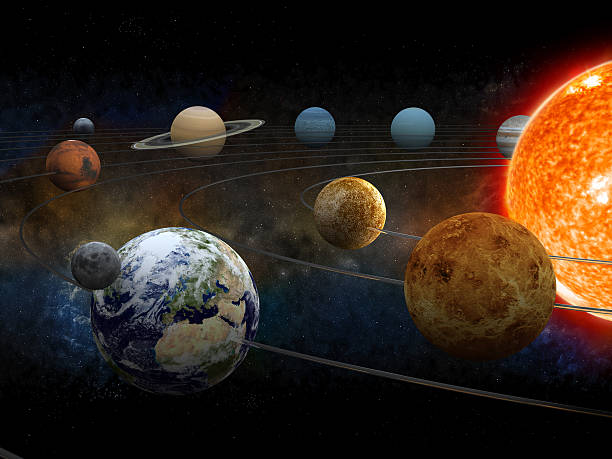
The Solar System is our home in the vast universe. It is the only planetary system we can explore in extraordinary detail, and every year, new discoveries reveal that it is far stranger, more dynamic, and more beautiful than anyone once imagined. From the blazing surface of the Sun to the icy bodies beyond Pluto, the Solar System is filled with incredible worlds, violent storms, hidden oceans, towering volcanoes, and mysterious objects that continue to challenge scientists.
For centuries, humanity believed the Solar System consisted of only a handful of planets circling the Sun. Today, thanks to powerful telescopes, robotic spacecraft, advanced computer simulations, and decades of planetary exploration, astronomers know that our cosmic neighborhood contains far more than eight planets. It includes hundreds of moons, millions of asteroids, countless comets, dwarf planets, rings, dust, plasma, magnetic fields, and distant icy bodies stretching trillions of kilometers into space.
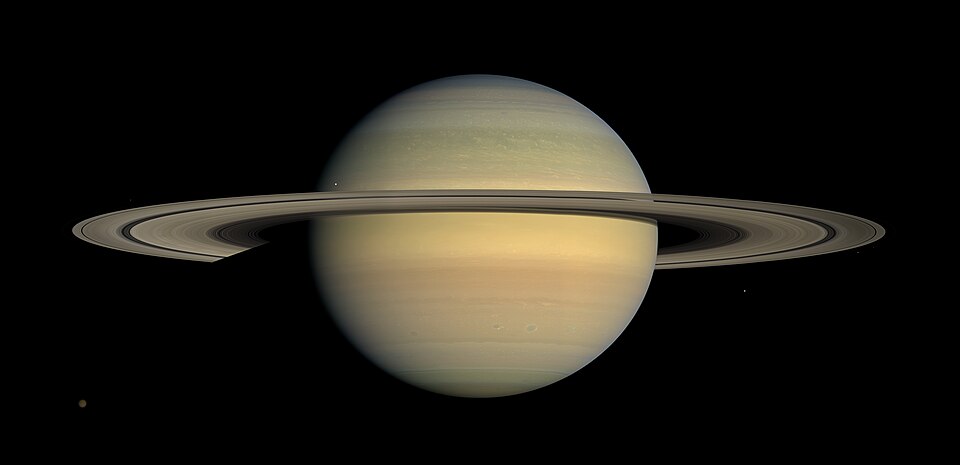
Every planet tells a different story. Mercury bears the scars of countless impacts. Venus became a world of crushing heat and toxic clouds. Earth evolved into the only known planet with abundant life. Mars preserves clues about ancient rivers and lakes. Jupiter dominates with immense gravity and gigantic storms. Saturn dazzles with its magnificent rings. Uranus spins almost on its side, while Neptune hosts some of the fastest winds in the Solar System.
Yet even these famous worlds represent only part of the story.
The more scientists explore, the more astonishing the Solar System becomes. Here are fifteen amazing facts that reveal just how extraordinary our cosmic home truly is.
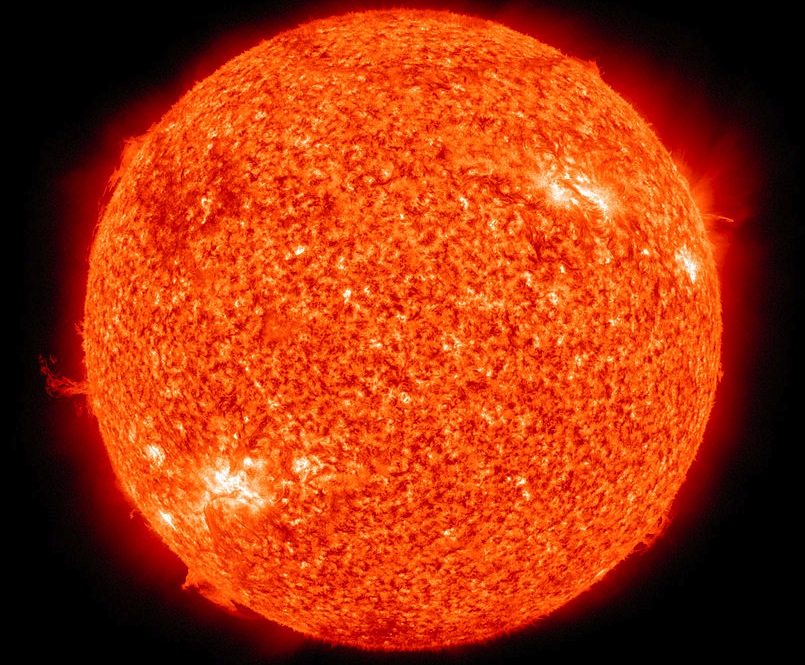
1. The Sun Contains Almost All the Solar System’s Mass
When people imagine the Solar System, they often picture the planets as its main components. In reality, the Sun overwhelmingly dominates everything around it.
The Sun contains approximately 99.86% of the total mass of the entire Solar System. Every planet, moon, asteroid, comet, and grain of dust combined accounts for only about 0.14% of the total.
This enormous concentration of mass explains why the Sun’s gravity controls the motion of all planets and countless smaller objects. Even distant icy bodies in the far reaches of the Solar System remain gravitationally bound to our star.
At its core, the Sun generates energy through nuclear fusion, converting hydrogen into helium under temperatures of roughly 15 million degrees Celsius (27 million degrees Fahrenheit). Every second, it converts about 600 million metric tons of hydrogen into helium while releasing enormous amounts of energy as light and heat.
Without the Sun, there would be no planetary orbits, no climates, no liquid water on Earth, and almost certainly no life.
The Solar System is, in many ways, really the Sun’s system.
2. Jupiter Is More Massive Than All the Other Planets Combined
Jupiter truly deserves its title as the giant of the Solar System.
With a mass more than 318 times greater than Earth’s, Jupiter contains over two and a half times the combined mass of every other planet in the Solar System.
Its immense gravity has shaped the Solar System for billions of years.
Jupiter influences asteroid orbits, redirects comets, and helps sculpt the structure of the outer Solar System. Many astronomers believe its gravity played an important role during the early evolution of the planetary system by affecting how planets formed and migrated.
The planet is essentially a giant sphere composed mostly of hydrogen and helium, similar to the Sun but far too small to sustain nuclear fusion.
Despite its enormous size, Jupiter rotates incredibly quickly, completing one rotation in just under ten hours. This rapid spinning causes the planet to bulge noticeably around its equator.
Its enormous magnetic field is the strongest of any planet in the Solar System and extends millions of kilometers into space.
3. Venus Is Hotter Than Mercury
At first glance, this seems impossible.
Mercury is the closest planet to the Sun, while Venus orbits farther away. Logic would suggest Mercury should be the hottest planet.
Instead, Venus holds that title.
Surface temperatures on Venus average about 465°C (869°F)—hot enough to melt lead.
The reason lies in its atmosphere.
Venus possesses an incredibly dense atmosphere composed primarily of carbon dioxide. This thick blanket traps heat through an extreme greenhouse effect, preventing thermal energy from escaping into space.
Mercury, by contrast, has almost no atmosphere. Although its dayside becomes extremely hot, much of that heat escapes rapidly, causing nighttime temperatures to plunge dramatically.
Venus demonstrates the extraordinary influence an atmosphere can have on a planet’s climate.
It also serves as a powerful reminder of how greenhouse gases affect planetary temperatures.
4. Olympus Mons Is the Largest Volcano in the Solar System
Towering above the Martian landscape stands a mountain unlike anything found on Earth.
Olympus Mons rises approximately 22 kilometers (14 miles) above the surrounding plains, making it the tallest known volcano in the Solar System.
Its base stretches roughly 600 kilometers (370 miles) across—about the size of the U.S. state of Arizona.
Olympus Mons is a shield volcano formed by repeated eruptions of low-viscosity lava over millions of years.
Mars’ lower gravity allowed lava to accumulate into an enormous structure. Unlike Earth, Mars lacks active plate tectonics, meaning the volcanic hotspot remained stationary while eruptions continued in the same location.
On Earth, moving tectonic plates generally carry volcanoes away from their magma sources before they can grow this large.
Olympus Mons represents one of the greatest geological structures ever discovered on another world.
5. Saturn Could Float in a Giant Ocean
Saturn is famous for its spectacular ring system, but it possesses another remarkable characteristic.
It is the only planet in the Solar System with an average density lower than that of liquid water.
Its average density is approximately 0.69 grams per cubic centimeter, while water has a density of about 1 gram per cubic centimeter.
This leads to the famous statement that Saturn could float if there were an ocean large enough to hold it.
Of course, no such ocean exists.
Saturn’s low density results from its composition. Like Jupiter, it consists mostly of hydrogen and helium, the lightest elements in the universe.
Its immense size may be breathtaking, but much of its volume consists of relatively low-density gases compressed under tremendous pressure.
6. There Are Oceans Hidden Beneath Ice Across the Solar System
For many years, scientists believed liquid water existed only on Earth.
Today, evidence suggests several icy moons contain enormous subsurface oceans hidden beneath frozen crusts.
Among the most promising are Europa, one of Jupiter’s moons, and Enceladus, orbiting Saturn.
Europa possesses a thick shell of ice covering an ocean that may contain more water than all of Earth’s oceans combined.
Enceladus actively sprays water vapor and icy particles into space through fractures near its south pole. Spacecraft analysis has detected organic molecules, salts, and chemical compounds associated with hydrothermal activity.
These hidden oceans have become major targets in the search for extraterrestrial life.
Although no evidence of life has been found, the presence of liquid water, chemical nutrients, and possible energy sources makes these moons among the most intriguing places in the Solar System.
7. Neptune Has Some of the Fastest Winds Ever Measured
Neptune lies nearly 4.5 billion kilometers (2.8 billion miles) from the Sun, receiving only a small fraction of the sunlight that reaches Earth.
Yet it possesses some of the Solar System’s most violent weather.
Wind speeds can exceed 2,000 kilometers per hour (1,200 miles per hour), making them the fastest planetary winds ever recorded.
Scientists do not yet fully understand why Neptune’s atmosphere remains so energetic despite receiving relatively little solar energy.
Internal heat escaping from the planet likely contributes significantly.
Neptune’s dynamic atmosphere continually produces enormous storms and rapidly changing cloud systems that challenge planetary scientists trying to understand giant planet meteorology.
8. The Solar System Has More Than 900 Known Moons
For centuries, Earth’s Moon seemed unique.
Today, astronomers know the Solar System contains well over 900 confirmed natural satellites, with new discoveries continuing as telescopes improve.
Jupiter alone possesses nearly one hundred confirmed moons.
Saturn currently holds the record for the largest number of known moons.
These satellites vary enormously.
Some are tiny rocky fragments only a few kilometers wide.
Others rival planets in size.
Titan, Saturn’s largest moon, is actually larger than the planet Mercury.
Ganymede, orbiting Jupiter, is the largest moon in the Solar System and exceeds Mercury in diameter as well.
Each moon represents an individual world with its own geological history, atmosphere, chemistry, and scientific mysteries.
9. Earth’s Moon Is Slowly Moving Away
The Moon does not orbit Earth at a constant distance forever.
It gradually drifts away by approximately 3.8 centimeters (1.5 inches) every year.
Scientists measure this movement using lasers reflected from mirrors left on the Moon during the Apollo missions.
The gradual recession results from tidal interactions between Earth and the Moon.
Earth’s rotation creates tidal bulges in the oceans that slightly pull the Moon forward in its orbit.
As a consequence, the Moon gains orbital energy and slowly moves farther away while Earth’s rotation becomes very gradually slower.
Hundreds of millions of years ago, days on Earth were significantly shorter than they are today.
The Earth-Moon system continues evolving, although the changes occur so slowly that they are noticeable only through precise scientific measurements.
10. There Is a Giant Asteroid Belt Between Mars and Jupiter
Many people imagine the asteroid belt as a densely packed region where spacecraft must dodge countless rocks.
Reality is quite different.
The main asteroid belt contains millions of rocky bodies, but the distances between them are enormous.
A spacecraft can usually travel through the asteroid belt without encountering any significant obstacle.
The belt’s largest object is the dwarf planet Ceres, which contains roughly one-third of the belt’s total mass.
Most scientists believe the asteroid belt represents material that never formed into a planet because Jupiter’s immense gravity disrupted the process during the early Solar System.
These ancient objects preserve valuable clues about planetary formation over 4.5 billion years ago.
11. Comets Are Ancient Time Capsules
Comets are often described as “dirty snowballs,” although they are more accurately mixtures of ice, dust, and rocky material.
Many formed during the earliest stages of Solar System history and have remained largely unchanged ever since.
When a comet approaches the Sun, solar heating causes its ice to vaporize.
This escaping gas carries dust into space, creating the spectacular glowing coma and long tails visible from Earth.
Remarkably, a comet always develops two distinct tails.
One consists of dust pushed away by sunlight.
The other consists of ionized gas shaped by the solar wind.
Because comets preserve ancient material from the Solar System’s formation, they provide scientists with valuable information about conditions that existed billions of years ago.
12. The Solar System Has a Vast Protective Bubble
The Sun continuously releases charged particles known as the solar wind.
This outward-flowing stream creates an enormous magnetic bubble surrounding the Solar System called the heliosphere.
The heliosphere extends far beyond Pluto and acts as a partial shield against many high-energy cosmic rays arriving from interstellar space.
NASA’s Voyager 1 and Voyager 2 spacecraft eventually crossed the heliosphere’s outer boundary, known as the heliopause, becoming humanity’s first spacecraft to enter interstellar space.
Even there, however, they remain gravitationally bound to the Sun and will continue traveling through the Milky Way for billions of years.
13. Rings Are More Common Than Once Thought
Saturn’s magnificent rings are the Solar System’s most famous, but they are far from unique.
Jupiter, Uranus, and Neptune also possess ring systems.
Even some smaller bodies, including the centaur object Chariklo, have rings.
Planetary rings consist of countless particles ranging from microscopic dust to chunks several meters across.
Scientists continue studying how rings form, evolve, and eventually disappear.
Some ring systems may be relatively young.
Others could be ancient.
Understanding ring dynamics provides valuable insight into broader processes of planetary formation and orbital mechanics.
14. The Oort Cloud May Contain Trillions of Icy Objects
Far beyond the planets lies one of the most mysterious regions of the Solar System.
The hypothetical Oort Cloud is thought to be a vast spherical reservoir of icy bodies extending thousands of times farther from the Sun than Pluto.
Although astronomers have not observed it directly, its existence is strongly supported by the behavior of long-period comets entering the inner Solar System from all directions.
Scientists estimate the Oort Cloud may contain billions to trillions of icy objects.
It represents the outermost known region of the Sun’s gravitational influence and marks the distant frontier of our planetary system.
15. The Solar System Is Still Changing
It is easy to imagine the Solar System as a stable arrangement of planets moving along fixed paths forever.
In reality, it remains remarkably dynamic.
Asteroids collide.
Comets evaporate.
Moons experience geological activity.
Planetary atmospheres evolve.
The Sun gradually becomes brighter as it ages.
New moons are discovered.
New dwarf planets are identified.
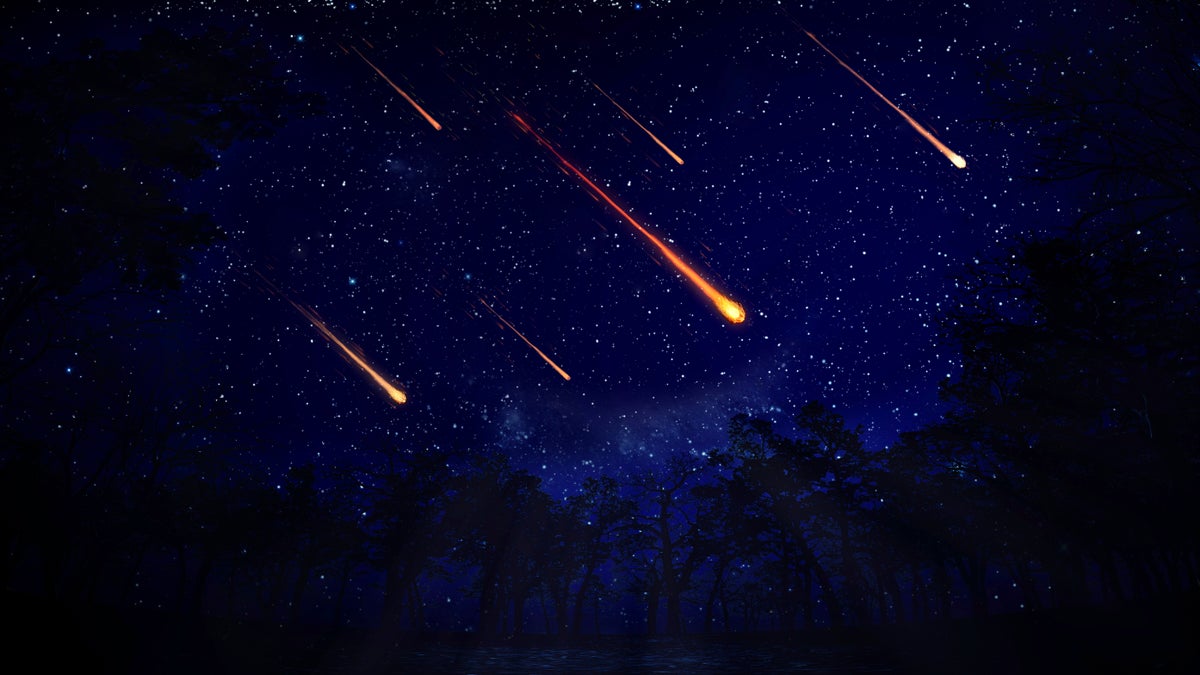
Meteor impacts continue shaping planetary surfaces.
Even planetary orbits slowly change through gravitational interactions over millions and billions of years.
The Solar System is not a finished creation frozen in time.
It is an active, evolving system governed by gravity, chemistry, geology, radiation, and the fundamental laws of physics.
Every new spacecraft mission reveals another chapter in this ongoing story.
Why the Solar System Continues to Fascinate Scientists
The Solar System is far more than a collection of planets orbiting a star. It is a natural laboratory where scientists can study nearly every major process that shapes planetary systems throughout the universe. By comparing rocky worlds, gas giants, icy moons, comets, and asteroids, researchers gain insight into how planets form, evolve, and sometimes become capable of supporting life.
Each mission expands our understanding. Orbiters map hidden landscapes with astonishing precision. Landers analyze alien soils. Rovers search for signs of ancient environments. Space telescopes observe distant objects at the edge of the Solar System. Together, these investigations help answer some of humanity’s oldest questions: How did our planetary system form? Why are the planets so different from one another? Could life exist elsewhere?
A Universe Begins at Home
When we gaze at the night sky, it is tempting to focus on distant galaxies and exotic exoplanets. Yet our own Solar System remains one of the most extraordinary places known to science. It contains worlds hotter than molten metal and colder than liquid nitrogen, mountains taller than any on Earth, storms larger than entire planets, hidden oceans beneath frozen crusts, and ancient objects that preserve material from the birth of the Sun itself.
Every remarkable fact about the Solar System reminds us that exploration is far from over. Many of its greatest mysteries remain unsolved. Scientists continue to investigate the origins of planetary rings, the possibility of life beneath icy moons, the history of Mars, the nature of the distant Oort Cloud, and countless other questions that will shape future discoveries.
The Solar System is not merely our cosmic address—it is the first frontier of humanity’s exploration of the universe. Every new discovery reveals that our celestial neighborhood is more complex, more dynamic, and more awe-inspiring than we ever imagined, inviting each new generation of space enthusiasts to keep looking upward with curiosity and wonder.