The internet has become so deeply woven into modern life that it is difficult to imagine a world without it. Every day, billions of people use it to communicate, learn, work, shop, watch videos, play games, and access information within seconds. What began as a small research network connecting a handful of computers has grown into one of the most transformative technologies in human history.
Yet the internet we use today is only one chapter in a much larger story. Scientists, engineers, governments, and technology companies are already building the next generation of internet technologies. Faster connections, smarter networks, artificial intelligence, immersive virtual worlds, quantum communication, satellite internet, and stronger cybersecurity are reshaping how the internet will function in the coming decades.
The future of the internet is not simply about higher speeds. It is about creating a digital world that is more intelligent, more secure, more accessible, and more connected than ever before.
The Internet Has Never Stopped Evolving
The internet has changed dramatically since its earliest days.
In the 1980s and early 1990s, most internet users relied on slow dial-up connections. Simple text-based websites and email dominated online activity. As broadband connections became widespread, websites became richer with images, videos, and interactive content.
The arrival of smartphones transformed the internet once again. Suddenly, people carried the internet in their pockets, giving them instant access to information wherever they went.
Cloud computing, social media, streaming services, and mobile applications created another wave of innovation. Today, artificial intelligence is beginning to reshape how people search for information, create content, and interact with online services.
This history demonstrates an important truth: the internet is constantly evolving. The next few decades are likely to bring even more dramatic changes.
Faster Internet Will Continue to Transform Everyday Life
One of the most visible changes will be continued improvements in internet speed.
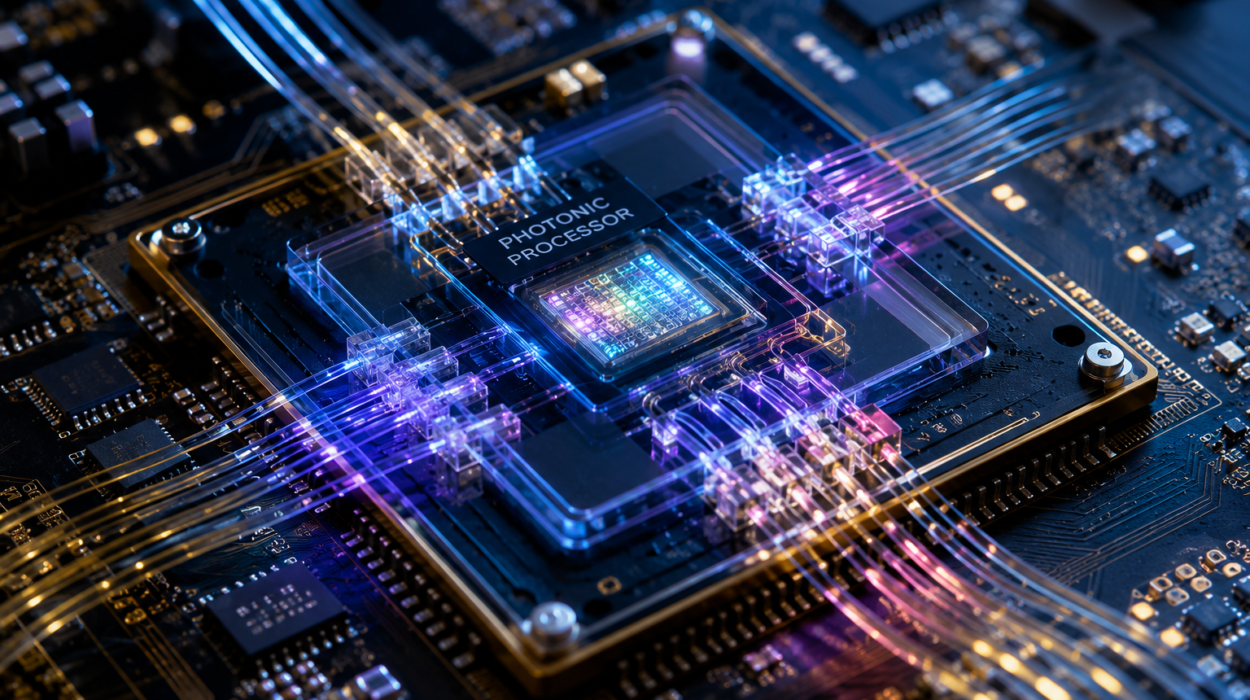
Fiber-optic networks already allow data to travel using pulses of light, enabling incredibly high speeds. New generations of wireless technology, including advanced 5G networks and future 6G systems, promise even lower latency and higher data capacity.
Lower latency means information travels with less delay. This is especially important for applications such as remote surgery, autonomous vehicles, industrial robotics, cloud gaming, and virtual reality.
As internet infrastructure improves, activities that currently require powerful local computers may increasingly happen in remote data centers. Users will simply access those computing resources through fast internet connections.
The result will be smoother video calls, nearly instant cloud applications, higher-quality streaming, and faster access to digital services around the world.
Artificial Intelligence Will Become Part of the Internet Itself
Artificial intelligence is expected to become one of the defining features of the future internet.
Today, AI already recommends videos, filters spam emails, translates languages, recognizes speech, and helps answer questions.
In the future, AI may become deeply integrated into nearly every online experience.
Instead of manually searching through dozens of websites, intelligent digital assistants may understand complex questions, gather reliable information from multiple sources, and provide personalized responses within seconds.
AI could automatically organize emails, schedule appointments, summarize lengthy documents, detect online fraud, improve cybersecurity, optimize internet traffic, and translate conversations between people speaking different languages in real time.
Rather than simply delivering information, the future internet may actively help users accomplish tasks more efficiently.
The Internet of Things Will Connect Everyday Objects
Today, most internet users think of computers, tablets, and smartphones.
Tomorrow, billions of everyday objects may also become internet-connected.
This concept is known as the Internet of Things, often abbreviated as IoT.
Smart thermostats already adjust home temperatures automatically.
Fitness trackers monitor heart rate and physical activity.
Connected vehicles exchange information with navigation systems.
Factories use internet-connected sensors to monitor equipment continuously.
Future smart cities may use millions of sensors to manage traffic, reduce energy consumption, monitor air quality, improve public transportation, and detect infrastructure problems before they become serious.
Homes may become increasingly automated, with appliances communicating seamlessly to improve energy efficiency and convenience.
Satellite Internet Could Connect the Entire Planet
For many years, reliable internet access depended heavily on cables and cellular towers.
Satellite internet is changing that.
Large constellations of satellites orbiting Earth are expanding internet coverage to remote regions where traditional infrastructure is difficult or expensive to build.
This could help connect rural communities, ships at sea, scientific research stations, disaster zones, and isolated islands.
Improved global connectivity has the potential to expand education, healthcare, business opportunities, and emergency communications for millions of people who currently have limited internet access.
Although satellite internet still faces technical challenges such as network capacity and environmental concerns related to space debris, it represents an important step toward global digital inclusion.
Virtual Reality and Augmented Reality Could Change How We Use the Internet
Most internet experiences today happen through flat screens.
Future internet technologies may become far more immersive.
Virtual reality creates fully digital environments that users can explore using specialized headsets.
Augmented reality overlays digital information onto the real world through glasses or mobile devices.
Instead of viewing online stores on a webpage, shoppers may walk through realistic virtual showrooms.
Students could explore ancient civilizations or travel inside the human body during interactive science lessons.
Architects might collaborate inside shared three-dimensional building models despite working on different continents.
Family members separated by thousands of miles could feel as though they are sitting together in the same virtual room.
These technologies remain under active development, but improvements in graphics, internet speed, and computing power continue to make immersive experiences more practical.
Cloud Computing Will Become Even More Powerful
Cloud computing has already transformed how software is delivered.
Instead of installing large programs on individual computers, many applications now run on powerful remote servers.
This trend is expected to continue.
Future cloud systems may provide enormous computing power to individuals and businesses without requiring expensive hardware.
Complex engineering simulations, advanced AI models, scientific research, video editing, and software development may increasingly rely on cloud infrastructure.
Users will simply connect through the internet while remote data centers perform most of the heavy computing.
This approach allows devices to become lighter, more energy-efficient, and capable of handling increasingly demanding applications.
Cybersecurity Will Become More Important Than Ever
As more aspects of life depend on the internet, protecting digital information becomes increasingly critical.
Cybercriminals continue developing sophisticated attacks targeting governments, businesses, hospitals, financial institutions, and individuals.
Future cybersecurity systems will likely rely heavily on artificial intelligence to detect unusual activity before attacks cause significant damage.
Encryption technologies will continue protecting sensitive communications.
Multi-factor authentication, biometric identification, and hardware-based security features are becoming increasingly common.
Researchers are also developing new cryptographic methods designed to remain secure even against future quantum computers.
Cybersecurity will remain one of the most important challenges shaping the future of the internet.
Privacy Will Continue to Shape Internet Development
Modern internet services collect enormous amounts of data.
Search history, location information, shopping habits, online activity, and device usage all contribute to personalized digital experiences.
At the same time, growing awareness of privacy concerns is influencing how internet services are designed.
Future internet technologies may give users greater control over personal information through stronger privacy protections, improved encryption, decentralized identity systems, and more transparent data management.
Governments around the world are also introducing regulations aimed at protecting user privacy while balancing innovation and security.
The relationship between convenience and privacy will continue to evolve as technology advances.
Quantum Internet Could Revolutionize Secure Communication
One of the most exciting research areas involves the possibility of a quantum internet.
Unlike today’s internet, which transmits classical digital information, a quantum internet would transmit quantum information using the principles of quantum mechanics.
Researchers are exploring technologies that could enable extremely secure communication through quantum entanglement and quantum key distribution.
Because measuring certain quantum states changes them, unauthorized interception could become detectable.
Although practical large-scale quantum internet networks remain years away, early demonstrations have already shown that quantum communication is scientifically possible.
If successfully developed, quantum networking could transform cybersecurity, scientific collaboration, and distributed quantum computing.
Edge Computing Will Bring Data Processing Closer to Users
Traditional cloud computing often sends information to distant data centers for processing.
Edge computing moves some of this processing much closer to users.
For example, autonomous vehicles cannot always wait for distant servers to analyze road conditions.
Similarly, industrial robots, medical equipment, and smart factories require nearly instantaneous responses.
By processing data locally or at nearby network facilities, edge computing reduces latency while improving reliability.
This approach will become increasingly important as billions of connected devices generate enormous amounts of data every second.
The Internet Will Become More Sustainable
The internet requires vast amounts of electricity.
Data centers, communication networks, and billions of connected devices consume significant energy.
Technology companies and researchers are working to improve energy efficiency through better hardware, advanced cooling systems, renewable energy sources, and more efficient software.
Future internet infrastructure may increasingly rely on solar, wind, hydroelectric, and other low-carbon energy sources.
Artificial intelligence can also optimize energy consumption by adjusting computing workloads based on demand.
Making the internet more environmentally sustainable will become an increasingly important priority as global internet usage continues to grow.
Digital Education Will Reach More People
The internet has already transformed education.
Students can access lectures, digital libraries, scientific journals, and educational videos from almost anywhere.
Future internet technologies may make education even more interactive.
Artificial intelligence could personalize lessons according to each student’s learning pace.
Virtual reality could provide realistic laboratory experiences without requiring expensive physical equipment.
Language translation systems may allow students to learn from teachers around the world regardless of language barriers.
Improved global connectivity could help reduce educational inequalities by bringing high-quality learning resources to remote communities.
Healthcare Will Become More Connected
The future internet is expected to play an increasingly important role in medicine.
Doctors already conduct virtual consultations with patients in many parts of the world.
Medical devices can remotely monitor heart rate, blood pressure, blood glucose, and other health measurements.
Future internet systems may enable continuous monitoring of chronic conditions while allowing healthcare providers to detect problems earlier.
Artificial intelligence could assist physicians by analyzing medical images, identifying disease patterns, and supporting clinical decision-making.
High-speed internet may also enable more advanced forms of telemedicine, particularly in rural areas with limited access to specialists.
These technologies are designed to support healthcare professionals rather than replace their expertise.
Work Will Continue to Change
Remote work expanded significantly during the early 2020s, demonstrating that many jobs can be performed from almost anywhere with reliable internet access.
Future internet technologies may further blur the boundaries between physical and digital workplaces.
Advanced collaboration tools, real-time language translation, immersive virtual meeting spaces, and cloud-based software will allow teams across continents to work together more naturally.
Businesses may increasingly hire talented employees regardless of geographic location, expanding opportunities for workers around the world.
Digital Entertainment Will Become More Interactive
Streaming services have already transformed how people watch movies and television.
The future internet could make entertainment increasingly interactive.
Cloud gaming allows users to play advanced video games without expensive gaming hardware because powerful remote servers perform the processing.
Virtual concerts, immersive sporting events, interactive storytelling, and mixed-reality experiences may become increasingly common.
Artificial intelligence may generate personalized entertainment tailored to individual interests while helping creators produce higher-quality digital content.
Challenges the Future Internet Must Overcome
Despite enormous opportunities, significant challenges remain.
Cybersecurity threats continue evolving.
Digital misinformation spreads rapidly across online platforms.
Privacy concerns remain important.
Unequal internet access still affects many communities.
Large-scale internet infrastructure requires substantial energy and investment.
Artificial intelligence raises important ethical questions about transparency, accountability, and responsible use.
Governments, researchers, businesses, and citizens will need to work together to address these challenges while preserving the internet as an open platform for communication, innovation, and knowledge sharing.
Will the Internet Ever Reach Everyone?
One of the greatest goals of future internet development is universal connectivity.
Although billions of people already use the internet, hundreds of millions still have limited or no reliable access.
Expanding broadband infrastructure, deploying satellite networks, reducing equipment costs, and improving digital literacy may help close this digital divide.
Providing reliable internet access is increasingly viewed as an important driver of education, healthcare, economic development, scientific collaboration, and social inclusion.
Connecting more people to the global digital community could unlock enormous opportunities for individuals and societies alike.
The Future of the Internet Is Still Being Written
The internet has never been a finished invention. It has continuously evolved through scientific discovery, engineering innovation, and the changing needs of society. The next generation of internet technologies promises networks that are faster, more intelligent, more secure, and more accessible than anything available today.
Artificial intelligence will make online experiences more helpful and personalized. Quantum communication may redefine secure networking. Satellite systems will extend connectivity to remote regions. Immersive virtual environments could transform education, healthcare, work, and entertainment. At the same time, protecting privacy, strengthening cybersecurity, and ensuring equitable access will remain essential priorities.
No one can predict every innovation that lies ahead. Just as the pioneers of the early internet could scarcely imagine smartphones, video streaming, or cloud computing, today’s researchers are laying the foundation for technologies that may seem extraordinary today but could become ordinary tomorrow. The future of the internet will not simply connect more devices—it will connect more ideas, more communities, and more possibilities, continuing one of humanity’s greatest technological journeys.