Artificial intelligence is changing the world at an incredible pace. It is helping doctors diagnose diseases, allowing scientists to analyze enormous amounts of data, enabling businesses to improve customer service, and making everyday tasks easier through smart assistants and automation. AI has become one of the most powerful technologies of the modern era.
But like many powerful technologies, artificial intelligence has a darker side. The same tools that can improve lives can also be misused by cybercriminals. One of the clearest examples is phishing—a type of online scam that has existed for decades but has become far more dangerous in the age of AI.
Traditional phishing attacks often contained obvious warning signs. Poor grammar, awkward wording, strange formatting, and suspicious email addresses made many scams easier to recognize. Today, artificial intelligence is changing that reality. AI can generate convincing emails, realistic voices, and even fake videos that are difficult to distinguish from genuine communications. As a result, phishing attacks are becoming more sophisticated, more personalized, and more successful.
Understanding how AI is changing phishing is one of the most important steps toward staying safe in an increasingly digital world.
What Is Phishing?
Phishing is a form of cybercrime in which attackers try to trick people into revealing sensitive information or performing actions that benefit the attacker.
The goal is often to steal usernames, passwords, credit card numbers, banking information, personal data, or authentication codes. In some cases, phishing attempts persuade victims to download malicious software or transfer money to fraudulent accounts.
Phishing usually relies on deception rather than technical hacking. Instead of breaking into a computer system directly, attackers manipulate people into giving away valuable information voluntarily.
A phishing message may appear to come from a trusted company, a bank, a government agency, a coworker, or even a family member. The victim believes the communication is legitimate and responds without realizing they are interacting with a criminal.
This technique is known as social engineering, and it remains one of the most effective forms of cyberattack.
How Traditional Phishing Worked
Before the widespread availability of advanced AI, phishing attacks often relied on mass emails sent to thousands or even millions of people.
These emails usually contained common characteristics.
The language might sound unnatural because it was translated poorly or written by someone unfamiliar with the recipient’s language.
Generic greetings such as “Dear Customer” were common.
Messages often contained spelling mistakes, grammatical errors, or unusual formatting.
Cybercriminals hoped that even if only a small percentage of recipients fell for the scam, the attack would still be profitable.
While these attacks were successful in many cases, careful users could often identify suspicious messages through obvious clues.
Artificial intelligence has dramatically reduced many of those clues.
How Artificial Intelligence Is Changing Phishing
Modern AI systems can generate human-like text, analyze large amounts of publicly available information, imitate voices, create realistic images, and automate repetitive tasks.
These capabilities make phishing campaigns far more convincing than they were only a few years ago.
Instead of sending one poorly written message to thousands of people, attackers can now create highly personalized messages for individual targets within seconds.
The result is phishing that feels much more believable.
AI Creates More Convincing Emails
One of AI’s most significant impacts is improving the quality of phishing emails.
Large language models can produce natural, grammatically correct writing in many different languages. They can match professional writing styles, mimic business communication, and even imitate the tone of specific organizations.
This means phishing emails no longer need to contain obvious mistakes.
An email pretending to come from your bank may include clear language, proper formatting, and convincing explanations. It may sound almost identical to genuine customer support messages.
When people no longer notice poor grammar or awkward wording, identifying scams becomes much more difficult.
AI Makes Phishing More Personal
Cybercriminals increasingly combine AI with publicly available information gathered from social media, company websites, and online profiles.
If someone regularly posts about their workplace, hobbies, recent travel, or family events, attackers may use AI to generate messages that reference those details.
Instead of receiving a generic email, a victim might receive a message mentioning their employer, a recent conference they attended, or a project they recently discussed online.
This personalization creates a stronger sense of trust.
People naturally believe messages that appear relevant to their own lives.
AI Can Mimic Writing Styles
Artificial intelligence can analyze someone’s publicly available writing, including emails, blog posts, or social media updates.
By identifying common vocabulary, sentence structure, and writing habits, AI can generate messages that resemble the communication style of a real person.
For example, an employee might receive an email that closely resembles messages normally sent by their manager.
Although the email is fake, the familiar writing style can reduce suspicion.
This technique is especially dangerous in business environments where employees frequently exchange emails with colleagues.
AI-Powered Spear Phishing
Spear phishing is a highly targeted form of phishing aimed at specific individuals rather than large groups.
Unlike traditional phishing, spear phishing often involves research about the intended victim.
Artificial intelligence makes this process much faster.
Instead of spending hours gathering information and writing personalized messages, attackers can automate much of the work.
AI can rapidly summarize information about potential targets and generate customized emails for each person.
Because these messages are tailored to individual circumstances, they are generally more effective than generic phishing attempts.
Voice Cloning Creates New Threats
One of the most concerning developments is AI-generated voice cloning.
Modern AI systems can reproduce a person’s voice after analyzing only a short audio recording. Public speeches, podcasts, online videos, or social media clips may provide enough material for convincing voice imitation.
Imagine receiving a phone call that sounds exactly like your manager asking you to urgently transfer money.
Or imagine hearing what appears to be a family member requesting immediate financial help.
The voice may sound completely genuine even though it was generated by artificial intelligence.
These attacks exploit human trust rather than technical vulnerabilities.
Deepfake Videos Increase Deception
Artificial intelligence can also generate realistic fake videos known as deepfakes.
Deepfake technology uses machine learning to create videos in which people appear to say or do things that never actually happened.
Although many deepfakes can still be detected with careful analysis, the technology continues to improve.
Cybercriminals may use deepfake videos during online meetings or in recorded messages to impersonate executives, government officials, or business partners.
Even a brief fake video can persuade someone to share confidential information or approve financial transactions.
AI Automates Large-Scale Attacks
Artificial intelligence allows cybercriminals to operate much more efficiently.
Instead of manually writing hundreds of phishing messages, AI can generate thousands within minutes.
Attackers can quickly create multiple versions of the same message, making it harder for spam filters to recognize patterns.
AI can also translate phishing messages into numerous languages, allowing criminals to target victims around the world without needing fluent speakers.
Automation dramatically increases both the scale and speed of phishing campaigns.
AI Helps Criminals Adapt Quickly
Traditional phishing campaigns often remained unchanged for long periods.
Modern AI systems allow attackers to rapidly improve their strategies.
If one email performs poorly, AI can generate alternative versions with different wording, subject lines, or emotional appeals.
By continuously testing different approaches, cybercriminals can identify which messages receive the highest response rates.
This process resembles the way legitimate businesses optimize marketing campaigns, but it is used for criminal purposes.
Emotional Manipulation Becomes More Effective
Successful phishing rarely depends only on technology.
It depends on human emotions.
People often make quick decisions when they feel fear, urgency, curiosity, excitement, or sympathy.
Artificial intelligence can generate messages specifically designed to trigger these emotional responses.
A phishing email may claim that a bank account has been locked, that an important package cannot be delivered, or that an employer requires immediate action.
Because the message appears professional and urgent, the recipient may respond before carefully evaluating its authenticity.
AI enhances emotional manipulation by making these messages more realistic and persuasive.
Business Email Compromise
One of the costliest forms of phishing is Business Email Compromise, often called BEC.
In these attacks, criminals impersonate executives, suppliers, or trusted business partners.
The goal is usually to convince employees to transfer money or reveal confidential information.
Artificial intelligence makes these attacks more convincing by producing realistic business language, accurate formatting, and personalized details.
Combined with voice cloning or deepfake technology, BEC attacks can become extremely difficult to detect without careful verification procedures.
AI Is Also Defending Against Phishing
Although AI strengthens phishing attacks, it is also becoming one of the strongest defenses against them.
Cybersecurity companies use machine learning to detect suspicious emails, unusual communication patterns, and malicious websites.
AI systems can analyze enormous numbers of messages far faster than human analysts.
Instead of looking only for known phishing signatures, advanced AI can identify unusual behaviors that may indicate previously unseen attacks.
For example, an AI security system may notice that an employee suddenly receives emails from an unfamiliar domain pretending to represent a trusted organization.
The system can flag the message for further review before it reaches the user’s inbox.
Why Humans Remain the Biggest Target
Despite advances in cybersecurity, people remain the primary target of phishing attacks.
Technology can block many malicious emails, but no automated system is perfect.
Attackers understand that humans naturally trust familiar names, respond to urgent requests, and sometimes act quickly without verifying information.
Artificial intelligence does not eliminate these psychological tendencies.
Instead, it exploits them more effectively.
That is why cybersecurity experts often describe people as both the strongest and weakest part of digital security.
Knowledge and awareness remain essential.
Recognizing AI-Enhanced Phishing
AI-generated phishing messages may appear highly professional, but they often still contain warning signs.
Unexpected requests for passwords, verification codes, or financial information should always be treated with caution.
Messages creating extreme urgency deserve careful scrutiny.
Unexpected attachments or unfamiliar links should never be opened without verification.
If a phone call requests sensitive information or urgent payments, independently contacting the person through a trusted phone number can help confirm whether the request is genuine.
Even realistic voices and videos should not be accepted as proof of identity without additional verification.
Protecting Yourself in the Age of AI
Good cybersecurity habits are becoming more important than ever.
Using strong and unique passwords reduces the damage if one account becomes compromised.
Password managers can help generate and securely store complex passwords.
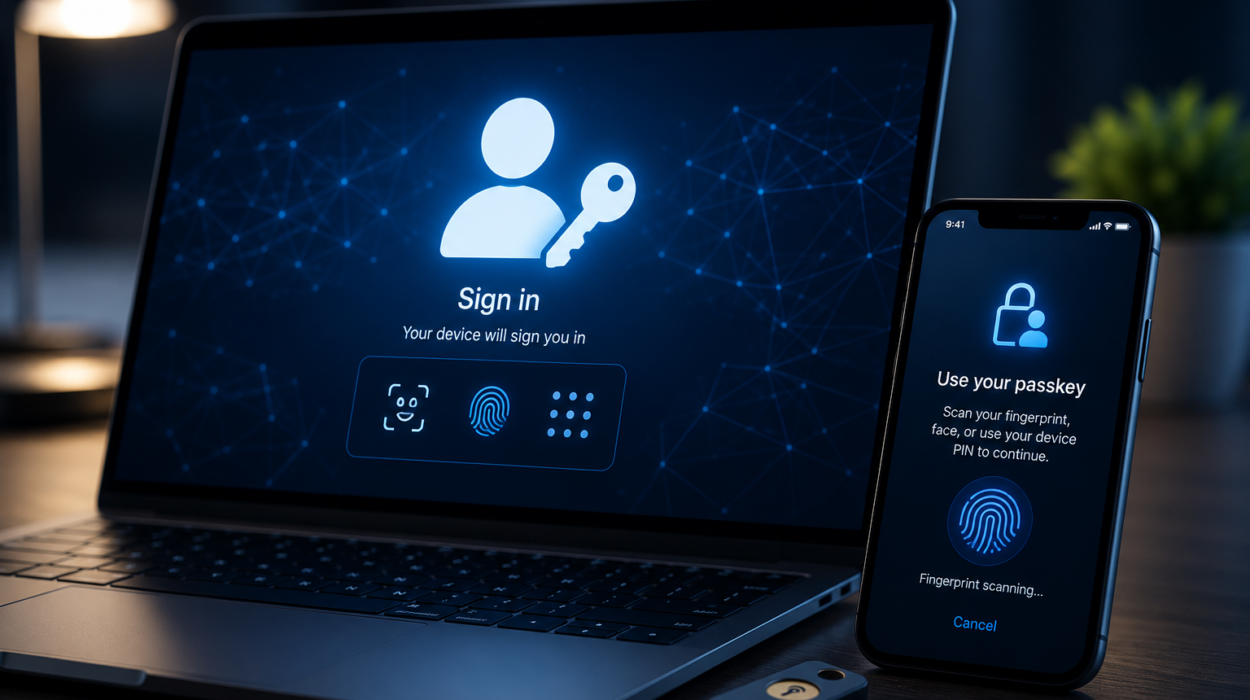
Multi-factor authentication adds an additional layer of security by requiring more than just a password to access an account.
Keeping software updated ensures that known security vulnerabilities are patched.
Being cautious before clicking links, downloading files, or sharing personal information significantly reduces the risk of becoming a victim.
Equally important is developing a habit of slowing down before responding to unexpected requests. Many phishing attacks succeed because people react immediately without taking a moment to verify the message.
The Future of AI and Phishing
Artificial intelligence will almost certainly continue to improve.
Future phishing attacks may become even more personalized, more convincing, and more difficult to recognize.
Voice cloning may become nearly indistinguishable from real speech.
Deepfake videos may become increasingly realistic.
AI-generated conversations may evolve to interact naturally with victims over extended periods.
At the same time, defensive AI systems are also advancing rapidly.
Cybersecurity researchers are developing smarter tools capable of detecting sophisticated scams, identifying fake media, and recognizing unusual patterns before damage occurs.
The future will likely involve an ongoing competition between attackers using AI and defenders using AI.
Why Digital Literacy Matters More Than Ever
Technology continues to reshape how people communicate, work, shop, and learn. As artificial intelligence becomes integrated into everyday life, digital literacy is no longer just a useful skill—it is an essential one.
Understanding how phishing works helps people recognize deception before it causes harm. Learning to question unexpected requests, verify identities through trusted channels, and think critically about digital communications can prevent many attacks from succeeding.
Artificial intelligence itself is not the enemy. It is a powerful tool created by humans. Its impact depends on how it is used. While criminals may exploit AI to create more convincing phishing attacks, researchers, engineers, educators, and cybersecurity professionals are using the same technology to build stronger defenses.
The challenge for society is not simply to develop more advanced AI, but to ensure that people have the knowledge and awareness needed to use digital technology safely. In an era where fake emails, cloned voices, and realistic videos can all be generated by artificial intelligence, informed and cautious users remain one of the strongest defenses against cybercrime.