The universe is filled with light. Every star, galaxy, nebula, and exploding supernova sends light traveling across the vastness of space. Some of this light begins its journey millions or even billions of years before reaching Earth. By the time astronomers detect it with powerful telescopes, it carries far more than a beautiful image—it carries information about the object’s distance, motion, age, and even the history of the universe itself.
One of the most important clues hidden in this ancient light is something called redshift. Although the concept may sound complicated, it is actually based on a simple and familiar idea: the way waves change when the source producing them moves.
Redshift has transformed our understanding of the cosmos. It helped scientists discover that the universe is expanding, estimate the distances to galaxies, study the earliest stars, and explore events that happened billions of years ago. Today, redshift remains one of the most powerful tools in modern astronomy and cosmology.
Understanding the Meaning of Redshift
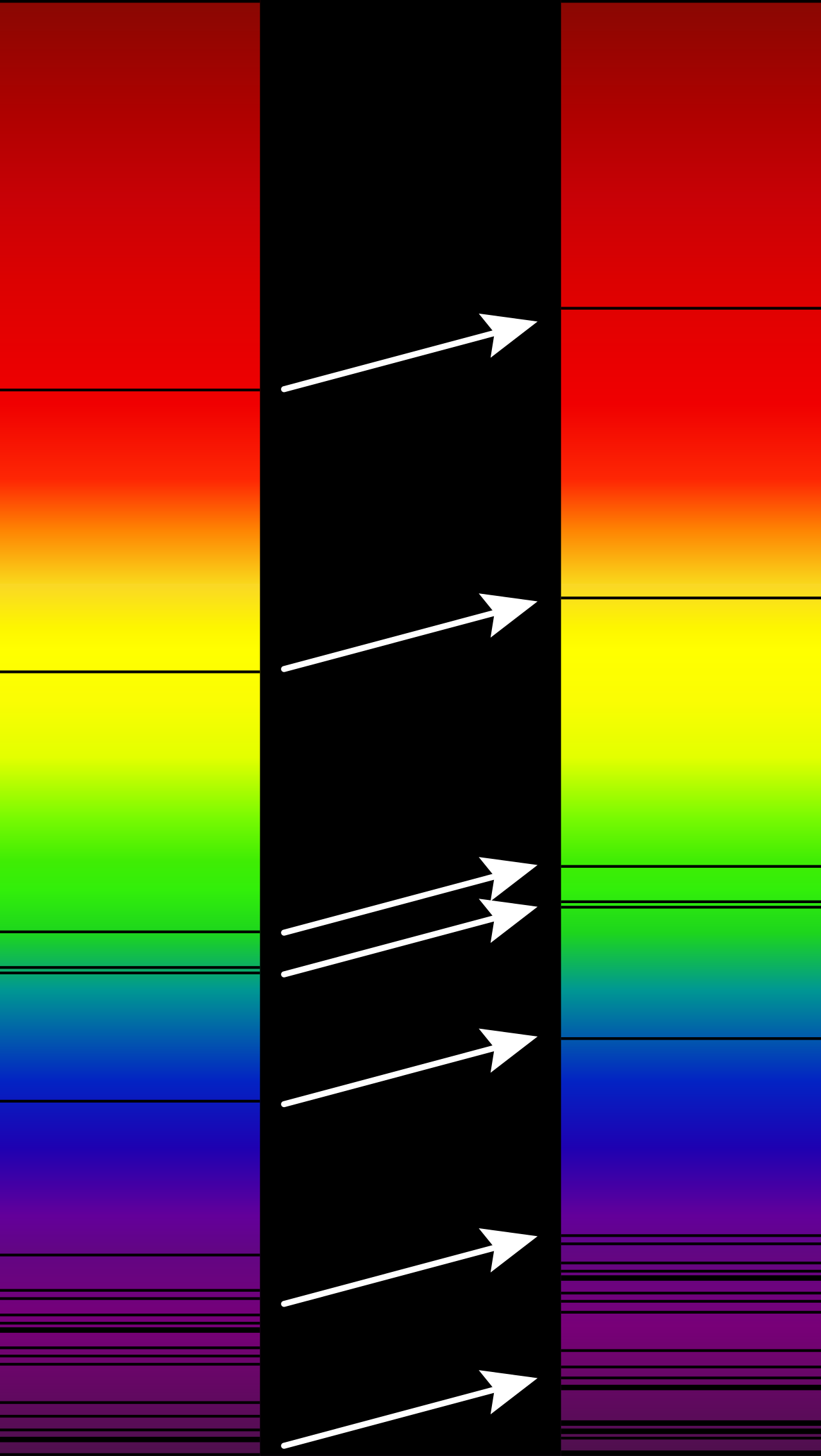
Redshift is the phenomenon in which light from an object is shifted toward the red end of the visible spectrum. This happens when the wavelength of light becomes longer than it was when the light was originally emitted.
Visible light consists of different colors, each corresponding to a different wavelength. Violet and blue light have shorter wavelengths, while red light has longer wavelengths. When light is “redshifted,” its wavelength stretches, causing its color to move closer to red.
The amount of redshift tells astronomers valuable information about how an object is moving or how much the universe has expanded while the light was traveling through space.
Redshift is not simply about seeing something appear red. It is a measurable change in the wavelength of light that scientists can detect using instruments called spectrographs.
What Is Light?
To understand redshift, it helps to understand what light is.
Light is a form of electromagnetic radiation. It travels through space as waves while also behaving like tiny particles called photons. Every wave has a wavelength, which is the distance between two consecutive peaks.
Different wavelengths correspond to different colors.
Blue light has a relatively short wavelength.
Green light has a medium wavelength.
Red light has a longer wavelength.
Beyond the visible spectrum are infrared waves, microwaves, and radio waves with even longer wavelengths, as well as ultraviolet rays, X-rays, and gamma rays with much shorter wavelengths.
When light’s wavelength changes, its position within the electromagnetic spectrum changes as well.
Why Does Redshift Happen?
Redshift can occur for several reasons, but they all involve light becoming stretched.
Sometimes the source of light is moving away from the observer.
Sometimes gravity stretches the light.
Sometimes space itself expands while the light is traveling.
Each of these processes creates a slightly different kind of redshift, but they all produce the same basic effect: longer wavelengths.
Understanding which type of redshift is occurring helps astronomers learn about different physical processes in the universe.
The Doppler Effect and Redshift
One of the easiest ways to understand redshift is through the Doppler effect.
Imagine standing beside a road as an ambulance approaches with its siren turned on. As it comes closer, the siren sounds higher in pitch. After it passes and moves away, the pitch suddenly becomes lower.
The sound itself has not changed.
Instead, the motion of the ambulance changes the spacing of the sound waves reaching your ears.
When the ambulance approaches, the sound waves are compressed.
When it moves away, the sound waves are stretched.
Light behaves in a similar way.
If a star or galaxy moves toward Earth, its light waves become compressed, producing a blueshift.
If it moves away, the light waves become stretched, producing a redshift.
This phenomenon is called Doppler redshift.
The Expanding Universe and Cosmological Redshift
The most important type of redshift in modern astronomy is cosmological redshift.
Unlike Doppler redshift, cosmological redshift is not mainly caused by galaxies flying through space.
Instead, it happens because space itself is expanding.
Imagine drawing several dots on the surface of a balloon. As the balloon inflates, every dot moves farther away from every other dot. The dots are not crawling across the balloon—they are being carried apart because the balloon itself is expanding.
The universe behaves in a similar way.
Galaxies are embedded within space, and as space expands, the light traveling through it is stretched.
As the wavelength becomes longer, the light shifts toward the red end of the spectrum.
This stretching can continue for billions of years as light crosses the expanding universe.
Edwin Hubble and the Discovery of an Expanding Universe
In the 1920s, astronomer Edwin Hubble made one of the greatest discoveries in scientific history.
Using observations of distant galaxies, he found that nearly all galaxies showed redshift.
Even more remarkably, galaxies that were farther away displayed larger redshifts.
This revealed that distant galaxies are receding from us faster than nearby galaxies.
The relationship became known as Hubble’s Law.
Rather than placing Earth at the center of an explosion, this discovery showed that the entire universe is expanding everywhere.
Every sufficiently distant galaxy appears to move away from every other galaxy because space itself is growing.
This revolutionary finding eventually became one of the strongest pieces of evidence supporting the Big Bang model.
What Is the Redshift Value?
Astronomers express redshift using the symbol z.
A redshift of zero means the light has not been stretched.
A positive redshift means the wavelength has increased.
The larger the value of z, the more the universe has expanded since the light was emitted.
For nearby galaxies, the redshift is usually small.
For galaxies billions of light-years away, the redshift can become very large.
Some of the earliest known galaxies have redshift values greater than 10, meaning the universe has expanded dramatically since their light first began its journey.
Measuring Redshift
Astronomers measure redshift by analyzing an object’s spectrum.
A spectrum is produced when light is separated into its different wavelengths, much like sunlight passing through a prism creates a rainbow.
Every chemical element absorbs and emits light at very specific wavelengths.
Hydrogen, helium, oxygen, carbon, sodium, and other elements each produce unique patterns called spectral lines.
Scientists know exactly where these lines should appear in laboratory measurements.
When observing distant galaxies, astronomers compare the observed positions of these lines with their known laboratory positions.
If every spectral line appears shifted toward longer wavelengths, the amount of redshift can be calculated with great precision.
Redshift and Distance
One of the most valuable uses of redshift is estimating cosmic distances.
Because the universe expands in a predictable way on large scales, redshift provides clues about how far away an object is.
Generally speaking, galaxies with larger redshifts are farther from Earth.
This allows astronomers to build enormous three-dimensional maps of the observable universe.
By combining redshift measurements with other observational techniques, scientists can estimate distances extending billions of light-years into space.
Looking Back in Time
One of the most fascinating aspects of redshift is that it allows us to see the past.
Light travels at a finite speed of approximately 299,792 kilometers per second.
Although incredibly fast, it still takes time to cross vast cosmic distances.
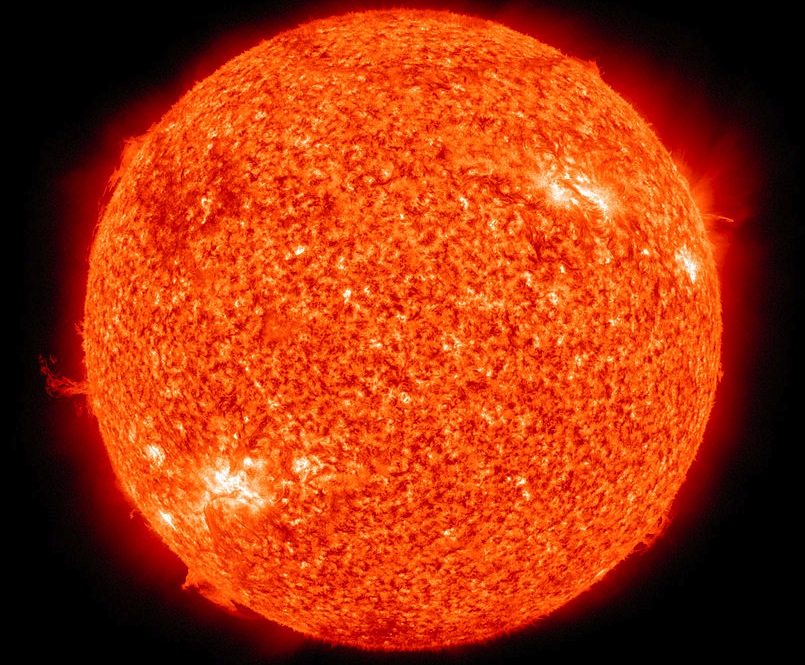
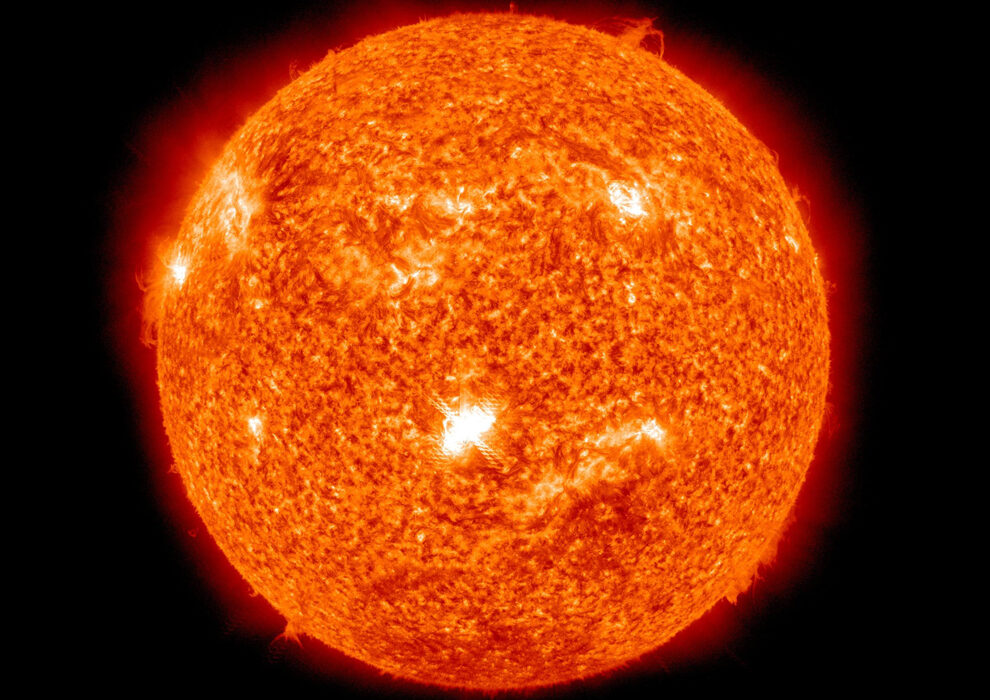
When astronomers observe the Sun, they see it as it was about eight minutes ago.
The nearest star beyond the Sun appears as it was more than four years ago.
A galaxy one billion light-years away appears as it existed one billion years in the past.
The most distant galaxies observed today show the universe during its infancy, only a few hundred million years after the Big Bang.
Redshift therefore acts as a kind of cosmic time machine.
Gravitational Redshift
Gravity can also produce redshift.
According to Albert Einstein’s theory of general relativity, gravity affects both matter and light.
When light climbs away from a very massive object, such as a white dwarf, neutron star, or black hole, it loses energy.
Instead of slowing down—which light cannot do in a vacuum—its wavelength becomes longer.
This produces gravitational redshift.
Gravitational redshift has been measured in laboratories on Earth, observed around compact stars, and confirmed through numerous astronomical observations.
It provides another important test of Einstein’s theory.
Redshift and Black Holes
Near a black hole, gravity becomes extraordinarily strong.
Light escaping from regions close to the event horizon experiences extreme gravitational redshift.
Its wavelength stretches dramatically.
In some cases, the light becomes shifted from visible wavelengths into infrared, microwave, or even radio wavelengths before reaching distant observers.
This effect helps astronomers study matter falling toward black holes and understand the intense gravitational environments surrounding them.
Redshift in the Cosmic Microwave Background
One of the oldest forms of light in the universe is the Cosmic Microwave Background (CMB).
This radiation was released about 380,000 years after the Big Bang, when the universe became cool enough for atoms to form.
Originally, this radiation was mostly visible and infrared light.
Over the course of nearly 13.8 billion years, the expansion of the universe stretched its wavelength enormously.
Today, that same radiation exists as microwaves.
This dramatic transformation is one of the clearest examples of cosmological redshift.
The CMB provides a snapshot of the early universe and remains one of the strongest pieces of evidence supporting the Big Bang theory.
Redshift and the James Webb Space Telescope
The James Webb Space Telescope was specifically designed to observe highly redshifted objects.
Because light from the earliest galaxies has been stretched into the infrared part of the spectrum, Webb’s infrared instruments allow astronomers to detect objects that older visible-light telescopes often could not see.
Many of the most distant galaxies discovered so far have been identified through their extremely large redshifts.
These observations are helping scientists investigate the birth of the first stars, the formation of early galaxies, and the evolution of the universe shortly after the Big Bang.
Does Redshift Mean Everything Is Moving Away From Earth?
This is a common misunderstanding.
Redshift does not mean Earth occupies the center of the universe.
From any galaxy in the expanding universe, distant galaxies would appear to move away in much the same way.
The expansion of space affects the distances between galaxies throughout the universe.
This is one of the most remarkable predictions of modern cosmology and has been confirmed by decades of observations.
Can Nearby Objects Have Blueshift Instead?
Yes.
Not every object in the universe is redshifted.
Some nearby galaxies are moving toward us because gravity dominates over cosmic expansion on relatively small scales.
The Andromeda Galaxy is a famous example.
Instead of redshift, its light exhibits blueshift, indicating that it is approaching the Milky Way.
Astronomers expect the Milky Way and Andromeda to merge several billion years from now.
This demonstrates that local gravitational interactions can overcome the expansion of the universe over comparatively short distances.
Why Redshift Is So Important
Without redshift, modern astronomy would be almost unrecognizable.
It allows scientists to measure the motion of stars and galaxies.
It helps determine the size and age of the universe.
It provides evidence for cosmic expansion.
It reveals the history of galaxy formation.
It helps identify the earliest objects ever observed.
It tests Einstein’s theory of general relativity.
It contributes to studies of dark matter and dark energy.
Redshift has become one of the essential tools for exploring the universe.
Redshift in Everyday Perspective
Although redshift occurs on enormous cosmic scales, the underlying idea is surprisingly familiar.
It is closely related to everyday experiences such as hearing the changing pitch of a passing train or ambulance.
The same wave behavior that changes the sound reaching our ears also changes the light reaching our telescopes.
Nature often follows simple principles that apply across vastly different situations, from sound waves on Earth to ancient light traveling across billions of light-years.
The Future of Redshift Research
Astronomers continue to push the limits of redshift measurements.
New telescopes on Earth and in space are discovering increasingly distant galaxies, quasars, and supernovae.
Future observatories will map the large-scale structure of the universe with unprecedented precision, helping scientists better understand dark energy, cosmic expansion, and the ultimate fate of the cosmos.
As technology advances, redshift will remain one of the most powerful windows into the history and evolution of the universe.
Conclusion
Redshift is the stretching of light toward longer wavelengths, usually because an object is moving away from us, gravity is affecting the light, or the universe itself is expanding. By measuring this subtle change in light, astronomers can determine how fast galaxies are receding, estimate their distances, study the earliest moments of cosmic history, and test some of the deepest ideas in modern physics.
Far more than a simple shift in color, redshift is a cosmic messenger. It allows humanity to read the history written into ancient light, revealing how the universe has grown and evolved over billions of years. Every beam of redshifted light that reaches our telescopes carries a story from the distant past, helping us piece together the remarkable history of the cosmos and our place within it.