For most of human history, space was a place of dreams. It inspired stories, scientific curiosity, and the imagination of countless generations. Then, in the twentieth century, those dreams became reality as governments launched astronauts beyond Earth’s atmosphere. Space exploration was once almost entirely the work of national space agencies, supported by massive government budgets and driven by scientific discovery, technological competition, and international prestige.
Today, however, a new chapter is unfolding. Private companies are no longer watching from the sidelines—they are building rockets, launching satellites, transporting astronauts, and developing entirely new ways to explore space. Commercial spaceflight has transformed what was once an exclusive government endeavor into a rapidly growing global industry filled with innovation, competition, and opportunity.
This change is more than a business story. It represents a major shift in how humanity reaches space, conducts research, delivers technology, and dreams about the future. As commercial companies continue to push the boundaries of engineering, they are making access to space more frequent, more flexible, and, in many cases, less expensive than ever before.
What Is Commercial Spaceflight?
Commercial spaceflight refers to space missions and services provided by private companies rather than being owned and operated solely by governments. These companies may design rockets, build spacecraft, manufacture satellites, transport cargo, launch astronauts, or even develop vehicles for future space tourism.
Unlike traditional government-led missions, commercial companies often operate as businesses. They invest in new technologies, compete for customers, and seek ways to reduce costs while improving reliability and efficiency.
Many commercial missions are still carried out in partnership with government space agencies, universities, and research organizations. In these collaborations, governments purchase transportation or launch services instead of building and operating every spacecraft themselves.
The Early Days of Space Exploration
During the early years of the Space Age, only a handful of nations possessed the technology and resources needed to reach space.
Building rockets required enormous financial investment, advanced engineering, highly trained scientists, and years of research. Governments established national space programs to develop launch vehicles, satellites, and crewed spacecraft.
These early achievements transformed science and technology. Satellites improved weather forecasting and communication. Human missions expanded our understanding of life in space. Robotic spacecraft explored planets throughout the Solar System.
Although these accomplishments were extraordinary, space missions remained rare, expensive, and largely limited to national priorities.
A New Era Begins
Over the past few decades, technological advances and private investment have dramatically changed the landscape.
Instead of relying entirely on government-built launch systems, private aerospace companies began designing their own rockets and spacecraft.
As these companies demonstrated successful launches and recoveries, governments increasingly purchased launch services from commercial providers rather than developing every vehicle independently.
This partnership encouraged innovation while allowing public space agencies to focus more resources on scientific research, planetary exploration, and future missions to the Moon and Mars.
The result has been a more dynamic and competitive space industry.
Reusable Rockets Are Revolutionizing Spaceflight
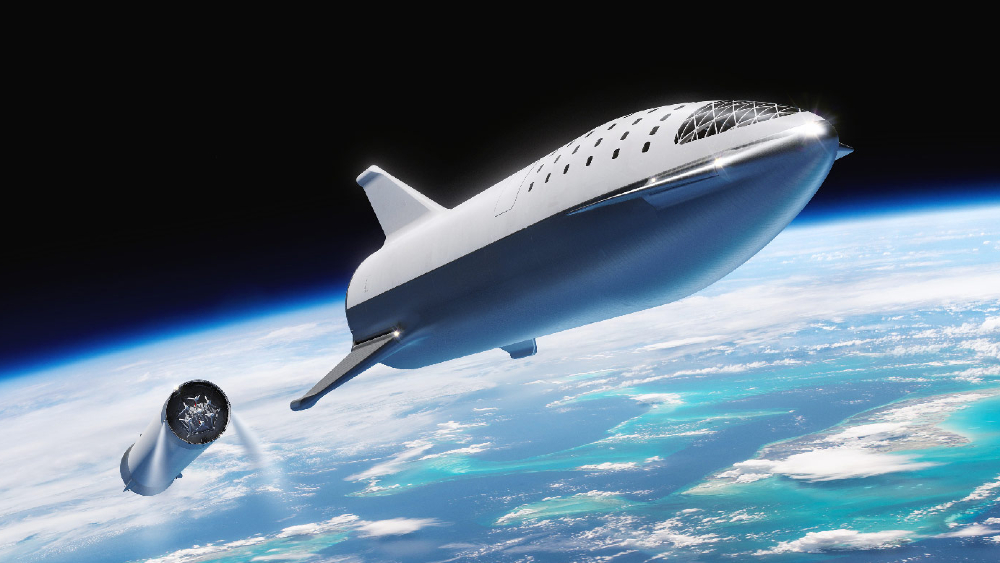
One of the most important developments in commercial spaceflight has been the successful use of reusable rockets.
For decades, most rockets were used only once. After launching a spacecraft, large portions of the rocket fell into the ocean or burned up in Earth’s atmosphere.
Building a completely new rocket for every mission made spaceflight extremely expensive.
Modern reusable launch systems have changed this model.
Instead of being discarded after launch, some rocket stages are designed to return safely to Earth, where engineers inspect, refurbish, and prepare them for future missions.
This approach is similar to how airplanes are used repeatedly rather than being thrown away after a single flight.
Although refurbishment still requires time and resources, reusability has the potential to lower launch costs, increase launch frequency, and improve operational efficiency.
Lower Costs Open New Opportunities
Reducing launch costs has broad effects across the entire space industry.
When reaching orbit becomes more affordable, more organizations can participate in space activities.
Universities gain greater access to scientific research opportunities.
Small companies can launch satellites that were once financially out of reach.
Governments with limited space budgets can purchase commercial launch services.
Researchers can perform more experiments in orbit.
As access becomes easier, innovation accelerates across many scientific and technological fields.
Satellites Are Transforming Daily Life
Many people think of astronauts when they hear the word “space,” but satellites are among the most valuable products of commercial spaceflight.
Thousands of satellites orbit Earth, providing services that millions of people rely on every day.
They enable global communications, television broadcasting, internet connectivity, weather forecasting, navigation systems, environmental monitoring, disaster response, and scientific observations.
Commercial launch providers have made it possible to place satellites into orbit more frequently and, in many cases, at lower cost than in previous decades.
This has contributed to the rapid growth of satellite-based industries around the world.
Smaller Satellites Are Changing the Market
Advances in electronics have allowed satellites to become much smaller while remaining highly capable.
Compact satellites can perform scientific observations, Earth imaging, communication, and technology demonstrations using far less mass than traditional spacecraft.
Because smaller satellites require less launch capacity, they often reduce mission costs.
Commercial launch companies now offer missions specifically designed for these smaller spacecraft, making space more accessible to universities, startups, and research institutions.
This trend has expanded participation in space exploration beyond major government agencies.
Commercial Cargo Missions
One of the earliest major successes of commercial spaceflight involved transporting cargo to orbit.
Private spacecraft now routinely deliver food, scientific equipment, replacement hardware, and other supplies to astronauts living aboard orbital laboratories.
These missions demonstrate that commercial providers can perform complex logistical operations in space with high reliability.
Government agencies benefit by purchasing transportation services while concentrating their own resources on scientific exploration and advanced research.
Commercial Crew Transportation
Commercial companies have also developed spacecraft capable of carrying astronauts.
Instead of relying exclusively on government-operated vehicles, astronauts can now travel aboard commercially developed spacecraft operating under rigorous safety requirements.
This partnership has expanded human access to space while encouraging innovation in spacecraft design and operations.
Every crewed mission undergoes extensive testing, certification, and safety review before carrying astronauts.
Human spaceflight remains one of the most carefully regulated activities in engineering.
Space Tourism Becomes a Reality
One of the most publicized developments in commercial spaceflight is space tourism.
Private companies have begun offering limited opportunities for paying passengers to experience spaceflight.
Some flights provide only a few minutes of weightlessness during suborbital journeys.
Others aim to carry passengers into orbit for longer missions.
Although these experiences currently remain expensive and available to relatively few people, they represent the beginning of an entirely new sector within the aerospace industry.
As technology advances and operational experience grows, costs may gradually decline, though widespread affordability remains uncertain.
Scientific Research Benefits from Commercial Spaceflight
Commercial spaceflight is not only about business.
It also supports scientific discovery.
Researchers use commercial launches to send experiments into orbit more frequently.
Microgravity allows scientists to investigate how materials, fluids, proteins, plants, and living cells behave under conditions impossible to reproduce fully on Earth.
These experiments improve our understanding of biology, physics, chemistry, and materials science.
Commercial transportation increases opportunities for conducting this valuable research.
Manufacturing in Space
Scientists are also exploring whether certain products can be manufactured more effectively in microgravity.
The absence of significant gravitational forces changes how liquids flow, crystals grow, and materials solidify.
Researchers are investigating whether these unique conditions could improve the production of specialized pharmaceuticals, advanced optical fibers, and high-performance materials.
Although this field is still developing, commercial access to space enables more frequent experimentation.
Supporting Future Lunar Exploration
Commercial companies are expected to play major roles in future missions to the Moon.
Instead of governments building every spacecraft themselves, commercial providers are developing lunar landers, cargo vehicles, communications systems, and other technologies that may support long-term exploration.
This collaborative approach allows public and private organizations to combine expertise while sharing responsibilities.
Commercial innovation could help establish sustainable operations beyond Earth.
Preparing for Mars
Human missions to Mars remain one of the greatest goals in space exploration.
Such missions will require powerful launch vehicles, advanced life-support systems, reliable spacecraft, and the ability to transport large amounts of cargo.
Commercial companies are contributing to the development of many of these technologies.
Although sending humans safely to Mars presents enormous scientific and engineering challenges, commercial investment has accelerated research into vehicles capable of supporting future deep-space exploration.
Innovation Through Competition
Competition often drives technological progress.
As multiple companies develop launch systems, spacecraft, and satellite technologies, each seeks to improve efficiency, reliability, and performance.
Engineers continually search for lighter materials, stronger structures, more efficient engines, smarter software, and safer operating procedures.
This competitive environment encourages rapid technological advancement while expanding the capabilities available to customers.
Artificial Intelligence Is Becoming Increasingly Important
Modern spacecraft rely heavily on advanced software.
Artificial intelligence and machine learning are increasingly being used to analyze spacecraft health, optimize flight operations, process satellite imagery, and assist with autonomous navigation.
These technologies help spacecraft respond more effectively to changing conditions while supporting mission planning and operational efficiency.
However, human oversight remains essential, particularly during crewed missions and critical flight operations.
New Careers in the Space Economy
The growth of commercial spaceflight is creating opportunities far beyond astronaut careers.
Engineers design rockets, spacecraft, and satellites.
Software developers create guidance and navigation systems.
Scientists analyze data collected from orbit.
Manufacturing specialists build precision aerospace components.
Experts in robotics, cybersecurity, communications, materials science, environmental monitoring, medicine, and business all contribute to the expanding space economy.
As commercial activity increases, demand for highly skilled professionals continues to grow.
Environmental Challenges
While commercial spaceflight brings exciting opportunities, it also raises environmental questions.
Rocket launches release gases and particles into the atmosphere.
Scientists continue studying their environmental effects, particularly as launch frequency increases.
Another concern is orbital debris.
Inactive satellites, spent rocket components, and fragments from previous missions remain in orbit around Earth.
These objects can pose collision risks to operational spacecraft.
Commercial companies, governments, and international organizations are working to improve debris mitigation, spacecraft disposal strategies, and long-term sustainability in Earth’s orbital environment.
Safety Remains the Highest Priority
Spaceflight is inherently challenging.
Extreme temperatures, powerful vibrations, high speeds, radiation, and the vacuum of space create demanding engineering conditions.
Commercial spacecraft undergo extensive design reviews, simulations, ground testing, engine firings, and flight demonstrations before operational missions.
Safety standards continue to evolve as experience grows.
Protecting astronauts, passengers, spacecraft, and people on the ground remains the highest priority for every responsible space organization.
International Cooperation
Commercial spaceflight is becoming increasingly global.
Companies frequently work with international customers, research institutions, universities, and government agencies.
Satellites launched in one country may provide services to users across the world.
Scientific missions often involve researchers from many nations working together.
This international cooperation strengthens scientific progress while expanding access to space technologies.
Challenges That Still Need to Be Solved
Despite remarkable achievements, commercial spaceflight still faces important challenges.
Launch systems must continue improving reliability while reducing costs.
Battery technology, advanced propulsion, and sustainable fuels require further development.
Managing increasingly crowded orbital environments demands better traffic coordination.
International regulations must continue evolving to address safety, licensing, environmental responsibility, and commercial operations.
Public confidence also depends on maintaining high standards of engineering excellence and operational transparency.
Addressing these challenges will require continued collaboration among governments, industry, scientists, and international partners.
The Future of Commercial Spaceflight
The coming decades may bring changes that once seemed unimaginable.
Reusable launch vehicles could become even more efficient.
Commercial space stations may support scientific research and industrial manufacturing.
Lunar transportation systems could enable regular cargo deliveries.
More countries may gain independent access to space through commercial launch providers.
Future spacecraft may use advanced propulsion technologies that improve efficiency for deep-space exploration.
While not every ambitious concept will become reality, the pace of innovation suggests that commercial spaceflight will remain one of the fastest-growing sectors of modern science and engineering.
Why Commercial Spaceflight Matters
Commercial spaceflight is changing much more than the aerospace industry.
It is reshaping scientific research, communications, manufacturing, education, environmental monitoring, and international cooperation.
Lower launch costs allow more organizations to participate in space exploration.
New technologies developed for space often find valuable applications on Earth.
Young students who once dreamed only of becoming astronauts can now imagine careers as spacecraft designers, satellite engineers, software developers, mission planners, and space entrepreneurs.
The expanding commercial space industry is creating opportunities that extend far beyond Earth’s atmosphere.
Conclusion
Commercial spaceflight represents one of the most significant transformations in the history of space exploration. By combining private innovation with scientific research and government partnerships, it has expanded access to space, encouraged technological breakthroughs, and opened new possibilities for exploration, communication, and discovery. Reusable rockets, commercial spacecraft, satellite services, and emerging space tourism are only the beginning of a much larger transformation.
Although challenges such as environmental sustainability, orbital safety, regulatory oversight, and technological development remain, the progress achieved over the past few decades has been extraordinary. Commercial spaceflight is no longer simply an idea about the future—it is an active and rapidly evolving part of the global space industry. As engineers, scientists, businesses, and governments continue working together, commercial spaceflight will play an increasingly important role in humanity’s journey beyond Earth, helping shape a future where space becomes more accessible than ever before.