On a clear night, when you look up at the stars, the sky appears peaceful and unchanging. Yet hidden among the countless points of light are millions of ancient rocky worlds silently traveling around the Sun. These objects have been wandering through the Solar System for billions of years, long before Earth became a planet capable of supporting life. They are called asteroids.
Asteroids are often described as “space rocks,” but that simple phrase barely captures their importance. These ancient objects are cosmic time capsules that preserve clues about the birth of the Solar System. They have shaped the history of planets, delivered some of the building blocks of life, and occasionally collided with Earth, changing the course of evolution forever.
Today, scientists study asteroids not only to understand our origins but also to protect our future. With modern telescopes and spacecraft exploring these fascinating worlds up close, asteroids have become one of the most exciting subjects in planetary science.
What Is an Asteroid?
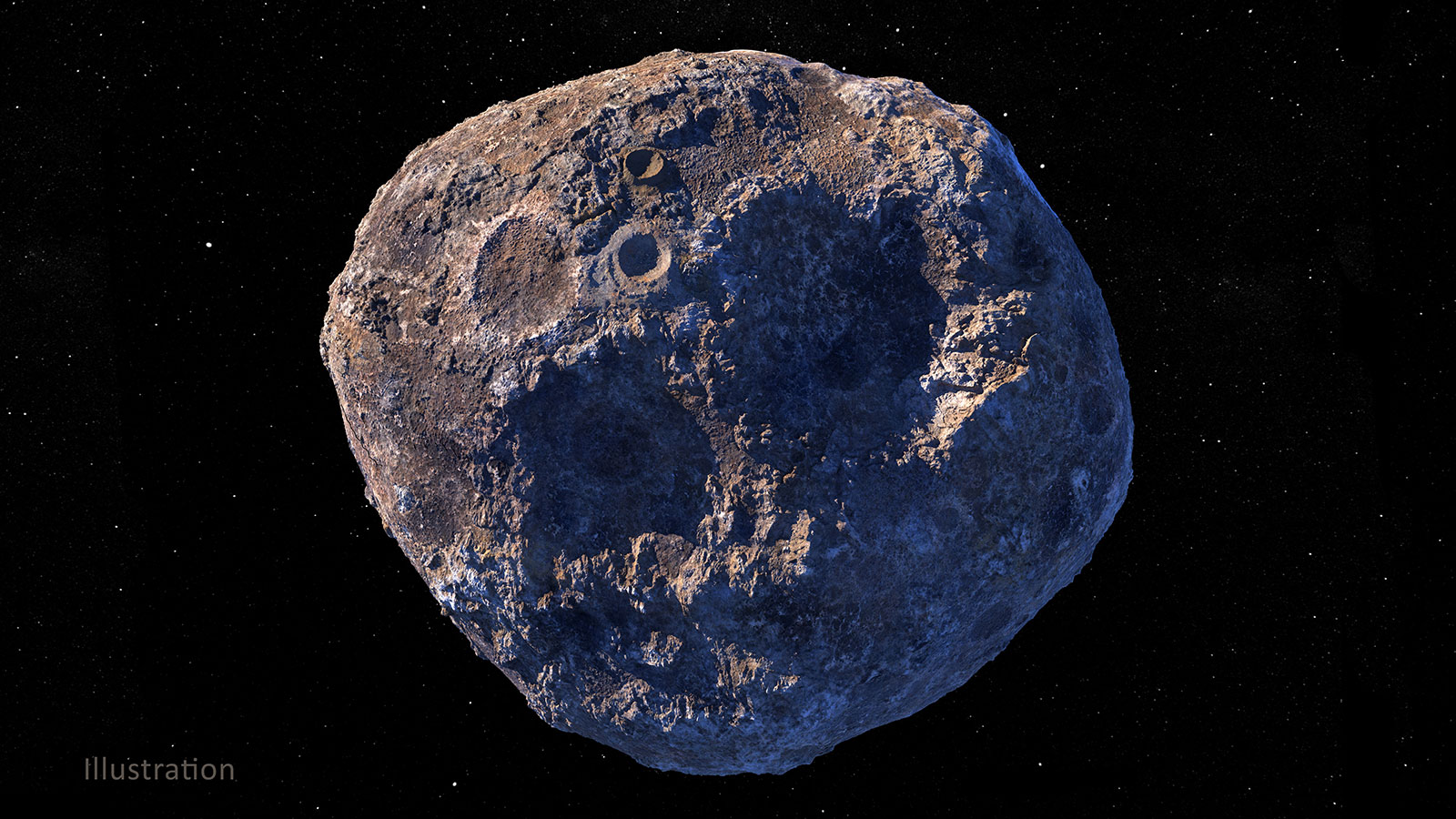
An asteroid is a naturally occurring rocky, metallic, or sometimes ice-rich object that orbits the Sun but is too small to be classified as a planet or a dwarf planet. Most asteroids are irregularly shaped because they do not have enough gravity to pull themselves into a sphere.
Asteroids are among the oldest objects in the Solar System. Most formed about 4.6 billion years ago from the cloud of gas and dust that gave birth to the Sun and planets. They are leftovers from the planet-building process—pieces of material that never combined to form a full-sized planet.
Because they have changed relatively little over billions of years, asteroids preserve valuable information about the early Solar System, making them natural archives of cosmic history.
How Asteroids Formed
Around 4.6 billion years ago, a giant cloud of gas and dust called the solar nebula began collapsing under its own gravity. Most of the material gathered at the center, where the Sun formed. The remaining dust and gas gradually stuck together, creating tiny solid particles.
Over time, these particles collided and merged into larger objects known as planetesimals. Many of these planetesimals eventually combined to become the planets we know today.
However, not all of them completed this journey.
In the region between Mars and Jupiter, the immense gravitational influence of Jupiter constantly disturbed the growing objects. Instead of merging into a single planet, countless rocky bodies remained separate. These surviving fragments became the asteroids we observe today.
Some asteroids also formed in other regions of the Solar System and were later moved into new orbits through gravitational interactions with planets.
Where Are Most Asteroids Found?
The majority of known asteroids are located in the main asteroid belt, a vast region between the orbits of Mars and Jupiter.
Although illustrations often show the asteroid belt as crowded with rocks packed closely together, reality is very different. The asteroids are spread across an enormous volume of space. The average distance between large asteroids can be hundreds of thousands to millions of kilometers, meaning spacecraft can safely travel through the belt without constantly dodging rocks.
The main asteroid belt contains millions of asteroids, ranging from tiny pebbles to bodies hundreds of kilometers across.
Beyond the main belt, many asteroids travel in other parts of the Solar System. Some share Jupiter’s orbit, while others pass close to Earth or even cross Earth’s orbit.
What Are Asteroids Made Of?
Asteroids are composed of materials that formed during the earliest stages of the Solar System.
Many are made primarily of rock, containing minerals rich in silicon and oxygen.
Others contain large amounts of iron and nickel, making them metallic.
Some include significant amounts of carbon-rich material along with minerals that contain water locked within their crystal structures. These carbon-rich asteroids are especially interesting because they may preserve complex organic molecules that were present in the young Solar System.
Scientists classify asteroids based on their composition by studying the sunlight reflected from their surfaces.
Different Types of Asteroids
Not all asteroids are alike.
Some are dark and carbon-rich, appearing almost black because they reflect very little sunlight. These are among the most primitive objects known and likely preserve material that has changed little since the Solar System formed.
Others are made mainly of rocky minerals rich in silicates. These asteroids are brighter and are commonly found throughout the main belt.
A smaller group consists largely of metallic iron and nickel. Scientists believe many of these metallic asteroids may once have been the cores of larger bodies that were shattered in ancient collisions.
Each type offers different clues about how planets formed and evolved.
How Big Can an Asteroid Be?
Asteroids come in an astonishing range of sizes.
Some are no larger than grains of dust.
Others measure only a few meters across, about the size of a house.
Many are several kilometers wide.
The largest asteroid, Ceres, is about 940 kilometers (584 miles) in diameter. However, Ceres is now classified as a dwarf planet because its gravity has pulled it into a nearly spherical shape.
Among the largest true asteroids are Vesta, Pallas, and Hygiea, each hundreds of kilometers across.
Despite their impressive sizes, even the largest asteroids are tiny compared with Earth’s Moon.
What Shape Are Asteroids?
Unlike planets, most asteroids have irregular shapes.
Many resemble giant potatoes, spinning tops, peanuts, or oddly sculpted rocks.
Their weak gravity is not strong enough to pull them into perfect spheres.
Some asteroids are actually two lobes joined together, creating a shape similar to a snowman or a peanut. Scientists believe these “contact binaries” formed when two smaller asteroids gently collided and stuck together.
Others are loose collections of rocks held together mainly by gravity rather than solid pieces of rock.
Do Asteroids Have Moons?
Surprisingly, some asteroids have their own moons.
These small companion objects orbit larger asteroids just as Earth’s Moon orbits our planet.
Astronomers have discovered hundreds of asteroid systems with one or more natural satellites.
Studying these systems helps scientists estimate asteroid masses and understand how these objects formed through collisions or rotational breakup.
How Do Asteroids Move?
Asteroids orbit the Sun according to the same gravitational laws that govern the planets.
Their paths are usually elliptical rather than perfectly circular.
Some complete one orbit in just a few years, while others take decades.
Asteroids also rotate.
Some spin slowly, taking many days to complete one rotation.
Others rotate in only a few hours.
A few spin so rapidly that loose rocks may slide across their surfaces or even escape into space.
The gravitational pull of planets can gradually change asteroid orbits over millions of years, occasionally sending them toward the inner Solar System.
Near-Earth Asteroids
Not all asteroids remain safely within the main asteroid belt.
Some travel on paths that bring them close to Earth’s orbit.
These are known as Near-Earth Asteroids, or NEAs.
Most pose no danger because their orbits do not intersect Earth’s at the same time Earth passes through.
Astronomers carefully monitor these objects using powerful telescopes around the world. Their positions and future trajectories are calculated with remarkable precision.
A small fraction of near-Earth asteroids are classified as potentially hazardous asteroids, meaning their orbits bring them relatively close to Earth and they are large enough to cause significant regional or global damage if an impact were ever to occur. Importantly, being classified as potentially hazardous does not mean a collision is expected.
Can Asteroids Hit Earth?
Yes.
Asteroids have collided with Earth throughout its history.
Fortunately, large impacts are extremely rare.
Small asteroids enter Earth’s atmosphere almost every day. Most are tiny enough to burn up completely, producing beautiful streaks of light known as meteors, or “shooting stars.”
Larger objects occasionally survive passage through the atmosphere, with fragments reaching the ground as meteorites.
Very large asteroid impacts occur only over long geological timescales, but they can have dramatic consequences.
The best-known example happened about 66 million years ago, when an asteroid approximately 10 kilometers (6 miles) wide struck what is now Mexico’s Yucatán Peninsula. The impact created the Chicxulub crater and triggered environmental changes strongly linked to the mass extinction that included the non-avian dinosaurs.
Why Scientists Study Asteroids
Asteroids are like fossils from the birth of the Solar System.
Unlike planets, many have experienced relatively little geological activity. Their ancient surfaces preserve information about conditions that existed billions of years ago.
By studying asteroids, scientists hope to answer questions such as:
How did the planets form?
Where did Earth’s water come from?
How were the ingredients for life distributed throughout the Solar System?
What was the environment like during the earliest stages of planetary evolution?
Asteroids also help scientists improve strategies for protecting Earth from future impacts.
Space Missions to Asteroids
Robotic spacecraft have transformed our understanding of asteroids.
NASA’s NEAR Shoemaker became the first spacecraft to orbit and land on an asteroid.
Japan’s Hayabusa mission successfully collected samples from asteroid Itokawa and returned them to Earth, demonstrating that asteroid sample return was possible.
The follow-up Hayabusa2 mission visited asteroid Ryugu, collecting even more valuable material from a primitive carbon-rich asteroid.
NASA’s OSIRIS-REx spacecraft explored asteroid Bennu in extraordinary detail before returning samples to Earth in 2023. These pristine materials are helping scientists investigate the chemistry of the early Solar System.
NASA’s DART mission achieved another historic milestone in 2022 by deliberately crashing into the small asteroid moon Dimorphos, successfully changing its orbit around the asteroid Didymos. The experiment demonstrated that kinetic impact could become a practical method for planetary defense if a dangerous asteroid were ever found on a collision course with Earth.
Could Asteroids Be Mined?
Many asteroids contain valuable materials, including iron, nickel, cobalt, platinum-group metals, and water ice.
Some scientists believe future space missions could mine asteroids to provide resources for long-term exploration of the Moon, Mars, and beyond.
Water extracted from asteroids could potentially be split into hydrogen and oxygen to produce rocket fuel.
Although asteroid mining remains experimental and faces major engineering and economic challenges, it is considered a promising possibility for the future of space exploration.
Are Asteroids and Meteoroids the Same?
These terms are often confused, but they describe different things.
An asteroid is generally a rocky or metallic object orbiting the Sun.
A much smaller fragment, typically ranging from dust-sized particles to objects about one meter across, is called a meteoroid.
When a meteoroid enters Earth’s atmosphere and produces a streak of light, it becomes a meteor.
If part of it survives the journey through the atmosphere and reaches the ground, the remaining piece is called a meteorite.
These terms describe different stages or sizes of similar space material rather than completely different objects.
Asteroids and the Search for Life
Asteroids may have played an important role in making Earth habitable.
Some carbon-rich asteroids contain water-bearing minerals and complex organic molecules.
Many scientists think impacts by primitive asteroids during Earth’s early history may have delivered part of the water and some of the chemical ingredients needed for life.
While this idea remains an active area of research, asteroid samples continue providing important evidence about the chemistry that existed before life emerged on Earth.
The Future of Asteroid Exploration
The coming decades promise exciting discoveries.
New telescopes will detect millions of previously unknown asteroids.
Improved computer models will predict asteroid orbits with even greater accuracy.
Future spacecraft will visit more asteroids, collect additional samples, and perhaps even explore their interiors using advanced instruments.
Scientists are also developing better planetary defense systems to identify and, if necessary, deflect potentially dangerous asteroids long before they could threaten Earth.
Each new mission brings us closer to understanding these ancient worlds.
Conclusion
Asteroids are far more than wandering rocks drifting through space. They are surviving fragments of the Solar System’s birth, preserving a record of events that occurred billions of years before Earth became home to life. Every asteroid carries clues about how planets formed, how water and organic materials were distributed across the young Solar System, and how cosmic collisions have shaped the history of worlds.
From the vast asteroid belt between Mars and Jupiter to the near-Earth asteroids carefully tracked by astronomers, these remarkable objects continue to capture the imagination of scientists and the public alike. They remind us that the Solar System is still a dynamic and evolving place, where ancient relics continue their endless journeys around the Sun.
As new spacecraft venture farther into space and return samples from these rocky worlds, asteroids are helping humanity uncover one of the greatest stories ever told—the story of our own cosmic origins.