Imagine standing on the surface of a world where the Sun appears much smaller than it does from Earth, where towering cliffs rise above a frozen landscape, and where mysterious bright spots shine from the floors of ancient craters. This is Ceres, a fascinating world that quietly orbits the Sun between Mars and Jupiter.
Although it is much smaller than Earth or even our Moon, Ceres has become one of the most intriguing objects in the Solar System. It is not just another asteroid. It is a dwarf planet, the largest object in the asteroid belt, and a place that has changed the way scientists think about the early Solar System.
For centuries, Ceres was little more than a tiny point of light in telescopes. Today, thanks to spacecraft exploration, scientists know it is a complex world with ice, salts, mysterious geology, and perhaps even an underground reservoir of salty liquid that survived far longer than anyone expected.
Ceres may be small, but its story is enormous.
What Is Ceres?
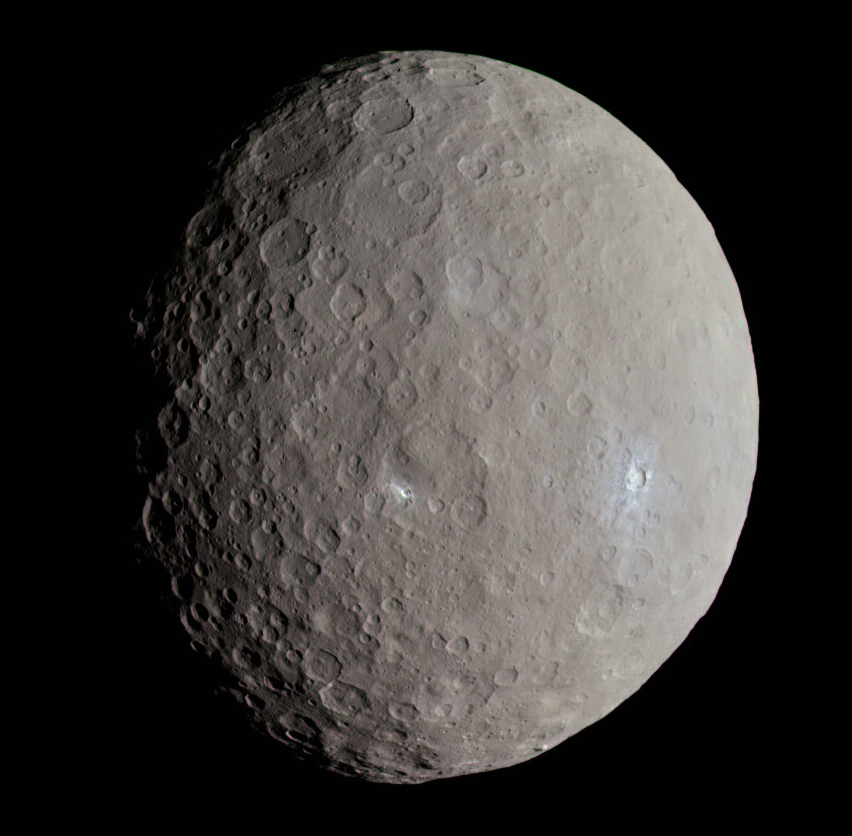
Ceres is a dwarf planet located in the main asteroid belt, the region of space between the orbits of Mars and Jupiter. It is the largest object in this vast collection of rocky bodies, accounting for about one-third of the asteroid belt’s total mass.
Unlike most asteroids, which have irregular shapes, Ceres is nearly spherical because its own gravity pulled it into a rounded form. This rounded shape is one of the characteristics that helped earn it the status of a dwarf planet.
With a diameter of about 940 kilometers (584 miles), Ceres is much smaller than Earth’s Moon but much larger than typical asteroids.
It completes one orbit around the Sun in about 4.6 Earth years and rotates once every nine hours, giving it relatively short days.
Where Is Ceres Located?
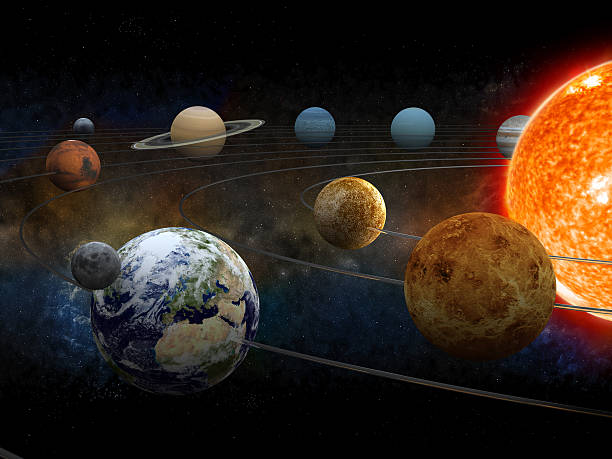
The Solar System contains eight planets, but between Mars and Jupiter lies a region filled with millions of rocky objects known as the asteroid belt.
Ceres sits near the center of this region.
Its average distance from the Sun is about 2.8 astronomical units, meaning it is nearly three times farther from the Sun than Earth is. At this distance, sunlight reaching Ceres is much weaker, making its surface extremely cold.
Despite being surrounded by countless asteroids, collisions are relatively uncommon because the objects are spread across an enormous volume of space.
The Discovery of Ceres
The story of Ceres begins on January 1, 1801, when Italian astronomer Giuseppe Piazzi noticed an unfamiliar object moving slowly across the night sky.
At first, he believed he had discovered a new comet.
As more observations were collected, astronomers realized the object followed a nearly circular orbit, unlike the elongated paths typical of comets.
It soon became clear that Piazzi had discovered an entirely new kind of object.
For several decades, Ceres was considered a planet.
As more objects were found in the same region between Mars and Jupiter, astronomers recognized that Ceres belonged to a much larger population of bodies. It was later reclassified as an asteroid.
In 2006, when the International Astronomical Union introduced the modern definition of a planet, Ceres received a new classification as a dwarf planet, joining Pluto, Eris, Haumea, and Makemake.
Unlike the other recognized dwarf planets, which orbit in the distant outer Solar System, Ceres is the only dwarf planet located in the inner Solar System.
Why Is Ceres Called a Dwarf Planet?
To understand why Ceres is a dwarf planet instead of a planet, it helps to know how astronomers classify worlds.
A planet must orbit the Sun, have enough gravity to become nearly round, and have cleared most other objects from its orbital neighborhood.
Ceres satisfies the first two conditions.
It orbits the Sun and has enough gravity to form a nearly spherical shape.
However, it shares its orbit with countless asteroids instead of dominating the region. Because it has not cleared its orbital neighborhood, it is classified as a dwarf planet.
This distinction says nothing about its scientific importance. In many ways, Ceres is one of the most interesting worlds ever explored.
How Big Is Ceres?
Although Ceres is the largest object in the asteroid belt, it is still quite small compared with the planets.
If Ceres were placed across the continental United States, it would stretch roughly from the East Coast to the Midwest.
Its gravity is also much weaker than Earth’s.
A person weighing 70 kilograms (154 pounds) on Earth would feel only about 2.7 kilograms (6 pounds) of weight on the surface of Ceres.
Walking there would feel more like bouncing gently across the landscape than taking ordinary steps.
Despite its modest size, Ceres contains enough mass to account for nearly one-third of the asteroid belt’s total mass.
What Is Ceres Made Of?
Ceres is not simply a giant rock.
Scientists have discovered that it is made from a mixture of rock, minerals, water ice, salts, and carbon-rich materials.
Water plays an especially important role.
Measurements indicate that Ceres contains enormous amounts of water, much of it frozen as ice beneath the surface. In fact, if all of Ceres’ water could somehow be collected, it would exceed the amount of fresh water found on Earth.
This makes Ceres one of the most water-rich objects in the inner Solar System.
Its interior appears to be layered, with a rocky core surrounded by an outer shell containing ice and hydrated minerals.
A Frozen Yet Active World
For many years, scientists assumed that asteroids were inactive worlds that had remained largely unchanged for billions of years.
Ceres challenged that idea.
Observations from spacecraft revealed evidence that the dwarf planet has experienced geological activity far more recently than expected.
Its surface contains fractures, landslides, smooth plains, cryovolcanic features, and unusual deposits that suggest water, ice, or salty fluids once moved beneath the surface.
Rather than being a frozen, lifeless rock, Ceres appears to have been geologically dynamic.
The Mystery of the Bright Spots
One of the most famous discoveries on Ceres is its dazzling bright spots.
Before NASA’s Dawn spacecraft arrived, telescopes showed mysterious white patches that sparked widespread curiosity.
Some people even speculated they might be reflections from ice or signs of something extraordinary.
When Dawn reached Ceres in 2015, the mystery was finally solved.
The bright areas are largely made of sodium carbonate and other salts.
These minerals were likely left behind after salty water reached the surface and evaporated or froze away.
The largest and brightest deposits lie inside Occator Crater, where cracks and domes suggest that salty brines once rose from below.
These deposits indicate that Ceres remained internally active much longer than scientists had expected.
Did Ceres Have an Underground Ocean?
One of the biggest scientific questions is whether Ceres once possessed a global underground ocean.
Evidence suggests that early in its history, heat generated by radioactive elements may have melted much of its internal ice.
This could have produced a deep ocean beneath the surface.
As Ceres cooled over billions of years, most of that ocean likely froze.
However, computer models and spacecraft observations indicate that pockets of salty liquid may have survived underground far more recently than previously believed.
Because dissolved salts lower the freezing point of water, these underground reservoirs may have remained liquid long after pure water would have frozen solid.
Scientists continue investigating whether any liquid still exists deep beneath the crust today.
Cryovolcanoes on Ceres
Volcanoes usually erupt molten rock.
On icy worlds, however, volcanoes can erupt water, ice, salts, and slushy mixtures instead.
These are called cryovolcanoes.
Ceres contains a remarkable mountain known as Ahuna Mons, which rises roughly four kilometers above the surrounding terrain.
Unlike ordinary mountains formed by impacts or tectonic forces, Ahuna Mons appears to be a cryovolcano.
Scientists believe it formed when icy material slowly pushed upward from beneath the surface.
Its relatively young age suggests that Ceres remained geologically active until comparatively recently in Solar System history.
Countless Craters Tell an Ancient Story
Like many airless worlds, Ceres is covered with impact craters.
Each crater preserves part of the Solar System’s history.
Some craters are ancient and heavily worn.
Others appear much younger, with sharp rims and bright materials exposed by recent impacts.
Because Ceres has little atmosphere, incoming asteroids strike the surface directly without burning up.
Every impact adds another chapter to its geological record.
Water Ice Everywhere
Water ice is one of the defining characteristics of Ceres.
Scientists have detected frozen water beneath much of its surface.
In permanently shadowed craters near the poles, temperatures remain low enough for ice to survive for billions of years.
Some impacts also expose buried ice closer to the surface.
The presence of abundant water has made Ceres especially important for understanding how water was distributed throughout the early Solar System.
The Dawn Spacecraft Changes Everything
For more than two centuries after its discovery, astronomers could study Ceres only from Earth.
Everything changed with NASA’s Dawn mission.
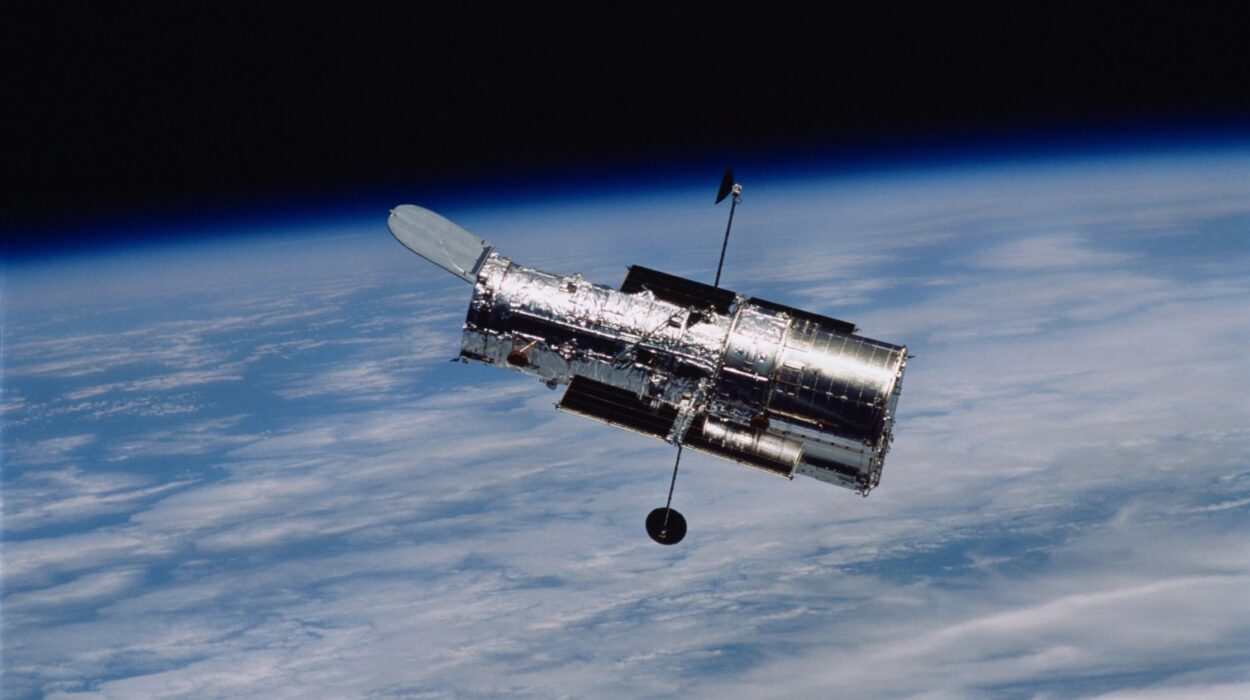
Launched in 2007, Dawn became the first spacecraft to orbit two different extraterrestrial worlds.
It first explored the giant asteroid Vesta before traveling onward to Ceres.
In March 2015, Dawn entered orbit around Ceres, becoming the first spacecraft ever to orbit a dwarf planet.
Over the following years, it mapped nearly the entire surface in remarkable detail.
Dawn discovered bright salt deposits, evidence for cryovolcanism, widespread hydrated minerals, organic compounds in some regions, and signs that Ceres remained active much more recently than scientists had imagined.
Its discoveries transformed Ceres from a little-known asteroid into one of the Solar System’s most scientifically valuable worlds.
Does Ceres Have an Atmosphere?
Ceres does not possess a thick atmosphere like Earth.
Instead, it has an extremely thin exosphere, a sparse collection of atoms and molecules that are so widely separated they rarely collide.
This exosphere is temporary and changes over time.
Water molecules released from surface ice or other processes can briefly become part of this tenuous envelope before escaping into space.
Without a substantial atmosphere, the surface experiences dramatic temperature changes between day and night.
Could Life Exist on Ceres?
No evidence of life has ever been found on Ceres.
However, scientists consider it an intriguing place for studying the ingredients that life requires.
Ceres contains water ice, carbon-rich compounds, minerals, and evidence that salty liquid existed beneath its surface.
These are important components for understanding planetary habitability.
Whether conditions on Ceres were ever suitable for life remains unknown.
Even if life never developed there, studying Ceres may reveal how water and organic materials were distributed across the early Solar System, helping scientists understand how habitable environments emerged elsewhere.
What Makes Ceres Different From Other Asteroids?
Most asteroids are relatively dry, irregularly shaped rocks.
Ceres is different in almost every way.
It is round because gravity shaped it.
It contains abundant water ice.
It has hydrated minerals, salt deposits, possible cryovolcanic activity, and evidence of long-lasting internal evolution.
Rather than being a simple leftover rock, Ceres appears to be a partially differentiated world that evolved much like a tiny planet.
Its complex history makes it more similar to icy moons than to ordinary asteroids.
Why Scientists Continue to Study Ceres
Ceres is a time capsule from the birth of the Solar System.
Because it formed more than 4.5 billion years ago and has changed relatively slowly, it preserves clues about the materials that existed when the planets were forming.
By studying Ceres, scientists hope to answer some of astronomy’s biggest questions.
How did water spread through the Solar System?
How did small worlds evolve?
Where did the ingredients for life originate?
Could other icy bodies hide underground liquid reservoirs?
Each new observation brings researchers closer to understanding these mysteries.
The Future of Ceres Exploration
Although the Dawn mission officially ended in 2018 after the spacecraft ran out of fuel for controlling its orientation, the scientific exploration of Ceres is far from over.
Researchers continue analyzing the enormous amount of data Dawn returned.
Future spacecraft may someday land on Ceres, drill beneath its surface, or even return samples to Earth for detailed laboratory analysis.
Such missions could reveal whether liquid reservoirs still exist underground and provide unprecedented insight into the evolution of icy worlds.
As technology advances, Ceres will almost certainly remain a high-priority destination for planetary science.
A Tiny World With Enormous Importance
At first glance, Ceres might seem like just another small object orbiting quietly between Mars and Jupiter. Yet beneath its cratered surface lies a remarkable story of water, ice, salts, geological activity, and planetary evolution. It bridges the gap between rocky asteroids and icy worlds, offering scientists a rare glimpse into processes that shaped the Solar System more than 4.5 billion years ago.
From its discovery at the dawn of the nineteenth century to the groundbreaking exploration by NASA’s Dawn spacecraft, Ceres has repeatedly surprised astronomers. Every new finding has revealed that this dwarf planet is far more complex than anyone imagined.
Though it is small enough to fit comfortably inside many countries on Earth, Ceres has become one of the Solar System’s biggest scientific treasures—a frozen world that continues to reshape our understanding of how planets, water, and perhaps even the conditions for life emerged in our cosmic neighborhood.