When we look up at the night sky, one object almost always captures our attention—the Moon. Its soft glow has inspired countless stories, guided travelers across oceans, shaped calendars, and fascinated scientists for thousands of years. Yet Earth’s Moon is only one of many. Across our solar system, hundreds of moons orbit planets, and astronomers continue discovering new ones.
A moon is much more than a beautiful object in the night sky. It is a natural world with its own history, geology, and sometimes even an atmosphere. Some moons are covered in ice, others are scarred by ancient impacts, and a few may even hide vast oceans beneath their frozen surfaces. Understanding moons helps us understand how planets form, how solar systems evolve, and whether life might exist beyond Earth.
Understanding the Definition of a Moon
A moon, also called a natural satellite, is a natural object that orbits a planet, dwarf planet, or, in some cases, another small body in space. Unlike artificial satellites built by humans, moons form naturally through processes that occurred during the birth and evolution of the solar system.
Gravity keeps a moon in orbit around its parent planet. At the same time, the moon’s forward motion prevents it from falling directly into the planet. This delicate balance between gravity and motion allows moons to travel around their planets in stable orbits for millions or even billions of years.
Every moon is unique. Some are tiny, only a few kilometers across, while others are larger than planets. Some complete an orbit in just a few hours, while others take months or even years.
Earth’s Moon
When people simply say “the Moon,” they are usually referring to Earth’s only natural satellite.
Earth’s Moon formed about 4.5 billion years ago, shortly after Earth itself formed. The leading scientific explanation is known as the Giant Impact Hypothesis. According to this idea, a Mars-sized object collided with the young Earth. The enormous impact blasted huge amounts of rock into space, and this material gradually came together under gravity to form the Moon.
The Moon is about 3,474 kilometers (2,159 miles) in diameter, making it the fifth-largest moon in the solar system. Although it appears large in our sky, it is actually about one-quarter the diameter of Earth.
The average distance between Earth and the Moon is approximately 384,400 kilometers (238,855 miles). Even at this distance, the Moon has a profound influence on our planet.
Why the Moon Shines
The Moon does not produce its own light.
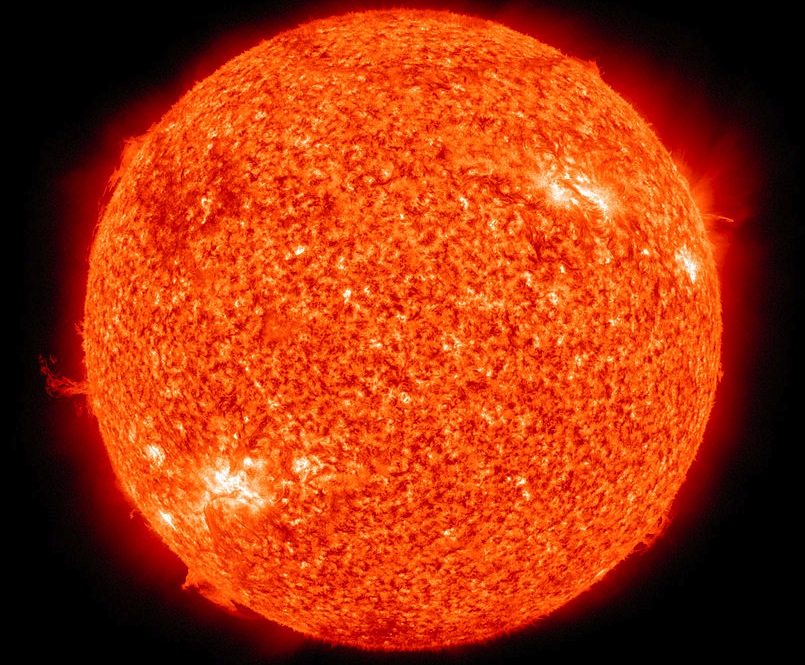
Instead, it shines because it reflects sunlight. During the day, sunlight illuminates one half of the Moon. As the Moon orbits Earth, we see different portions of its sunlit side, creating the familiar lunar phases.
Although the Moon often appears bright white, its surface is actually quite dark. It reflects only about 12% of the sunlight that reaches it, making it less reflective than fresh snow. It looks bright mainly because it is illuminated by the Sun against the darkness of space.
The Phases of the Moon
One of the Moon’s most familiar features is its changing appearance.
As it orbits Earth, the angle between the Sun, Earth, and Moon changes. This causes us to see different amounts of the illuminated half.
The cycle begins with the New Moon, when the side facing Earth receives little direct sunlight. Gradually, a thin crescent appears, followed by the First Quarter, when half the visible surface is illuminated. The Moon continues growing into a Gibbous Moon before reaching the Full Moon, when the entire Earth-facing side is lit.
After the Full Moon, the illuminated portion slowly decreases through another gibbous phase, the Last Quarter, and finally a thin crescent before returning to the New Moon.
This complete cycle, known as the lunar month, lasts about 29.5 days.
Why We Always See the Same Side
Many people wonder why the Moon always seems to show the same face.
The reason is called tidal locking.
The Moon rotates on its axis in almost exactly the same amount of time that it takes to orbit Earth—about 27.3 days. As a result, the same hemisphere always faces our planet.
The opposite side, often called the far side of the Moon, is not permanently dark. It receives just as much sunlight as the side facing Earth. It remained unseen until spacecraft photographed it in the twentieth century.
How the Moon Affects Earth
Although the Moon is much smaller than Earth, its gravitational pull has enormous effects on our planet.
The most obvious influence is the ocean tides. The Moon’s gravity pulls on Earth’s oceans, creating bulges of water that move around the planet as Earth rotates. This produces the regular rise and fall of sea levels known as tides.
The Moon also helps stabilize Earth’s rotation. Without the Moon, Earth’s axis would likely wobble much more over time, leading to greater changes in climate over millions of years.
Scientists believe that this long-term stability may have helped create conditions favorable for the evolution of life.
The Surface of the Moon
The Moon’s surface tells a story billions of years old.
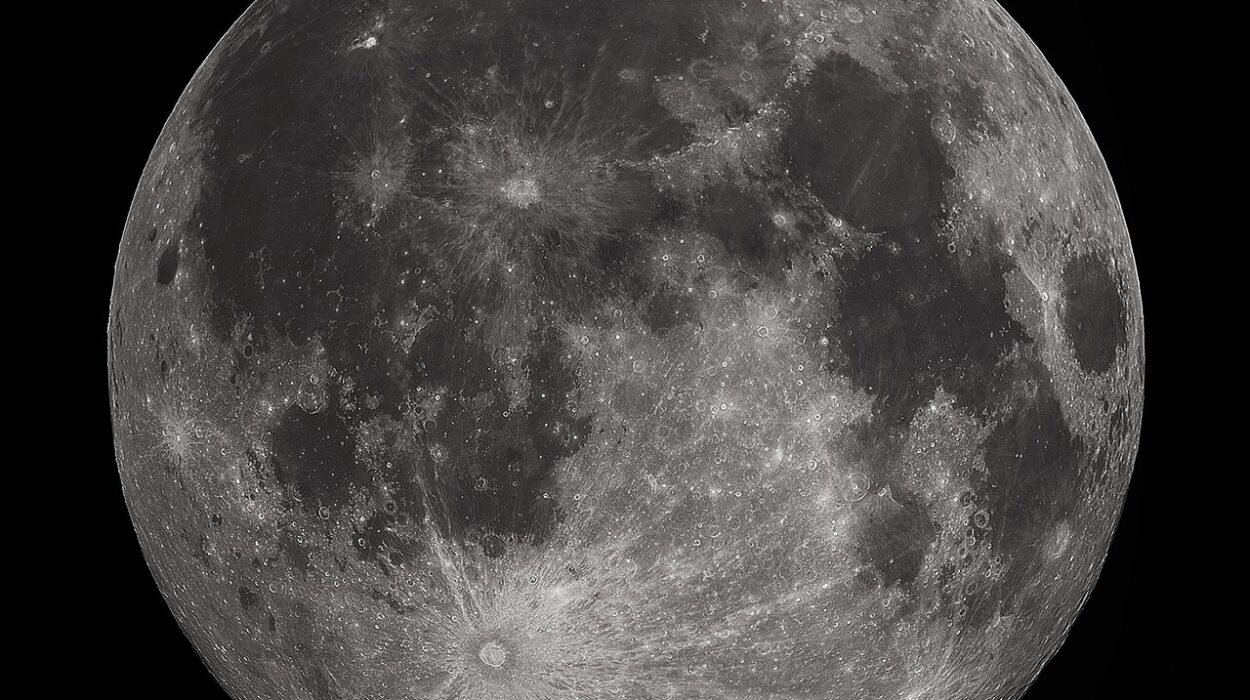
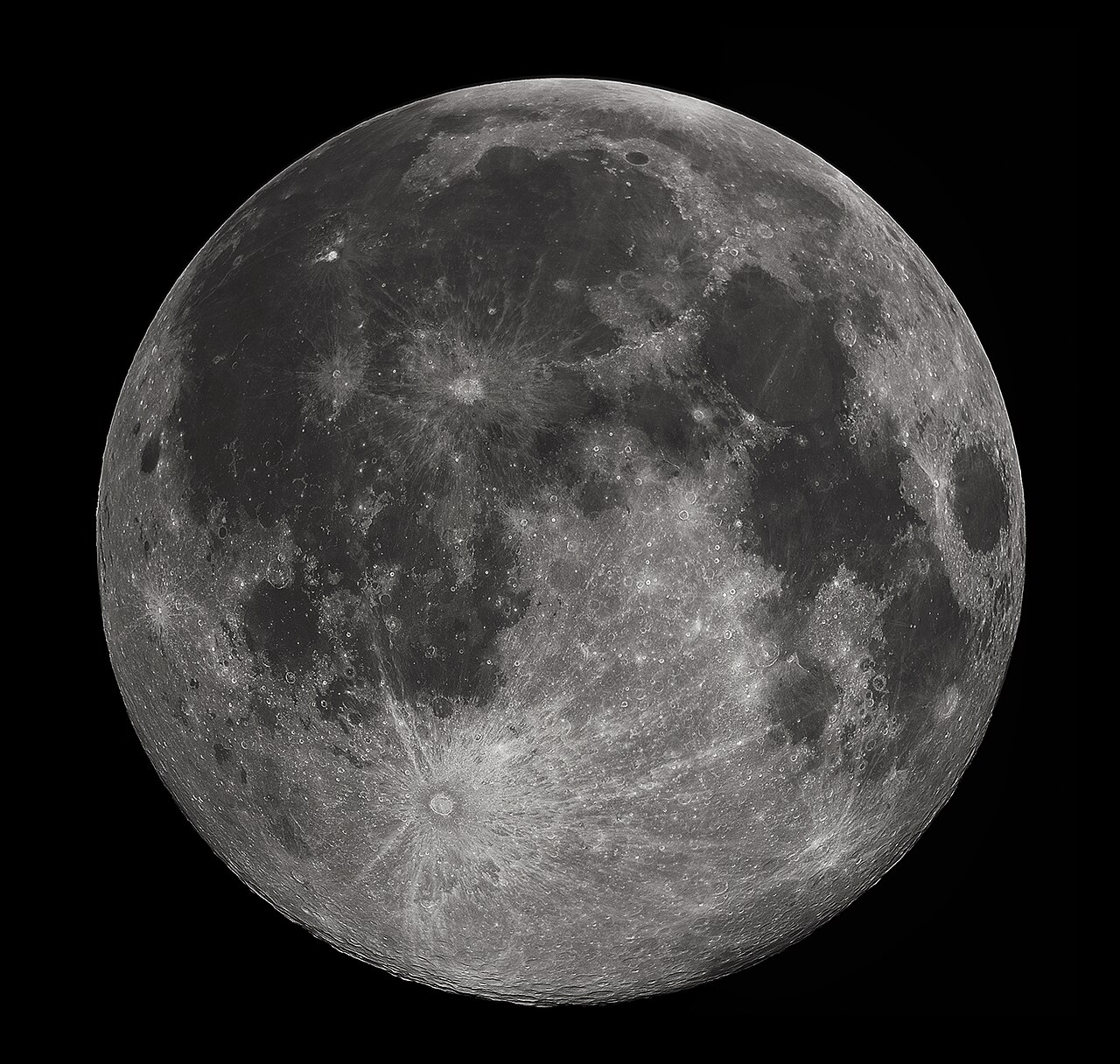
It is covered with countless craters created by asteroid and comet impacts. Because the Moon has almost no atmosphere, these space rocks reach the surface without burning up.
Large dark regions visible from Earth are called maria, a Latin word meaning “seas.” Early astronomers believed these dark areas contained water, but they are actually vast plains of solidified lava formed by ancient volcanic eruptions.
The brighter regions are known as the lunar highlands. These rugged, mountainous areas are older than the maria and preserve some of the oldest rocks in the solar system.
Fine dust called regolith covers much of the Moon’s surface. This dusty layer formed over billions of years as meteorites repeatedly struck the Moon and broke rocks into tiny particles.
Does the Moon Have an Atmosphere?
The Moon has almost no atmosphere.
Instead, it possesses an extremely thin layer of particles called an exosphere. This exosphere is so sparse that the particles rarely collide with one another.
Without a substantial atmosphere, the Moon has no weather, no clouds, no rain, and no wind. Footprints left by astronauts during the Apollo missions remain visible today because there is no wind or flowing water to erase them.
The lack of atmosphere also causes dramatic temperature changes. Sunlit areas can become hotter than 120°C (248°F), while nighttime temperatures can fall below –170°C (–274°F).
Water on the Moon
For many years, scientists believed the Moon was completely dry.
Today, we know that water exists there, although not in the form of rivers or lakes.
Spacecraft have discovered water ice inside permanently shadowed craters near the Moon’s poles. These deep craters never receive direct sunlight, allowing ice to survive for billions of years.
Some lunar rocks and soil also contain tiny amounts of water molecules.
This discovery has increased scientific interest in future lunar exploration because water could provide drinking water, oxygen for breathing, and hydrogen for rocket fuel.
How Many Moons Are in the Solar System?
Earth has only one moon, but many other planets have several.
Mercury and Venus have no moons.
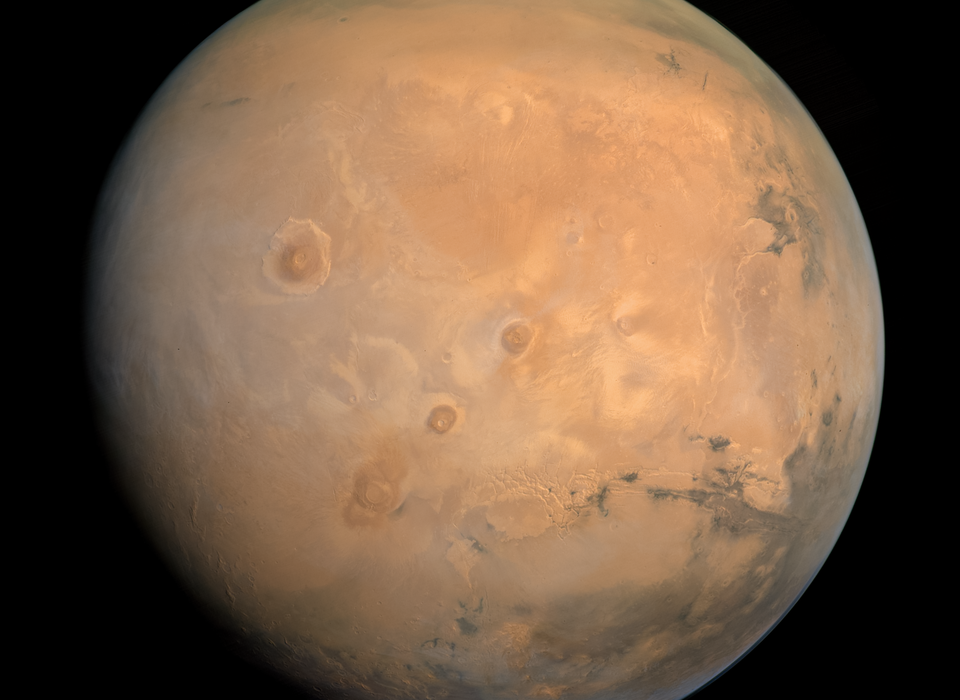
Mars has two small moons named Phobos and Deimos.
The giant planets possess impressive collections of natural satellites.
Jupiter has more than 90 known moons, including the four large Galilean moons discovered by Galileo Galilei in 1610.
Saturn has well over 100 confirmed moons, making it one of the solar system’s richest moon systems.
Uranus and Neptune also host numerous fascinating moons with unique characteristics.
As telescope technology improves, astronomers continue discovering additional moons around the giant planets.
The Largest Moons in the Solar System
Some moons are astonishingly large.
Jupiter’s moon Ganymede is the largest moon in the solar system. It is even bigger than the planet Mercury, although it has much less mass because it contains a large amount of ice.
Saturn’s moon Titan is famous for its thick atmosphere and lakes of liquid methane and ethane.
Jupiter’s moon Europa is covered by a smooth shell of ice that likely hides a global ocean beneath the surface. Many scientists consider Europa one of the most promising places to search for extraterrestrial life.
Jupiter’s volcanic moon Io is the most geologically active world in the solar system, with hundreds of active volcanoes erupting regularly.
Neptune’s moon Triton has geysers that spray nitrogen gas into space and orbits its planet in the opposite direction of most major moons, suggesting it was likely captured rather than formed alongside Neptune.
These remarkable worlds show that moons can be just as fascinating and complex as planets.
How Moons Form
Not all moons form in the same way.
Some develop from disks of gas, dust, and debris surrounding young planets during the early stages of solar system formation.
Others form after giant impacts, as Earth’s Moon likely did.
Still others are captured objects. These moons probably formed elsewhere in the solar system before being trapped by a planet’s gravity.
Because multiple formation processes exist, moons display an extraordinary variety of sizes, compositions, and histories.
Can Moons Have Moons?
A question that often sparks curiosity is whether a moon can have its own moon.
In theory, physics does not completely rule out this possibility under certain conditions. However, no confirmed example has ever been observed.
The strong gravitational influence of the parent planet usually makes stable long-term orbits around a moon extremely difficult.
As of today, astronomers have not discovered any confirmed “moonmoons.”
Why Scientists Study Moons
Moons preserve valuable clues about the history of the solar system.
Many have remained relatively unchanged for billions of years, preserving evidence of ancient impacts and geological processes.
Studying moons helps scientists understand how planets formed, how gravity shapes planetary systems, and how geological activity evolves over time.
Some icy moons may contain underground oceans kept liquid by internal heating. These hidden oceans are considered among the most promising places to search for microbial life beyond Earth.
By exploring moons, scientists are also preparing for future human missions deeper into the solar system.
Human Exploration of the Moon
The Moon became humanity’s first destination beyond Earth.
In 1969, NASA’s Apollo 11 mission successfully landed astronauts Neil Armstrong and Buzz Aldrin on the lunar surface while Michael Collins remained in orbit.
Armstrong’s first steps marked one of the greatest achievements in human history.
Between 1969 and 1972, six Apollo missions landed astronauts on the Moon. They collected hundreds of kilograms of lunar rocks, deployed scientific instruments, and dramatically expanded our understanding of Earth’s closest neighbor.
Today, interest in lunar exploration has returned. Robotic missions from several countries continue studying the Moon, while new programs aim to establish a long-term human presence near the lunar south pole.
Moons Beyond Our Solar System
Astronomers have discovered thousands of planets orbiting distant stars, known as exoplanets.
Naturally, scientists expect many of these planets to possess moons as well.
Although detecting moons around distant planets is extremely difficult, researchers continue searching for these so-called exomoons. Finding them could reveal new insights into planetary systems across our galaxy and even identify places where conditions suitable for life might exist.
Common Misconceptions About Moons
Many people believe every planet has a moon, but this is not true. Mercury and Venus have none.
Another common misunderstanding is that the Moon is perfectly round like a smooth ball. In reality, it has mountains, valleys, cliffs, lava plains, and countless impact craters.
Some also think the Moon changes shape each month. In fact, its shape never changes. The phases simply result from seeing different portions of its sunlit half.
It is also incorrect to say the far side of the Moon is always dark. Like the near side, it experiences both day and night as the Moon orbits Earth.
The Moon’s Importance to Humanity
The Moon has influenced human civilization for thousands of years.
Ancient cultures used its phases to create calendars and mark the passage of time.
Its light helped travelers navigate before modern technology.
Artists, poets, musicians, and storytellers have found endless inspiration in its beauty.
Today, the Moon continues to inspire scientific discovery. It serves as a natural laboratory for studying planetary evolution and may become a stepping stone for future exploration of Mars and beyond.
Our nearest celestial neighbor reminds us that even familiar objects can hold extraordinary mysteries waiting to be explored.
Conclusion
A moon is a natural satellite that orbits a planet or another larger body under the influence of gravity. While Earth’s Moon is the most familiar example, it is only one member of a vast family of natural satellites scattered throughout our solar system. Some are icy, some are rocky, some are volcanically active, and others may conceal oceans beneath frozen crusts.
From controlling Earth’s tides to preserving the history of the solar system, moons play essential roles in planetary science. They have shaped human culture, advanced scientific knowledge, and inspired generations to look toward the night sky with curiosity. As new missions continue exploring these remarkable worlds, moons will remain among the most exciting destinations in humanity’s ongoing quest to understand the universe.