Since the beginning of human history, people have looked up at the night sky with a sense of wonder. The stars inspired myths, guided travelers, marked the seasons, and eventually sparked one of humanity’s greatest scientific pursuits: astronomy.
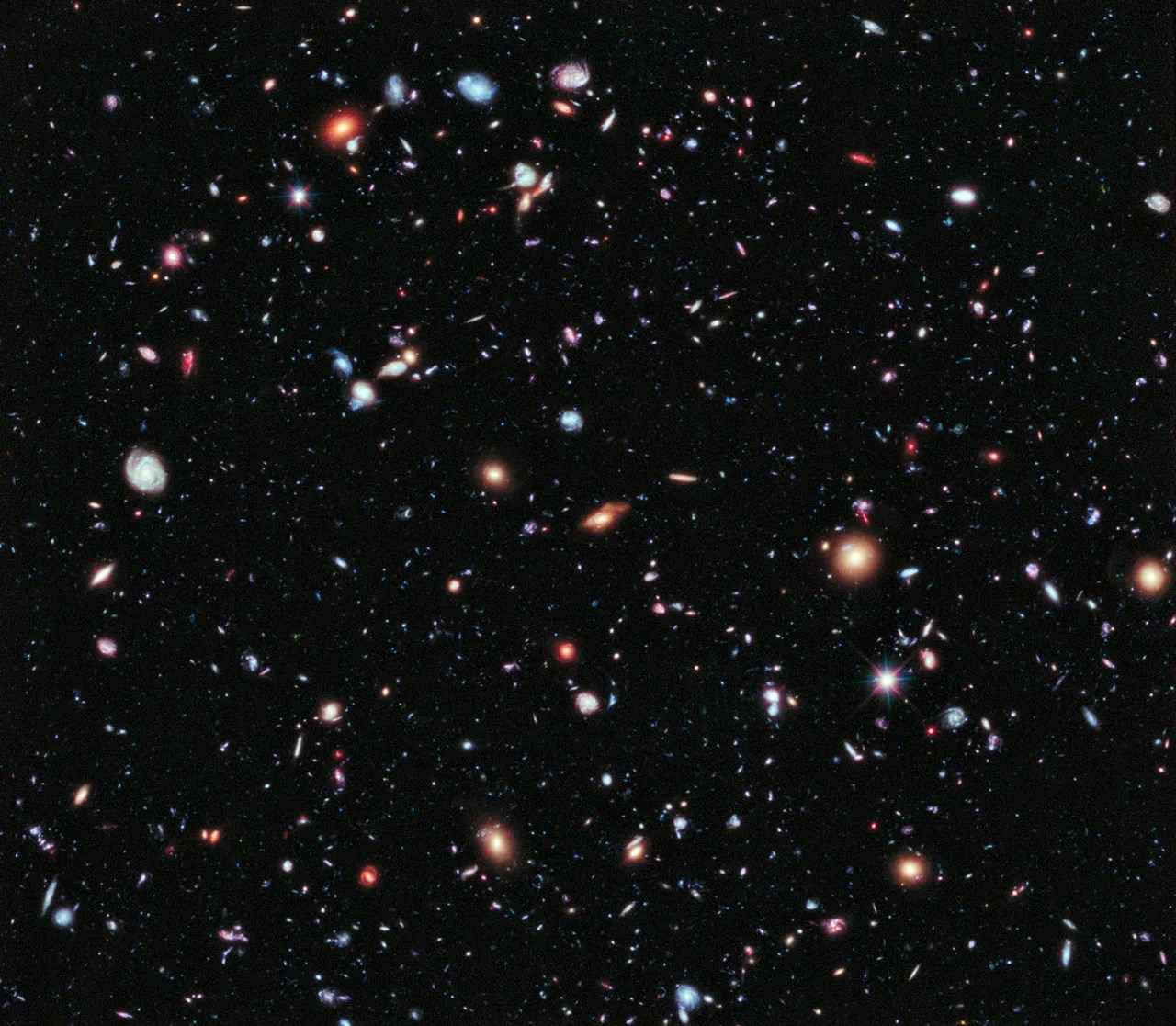
Today, powerful telescopes on Earth and in space have revealed a universe far larger and stranger than our ancestors could have imagined. We now know that our Sun is only one star among hundreds of billions in the Milky Way, that planets exist around many other stars, and that the observable universe contains hundreds of billions of galaxies.
Yet the more we discover, the more questions arise.
This guide answers 50 of the most fascinating questions about stars, planets, and galaxies using modern scientific understanding. Whether you’re just beginning your journey into astronomy or simply curious about the universe, these answers will help explain some of the greatest wonders of space.
Questions About Stars
1. What is a star?
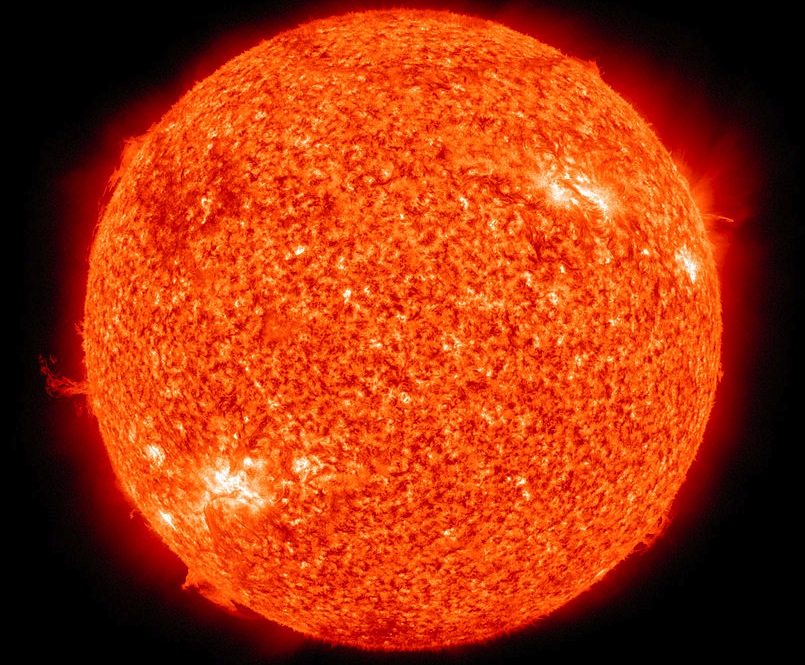
A star is a massive, luminous sphere of hot plasma held together by its own gravity. At its core, nuclear fusion converts hydrogen into helium, releasing enormous amounts of energy in the form of light and heat. Every visible star in the night sky is powered by this process.
2. Why do stars shine?
Stars shine because nuclear fusion inside their cores produces energy. This energy slowly travels outward through the star before escaping into space as visible light, infrared radiation, ultraviolet light, and other forms of electromagnetic radiation.
3. What is the closest star to Earth?
The Sun is the closest star to Earth, located about 149.6 million kilometers (93 million miles) away. After the Sun, the nearest known star is Proxima Centauri, approximately 4.24 light-years away.
4. Why does the Sun look bigger than other stars?
The Sun appears much larger because it is incredibly close to Earth. Other stars are vastly farther away, making them appear as tiny points of light despite many being larger than the Sun.
5. Are all stars the same size?
No. Stars vary enormously in size. Some neutron stars are only about 20 kilometers across, while supergiant stars can be more than a thousand times wider than the Sun.
6. What determines a star’s color?
A star’s color depends mainly on its surface temperature. Hot stars appear blue or blue-white, medium-temperature stars like the Sun appear white or yellowish-white, and cooler stars appear orange or red.
7. Why do stars twinkle?
Stars appear to twinkle because Earth’s atmosphere bends their light differently from moment to moment. This atmospheric turbulence causes rapid changes in brightness and position.
8. Do stars move?
Yes. Every star moves through space. They only appear fixed because they are extremely far away and their movements are very slow from our perspective.
9. How are stars born?
Stars form inside giant clouds of gas and dust called molecular clouds. Gravity pulls material together until the core becomes hot and dense enough for nuclear fusion to begin.
10. How long do stars live?
A star’s lifetime depends mainly on its mass. Massive stars burn through their fuel quickly and may live only a few million years. Smaller stars can survive for hundreds of billions or even trillions of years.
11. What happens when a star dies?
The fate of a star depends on its mass. Small stars become white dwarfs, while massive stars explode as supernovae and may leave behind neutron stars or black holes.
12. Can stars explode?
Yes. Massive stars can end their lives in spectacular explosions called supernovae, briefly becoming brighter than entire galaxies.
13. What is a neutron star?
A neutron star is the collapsed core left behind after a massive star explodes. It packs more mass than the Sun into a sphere only about 20 kilometers across.
14. What is a white dwarf?
A white dwarf is the hot, dense remnant of a Sun-like star after it has exhausted its nuclear fuel and shed its outer layers.
15. Are new stars still forming today?
Yes. Star formation continues throughout many galaxies, including regions within the Milky Way where dense molecular clouds still collapse under gravity.
Questions About Planets
16. What is a planet?
According to the International Astronomical Union, a planet is a body that orbits the Sun, is nearly round because of its own gravity, and has cleared most other objects from its orbital neighborhood.
17. How many planets are in our Solar System?
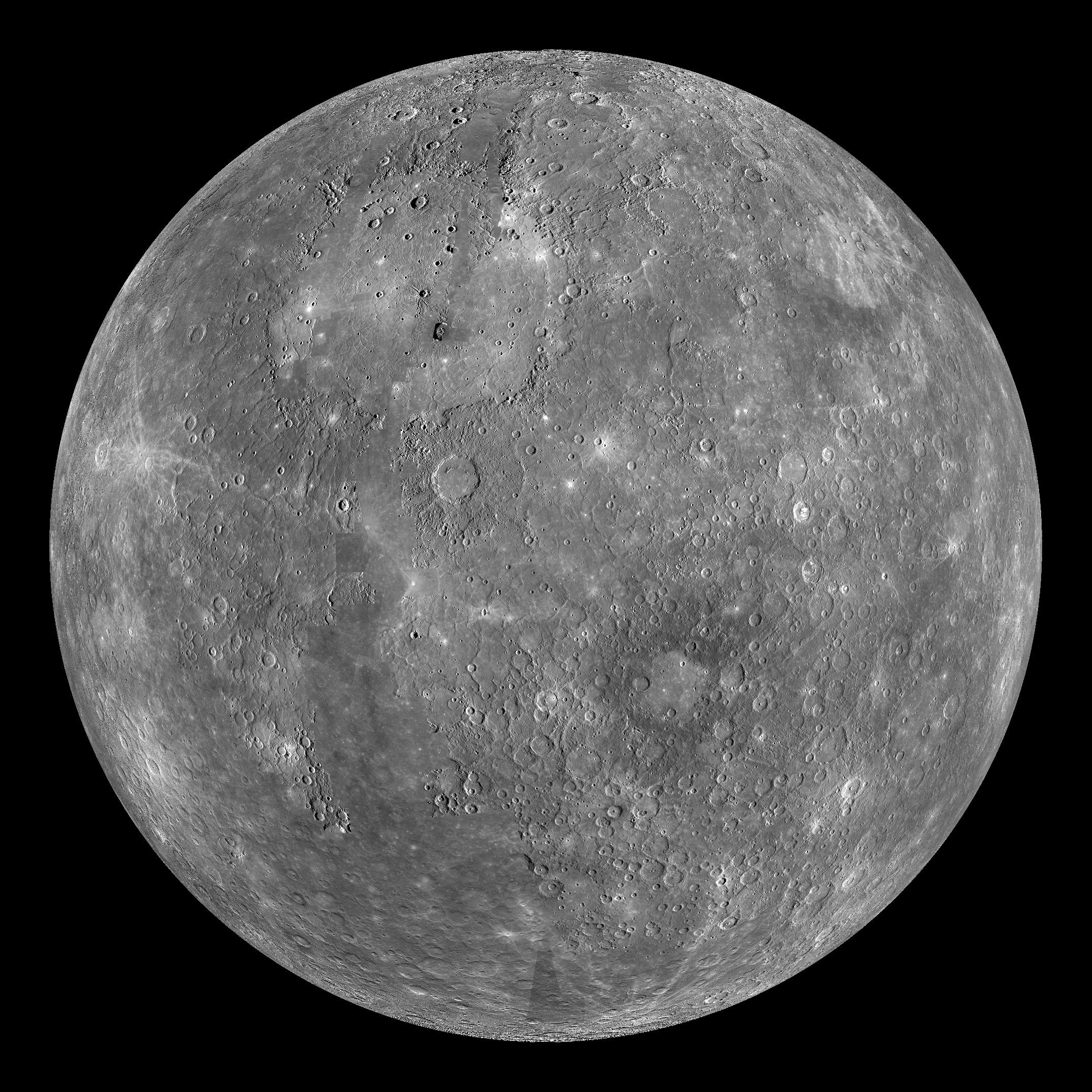
There are eight recognized planets: Mercury, Venus, Earth, Mars, Jupiter, Saturn, Uranus, and Neptune.
18. Why isn’t Pluto considered a planet anymore?
In 2006, Pluto was reclassified as a dwarf planet because it has not cleared other objects from its orbital region, one of the requirements in the modern definition of a planet.
19. What is a dwarf planet?
A dwarf planet orbits the Sun and is nearly spherical but has not cleared its orbital neighborhood of other objects.
20. How do planets form?
Planets form from disks of gas and dust surrounding young stars. Tiny particles gradually stick together, eventually growing into planet-sized worlds through millions of years of collisions and accumulation.
21. What are rocky planets?
Rocky planets, also called terrestrial planets, have solid surfaces made mostly of rock and metal. Mercury, Venus, Earth, and Mars belong to this category.
22. What are gas giants?
Gas giants are enormous planets composed primarily of hydrogen and helium. Jupiter and Saturn are the Solar System’s gas giants.
23. What are ice giants?
Ice giants contain larger amounts of water, ammonia, and methane than gas giants. Uranus and Neptune are classified as ice giants.
24. Which planet is the hottest?
Venus is the hottest planet because its dense carbon dioxide atmosphere creates an extreme greenhouse effect, raising surface temperatures to around 465°C (869°F).
25. Which planet is the largest?
Jupiter is the largest planet in the Solar System. More than 1,300 Earth-sized planets could fit inside its volume.
26. Which planet has the most moons?
Jupiter currently has the largest confirmed number of known moons, although discoveries continue and the rankings can change as astronomers identify new satellites.
27. Why do some planets have rings?
Planetary rings consist of countless particles of ice, rock, and dust that orbit the planet. They may form from shattered moons, leftover material from planetary formation, or captured debris.
28. Can planets exist without stars?
Some planets, called rogue planets, drift through interstellar space without orbiting any star. They may have been ejected from their original planetary systems.
29. What is an exoplanet?
An exoplanet is any planet that orbits a star outside our Solar System.
30. How many exoplanets have been discovered?
Astronomers have confirmed thousands of exoplanets, and many more candidates continue to be studied. The number grows every year as detection methods improve.
31. Could life exist on other planets?
Scientists do not yet know. However, the discovery of potentially habitable exoplanets and environments suitable for liquid water makes the possibility scientifically plausible.
32. What is the habitable zone?
The habitable zone is the region around a star where temperatures may allow liquid water to exist on a planet’s surface under suitable atmospheric conditions.
33. Why doesn’t every planet have an atmosphere?
Whether a planet retains an atmosphere depends on factors such as gravity, temperature, magnetic fields, and geological activity. Small planets often lose atmospheric gases more easily.
34. Can planets collide?
Yes. Planetary collisions occurred frequently during the early history of the Solar System and continue to happen in young planetary systems elsewhere in the universe.
35. Will Earth always remain habitable?
No. As the Sun gradually becomes brighter over billions of years, Earth’s climate will eventually become too hot for liquid surface water, long before the Sun reaches the end of its life.
Questions About Galaxies
36. What is a galaxy?
A galaxy is a vast collection of stars, planets, gas, dust, dark matter, and other objects held together by gravity.
37. What galaxy do we live in?
Earth is located in the Milky Way Galaxy, a spiral galaxy containing hundreds of billions of stars.
38. How big is the Milky Way?
The Milky Way measures roughly 100,000 light-years across, although its outer structure extends even farther.
39. How many stars are in the Milky Way?
Astronomers estimate that the Milky Way contains between about 100 billion and 400 billion stars.
40. How many galaxies exist in the observable universe?
Current estimates suggest that the observable universe contains hundreds of billions of galaxies, although the exact number remains uncertain.
41. What types of galaxies exist?
The main galaxy types are spiral galaxies, elliptical galaxies, irregular galaxies, and lenticular galaxies.
42. What is the nearest major galaxy to the Milky Way?
The Andromeda Galaxy is the nearest major galaxy, located about 2.5 million light-years away.
43. Will the Milky Way collide with Andromeda?
Yes. Astronomers predict that the Milky Way and Andromeda will begin merging in about 4 to 5 billion years.
44. What is at the center of most galaxies?
Most large galaxies contain supermassive black holes at their centers. The Milky Way hosts one called Sagittarius A*.
45. Do galaxies move?
Yes. Galaxies move through space under the influence of gravity and the expansion of the universe.
46. What is a galaxy cluster?
A galaxy cluster is a massive structure containing hundreds or even thousands of galaxies bound together by gravity.
47. Why are galaxies different shapes?
Galaxy shapes depend on their formation history, collisions with other galaxies, star formation, rotation, and gravitational interactions over billions of years.
48. What is dark matter?
Dark matter is an invisible form of matter inferred from its gravitational effects. Although it has never been directly detected, evidence suggests it makes up most of the matter in the universe.
49. Are galaxies still forming today?
Yes. Galaxies continue evolving through star formation, mergers, and the gradual accumulation of gas and dark matter.
50. Will the universe last forever?
Scientists do not yet know with certainty. Current observations indicate that the universe is expanding at an accelerating rate, likely driven by dark energy. Depending on the nature of dark energy and the universe’s long-term evolution, several possible futures have been proposed, including continued expansion indefinitely. The ultimate fate of the universe remains one of modern cosmology’s greatest unanswered questions.
Every Answer Leads to New Questions
Astronomy is unique among the sciences because it constantly reminds us of both how much we know and how much remains unknown. We have measured the ages of stars billions of light-years away, photographed black holes, discovered thousands of planets orbiting distant suns, and mapped galaxies across the observable universe. Yet we still do not know what dark matter is, what dark energy truly represents, whether life exists elsewhere, or exactly how the first stars formed after the Big Bang.
Every new telescope reveals previously unseen wonders. Every space mission uncovers unexpected discoveries. Every answered question opens the door to even deeper mysteries.
That is the beauty of astronomy.
The night sky is not simply a collection of stars—it is a record of cosmic history stretching back nearly 13.8 billion years. Every point of light tells a story of gravity, nuclear fusion, planetary formation, and the evolution of galaxies. By asking questions about the universe, we are also asking questions about our own origins, because the atoms in our bodies were forged inside ancient stars long before Earth existed.
The universe continues to expand, evolve, and surprise us. And as long as humans continue looking upward with curiosity, there will always be new questions waiting to be answered.