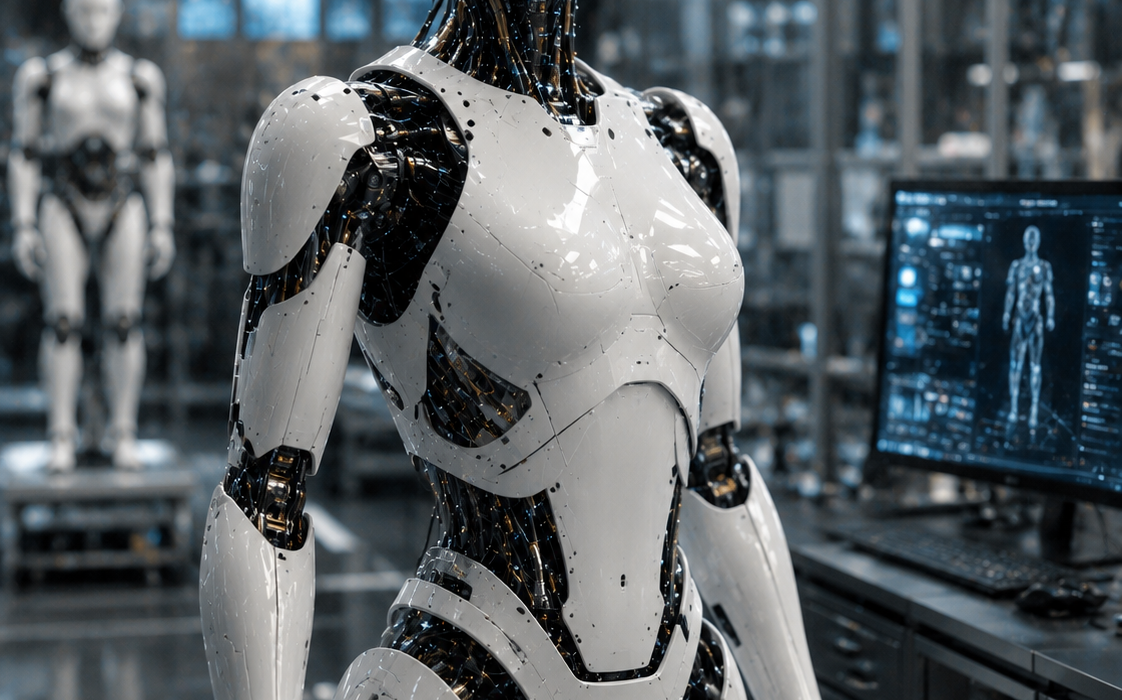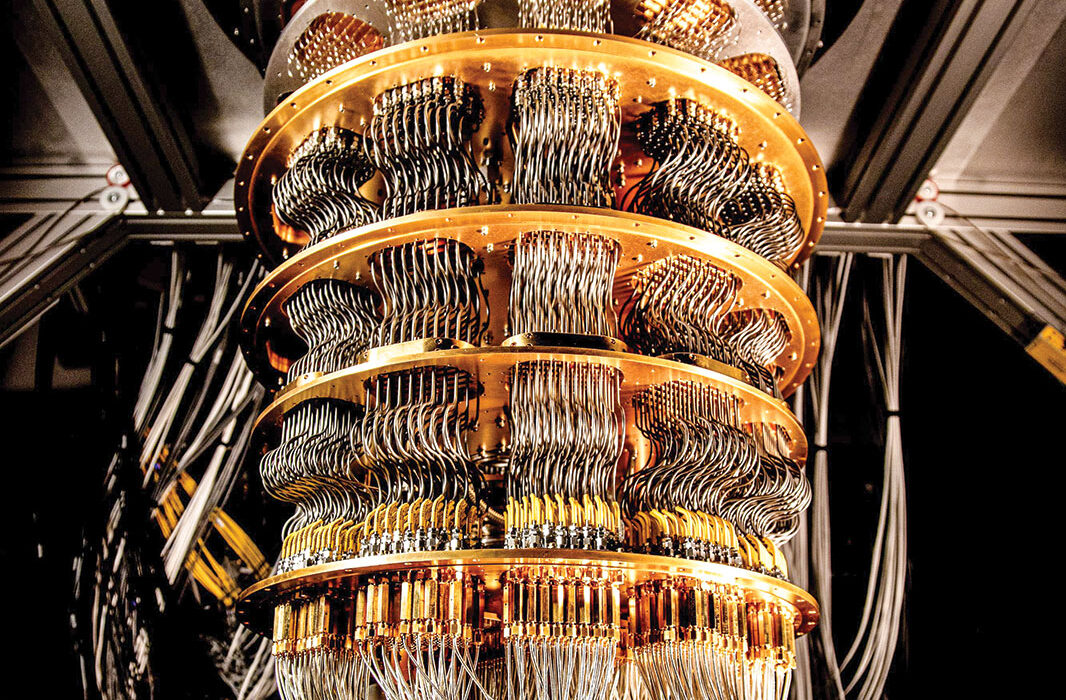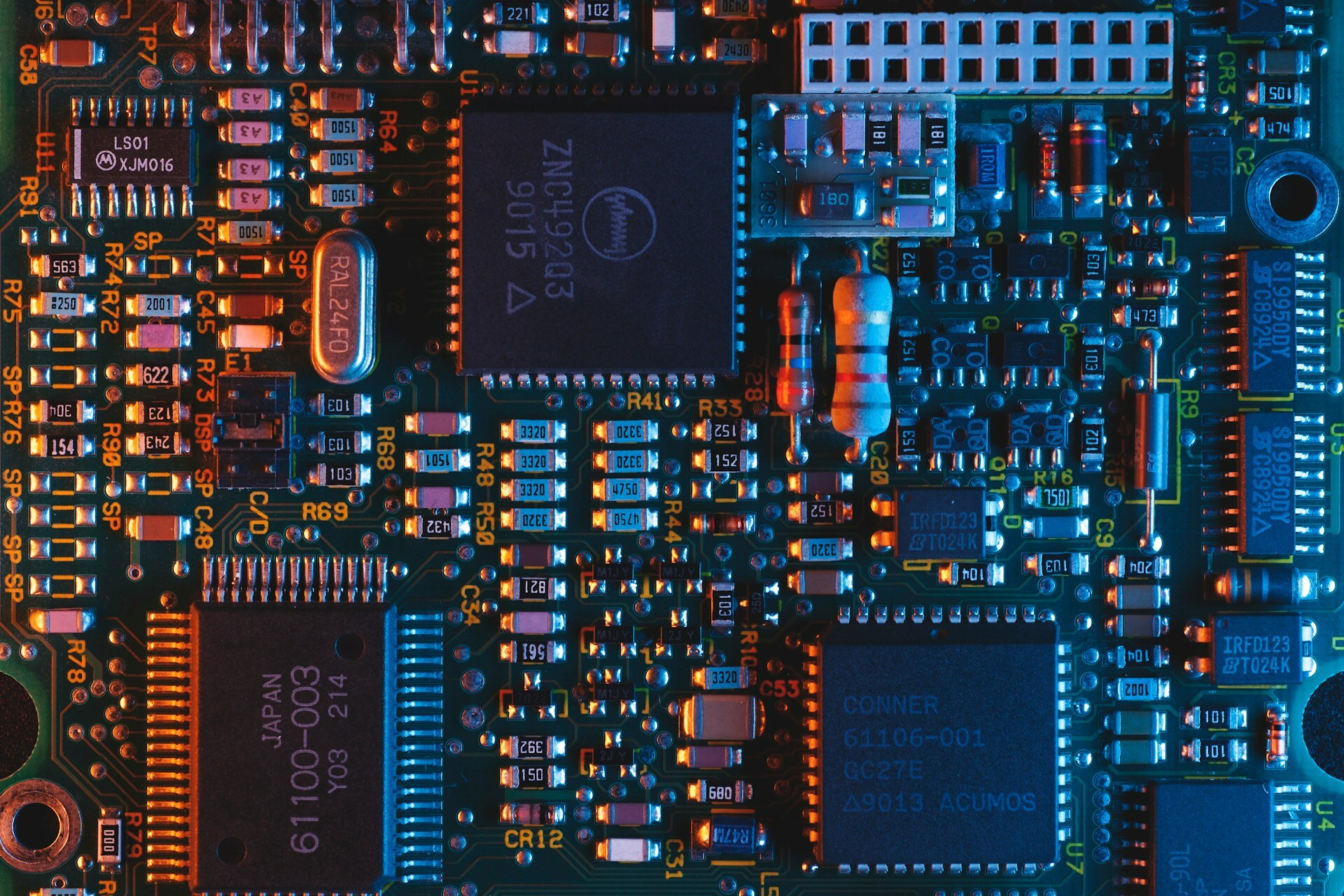
Take a moment to look around. The smartphone in your pocket, the laptop on your desk, the television in your living room, the car you drive, and even the smartwatch on your wrist all have one remarkable thing in common. Hidden deep inside each of these devices are billions—or even tens of billions—of tiny electronic components called transistors.
Although each transistor is smaller than a grain of dust, together they perform one of the greatest technological miracles in human history. They process information, store data, perform calculations, amplify signals, and control electrical current at astonishing speeds. Without transistors, there would be no modern computers, no internet, no smartphones, no artificial intelligence, and no space-age electronics.
Every time you send a message, watch a video, search the internet, or ask an AI assistant a question, countless transistors work together behind the scenes. They switch on and off billions of times every second, making modern digital life possible.
Understanding how transistors work is like uncovering the hidden language of electronics. While they may appear mysterious at first, the underlying principles are surprisingly elegant. Their operation is rooted in the fascinating behavior of electrons moving through carefully engineered semiconductor materials.
What Is a Transistor?
A transistor is a semiconductor electronic device that controls the flow of electrical current. Depending on how it is used, it can function as a switch, an amplifier, or both.
When acting as a switch, a transistor either allows electricity to flow or blocks it completely. This simple “on” and “off” behavior forms the foundation of all digital electronics.
When acting as an amplifier, a transistor uses a very small electrical signal to control a much larger current. This capability is essential for radios, microphones, wireless communication, and countless other electronic systems.
Despite its incredible importance, the basic purpose of every transistor remains simple: control electricity with extraordinary precision.
Why Were Transistors Invented?
Before transistors, electronic devices relied on vacuum tubes.
Vacuum tubes could amplify electrical signals and perform switching operations, but they had many disadvantages. They were large, fragile, consumed enormous amounts of electricity, generated significant heat, and often failed after extended use.
Early computers built with vacuum tubes filled entire rooms. They required extensive cooling systems and consumed enormous amounts of power while offering only a tiny fraction of the computing capability found in today’s smartphones.
Scientists searched for a smaller, faster, and more reliable alternative.
That breakthrough arrived in 1947 when researchers at Bell Laboratories developed the first working transistor. This invention transformed electronics forever and became one of the most important technological achievements of the twentieth century.
The Meaning of “Semiconductor”
To understand how transistors work, it is first necessary to understand semiconductors.
Materials can generally be grouped according to how easily electricity moves through them.
Conductors, such as copper and silver, allow electricity to flow very easily because they contain many free electrons.
Insulators, such as rubber, plastic, and glass, strongly resist electrical flow because their electrons are tightly bound.
Semiconductors occupy a unique middle ground.
They do not conduct electricity as well as metals, but they are not complete insulators either. Most importantly, scientists can carefully control how well semiconductors conduct electricity.
This ability to precisely regulate electrical conductivity makes semiconductors ideal for building transistors.
Silicon: The Foundation of Modern Electronics
Almost every transistor manufactured today is made primarily from silicon.
Silicon is the second most abundant element in Earth’s crust, making it relatively inexpensive and widely available.
Pure silicon has a crystal structure in which each atom shares electrons with neighboring atoms. Under normal conditions, only a limited number of electrons are free to move.
By itself, pure silicon is not an excellent electrical conductor.
However, scientists discovered that adding extremely small amounts of other elements dramatically changes silicon’s electrical properties.
This process is called doping, and it forms the heart of semiconductor engineering.
Doping Creates Two Types of Silicon
Engineers create two different forms of semiconductor material by introducing carefully controlled impurities into pure silicon.
One type contains extra electrons available for electrical conduction. This material is known as n-type silicon.
The other type contains “holes,” which are locations where electrons are missing. These holes behave as if they carry positive electrical charge and can move through the crystal as neighboring electrons fill them. This material is called p-type silicon.
Neither material is truly positive or negative overall. Instead, the names describe which charge carriers are primarily responsible for conducting electricity.
When these two materials are joined together, remarkable electronic behavior emerges.
The P-N Junction
The boundary where p-type and n-type silicon meet is called a p-n junction.
This junction is one of the most important structures in electronics.
Initially, electrons from the n-type region naturally move toward the p-type region because of the difference in electron concentration. At the same time, holes effectively move in the opposite direction.
As these charge carriers meet, some electrons fill nearby holes. This leaves behind charged atoms that cannot move, creating a region with very few mobile charge carriers. This region is called the depletion region.
The depletion region acts as a barrier that limits further movement of charge unless an external voltage is applied.
By carefully controlling this barrier, engineers can regulate electrical current with remarkable precision.
The Basic Idea Behind a Transistor
A transistor works by using a small electrical signal to control a much larger flow of electricity.
Imagine a water valve connected to a large pipe.
Turning the valve requires only a small effort, yet it controls the flow of a much larger amount of water.
A transistor performs a similar function with electrical current.
Instead of manually turning a valve, a tiny electrical voltage changes the semiconductor’s properties, allowing or preventing current from flowing.
This simple principle forms the basis of modern electronic circuits.
The Two Main Types of Transistors
Although engineers have developed many transistor designs, two families dominate modern electronics.
The first is the bipolar junction transistor, commonly abbreviated as BJT.
The second is the metal-oxide-semiconductor field-effect transistor, better known as the MOSFET.
Each type controls electricity in a slightly different way, but both ultimately perform the same essential task: regulating electrical current.
Today, the overwhelming majority of transistors inside computer processors, memory chips, smartphones, and AI accelerators are MOSFETs.
How a Bipolar Junction Transistor Works
A bipolar junction transistor contains three semiconductor regions.
These regions create two closely connected p-n junctions.
The transistor has three terminals called the emitter, base, and collector.
The emitter supplies charge carriers.
The collector receives them.
The base controls the flow between the two.
The remarkable feature of a BJT is that an extremely small current entering the base allows a much larger current to flow from the emitter to the collector.
A tiny control signal therefore regulates a much stronger electrical current.
Because of this property, bipolar transistors are excellent amplifiers.
Amplification in Action
Suppose a microphone converts your voice into an extremely weak electrical signal.
That signal alone would not be powerful enough to drive a loudspeaker.
A transistor solves this problem.
The weak signal enters the transistor, which uses energy supplied by an external power source to produce a much stronger output that accurately follows the original signal.
The transistor has not created energy from nothing. Instead, it has used a small control signal to regulate a larger flow of electrical energy.
This is amplification.
Without transistor amplifiers, modern communication systems would not exist.
The Rise of the MOSFET
Although bipolar transistors remain useful, modern digital electronics depend primarily on MOSFETs.
A MOSFET also has three terminals, known as the source, drain, and gate.
Unlike a BJT, the gate draws almost no steady current during normal operation. Instead, the voltage applied to the gate creates an electric field.
This electric field changes the conductivity of the semiconductor beneath the gate.
If the gate voltage reaches the appropriate level, it creates a conductive channel between the source and drain.
Current then flows.
If the gate voltage is removed, the channel disappears and current stops.
The transistor has switched off.
This ability to control current using an electric field makes MOSFETs extremely energy efficient.
A Transistor as an Electronic Switch
Digital computers rely on a remarkably simple concept.
Every transistor inside a processor operates primarily as an electronic switch.
When switched on, electrical current flows.
When switched off, current stops.
These two states naturally represent binary digits.
Current flowing corresponds to one binary state.
Current not flowing corresponds to the other.
Because modern processors contain billions of transistors switching billions of times every second, they can perform astonishing numbers of calculations in an instant.
Every photograph, video, website, computer game, and AI model ultimately depends on these rapid switching operations.
Binary: The Language of Computers
Computers understand information using binary numbers composed of only two possible values.
Everything—from letters and photographs to music and scientific calculations—is represented using long sequences of these binary values.
Individual transistors physically create these binary states through their switching behavior.
Groups of transistors combine to form logic gates.
Logic gates combine into arithmetic units, memory circuits, and control systems.
These components together form complete microprocessors capable of executing complex software.
Remarkably, every modern computer ultimately relies on countless simple on-and-off decisions made by individual transistors.
Logic Gates: Building Intelligence from Simple Switches
Logic gates perform basic logical operations using transistors.
They determine outputs based on combinations of input signals.
By connecting many logic gates together, engineers create increasingly sophisticated circuits.
These circuits become calculators, memory chips, graphics processors, communication systems, and artificial intelligence hardware.
Every software program eventually becomes electrical signals moving through enormous networks of transistor-based logic gates.
Billions of Transistors on a Single Chip
Modern computer processors contain astonishing numbers of transistors.
Advanced CPUs and GPUs often integrate tens of billions of transistors onto a single silicon chip only a few square centimeters in size.
This extraordinary density became possible through decades of advances in semiconductor manufacturing.
Engineers continually reduced transistor dimensions from millimeters to micrometers, then to nanometers.
Today’s most advanced commercial transistors have critical features measured in only a few nanometers.
At this scale, engineers must carefully account for quantum mechanical effects that become increasingly significant.
Why Smaller Transistors Are Better
Reducing transistor size offers several important advantages.
Smaller transistors switch more quickly because electrical signals travel shorter distances.
They require less energy for each switching operation.
More transistors fit onto a single chip, allowing greater computing power within the same physical area.
Shorter electrical pathways also improve communication between different parts of a processor.
These benefits have driven decades of rapid improvements in computing performance.
Moore’s Law
In 1965, engineer Gordon Moore observed that the number of transistors on integrated circuits tended to double approximately every two years while manufacturing costs remained relatively manageable.
This trend became known as Moore’s Law.
Although not a physical law, it accurately described semiconductor progress for many decades.
As transistors became smaller and more numerous, computers became dramatically faster, cheaper, and more powerful.
While continued miniaturization is becoming increasingly challenging due to physical limitations, engineers continue developing innovative manufacturing techniques and new transistor designs to sustain progress.
Transistors Inside Memory
Processors are not the only chips containing transistors.
Computer memory also depends heavily upon them.
Static RAM stores information using transistor circuits that maintain binary states as long as power remains available.
Dynamic RAM uses transistors together with tiny capacitors to store electrical charge representing data.
Flash memory, found in smartphones, USB drives, and solid-state drives, uses specialized transistor structures capable of retaining information even after power is removed.
Every digital photograph, document, and application stored on modern devices ultimately depends upon transistor technology.
Transistors and Artificial Intelligence
Artificial intelligence systems perform enormous numbers of mathematical operations.
These calculations occur inside processors specifically designed to execute trillions of operations per second.
Whether using CPUs, GPUs, or specialized AI accelerators, all of these chips rely on vast numbers of transistors.
Every AI-generated image, language model response, speech recognition system, and recommendation algorithm is ultimately powered by transistors switching at incredible speeds.
Without continuous advances in transistor technology, modern artificial intelligence would not be practical.
Manufacturing Modern Transistors
Building advanced transistors is one of the most sophisticated manufacturing achievements in human history.
Engineers begin with highly purified silicon wafers polished to extraordinary smoothness.
Using techniques such as photolithography, they project intricate circuit patterns onto the wafer with extreme precision.
Multiple layers of materials are deposited, etched, and modified to create billions of interconnected transistor structures.
Modern semiconductor fabrication facilities maintain environments far cleaner than hospital operating rooms because even microscopic dust particles could damage delicate circuits.
The manufacturing process requires atomic-scale precision across entire silicon wafers.
Heat and Power Consumption
Whenever transistors switch, they consume a small amount of energy.
Some of this energy becomes heat.
With billions of transistors operating simultaneously, processors can generate significant amounts of heat.
Engineers therefore design advanced cooling systems using heat sinks, fans, liquid cooling, and carefully optimized chip architectures.
Reducing transistor power consumption remains one of the central challenges of modern semiconductor engineering.
Future Transistor Technologies
Scientists continue searching for ways to improve transistor performance beyond traditional silicon designs.
Researchers are investigating new semiconductor materials such as gallium nitride, silicon carbide, and two-dimensional materials like graphene and molybdenum disulfide for specific applications.
Engineers are also developing new transistor architectures, including gate-all-around transistors and other advanced designs that improve electrical control as devices continue to shrink.
Future technologies may enable faster computing, lower energy consumption, and entirely new types of electronic systems.
Why Transistors Changed Human History
Few inventions have transformed civilization as profoundly as the transistor.
It made personal computers possible.
It enabled the internet.
It revolutionized communication.
It transformed medicine.
It accelerated scientific research.
It opened the door to smartphones, satellites, robotics, cloud computing, quantum research, and artificial intelligence.
Nearly every modern technological breakthrough rests upon billions of these microscopic electronic switches working together.
Although invisible to most people, transistors have become the foundation of the digital age.
The Tiny Device Behind an Enormous Revolution
The transistor is one of the greatest examples of how a simple scientific principle can reshape the world. By controlling the movement of electrons through carefully engineered semiconductor materials, this tiny device can switch electrical current on and off or amplify weak signals with extraordinary precision.
From the smallest wearable gadgets to the world’s fastest supercomputers, transistors silently perform trillions of operations every second. Their remarkable reliability, speed, and efficiency have fueled decades of technological progress and continue to drive innovations in artificial intelligence, communications, healthcare, transportation, and space exploration.
As researchers push the boundaries of semiconductor technology, the transistor remains at the heart of modern electronics—a tiny invention with an impact so vast that it has fundamentally changed how humanity communicates, learns, creates, and understands the world.