For more than a century, traditional cars have transformed the way people live. They have connected cities, supported economies, and given millions the freedom to travel whenever and wherever they choose. Roads, highways, bridges, and parking lots have been built around them, making the automobile one of the most influential inventions in human history.
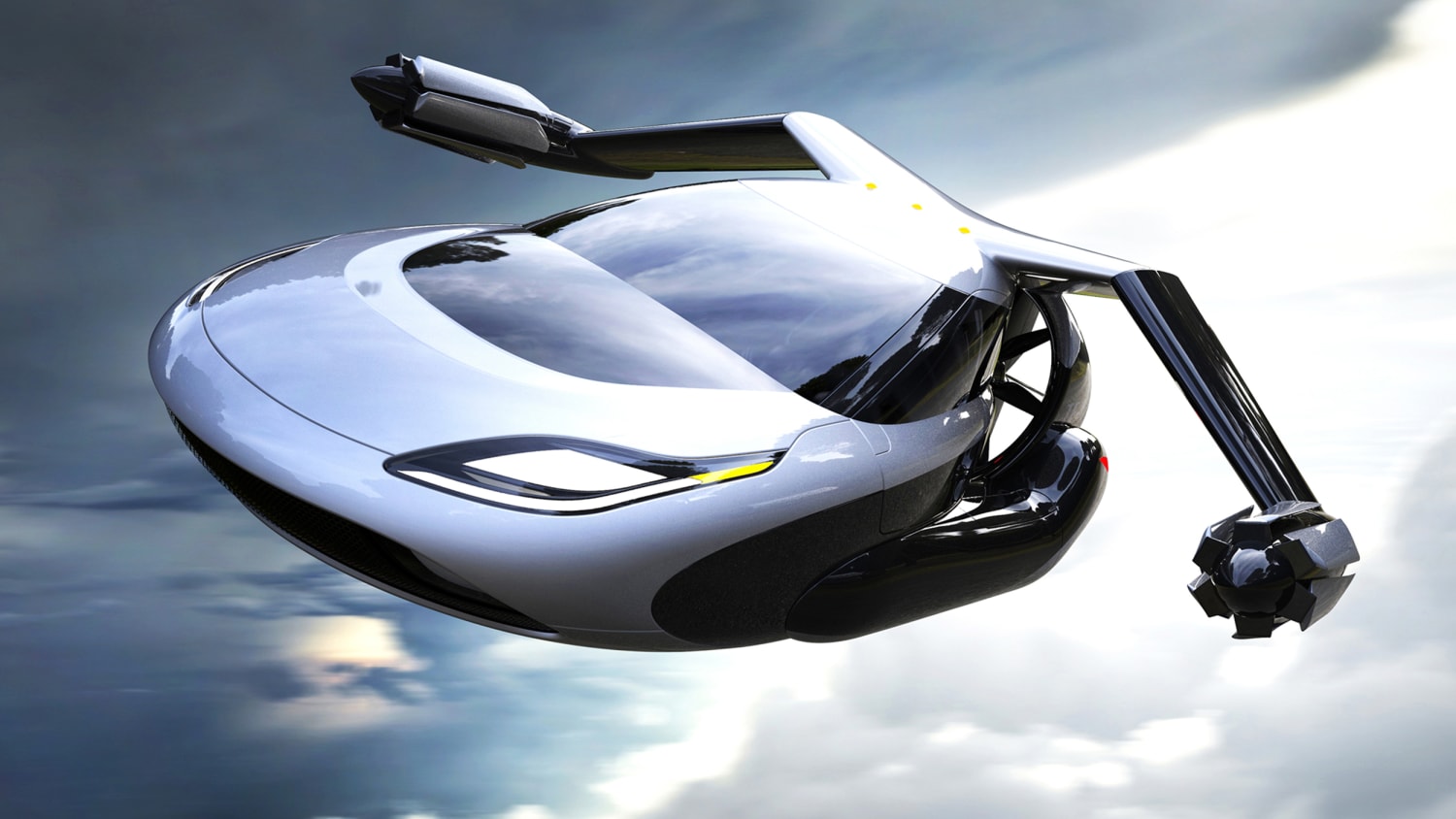
Now, a new vision of transportation is beginning to emerge. Instead of remaining on the ground, engineers are developing vehicles capable of taking to the skies. These flying cars, once seen only in science fiction, are becoming increasingly real as advances in electric motors, batteries, lightweight materials, and computer technology make personal flight more achievable than ever before.
Although flying cars and traditional cars share the common purpose of transporting people, they are fundamentally different in how they operate, the technologies they use, and the challenges they face. Understanding these differences helps us appreciate not only how far transportation has come but also where it may be heading in the future.
What Is a Traditional Car?
A traditional car is a ground vehicle designed to travel on roads using wheels. It is powered by an internal combustion engine, an electric motor, or a combination of both in the case of hybrid vehicles.
Traditional cars are among the most common forms of transportation worldwide. They are used for daily commuting, family travel, business trips, emergency services, and countless other purposes.
Modern cars are the result of more than one hundred years of engineering improvements. Today’s vehicles are safer, more efficient, and more technologically advanced than those of previous generations.
What Is a Flying Car?
A flying car is a vehicle designed to travel through the air, and in some cases, also operate on roads. Some flying cars can transform between driving mode and flight mode, while others are designed solely for aerial transportation.
Many of today’s flying car concepts belong to a category known as electric vertical takeoff and landing (eVTOL) aircraft. These vehicles use multiple electric propellers or rotors to lift off vertically before flying toward their destination.
Unlike conventional airplanes, many flying cars do not require long runways, making them more suitable for urban transportation.
The Biggest Difference: Ground vs Sky
The most obvious difference between traditional cars and flying cars is where they travel.
Traditional cars remain on roads. Their movement is limited by traffic lanes, intersections, bridges, tunnels, road conditions, and traffic signals.
Flying cars operate in the air, allowing them to travel over many obstacles that slow ground transportation.
Instead of navigating crowded streets, flying cars could potentially follow carefully managed aerial routes.
This difference has the potential to significantly reduce travel times for certain journeys, especially in heavily congested cities.
How They Move
Traditional cars move by turning their wheels against the road surface. The friction between the tires and the road allows the vehicle to accelerate, brake, and change direction.
Flying cars move using aerodynamic forces.
Their propellers, rotors, or wings generate lift to overcome gravity, while motors or engines provide thrust that moves the vehicle through the air.
Flying requires balancing several forces simultaneously, making aerial transportation considerably more complex than driving on roads.
Power Sources
Most traditional cars today use one of three power systems.
Many still rely on gasoline or diesel engines.
Others are fully electric and powered by rechargeable batteries.
Hybrid vehicles combine an internal combustion engine with an electric motor.
Flying cars are increasingly being designed with electric propulsion systems.
Electric motors are attractive because they are mechanically simpler, quieter than conventional aircraft engines, and produce no direct exhaust emissions during operation.
Some flying car prototypes also use hybrid systems that combine fuel-powered engines with electric motors to extend flight range.
Speed Comparison
Traditional cars are limited by road speed limits, traffic conditions, weather, and road design.
Even a powerful sports car often spends much of its journey waiting at traffic lights or moving slowly through congestion.
Flying cars have the potential to travel faster over longer distances because they avoid many ground obstacles.
However, their actual speed depends on aircraft design, weather conditions, safety regulations, and air traffic management.
Although flying cars may significantly reduce travel time for some routes, they will not necessarily travel at extremely high speeds in urban areas, where safety remains the highest priority.
Travel Time
Imagine traveling across a busy city during rush hour.
A traditional car may spend much of the journey stopped in traffic.
A flying car could potentially travel above many of those delays, following a more direct path.
For certain trips, this could reduce travel times considerably.
However, total travel time also includes takeoff preparation, landing procedures, passenger boarding, and access to designated landing facilities.
In some situations, especially for short distances, a traditional car may still be more convenient.
Infrastructure Requirements
Traditional cars depend on an enormous network of roads, highways, tunnels, bridges, fuel stations, charging stations, parking areas, repair shops, and traffic control systems.
This infrastructure has developed over many decades.
Flying cars require a completely different support system.
They need safe landing areas, charging or refueling facilities, maintenance centers, communication networks, weather monitoring, and advanced air traffic management.
Many experts believe specially designed vertiports will become important hubs for future flying vehicles.
Building this new infrastructure will require significant investment and careful planning.
Safety Considerations
Safety is important for every vehicle, but flying introduces additional challenges.
Traditional cars use airbags, seat belts, anti-lock braking systems, electronic stability control, and collision avoidance technologies to protect occupants.
Flying cars must include many additional safety systems.
They require reliable flight control computers, multiple backup components, continuous monitoring systems, and emergency landing capabilities.
Engineers often design electric flying vehicles with several independent motors so that a single motor failure does not necessarily result in loss of control.
Because aircraft operate in three-dimensional space, maintaining safety standards is even more demanding than for road vehicles.
Weather Effects
Traditional cars can usually operate in rain, moderate snow, or strong winds, although drivers must adjust their speed and driving style.
Flying cars are generally more sensitive to weather conditions.
Strong winds, thunderstorms, heavy rain, dense fog, and icy conditions can make flight difficult or unsafe.
Weather forecasting and real-time atmospheric monitoring will play a much larger role in flying transportation than in everyday driving.
Environmental Impact
Environmental effects depend on the type of vehicle and its energy source.
Traditional gasoline and diesel cars emit carbon dioxide and other pollutants during operation.
Electric cars produce no direct exhaust emissions, although their overall environmental impact depends on how the electricity is generated and the production of batteries.
Many flying cars are also designed to use electricity.
If charged using renewable energy sources such as solar or wind power, they could reduce operational greenhouse gas emissions compared with fossil fuel-powered vehicles.
However, flying generally requires more energy than driving because maintaining flight demands continuous power to overcome gravity and air resistance. As a result, energy efficiency depends strongly on vehicle design and mission profile.
Noise
Most people are familiar with the sounds of cars traveling on roads.
Modern electric cars operate much more quietly than gasoline vehicles.
Flying cars generate noise from rapidly spinning propellers or rotors.
Engineers are working to reduce this noise through improved propeller design, quieter electric motors, and optimized flight paths.
Reducing noise will be essential if flying cars are to operate near residential neighborhoods.
Driving vs Flying Skills
Driving a traditional car requires learning road rules, vehicle control, and safe driving practices.
Operating a flying car is much more complex.
Pilots must understand navigation, weather, aircraft systems, emergency procedures, and aviation regulations.
Future flying cars are expected to rely heavily on automation.
Advanced computers and artificial intelligence may assist with navigation and flight control, making operation simpler than piloting conventional aircraft.
Even so, regulatory authorities will determine the qualifications required for operating these vehicles safely.
Passenger Capacity
Traditional cars come in many sizes.
Some carry only two passengers, while others can transport seven or more.
Flying cars currently tend to carry fewer passengers because reducing weight is essential for efficient flight.
Many existing prototypes are designed for one to four occupants.
As technology advances, larger flying vehicles capable of transporting more passengers may become practical.
Maintenance
Traditional cars require regular servicing, including tire replacement, oil changes for combustion engines, brake maintenance, and inspections.
Flying cars must meet aviation safety standards.
Their maintenance requirements are expected to be more rigorous because every component involved in flight must perform reliably.
Routine inspections, software updates, motor testing, battery monitoring, and structural evaluations will likely be conducted more frequently than for ordinary cars.
Cost
Traditional cars are available across a wide range of prices, making personal transportation accessible to many people.
Flying cars are currently expensive because they involve advanced engineering, specialized materials, and relatively small production numbers.
As manufacturing technology improves and production scales increase, costs may gradually decrease.
History has shown that many technologies become more affordable over time as production expands and innovation continues.
Regulations
Traditional cars operate under road traffic laws established by governments.
Flying cars must comply with aviation regulations, which are generally much stricter.
Authorities must certify the aircraft, establish pilot or operator requirements, define flight routes, ensure communication systems function properly, and maintain safe separation between vehicles.
Creating a comprehensive regulatory framework is one of the largest challenges facing the widespread adoption of flying cars.
Everyday Convenience
Traditional cars excel in convenience.
They can be parked almost anywhere appropriate, driven on existing roads, and used for short daily trips.
Flying cars may offer remarkable speed for longer journeys, but they will likely depend on designated takeoff and landing locations in many cases.
For quick neighborhood errands, traditional cars may remain the more practical option.
For longer urban or regional travel, flying cars could eventually provide significant time savings.
Rather than completely replacing traditional cars, flying cars may complement them by serving different transportation needs.
Technology Inside the Vehicle
Modern traditional cars already contain sophisticated technology.
They include navigation systems, adaptive cruise control, automatic emergency braking, parking assistance, cameras, radar, and advanced driver assistance systems.
Flying cars build upon many of these technologies while adding aircraft-specific systems.
They require flight control computers, altitude sensors, airspeed monitoring, navigation equipment, communication systems, and highly precise motor controllers.
Artificial intelligence may further enhance flight planning, obstacle detection, and system monitoring.
Which Is More Energy Efficient?
Energy efficiency depends on how a vehicle is used.
Driving on roads generally requires less energy than sustained powered flight because the ground supports the vehicle’s weight.
Flying vehicles must continuously generate lift while also overcoming aerodynamic drag.
For this reason, traditional cars are usually more energy-efficient for short-distance travel.
Flying cars may justify their higher energy use when the value of significantly reduced travel time outweighs the additional energy required.
The Future of Transportation
The future may not belong exclusively to either traditional cars or flying cars.
Instead, transportation systems could become increasingly integrated.
People might drive traditional electric cars for local errands while using flying vehicles for rapid travel between cities or across congested urban areas.
Autonomous technology, renewable energy, artificial intelligence, and smart transportation networks may allow both forms of transportation to work together efficiently.
Rather than competing, they could become complementary parts of a connected mobility system.
Scientific Challenges Ahead
Although flying cars have made impressive progress, several scientific and engineering challenges remain.
Battery technology must continue improving to provide greater range without adding excessive weight.
Engineers must develop quieter propulsion systems suitable for densely populated areas.
Air traffic management systems capable of safely coordinating large numbers of low-altitude aircraft are still under development.
Weather forecasting, cybersecurity, communication networks, and infrastructure planning all require continued research and innovation.
Overcoming these challenges will determine how quickly flying cars move from experimental prototypes to everyday transportation.
Conclusion
Flying cars and traditional cars represent two different chapters in the story of human transportation. Traditional cars have shaped modern society by providing reliable, affordable, and flexible travel across an extensive global road network. Flying cars, meanwhile, represent an exciting vision of the future, combining advances in aviation, electric propulsion, artificial intelligence, and materials science to explore entirely new ways of moving through the world.
While flying cars have the potential to reduce travel times and transform urban mobility, they also face significant technological, regulatory, and infrastructure challenges before becoming a common sight in the skies. Traditional cars will continue to play an essential role for many years, even as flying vehicles gradually evolve. Rather than replacing one another, the two technologies are likely to coexist, each serving the situations where it performs best. Together, they illustrate humanity’s enduring desire to travel farther, faster, and more efficiently while continuing to push the boundaries of science and engineering.