Imagine floating outside a spacecraft, surrounded by the endless darkness of space. A nearby star explodes in a spectacular supernova, releasing more energy than our Sun will produce in its entire lifetime. In movies, you might expect a deafening roar to shake the cosmos. But in reality, you would hear absolutely nothing.
This surprising fact has fascinated people for generations. Space is filled with incredible events—colliding galaxies, exploding stars, black holes consuming matter, and planets crashing into one another. Yet, despite all this cosmic activity, the universe is eerily silent to human ears.
Why is space so quiet? Does sound really not travel through space? Or is the answer more complicated than a simple yes or no?
The truth is one of the most fascinating lessons in physics. Understanding it reveals not only how sound works but also why astronauts experience space so differently from how it is portrayed in science fiction.
What Is Sound?
Before answering whether sound travels through space, it’s important to understand what sound actually is.
Sound is a form of mechanical energy. It is created when an object vibrates. Those vibrations disturb nearby particles, causing them to move back and forth. As these particles collide with neighboring particles, the disturbance spreads outward as a sound wave.
Imagine dropping a stone into a calm pond. Ripples spread across the water in every direction. Sound behaves in a similar way, except instead of water, it moves through materials such as air, water, or solid objects.
When someone speaks, the vocal cords vibrate. These vibrations push nearby air molecules together and apart, creating regions of compression and expansion. These pressure changes travel through the air until they reach another person’s ears, where the brain interprets them as speech.
Without vibrating particles to carry these waves, sound simply cannot travel.
Why Sound Needs a Medium
One of the most important characteristics of sound is that it requires a medium.
A medium is any material through which sound can move. This can be a gas, a liquid, or a solid.
Air is the medium we rely on every day. When you hear music, birds singing, or thunder rumbling, sound is traveling through the air between the source and your ears.
Water is also an excellent medium for sound. In fact, sound travels much faster in water than it does in air because water molecules are packed more closely together.
Solids are even better at carrying sound. If you’ve ever placed your ear against a railroad track or a wall, you’ve probably noticed that sounds travel through solid materials surprisingly well.
The key requirement is simple: there must be particles close enough together to pass vibrations from one to another.
What Is Space Really Like?
Many people imagine space as completely empty.
While this is a useful simplification, it isn’t entirely true.
Outer space contains tiny amounts of matter, including atoms, molecules, dust, plasma, and radiation. However, these particles are spread incredibly far apart.
Near Earth’s surface, a single cubic centimeter of air contains roughly 25 quintillion molecules. They constantly collide with one another, making sound transmission easy.
In the vacuum of interplanetary space, that same volume may contain only a few particles—or sometimes even fewer.
Because the particles are so sparse, they are too far apart to pass sound vibrations effectively.
This is why space is often described as a vacuum.
Does Sound Travel Through the Vacuum of Space?
In the ordinary vacuum of outer space, sound cannot travel.
This is because there are not enough particles to carry mechanical vibrations from one place to another.
Imagine trying to pass a message through a long line of people. If everyone stands shoulder to shoulder, the message can move quickly down the line. But if each person is separated by several kilometers, the message cannot be passed at all.
Sound behaves in much the same way.
Since the particles in space are separated by enormous distances, there is no continuous chain through which sound waves can travel.
As a result, if two astronauts floated several meters apart outside their spacecraft without radio communication, they would not hear each other speaking, no matter how loudly they shouted.
Why Astronauts Use Radios
Astronauts communicate using radios rather than their voices.
Radio signals are not sound waves.
Instead, they are electromagnetic waves.
Unlike sound, electromagnetic waves do not require a material medium. They can travel through the vacuum of space at the speed of light.
When an astronaut speaks, the microphone converts the sound into electrical signals.
These signals are transmitted as radio waves through space.
Another astronaut’s radio receives those waves and converts them back into sound.
This process allows astronauts to communicate clearly even though ordinary sound cannot travel between them.
Without radio technology, conversations during spacewalks would be impossible.
Can You Hear Inside a Spacecraft?
Although space itself is silent, spacecraft are anything but quiet.
Inside a spacecraft, there is air.
Because air fills the cabin, sound behaves much like it does on Earth.
Astronauts can hear each other speaking, alarms sounding, fans running, computers operating, and equipment humming.
The International Space Station, for example, is filled with the constant noise of ventilation systems, scientific instruments, pumps, and electronics.
In fact, astronauts often describe spacecraft as surprisingly noisy environments.
The silence exists only outside the spacecraft, where there is no atmosphere to carry sound.
Can Sound Travel Through Objects in Space?
Yes.
Although sound cannot travel through empty space itself, it can move through solid objects that are in space.
Imagine two astronauts touching opposite ends of a long metal beam.
If one astronaut taps the beam with a wrench, the vibration travels through the metal.
The other astronaut could detect that vibration by touching the beam, even though the surrounding vacuum carries no sound.
This works because the sound is traveling inside the solid material, not through empty space.
Similarly, vibrations can travel through spacecraft walls, tools, or structural components.
Can Sound Travel in Planetary Atmospheres?
Absolutely.
Many planets and moons have atmospheres, and sound can travel through them.
On Earth, our nitrogen-oxygen atmosphere carries sound extremely well.
On Mars, the atmosphere is much thinner than Earth’s. Sound still travels, but it behaves differently.
Because Martian air is less dense, sounds become quieter over long distances and travel more slowly than on Earth.
Scientists studying Mars have even used microphones aboard NASA’s Perseverance rover to record the sounds of Martian winds, the rover’s movements, and laser experiments.
These recordings help researchers better understand the Martian environment.
On Venus, the atmosphere is much denser than Earth’s.
If you could somehow survive there, sound would travel differently because of the planet’s thick atmosphere and high pressure.
Each atmosphere changes the way sound behaves depending on its density, temperature, and composition.
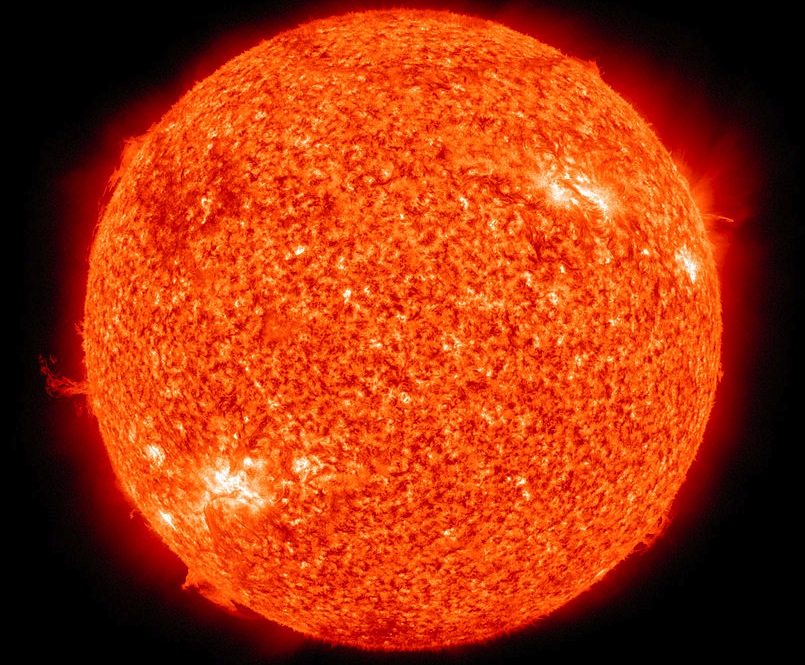
Does the Sun Make Sound?
Surprisingly, yes.
The Sun constantly vibrates.
Inside the Sun, enormous pressure waves move through its hot plasma, creating oscillations similar to sound waves.
Scientists study these vibrations using a field called helioseismology.
By analyzing how waves move through the Sun, researchers can learn about its internal structure, much like doctors use ultrasound to examine the human body.
However, these solar sound waves cannot travel through the vacuum separating the Sun and Earth.
Instead, scientists detect them by observing tiny movements on the Sun’s surface using specialized instruments.
Can Black Holes and Galaxies Produce Sound?
This question has an interesting answer.
Many cosmic objects create pressure waves in gases surrounding them.
For example, giant black holes located in galaxy clusters can generate enormous pressure waves within the hot gas filling those clusters.
Scientists sometimes refer to these as “sound waves.”
One famous example comes from the Perseus galaxy cluster, where astronomers detected gigantic pressure waves produced by the cluster’s central supermassive black hole.
These waves have frequencies far below the range of human hearing—millions of billions of times lower than the lowest note humans can hear.
Although scientists often describe these as sound waves, they are not sounds anyone could hear directly.
Researchers sometimes shift these frequencies upward into the audible range, a process called sonification, allowing people to listen to scientific data as sound.
These recordings are not literal sounds traveling through empty space but transformed representations of real physical data.
Why Movies Often Get Space Wrong
Many science fiction films feature dramatic explosions with thunderous booms echoing through space.
These sound effects make scenes exciting and emotionally powerful.
However, they are scientifically inaccurate.
If two spacecraft exploded in deep space, an outside observer would see bright flashes, expanding debris, and intense radiation—but hear nothing.
Some filmmakers have intentionally embraced scientific realism.
Movies such as 2001: A Space Odyssey famously portrayed the silence of space during many exterior scenes.
This silence can actually make the experience feel even more dramatic because it reflects the true nature of the universe.
What Would You Experience During a Spacewalk?
Imagine stepping outside a spacecraft wearing a modern spacesuit.
The view would be breathtaking.
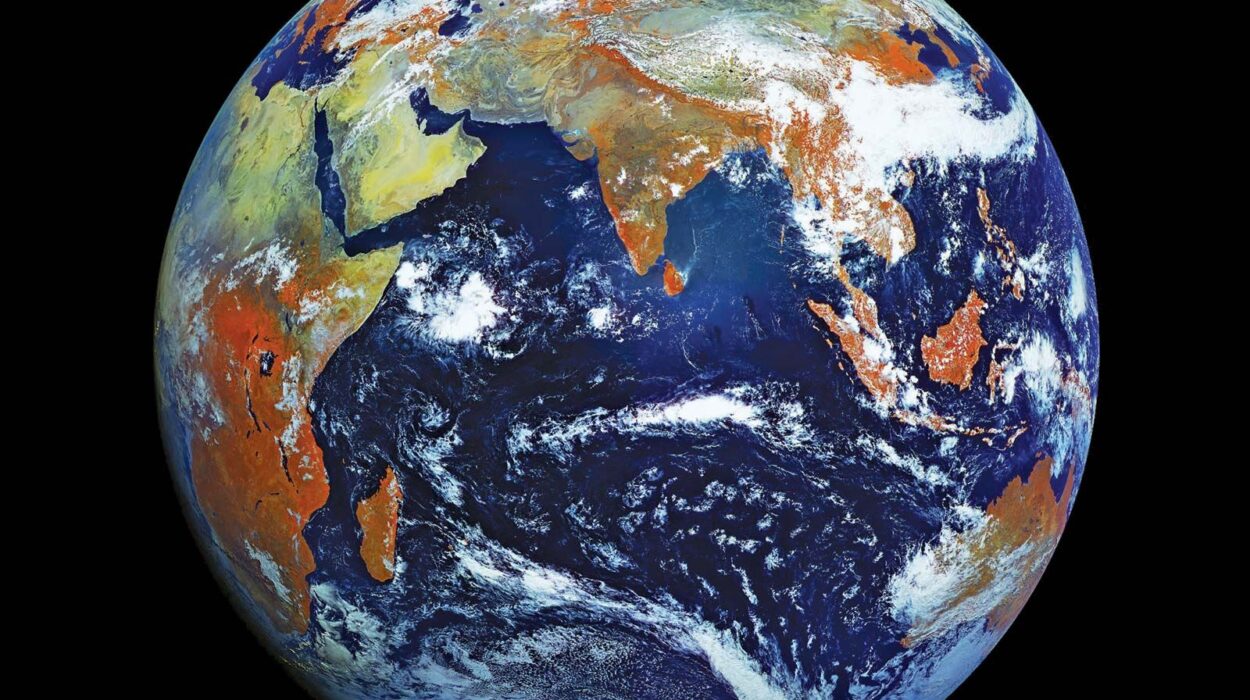
Earth might shine beneath you in brilliant blue.
Stars would stretch endlessly across the sky.
The Sun would blaze with incredible brightness.
Yet despite this extraordinary scenery, everything outside would appear silent.
You would not hear your own footsteps.
You would not hear nearby satellites.
You would not hear meteorites passing by.
You would not even hear another astronaut calling your name without radio communication.
Instead, the sounds you hear would come from inside your own suit.
You might hear your breathing, the circulation of oxygen, cooling fans, electronic equipment, and your own heartbeat transmitted through your body and the suit’s structure.
The universe outside would remain silent.
Can Humans Hear in a Vacuum?
Human ears cannot function without a medium carrying sound.
Even though your ears remain perfectly capable of detecting vibrations, no sound waves can reach them through a vacuum.
If someone somehow removed all the air between a ringing bell and your ears, the bell would continue vibrating, but you would hear nothing.
This classic demonstration has been performed in laboratories using vacuum chambers.
As the air is pumped out, the ringing gradually becomes quieter until it disappears entirely, even though the bell continues to vibrate.
This experiment clearly demonstrates that sound requires matter to travel.
Sound Versus Light
One reason people often misunderstand space is that light behaves very differently from sound.
Light is an electromagnetic wave.
It does not require air, water, or any other material.
It travels easily through empty space.
This is why sunlight reaches Earth across approximately 150 million kilometers of nearly empty space.
It is also why we can see distant stars and galaxies billions of light-years away.
Sound, on the other hand, depends entirely on particles transferring vibrations.
Without those particles, sound cannot propagate.
This fundamental difference explains why space is filled with light but largely devoid of audible sound.
Is Space Completely Silent?
Not entirely.
While the vacuum itself cannot carry sound, many regions of space contain gases and plasma where pressure waves can exist.
Inside stars, giant molecular clouds, planetary atmospheres, and dense regions of galaxy clusters, wave-like disturbances similar to sound can propagate.
However, these environments are very different from the near-vacuum surrounding most planets and spacecraft.
Moreover, even when such waves exist, their frequencies often fall far outside the range of human hearing.
So although physicists sometimes speak of “sound” in certain cosmic environments, this does not mean space is filled with noises we could hear.
How Scientists “Listen” to the Universe
Modern astronomy often transforms invisible data into sound to help scientists identify patterns.
This technique is known as sonification.
Data collected from telescopes, X-ray observatories, gravitational-wave detectors, and spacecraft can be converted into audible frequencies.
These sounds are not recordings captured by microphones floating in space.
Instead, they are scientifically meaningful translations of data into sound that humans can perceive.
Sonification has become a valuable research tool and also helps make complex astronomical discoveries more accessible to the public.
Why Understanding Sound in Space Matters
Learning why sound does not travel through space teaches us much more than a single scientific fact.
It reveals how waves behave.
It explains the importance of matter in transmitting energy.
It highlights the difference between mechanical waves and electromagnetic waves.
It also demonstrates why careful scientific observation sometimes challenges our everyday intuition.
Many concepts that seem obvious on Earth change dramatically in the environment of space.
Understanding these differences deepens our appreciation of both physics and the remarkable conditions that make life possible on our planet.
Conclusion
So, does sound travel in space?
In the vast vacuum of outer space, the answer is no. Sound is a mechanical wave that requires particles to carry vibrations from one place to another. Because the space between planets and stars contains far too few particles, ordinary sound cannot propagate through it. This is why astronauts rely on radios, why spacecraft appear silent from the outside, and why the dramatic explosions heard in many movies are works of fiction rather than scientific reality.
However, the story does not end there. Sound can travel through the air inside spacecraft, through the atmospheres of planets, through solid objects in space, and through the dense gases and plasma found in stars and certain regions of the universe. In these environments, vibrations have the particles they need to move from one place to another.
The universe may seem silent to our ears, but it is far from inactive. Beneath that silence lies a cosmos alive with motion, energy, light, gravity, and countless invisible processes that continue to inspire curiosity and expand our understanding of the natural world.