Artificial intelligence often feels almost magical. You type a question into a chatbot and receive a thoughtful answer within seconds. A photo editing app removes unwanted objects with a single tap. A translation service instantly converts one language into another. Voice assistants understand spoken commands, recommendation systems seem to know what you want to watch next, and self-driving technologies analyze the world around them in real time.
Behind these remarkable experiences lies an enormous amount of computation. Every image recognized, every sentence generated, and every prediction made by an AI model requires billions—or even trillions—of mathematical calculations. Ordinary computer processors can perform these tasks, but they often do so too slowly or inefficiently for today’s increasingly sophisticated AI systems.
This is where cloud AI chips come in.
Cloud AI chips are among the most powerful processors ever created. They work inside vast data centers filled with thousands of interconnected servers, helping train and run artificial intelligence models that serve millions of people every day. Although most users never see these chips, they quietly power many of the AI tools that have become part of everyday life.
Understanding cloud AI chips offers a fascinating look into how modern artificial intelligence actually works.
What Are Cloud AI Chips?
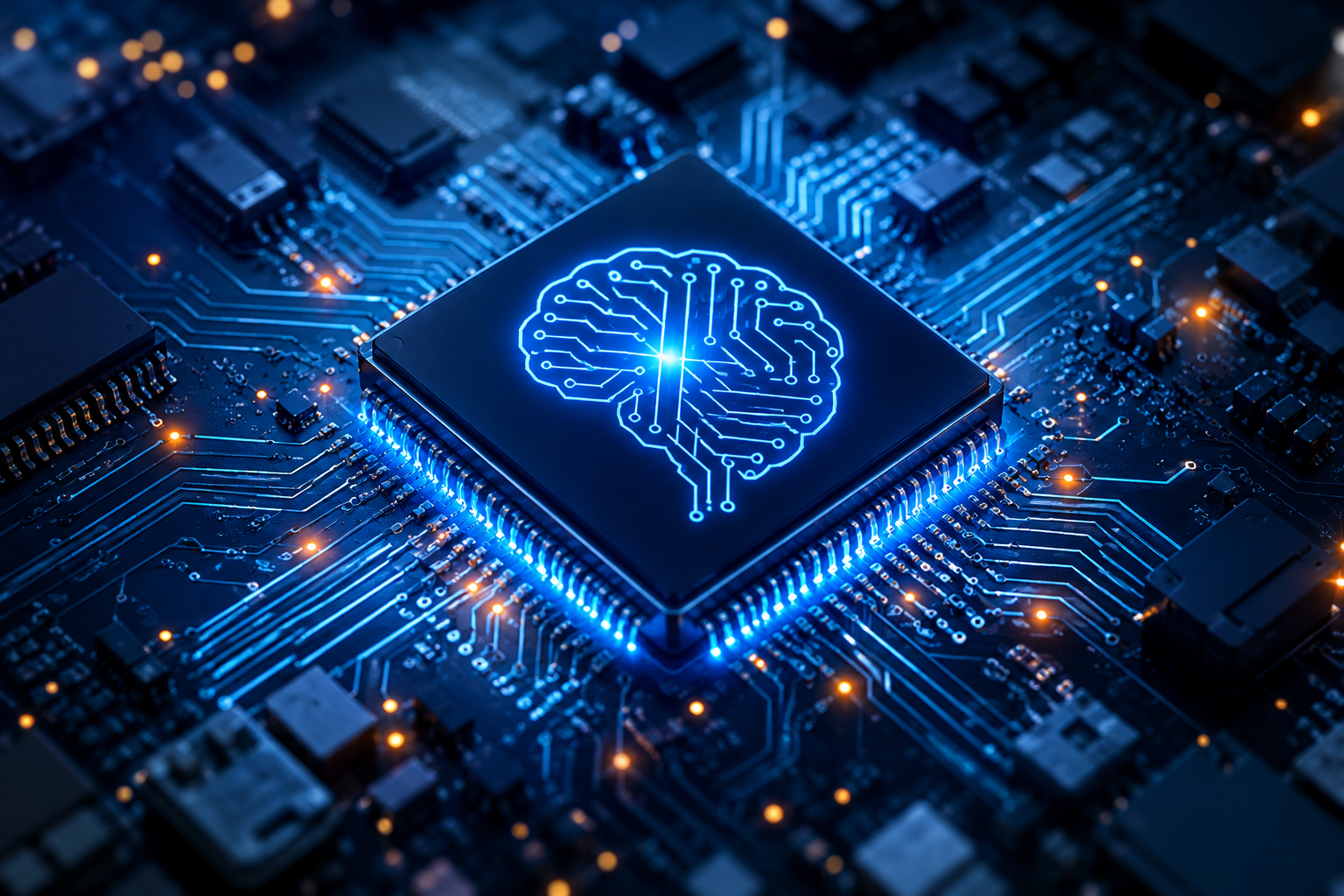
Cloud AI chips are specialized computer processors designed to accelerate artificial intelligence workloads inside cloud computing data centers. Instead of sitting inside your laptop or smartphone, these chips operate in massive facilities owned by cloud providers, where they process enormous amounts of data for users around the world.
Whenever you interact with an online AI service, your request usually travels across the internet to one of these data centers. There, cloud AI chips perform the necessary calculations and send the results back in fractions of a second.
Unlike general-purpose processors, cloud AI chips are optimized specifically for machine learning and deep learning. They can execute huge numbers of mathematical operations simultaneously, making them far more efficient for AI tasks than traditional processors alone.
In simple terms, cloud AI chips are the engines that make large-scale artificial intelligence practical.
Understanding Cloud Computing
To appreciate cloud AI chips, it helps to understand cloud computing itself.
Cloud computing means using computing resources over the internet instead of relying only on your own device. Rather than storing all data or running all software locally, users access powerful remote computers whenever needed.
When you stream a movie, store photos online, edit documents in a web browser, or use an AI chatbot, much of the processing happens inside cloud data centers rather than on your personal device.
These facilities contain thousands of servers working together continuously. Cloud AI chips are installed inside many of these servers, allowing them to handle AI workloads that would overwhelm ordinary personal computers.
Because cloud providers can combine the power of thousands of chips, they can support AI models containing hundreds of billions or even trillions of parameters.
Why Artificial Intelligence Needs Special Chips
Artificial intelligence relies heavily on mathematics.
Neural networks perform countless matrix multiplications, additions, probability calculations, and other numerical operations. Even generating a single paragraph of text may require billions of mathematical computations.
Traditional central processing units, or CPUs, are designed to handle many different kinds of computing tasks. They are extremely versatile but not always the fastest option for AI.
AI workloads often involve performing the same kinds of calculations repeatedly across enormous datasets. Specialized AI chips are designed to perform these operations much more efficiently by processing many calculations simultaneously.
This ability dramatically reduces the time needed to train models and generate responses.
Without specialized AI hardware, many of today’s advanced AI systems would take far longer to operate and would consume much more electricity.
The Difference Between CPUs, GPUs, and AI Chips
Most computers contain a CPU, which serves as the main processor. The CPU excels at handling a wide variety of instructions, managing operating systems, running applications, and coordinating other hardware components.
Graphics processing units, or GPUs, were originally developed to render images and video games. They contain thousands of smaller processing cores capable of performing many calculations at the same time.
Researchers eventually realized that this parallel architecture was also ideal for deep learning.
Today, GPUs play a central role in training large AI models.
However, companies have gone even further by developing chips built specifically for artificial intelligence. These include AI accelerators such as tensor processing units, neural processing units, and custom AI inference chips.
These processors are designed around the mathematical patterns commonly used in machine learning, allowing them to perform AI calculations even more efficiently than general-purpose hardware in many situations.
What Makes Cloud AI Chips Different?
Cloud AI chips differ from the processors inside personal devices in several important ways.
First, they are designed for enormous scale. Instead of serving a single user, cloud AI chips may process requests from millions of people simultaneously.
Second, they prioritize sustained performance. Data center chips operate continuously, often twenty-four hours a day, under carefully controlled cooling systems.
Third, cloud AI chips can work together across thousands of interconnected servers. Large AI models are often too big for a single processor, so computations are divided among many chips operating in parallel.
Finally, cloud AI chips are engineered for maximum efficiency. Since data centers consume large amounts of electricity, improving computational efficiency can save enormous amounts of energy and operating costs.
Training AI Models
One of the most demanding jobs performed by cloud AI chips is AI training.
Training is the process through which an AI model learns patterns from enormous datasets.
Engineers feed the model vast collections of text, images, audio, video, scientific data, or other information. During training, the model repeatedly compares its predictions with correct answers and gradually adjusts billions of internal parameters.
This process requires an astonishing number of calculations.
Training advanced language models may involve processing trillions of words over weeks or even months using thousands of AI chips working together.
Without cloud AI hardware, training modern frontier models would be dramatically slower and, in many cases, economically impractical.
Running AI After Training
Once training is complete, the model begins serving users.
This stage is called inference.
Whenever someone asks an AI chatbot a question, requests an image, translates a document, or searches using AI-powered features, cloud AI chips perform inference.
Inference is generally less computationally demanding than training, but it must happen extremely quickly because users expect almost immediate responses.
Cloud providers therefore optimize their AI chips to deliver answers rapidly while handling millions of simultaneous requests.
How AI Chips Process Information
Inside an AI chip, billions of tiny electronic switches called transistors control the flow of electricity.
Modern AI chips contain tens of billions of these microscopic transistors packed onto pieces of silicon only a few centimeters across.
These transistors perform basic mathematical operations at incredible speeds.
The chip repeatedly multiplies numbers, adds results together, applies mathematical functions, and passes information through neural network layers.
Although each individual calculation is relatively simple, the sheer number performed every second is extraordinary.
Advanced cloud AI chips can execute quadrillions of operations every second, enabling today’s sophisticated AI systems.
The Importance of Parallel Processing
One of the greatest strengths of cloud AI chips is parallel processing.
Instead of solving calculations one after another, thousands of processing units work simultaneously.
Imagine asking a thousand people to solve different parts of a giant puzzle at the same time rather than assigning the entire puzzle to one person.
This parallel approach allows AI models to process enormous datasets much more efficiently.
Deep learning algorithms naturally lend themselves to this kind of computation because many mathematical operations can occur independently before being combined.
Memory Matters Just as Much
Processing speed alone is not enough.
AI models require enormous amounts of memory to store their parameters and intermediate calculations.
Cloud AI systems therefore rely on extremely fast memory technologies that allow processors to retrieve data with minimal delay.
High-bandwidth memory has become especially important because AI chips often spend as much time moving data as performing calculations.
Efficient communication between processors and memory is one of the biggest engineering challenges in modern AI hardware.
Connecting Thousands of Chips
Large AI models rarely run on a single processor.
Instead, thousands of AI chips communicate through specialized high-speed networking systems.
These connections allow processors to exchange information rapidly while working on different parts of the same computation.
Engineers design sophisticated communication technologies to minimize delays because even tiny bottlenecks can slow massive AI training jobs.
In modern cloud data centers, networking infrastructure is almost as important as the processors themselves.
Energy Consumption and Cooling
Cloud AI chips consume significant amounts of electrical power.
As AI models become larger, energy demands increase as well.
Running thousands of processors continuously generates substantial heat.
To keep chips operating safely, data centers use advanced cooling systems that may involve air cooling, liquid cooling, or specialized cooling plates attached directly to processors.
Efficient cooling improves performance while reducing electricity consumption.
Many cloud providers also invest heavily in renewable energy and energy-efficient infrastructure to reduce the environmental impact of AI computing.
Custom AI Chips
Several major technology companies now design their own cloud AI processors.
Instead of relying entirely on commercially available hardware, they develop chips tailored specifically for their own AI workloads.
Custom chips can improve efficiency, reduce costs, and optimize performance for particular machine learning algorithms.
These processors may accelerate specific mathematical operations while integrating tightly with the company’s software systems and cloud infrastructure.
As AI continues evolving, custom silicon is becoming an increasingly important competitive advantage.
Cloud AI Chips in Everyday Life
Although cloud AI chips remain hidden inside distant data centers, they influence countless daily activities.
They help generate responses from conversational AI systems.
They recognize objects in uploaded photographs.
They improve speech recognition during voice calls.
They recommend music, movies, books, and products.
They assist doctors by analyzing medical images.
They support scientific research by processing enormous datasets.
They help financial institutions detect fraudulent transactions.
They optimize traffic predictions, weather forecasting, language translation, and cybersecurity systems.
Many people interact with cloud AI dozens or even hundreds of times each day without realizing it.
Cloud AI Chips and Scientific Research
Cloud AI chips are accelerating scientific discovery across many disciplines.
Researchers use them to analyze genomic data, simulate protein structures, search for new medicines, study climate systems, and interpret astronomical observations.
Large physics experiments generate enormous quantities of information that would be difficult to analyze without advanced computing hardware.
By dramatically reducing computation times, cloud AI chips enable scientists to test ideas and analyze data much faster than ever before.
Challenges Facing Cloud AI Hardware
Despite their impressive capabilities, cloud AI chips face several challenges.
As AI models continue growing, computing demands increase rapidly.
Manufacturing advanced chips has become increasingly expensive and technically complex.
Supplying sufficient electrical power for expanding AI infrastructure presents another challenge.
Data movement between processors and memory can become a bottleneck even when computational performance continues improving.
Engineers also work to improve hardware reliability, reduce costs, and increase energy efficiency while meeting the growing demand for AI services.
These challenges are driving intense innovation across the semiconductor industry.
The Future of Cloud AI Chips
The next generation of cloud AI chips will likely become faster, more energy efficient, and increasingly specialized.
Researchers are exploring new chip architectures that reduce energy consumption while improving performance.
Advances in semiconductor manufacturing may allow even more transistors to fit onto individual chips.
Future systems may integrate processors, memory, and networking even more closely to reduce communication delays.
Scientists are also investigating entirely new computing approaches, including optical computing, neuromorphic computing inspired by the human brain, and quantum computing for certain specialized problems.
While these technologies remain under development, today’s cloud AI chips will continue evolving to support increasingly capable artificial intelligence.
Why Cloud AI Chips Matter
Artificial intelligence is transforming industries, education, healthcare, entertainment, transportation, and scientific research. None of this progress would be possible without hardware capable of performing extraordinary amounts of computation.
Cloud AI chips provide that foundation.
They make it possible to train massive neural networks, deliver AI services to millions of users, accelerate scientific discovery, and support applications that once seemed impossible.
Although most people will never see one of these processors in person, they have become as important to the digital age as electric power plants were to the industrial age.
Conclusion
Cloud AI chips are specialized processors designed to power artificial intelligence inside cloud data centers. Unlike ordinary computer chips, they are built to handle the enormous mathematical workloads required by modern machine learning and deep learning systems. Working together across thousands of servers, they train advanced AI models, generate responses in real time, and support a growing range of technologies used every day.
As artificial intelligence continues advancing, cloud AI chips will remain at the heart of this technological revolution. They are not simply faster processors—they are the computational engines enabling machines to recognize images, understand language, solve complex scientific problems, and assist people around the world. Every breakthrough in AI depends not only on better algorithms but also on the remarkable hardware quietly performing trillions of calculations behind the scenes, making the future of intelligent computing possible.