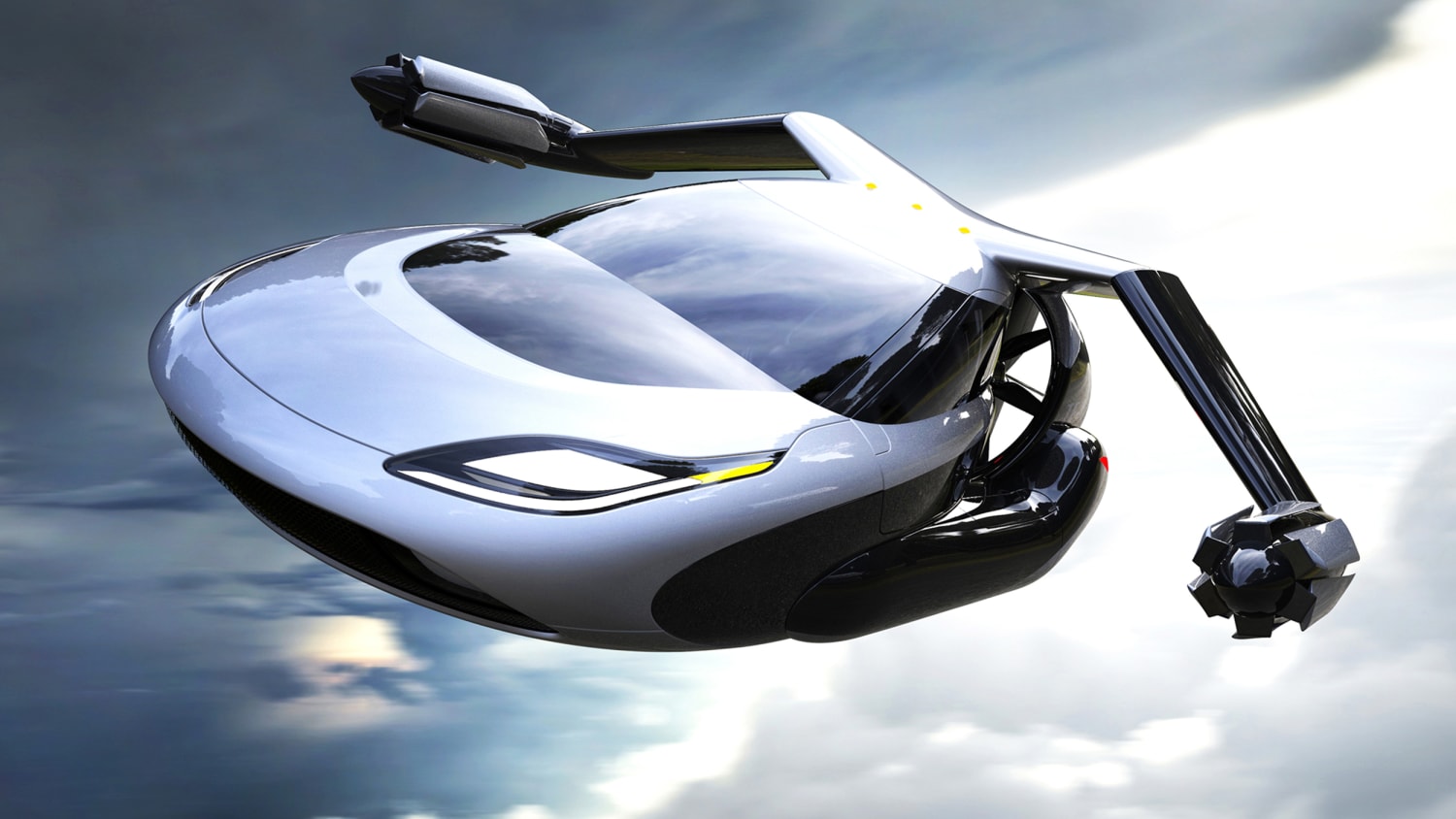
For more than a century, flying cars have captured the human imagination. They have appeared in science fiction novels, futuristic artwork, animated films, and blockbuster movies as symbols of a world where traffic jams no longer exist and the sky becomes an extension of the highway. The idea is exciting: instead of sitting in crowded traffic, you simply lift off vertically, fly above the city, and land near your destination.
For decades, this vision remained little more than a dream. Engineers struggled with the enormous technical challenges of building a vehicle that could safely function both as a car and as an aircraft. However, in recent years, rapid advances in electric motors, lightweight materials, batteries, artificial intelligence, and autonomous flight systems have brought the concept much closer to reality.
Today, dozens of companies around the world are developing aircraft that many people casually call “flying cars.” Some prototypes have already completed successful test flights. Governments have begun creating regulations for these new vehicles, and several companies hope to launch commercial services within the next few years.
But an important question remains.
When will flying cars actually become available for ordinary people?
The answer is more complex than many headlines suggest.
What Exactly Is a Flying Car?
The phrase “flying car” can mean different things.
Traditionally, people imagined a vehicle that could drive on roads like a normal automobile and then transform into an airplane whenever needed. This type of dual-purpose vehicle has existed as experimental prototypes for decades, but building one that is practical, affordable, and safe has proven extremely difficult.
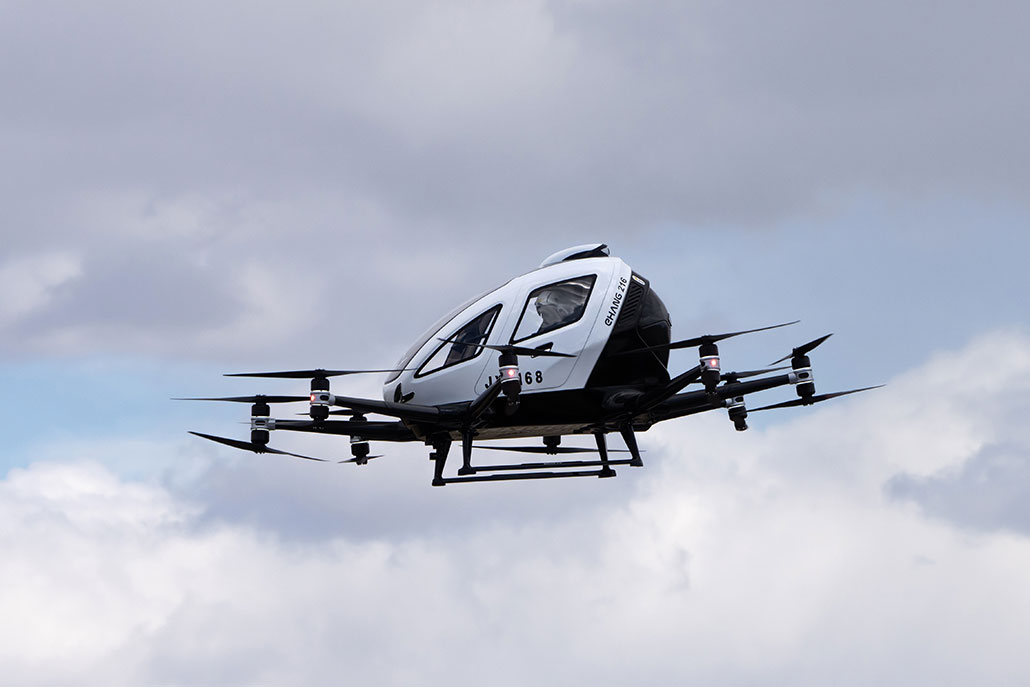
Today, however, most companies are developing a different kind of vehicle. These aircraft are known as electric Vertical Take-Off and Landing aircraft, or eVTOLs.
Unlike conventional airplanes, eVTOLs do not require long runways. Instead, they can take off and land vertically, much like helicopters. Most are powered entirely by electricity and use multiple small propellers instead of one large rotor.
Although many people call them flying cars, they are technically electric aircraft rather than road vehicles.
Some future designs may eventually combine both driving and flying capabilities, but the first generation of commercially available flying vehicles is expected to operate primarily in the air.
Why Are Flying Cars Becoming Possible Now?
For many years, engineers understood the basic principles needed to build flying cars, but the technology simply was not ready.
One major obstacle was the power source.
Traditional gasoline engines are heavy, mechanically complex, and require extensive maintenance. They also produce significant emissions and noise.
Modern electric motors have changed this picture.
Electric motors are smaller, lighter, more reliable, and easier to control than many traditional aircraft engines. They can independently power multiple propellers, improving both stability and safety.
Another breakthrough has been advances in battery technology.
Although today’s batteries still have limitations, they are far more efficient than those available just twenty years ago. This improvement makes short urban flights increasingly practical.
Computers have also become incredibly powerful.
Modern flight-control systems can automatically stabilize aircraft hundreds of times every second, reducing pilot workload and making flight much safer.
Artificial intelligence, advanced sensors, GPS navigation, radar, lidar, cameras, and high-speed communication systems all contribute to making these vehicles more capable than ever before.
How Do Modern Flying Cars Work?
Most eVTOL aircraft look quite different from traditional airplanes.
Instead of relying on large wings during takeoff, they use several electric propellers to lift straight upward.
After reaching a safe altitude, many designs transition into forward flight. Some tilt their propellers, while others use separate motors for vertical lift and horizontal movement.
Because multiple motors share the workload, these aircraft can often continue flying even if one motor fails, providing an extra layer of safety.
Many prototypes also include sophisticated autopilot systems that constantly monitor wind conditions, aircraft performance, battery levels, nearby obstacles, and flight paths.
Eventually, many experts expect these aircraft to become highly automated, reducing the need for extensive pilot training.
Are Flying Cars Already Real?
Yes—but with important limitations.
Several companies have successfully demonstrated working prototypes.
Some vehicles have completed hundreds or even thousands of test flights.
Others have flown between cities, carried passengers, or demonstrated vertical takeoff and landing capabilities.
These achievements show that the technology itself is no longer purely theoretical.
However, experimental flights are very different from operating thousands of aircraft safely every day over crowded cities.
Commercial aviation requires extremely high safety standards.
Every component must undergo rigorous testing before regulators approve passenger operations.
As a result, widespread availability takes much longer than building a successful prototype.
When Will Commercial Flying Cars Become Available?
The first commercial flying vehicles are expected to appear before personal flying cars become common.
Several companies aim to begin limited air taxi services during the second half of the 2020s, although schedules depend on regulatory approval, safety certification, and infrastructure development.
Initially, these services will likely operate on carefully planned routes between airports, business districts, hospitals, and transportation hubs.
Passengers may book flights using smartphone apps, much like today’s ride-sharing services.
Rather than purchasing a flying car, people will simply pay for short aerial trips.
This approach is considered much more practical because companies can maintain the aircraft, train professional pilots, and ensure consistent safety standards.
Will Ordinary People Be Able to Buy One?
Eventually, yes.
But not immediately.
The earliest privately owned flying vehicles are expected to be expensive.
Like luxury sports cars or small private airplanes, first-generation models may cost hundreds of thousands of dollars or even more.
Over time, as production increases and technology improves, prices could gradually decline.
History offers many examples of this pattern.
Early automobiles were once luxury items.
The first personal computers were extremely expensive.
Flat-screen televisions initially cost thousands of dollars.
As manufacturing expanded, prices fell dramatically.
Flying vehicles may follow a similar path, although probably over a much longer period.
Why Is It Taking So Long?
Building an aircraft is much more challenging than building a car.
Cars can safely pull over if something goes wrong.
Aircraft cannot.
Every flying vehicle must meet extremely strict safety requirements because failures in the air can have severe consequences.
Manufacturers must prove that every critical system performs reliably under many different conditions.
This includes heavy rain, strong winds, extreme temperatures, electrical failures, emergency landings, and unexpected mechanical problems.
Regulatory agencies carefully examine every detail before allowing passenger operations.
This certification process often takes many years.
Although it can seem slow, these regulations exist to protect public safety.
What Challenges Still Need to Be Solved?
Battery technology remains one of the biggest challenges.
Current batteries are much heavier than liquid fuels while storing less energy.
This limits how far electric flying vehicles can travel before needing to recharge.
Researchers continue developing batteries with higher energy density, faster charging times, and longer operational life.
Noise is another important issue.
Although electric aircraft are generally quieter than helicopters, spinning propellers still generate noticeable sound.
Reducing noise is essential if these vehicles are to operate frequently over residential neighborhoods.
Weather also presents difficulties.
Strong winds, thunderstorms, heavy rain, snow, and poor visibility can affect flight safety.
Unlike road vehicles, flying aircraft must carefully account for changing atmospheric conditions.
Air traffic management is another major challenge.
If thousands of flying vehicles eventually share city skies, sophisticated systems will be needed to coordinate their movements safely and efficiently.
Researchers are already developing automated traffic management systems specifically designed for urban air mobility.
Will Flying Cars Replace Regular Cars?
Probably not.
Most experts believe flying vehicles will complement rather than replace automobiles.
Cars remain highly practical for short local trips, shopping, commuting, and rural transportation.
Flying vehicles are likely to be most useful for routes where road traffic causes significant delays.
For example, a trip that normally takes ninety minutes by car during rush hour might require only twenty minutes by air.
This makes flying vehicles particularly attractive for business travel, airport transfers, emergency medical transportation, and connecting major urban centers.
Road transportation will continue playing a central role for everyday travel.
Could Flying Cars Help Emergency Services?
One of the most promising applications involves emergency response.
Medical transport could become significantly faster.
Doctors, nurses, medical equipment, blood supplies, or donor organs could reach hospitals more quickly.
Search-and-rescue teams could access disaster zones that are difficult to reach by road.
Firefighters might rapidly inspect wildfires or transport specialized equipment.
Natural disasters often damage roads and bridges.
Flying vehicles could help deliver food, medicine, and emergency supplies to isolated communities.
These humanitarian uses may become some of the earliest and most valuable applications.
Are Flying Cars Environmentally Friendly?
Compared with conventional helicopters, electric flying vehicles produce no direct exhaust emissions during flight.
However, their overall environmental impact depends on how the electricity used to charge them is generated.
If the electricity comes from renewable sources such as solar, wind, or hydroelectric power, total emissions can be significantly reduced.
Even so, flying generally requires more energy than driving because aircraft must continuously overcome gravity.
As a result, flying vehicles are unlikely to replace energy-efficient public transportation for large numbers of people.
Instead, they will probably serve specialized transportation needs where speed provides important benefits.
Will Flying Cars Be Safe?
Safety remains the highest priority for manufacturers.
Most modern designs include multiple independent motors.
If one motor stops working, others can continue operating.
Many aircraft also feature backup computers, redundant electrical systems, multiple communication links, and emergency landing procedures.
Some designs even include ballistic parachutes capable of lowering the entire aircraft safely during certain emergencies.
Future autonomous systems may further improve safety by reducing human error, which contributes to many transportation accidents.
Nevertheless, achieving public trust will require years of successful operation and continuous improvement.
Could Flying Cars Fly Themselves?
Autonomous flight represents one of the most exciting possibilities.
Modern aircraft already use advanced autopilot systems capable of handling many aspects of flight.
Future flying vehicles may become increasingly autonomous, allowing computers to manage navigation, obstacle avoidance, weather monitoring, and landing.
Artificial intelligence could continuously analyze enormous amounts of information far faster than any human pilot.
However, fully autonomous passenger flights require extensive testing, cybersecurity protection, and regulatory approval.
Most experts expect autonomy to increase gradually rather than appearing all at once.
How Cities May Change
If flying vehicles become common, cities may gradually adapt.
Specialized landing areas known as vertiports could appear on rooftops, near airports, hospitals, office buildings, and transportation centers.
Charging stations would become part of the infrastructure.
Digital air traffic management systems would coordinate thousands of flights simultaneously.
Urban planners would need to consider noise, flight corridors, public safety, and environmental impacts.
Rather than filling the sky with random traffic, future operations would likely follow carefully managed routes monitored in real time.
What Scientists and Engineers Are Still Working On
Research continues in many areas.
Engineers are designing lighter materials that improve efficiency without sacrificing strength.
Battery researchers are exploring new chemistries that could dramatically increase flight range.
Computer scientists are developing more reliable autonomous navigation systems.
Aerodynamic specialists are reducing drag while improving stability.
Acoustic engineers are designing quieter propellers to minimize community noise.
Every improvement brings flying vehicles one step closer to practical everyday use.
What Will the First Passenger Experience Be Like?
The first commercial flying experiences will probably resemble short airline flights more than driving a personal car.
Passengers may arrive at a vertiport, pass through safety procedures, board a small electric aircraft, and travel across a city in minutes.
The flight itself could be smooth, guided by advanced computers that automatically maintain stability and follow approved air routes.
Instead of steering through traffic, passengers may simply enjoy the view as buildings, parks, rivers, and streets pass quietly below.
As the technology matures, booking a short flight could become almost as routine as ordering a taxi today.
Looking Beyond the Future
The dream of flying cars has survived for generations because it represents more than a new type of vehicle. It reflects humanity’s constant desire to travel faster, overcome obstacles, and rethink what is possible. Today, that dream is no longer confined to science fiction. Working prototypes, successful test flights, and ongoing regulatory progress show that flying vehicles are steadily moving toward real-world operation.
Even so, widespread personal ownership is still some distance away. Significant challenges remain, including improving battery technology, reducing costs, ensuring public safety, managing urban air traffic, and building the necessary infrastructure. These are not small problems, and solving them will require years of engineering, testing, and international cooperation.
The first flying vehicles available to the public will most likely be commercial air taxis serving specific routes rather than personal cars parked in suburban driveways. Over time, as technology advances and production expands, broader access may become possible.
No one can predict the exact moment when flying cars will become an everyday sight. What scientists can say with confidence is that the journey has already begun. The combination of electric propulsion, advanced computing, autonomous flight systems, and innovative engineering is transforming an idea once considered impossible into a realistic transportation technology. While the future may not look exactly like the flying-car worlds imagined in old science fiction, the skies above our cities are likely to become much busier in the decades ahead.