The human brain is often described as the most complex object in the known universe. It contains around 86 billion neurons, each communicating with thousands of others through tiny electrical and chemical signals. Every thought you have, every memory you recall, every emotion you feel, and every movement you make begins with these microscopic signals traveling through vast neural networks.
For centuries, people could only imagine directly connecting the brain to a machine. It seemed like an idea reserved for science fiction. Today, however, scientists and engineers are turning that vision into reality through an extraordinary technology known as brain chips.
Brain chips are opening entirely new possibilities in medicine, neuroscience, and computing. They are helping people with paralysis move computer cursors using only their thoughts. They are allowing some patients to communicate after losing the ability to speak. Researchers are also exploring whether future brain chips could help restore vision, improve hearing, treat neurological disorders, and deepen our understanding of the human mind.
Although the technology is still developing, brain chips represent one of the most exciting frontiers in modern science.
What Is a Brain Chip?
A brain chip is a small electronic device designed to communicate directly with the brain. It detects, records, or sometimes stimulates the electrical activity of neurons.
The brain naturally works through electrical impulses. Every neuron generates tiny electrical signals whenever it communicates with another neuron. Brain chips are designed to detect these signals and convert them into digital information that computers can understand.
Some brain chips only read brain activity. Others can also send carefully controlled electrical signals back into the brain. This two-way communication creates what scientists call a brain-computer interface (BCI).
A brain-computer interface allows information to flow between the brain and an external device without requiring muscles or speech.
Understanding the Brain’s Electrical Language
To understand how brain chips work, it helps to understand how the brain communicates.
Neurons are specialized cells that process information. When a neuron becomes active, it produces a brief electrical pulse called an action potential.
These electrical pulses travel along the neuron’s long extension, called the axon, before reaching neighboring neurons through tiny junctions known as synapses.
At the synapse, electrical signals trigger the release of chemical messengers called neurotransmitters, which influence the next neuron.
This process happens incredibly quickly.
Every second, billions of neurons generate countless electrical signals throughout the brain.
Together, these signals create everything we think, feel, remember, and do.
Brain chips do not read thoughts like words on a page. Instead, they measure patterns of electrical activity that represent specific brain functions.
How Brain Chips Detect Neural Activity
Brain chips contain tiny electrodes that can detect electrical signals produced by nearby neurons.
An electrode is simply a small conductor capable of sensing electrical changes.
When neurons fire, the electrodes detect extremely small voltage changes, often measured in microvolts.
Because these signals are incredibly weak, they must first be amplified.
The amplified signals are then filtered to remove background noise before being converted into digital data.
This digital information is transmitted to a computer, where sophisticated software analyzes the patterns.
Modern artificial intelligence and machine learning algorithms play an increasingly important role in interpreting these signals.
Rather than recognizing individual thoughts, computers learn to associate certain patterns of brain activity with specific intentions or actions.
Turning Brain Signals Into Computer Commands
One of the most remarkable aspects of brain chips is their ability to translate neural activity into useful commands.
Imagine someone who cannot move their arms because of a spinal cord injury.
Although their muscles no longer receive signals from the brain, the brain itself may still generate the intention to move.
When the person imagines moving their hand, neurons in the motor cortex become active.
A brain chip records this activity.
Computer software analyzes the signal and recognizes that it represents the intention to move.
The computer then converts that intention into an action, such as moving a cursor across a screen, typing words, or controlling a robotic arm.
The person is not moving the machine with muscle strength.
Instead, they are controlling it directly with brain activity.
Where Brain Chips Are Placed
Brain chips can be used in several different ways depending on the medical goal.
Some systems are completely non-invasive.
These devices sit outside the head and record brain activity through the scalp using electrodes. Electroencephalography (EEG) is one example.
Because the skull weakens electrical signals, non-invasive systems generally provide lower-resolution information.
Other systems are partially invasive.
Electrodes may be placed on the surface of the brain beneath the skull without entering brain tissue.
These systems often provide clearer signals than external devices.
The most advanced brain chips are fully implanted inside the brain.
Tiny electrode arrays are inserted into specific regions where they can record signals from individual neurons or small groups of neurons.
Although implantation requires brain surgery, these devices can capture much more detailed neural information.
The Components Inside a Brain Chip
Despite their tiny size, modern brain chips contain sophisticated technology.
The electrodes detect electrical activity.
Tiny electronic circuits amplify the signals.
Specialized processors convert analog electrical signals into digital information.
Wireless communication systems may transmit data to external computers without cables.
Power systems provide energy for continuous operation.
Some implants are designed to minimize heat production because excessive heat could damage delicate brain tissue.
Researchers also develop special materials that reduce inflammation and allow implants to remain functional for many years.
How the Computer Learns the User’s Brain
Every person’s brain is unique.
Even when two people perform the same task, their neural activity may look different.
For this reason, brain chips require training.
During training sessions, users repeatedly imagine or attempt specific movements.
The computer records the corresponding brain activity.
Machine learning algorithms gradually recognize the patterns associated with each intended action.
Over time, the software becomes increasingly accurate.
Interestingly, the brain also adapts.
Users often become better at generating consistent neural patterns.
This mutual adaptation between the human brain and artificial intelligence allows performance to improve with practice.
Reading Thoughts Versus Reading Intentions
One common misunderstanding is that brain chips can read people’s private thoughts.
Current technology does not work this way.
Brain chips cannot simply access someone’s memories, opinions, dreams, or inner conversations.
Instead, they detect specific neural activity associated with carefully defined tasks.
For example, researchers may train a system to recognize when someone intends to move their hand or select a letter on a screen.
The device recognizes these learned patterns rather than interpreting every aspect of human thought.
The human brain is extraordinarily complex, and decoding its full activity remains far beyond current scientific capabilities.
Helping People With Paralysis
One of the most important uses of brain chips is restoring communication and independence for people with paralysis.
After spinal cord injuries, strokes, or neurodegenerative diseases such as amyotrophic lateral sclerosis (ALS), many individuals lose the ability to control their muscles.
In some cases, the brain continues producing movement commands even though they can no longer reach the body.
Brain chips can bypass damaged pathways.
Instead of sending commands to muscles, the brain sends them directly to computers or assistive devices.
This technology has enabled some participants in research studies to type messages, browse the internet, operate robotic limbs, and perform everyday computer tasks using only their intentions.
Restoring Communication
Losing the ability to speak can be devastating.
Researchers are developing brain chips that decode neural activity related to speech.
When a person silently attempts to say words, specific brain regions involved in language become active.
Brain chips record these patterns.
Artificial intelligence then predicts the intended words or sentences.
Although this technology is still evolving, early studies have demonstrated increasingly natural communication speeds for some individuals with severe paralysis.
Helping People With Parkinson’s Disease
Brain chips are also connected to another important technology known as deep brain stimulation (DBS).
Unlike devices designed primarily to record neural activity, DBS systems deliver carefully controlled electrical stimulation to specific brain regions.
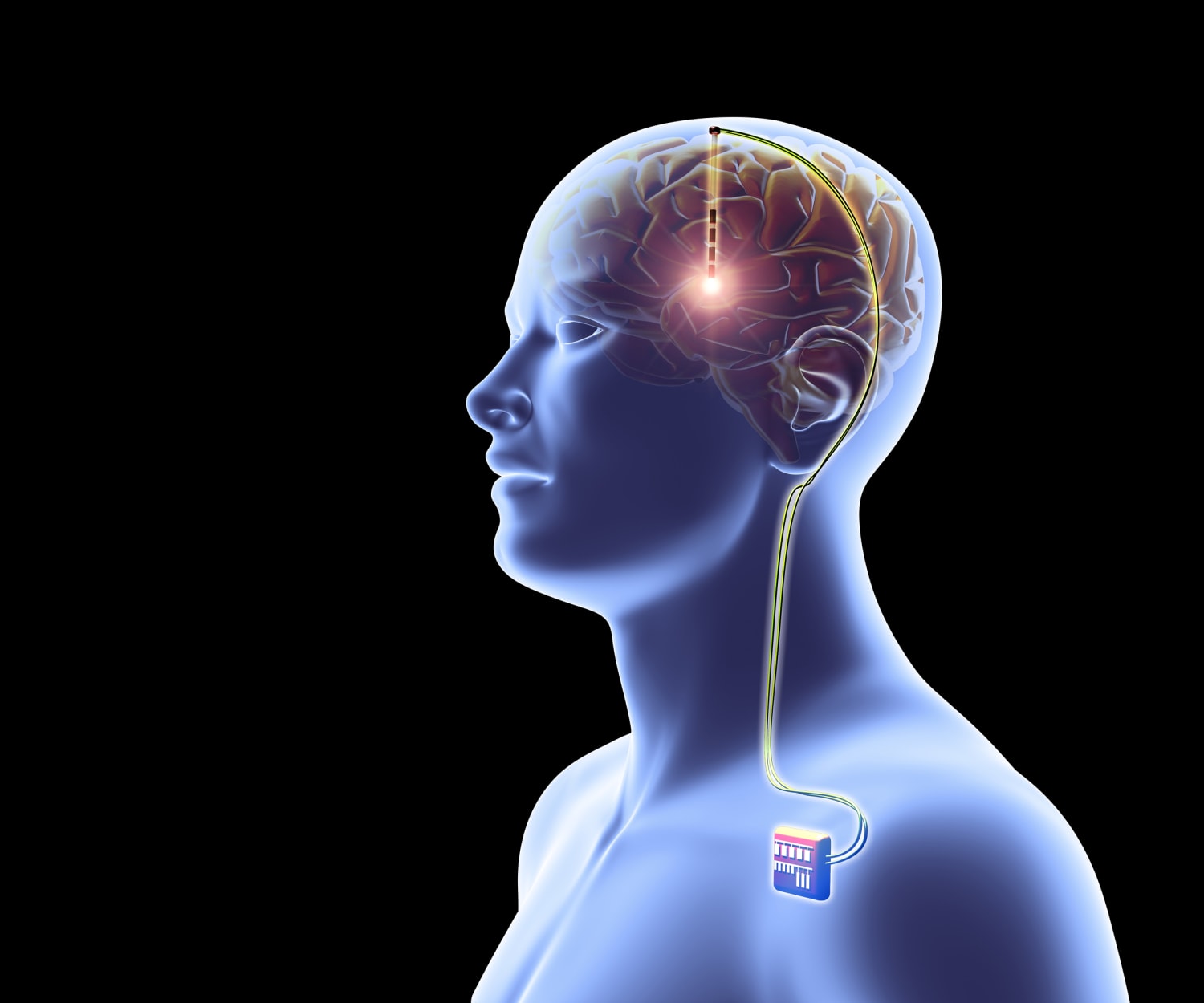
Doctors implant thin electrodes into targeted areas involved in movement.
A small pulse generator, usually placed under the skin near the chest, delivers electrical pulses.
For many people with Parkinson’s disease, essential tremor, or certain forms of dystonia, deep brain stimulation can significantly reduce symptoms when medications alone are not enough.
Scientists continue improving these systems to make stimulation more precise and adaptive.
Restoring Vision
Researchers are investigating whether brain chips could help certain people who have lost their vision.
Some experimental systems bypass damaged eyes entirely.
Instead of sending visual information through the normal pathway, cameras capture images and convert them into electrical signals.
These signals stimulate visual regions of the brain.
Although current technology does not restore normal vision, some experimental devices allow users to perceive simple patterns, light, or shapes.
Scientists hope future advances will produce richer visual experiences.
Helping Restore Hearing
Brain implants have already transformed hearing for many people.
Cochlear implants are among the most successful examples of neural interface technology.
Unlike brain chips placed inside the brain itself, cochlear implants stimulate the auditory nerve.
External microphones capture sound.
The device converts sound into electrical signals.
Electrodes stimulate the auditory nerve, allowing many people with severe hearing loss to perceive sound.
Although cochlear implants are not traditional brain chips, they demonstrate how neural interfaces can successfully restore lost sensory function.
Can Brain Chips Improve Memory?
Scientists are exploring whether brain stimulation might someday improve memory in certain medical conditions.
Early research has investigated stimulating brain regions involved in learning and memory.
Some studies suggest carefully timed stimulation may influence how memories are formed or recalled.
However, this area remains experimental.
Researchers emphasize that no currently approved brain chip can dramatically increase intelligence or provide instant knowledge.
The brain’s memory systems are extraordinarily complex, and much remains to be understood.
How Artificial Intelligence Makes Brain Chips Smarter
Artificial intelligence has become essential for modern brain-computer interfaces.
Raw brain signals are noisy and difficult to interpret.
Machine learning algorithms analyze enormous amounts of neural data to identify meaningful patterns.
As users continue interacting with the system, the algorithms become better at recognizing intended actions.
This continuous learning improves speed and accuracy.
Future advances in AI may allow brain chips to interpret increasingly complex neural activity while adapting automatically to changes in brain signals over time.
The Challenges Scientists Still Face
Although brain chips have achieved remarkable progress, important challenges remain.
The brain is an incredibly dynamic organ.
Neural activity changes constantly.
Electrodes may shift slightly over time.
Scar tissue can form around implanted devices, affecting signal quality.
Battery life, wireless communication, long-term durability, and surgical safety all require continuous improvement.
Researchers are also working to make implants smaller, more flexible, and more biocompatible so they interact more naturally with brain tissue.
Ethical Questions About Brain Chips
As brain chip technology advances, ethical questions become increasingly important.
Brain activity contains highly personal information.
Protecting privacy will be essential.
Researchers must ensure that neural data remains secure and is used only with informed consent.
Questions also arise about fairness, accessibility, and responsible use.
Could advanced brain technologies become available only to wealthy individuals?
How should governments regulate neural devices?
What rights should people have over their own brain data?
Scientists, ethicists, physicians, engineers, and policymakers are actively discussing these issues as the technology develops.
Are Brain Chips Safe?
Modern brain chip research follows strict medical and ethical standards.
Before any implanted device is tested in humans, it undergoes extensive laboratory testing and regulatory review.
Like any brain surgery, implantation carries risks, including infection, bleeding, or complications related to the procedure.
Researchers work continuously to reduce these risks through improved surgical techniques and safer implant designs.
Long-term safety remains an important area of ongoing study.
The Future of Brain Chips
The future of brain chips is both exciting and uncertain.
Scientists hope future devices will become smaller, more powerful, and capable of recording from many more neurons simultaneously.
Researchers envision systems that restore movement after paralysis, improve treatment for epilepsy and depression, help people recover from stroke, restore lost senses, and provide more natural communication for individuals with severe disabilities.
Some researchers are exploring whether future brain-computer interfaces could allow people to interact with computers, robots, or virtual environments more efficiently than ever before.
At the same time, scientists caution that many ambitious ideas remain experimental.
Developing safe, reliable, and practical brain chips requires years of careful research, clinical testing, and technological innovation.
Why Brain Chips Matter
Brain chips represent one of the most remarkable achievements at the intersection of neuroscience, engineering, medicine, and artificial intelligence. By translating the brain’s electrical activity into digital information, these tiny devices create entirely new ways for humans and computers to communicate.
Their greatest promise lies not in enhancing healthy brains but in restoring abilities lost through injury or disease. For people living with paralysis, severe speech impairment, Parkinson’s disease, or certain sensory disorders, brain chips offer hope for greater independence and improved quality of life.
Although many technical and ethical challenges remain, progress over the past few decades has been extraordinary. As scientists continue learning how the brain works and as electronics and artificial intelligence become more advanced, brain chips are likely to become increasingly capable, reliable, and medically valuable.
The human brain has always been one of science’s greatest mysteries. Brain chips are not unlocking every secret of the mind, but they are opening an unprecedented window into how billions of neurons work together to create movement, perception, communication, and thought. In doing so, they are helping transform ideas that once belonged to science fiction into technologies that are beginning to change real lives.