Imagine a computer so powerful that it can perform calculations faster than the human mind can comprehend. While an ordinary laptop can handle everyday tasks like browsing the internet, writing documents, or watching videos, some scientific problems are so enormous that they require machines capable of performing quadrillions of calculations every second. These extraordinary machines are known as supercomputers.
Supercomputers represent the pinnacle of computing technology. They are built not for casual use but for tackling some of the world’s most difficult scientific, engineering, and technological challenges. From predicting devastating hurricanes and discovering new medicines to simulating the birth of galaxies and training advanced artificial intelligence, supercomputers have become essential tools for modern science.
Although most people will never sit in front of a supercomputer, their lives are influenced by these remarkable machines every day. Weather forecasts, safer airplanes, improved medical treatments, and many of the technologies shaping the future have all benefited from the immense computational power of supercomputers.
Understanding What a Supercomputer Is
A supercomputer is an extremely powerful computer designed to process vast amounts of data and perform enormous numbers of calculations at exceptionally high speeds. Unlike personal computers, which are built to handle many different everyday tasks, supercomputers are optimized for solving highly complex mathematical and scientific problems that would take ordinary computers years—or even centuries—to complete.
The term “supercomputer” does not refer to a specific size or appearance. Instead, it describes a computer system that ranks among the fastest and most powerful in the world at a given time.
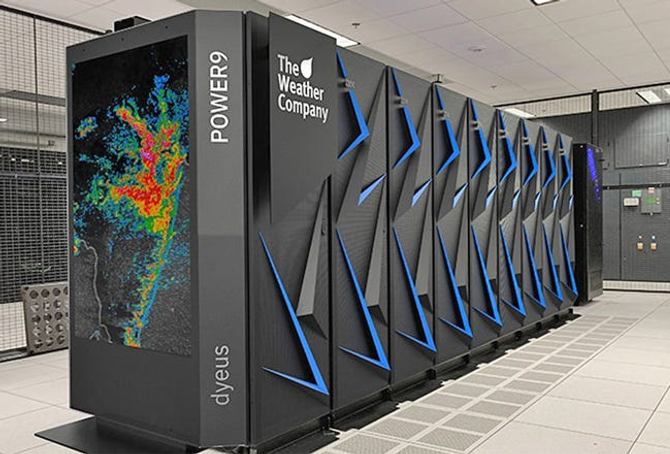
A modern supercomputer often fills an entire building or multiple rooms. Instead of containing just one processor, it consists of thousands or even millions of processors working together simultaneously.
This ability to divide enormous tasks into smaller pieces and solve them in parallel is what gives supercomputers their extraordinary speed.
How Supercomputers Differ from Ordinary Computers
At first glance, a supercomputer and a desktop computer may seem similar because both process information using electronic circuits. However, their capabilities are vastly different.
A home computer is designed to run applications one person uses at a time, such as word processing, gaming, video streaming, or web browsing. It typically contains a handful of processor cores and a modest amount of memory.
A supercomputer, on the other hand, combines tens of thousands—or even millions—of processor cores connected through incredibly fast communication networks. These processors work together as one giant computing system.
Instead of solving one problem after another, they solve many parts of the same problem simultaneously, dramatically reducing the time required for complex calculations.
For example, a weather simulation that might take decades on a typical computer can often be completed in just a few hours using a modern supercomputer.
The Meaning of Computational Power
The performance of a supercomputer is measured by how many calculations it can perform each second.
Scientists usually measure this performance in floating-point operations per second, commonly abbreviated as FLOPS.
A floating-point operation is a mathematical calculation involving decimal numbers, which are essential for scientific computing.
Computers have grown dramatically more powerful over time.
Early supercomputers measured performance in millions of calculations per second.
Later generations reached billions, then trillions.
Today’s most advanced supercomputers perform calculations in the exascale range, meaning they can execute more than one quintillion floating-point operations every second.
A quintillion is the number one followed by eighteen zeros.
This level of performance is almost impossible to visualize, yet it enables scientific discoveries that would otherwise remain beyond human reach.
How a Supercomputer Works
The incredible speed of a supercomputer comes from parallel computing.
Imagine trying to assemble a massive puzzle.
One person working alone might need several weeks.
If thousands of people each assemble different sections simultaneously, the puzzle can be completed much faster.
Supercomputers operate in a similar way.
Instead of assigning one processor to solve an entire problem, they divide the work among thousands of processors.
Each processor solves its assigned portion while constantly communicating with the others through high-speed networks.
Once every processor finishes its part, the results are combined into one final solution.
This cooperative approach allows supercomputers to solve problems of extraordinary complexity.
The Building Blocks of a Supercomputer
Although every supercomputer is unique, most share several essential components.
The processors perform calculations. Modern systems often combine traditional central processing units (CPUs) with highly parallel graphics processing units (GPUs). While GPUs were originally developed for rendering graphics, they are exceptionally effective at handling massive mathematical workloads.
Large amounts of memory allow supercomputers to store enormous datasets while calculations are in progress.
Ultra-fast storage systems enable scientists to read and write vast quantities of information without slowing computation.
High-speed communication networks connect every processor, allowing them to exchange data almost instantly.
Advanced cooling systems remove the tremendous heat generated during operation. Many supercomputers circulate chilled water through pipes, while others use sophisticated liquid-cooling technologies to maintain safe operating temperatures.
Without efficient cooling, the hardware would quickly overheat.
Why Supercomputers Need So Many Processors
Many scientific problems involve billions or trillions of individual calculations.
A single processor, regardless of its speed, would require far too much time.
Instead, supercomputers use parallel processing.
Each processor performs calculations independently while coordinating with others.
For example, when modeling Earth’s climate, different processors may simultaneously calculate atmospheric conditions, ocean currents, cloud formation, ice behavior, and land temperatures.
All these pieces interact continuously.
The processors exchange updated information many times every second until the entire simulation accurately represents Earth’s climate.
The History of Supercomputers
The story of supercomputers began during the second half of the twentieth century.
As science became increasingly dependent on computation, researchers needed machines far more powerful than conventional computers.
One of the pioneers of supercomputing was Seymour Cray, often called the “father of supercomputing.”
During the 1960s and 1970s, Cray designed groundbreaking systems that dramatically increased computational speed.
His innovations introduced new methods for processor design, memory organization, and cooling technology.
Since then, supercomputers have evolved at an astonishing pace.
Each new generation has become significantly faster while incorporating more processors, greater memory capacity, and improved energy efficiency.
Today’s supercomputers are millions of times more powerful than those built only a few decades ago.
Why Scientists Need Supercomputers
Many scientific questions cannot be answered through observation alone.
Instead, scientists build mathematical models describing natural processes.
These models often contain billions of equations that must be solved repeatedly.
For example, predicting tomorrow’s weather requires modeling atmospheric pressure, wind, humidity, cloud formation, solar radiation, and countless other variables across the entire planet.
Each calculation influences many others.
Without supercomputers, producing accurate forecasts within useful timeframes would be impossible.
The same principle applies to astronomy, biology, chemistry, engineering, economics, and numerous other disciplines.
Supercomputers and Weather Forecasting
One of the most familiar applications of supercomputers is weather prediction.
Earth’s atmosphere is extraordinarily complex.
Tiny changes in one location can eventually influence weather thousands of kilometers away.
Meteorologists collect data from satellites, weather balloons, aircraft, ocean buoys, and ground stations.
Supercomputers process these observations and simulate atmospheric behavior using sophisticated mathematical models.
Because they perform trillions of calculations every second, they can predict storms, hurricanes, heat waves, snowfall, and rainfall with increasing accuracy.
Improved forecasts save lives by providing earlier warnings of dangerous weather.
Climate Change Research
Climate differs from weather because it describes long-term patterns rather than daily conditions.
Understanding climate change requires simulations spanning decades or centuries.
Scientists use supercomputers to investigate how greenhouse gases influence Earth’s atmosphere, oceans, glaciers, forests, and ecosystems.
These simulations help researchers evaluate future scenarios, assess environmental risks, and guide international climate policies.
Without supercomputers, such comprehensive analyses would be practically impossible.
Exploring the Universe
Astronomers also rely heavily on supercomputers.
The universe contains billions of galaxies, each containing billions of stars.
Understanding how galaxies form and evolve requires enormous simulations of gravity, gas dynamics, radiation, and dark matter.
Supercomputers recreate these processes virtually, allowing scientists to investigate cosmic evolution over billions of years.
They also help analyze enormous datasets collected by modern telescopes, enabling discoveries of distant galaxies, black holes, exoplanets, and other celestial phenomena.
Supercomputers in Medicine
Healthcare has become increasingly dependent on computational science.
Researchers use supercomputers to study how proteins fold, how viruses infect cells, and how potential medicines interact with biological molecules.
Instead of testing millions of chemical compounds entirely through laboratory experiments, scientists can first simulate many interactions computationally.
This dramatically accelerates drug discovery while reducing costs.
Supercomputers also assist in cancer research, personalized medicine, medical imaging, and understanding genetic diseases.
Their ability to process massive biological datasets has transformed biomedical research.
Artificial Intelligence and Supercomputers
Artificial intelligence requires enormous computational resources.
Modern AI systems learn by analyzing gigantic datasets containing billions or even trillions of examples.
Training advanced neural networks involves repeated mathematical calculations on vast numbers of parameters.
Supercomputers equipped with thousands of powerful GPUs significantly reduce the time required for AI training.
Many breakthroughs in natural language processing, computer vision, robotics, and scientific AI have depended on supercomputing infrastructure.
As AI models continue growing, supercomputers remain essential for their development.
Engineering Better Machines
Engineers use supercomputers to design safer and more efficient products before building physical prototypes.
Aircraft manufacturers simulate airflow around wings.
Automobile companies study crash safety.
Civil engineers evaluate bridges and skyscrapers under earthquake or wind conditions.
Energy companies optimize wind turbines and power systems.
Because virtual testing is often faster and less expensive than building multiple prototypes, supercomputers save both time and resources.
Nuclear Physics and National Security
Many governments use supercomputers to model nuclear reactions.
Instead of relying solely on physical testing, scientists perform highly detailed simulations that improve understanding while supporting international agreements limiting nuclear testing.
Supercomputers also contribute to cybersecurity, cryptography, and national defense by analyzing enormous amounts of data and evaluating complex security scenarios.
Understanding Earth
Our planet is constantly changing.
Earthquakes, volcanic eruptions, ocean currents, glaciers, and shifting tectonic plates all involve complex physical processes.
Geophysicists use supercomputers to simulate Earth’s interior, helping improve understanding of natural hazards and geological evolution.
Although predicting earthquakes remains extremely challenging, computational models continue improving scientists’ understanding of Earth’s dynamic behavior.
Discovering New Materials
Modern technology depends on advanced materials.
Scientists use supercomputers to investigate atomic interactions before creating new materials in laboratories.
They search for stronger metals, lighter aircraft materials, better batteries, more efficient solar cells, improved semiconductors, and superconductors capable of transmitting electricity with little or no resistance.
Computational materials science dramatically accelerates innovation.
Energy Consumption
One challenge facing supercomputers is their enormous energy demand.
Operating millions of processors requires vast amounts of electricity.
Large supercomputing centers may consume as much power as small towns.
Engineers continuously work to improve energy efficiency by developing faster processors, smarter software, and more effective cooling systems.
Reducing energy consumption has become one of the most important goals in modern supercomputer design.
Cooling the World’s Fastest Computers
Powerful processors generate significant heat.
If temperatures become too high, electronic components may fail.
For this reason, cooling systems are just as important as processors themselves.
Some supercomputers use chilled air.
Others circulate water directly through cooling pipes.
The newest systems increasingly rely on liquid cooling because liquids remove heat much more efficiently than air.
Efficient cooling allows processors to operate continuously without overheating.
The World’s Fastest Supercomputers
Every few years, new supercomputers break previous performance records.
These machines are usually installed at national laboratories, research universities, and scientific computing centers.
Their performance is regularly evaluated using internationally recognized benchmarks that compare computational speed.
Reaching the top of global performance rankings represents years of engineering innovation involving processors, networking, memory, storage, and software.
The race to build faster supercomputers continues as countries invest heavily in scientific computing.
The Rise of Exascale Computing
For many years, achieving exascale computing was considered one of computer science’s greatest challenges.
Exascale systems perform more than one quintillion floating-point operations every second.
Achieving this milestone required breakthroughs in processor architecture, memory technology, networking, software optimization, and energy efficiency.
Exascale computing enables simulations with unprecedented detail, opening entirely new possibilities in medicine, physics, astronomy, climate science, and artificial intelligence.
It represents one of the greatest achievements in modern computing.
Challenges Facing Supercomputers
Despite their extraordinary capabilities, supercomputers face important challenges.
Building them requires enormous financial investment.
Operating them consumes substantial electricity.
Programming thousands of processors efficiently is highly complex.
Moving massive amounts of data between processors without delays remains a significant engineering challenge.
As processors become faster, designing software capable of fully utilizing their capabilities becomes increasingly difficult.
Researchers continue developing new programming techniques to overcome these limitations.
The Future of Supercomputers
The future of supercomputing is remarkably exciting.
Scientists are developing faster processors, more energy-efficient architectures, and improved methods for parallel computation.
Artificial intelligence is becoming increasingly integrated into scientific simulations.
Researchers are also exploring new computing technologies that could eventually surpass today’s machines.
Among the most promising possibilities is quantum computing, which uses the principles of quantum mechanics to solve certain types of problems much more efficiently than conventional computers. Although quantum computers are still in an early stage of development and are not expected to replace traditional supercomputers for most tasks, future high-performance computing systems may combine both technologies to tackle an even broader range of scientific challenges.
Advances in networking, memory, storage, and specialized processors will continue expanding the boundaries of what supercomputers can achieve.
Why Supercomputers Matter
Supercomputers are far more than exceptionally fast machines. They are powerful scientific instruments that enable humanity to explore questions beyond the reach of ordinary computers. They help scientists understand Earth’s climate, predict severe weather, discover new medicines, design safer technologies, explore the universe, advance artificial intelligence, and solve mathematical problems of extraordinary complexity.
Many of the scientific breakthroughs that shape modern society begin inside these vast computing systems. Every improvement in their speed and efficiency allows researchers to ask deeper questions and investigate phenomena that were previously impossible to study.
As humanity confronts challenges such as climate change, emerging diseases, sustainable energy, food security, and the exploration of space, supercomputers will remain among our most valuable tools. They transform unimaginable numbers into meaningful knowledge, turning raw calculations into discoveries that improve lives and expand our understanding of the universe. In doing so, they demonstrate that the greatest power of computing is not merely speed, but its ability to help humanity uncover the secrets of nature and solve problems that once seemed beyond our reach.