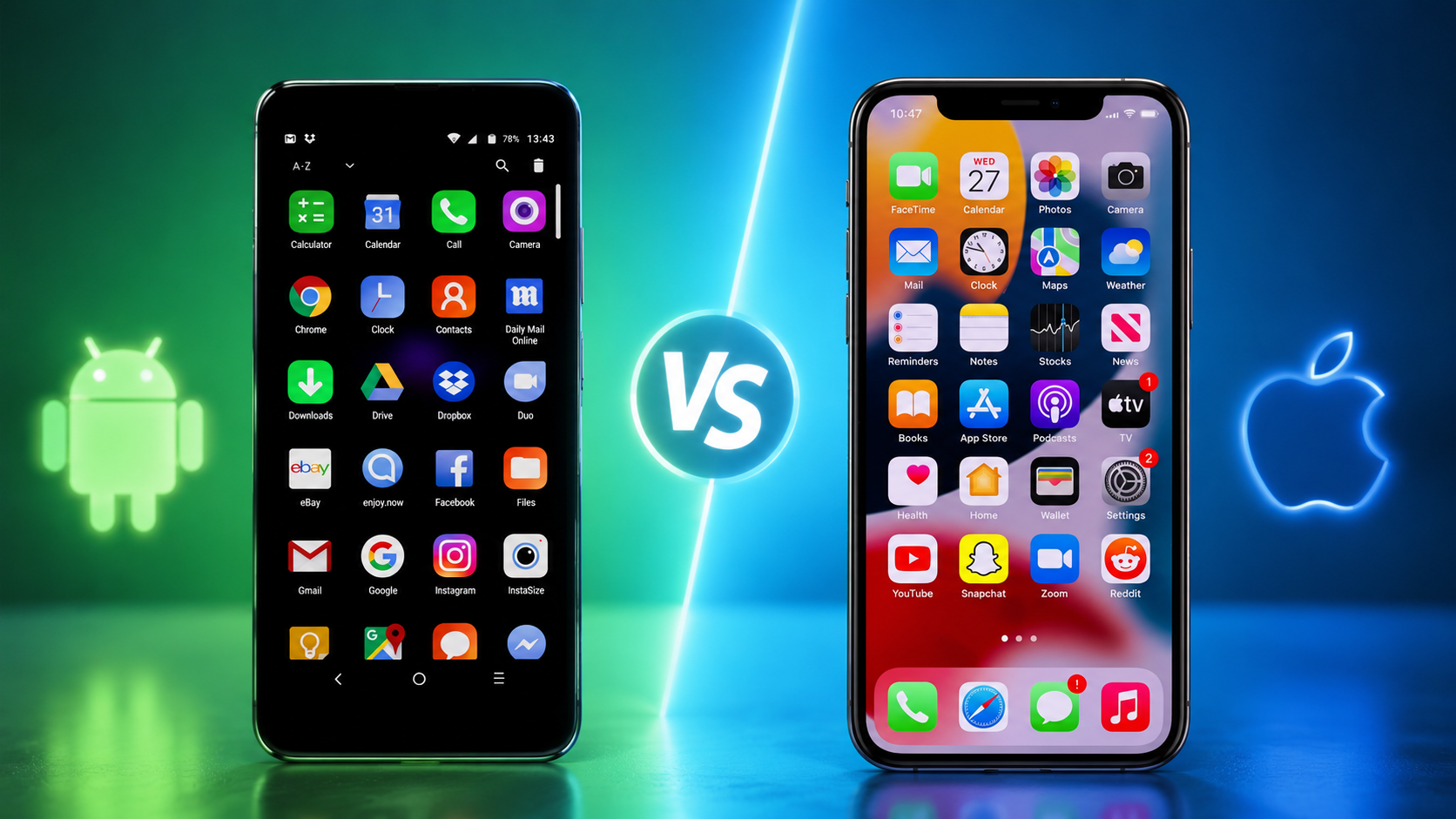
Few technology debates have lasted as long—or become as personal—as the comparison between Android and iPhone. Around the world, billions of people rely on smartphones to communicate, work, learn, create, navigate, and stay entertained. For many users, choosing between Android and iPhone is not simply about buying a new device. It is about selecting an ecosystem that may become part of everyday life for years.
Both platforms have transformed the way people interact with technology. They allow us to capture precious memories, connect with loved ones across continents, explore new places, manage finances, attend virtual meetings, and access almost the entire world’s knowledge from the palm of our hands.
Despite serving the same purpose, Android and iPhone offer noticeably different experiences. Their philosophies, designs, customization options, security approaches, software updates, and hardware choices reflect different priorities. Neither platform is objectively perfect for everyone. Instead, each excels in different areas depending on what matters most to the user.
Understanding these differences can make choosing your next smartphone much easier.
What Is Android?
Android is a mobile operating system developed primarily by Google. It is based on the Linux kernel and is designed to run on a wide variety of smartphones, tablets, smartwatches, televisions, and other connected devices.
Unlike iPhone, Android is not limited to one manufacturer. Many companies produce Android smartphones, including Samsung, Google, Xiaomi, OnePlus, Motorola, OPPO, vivo, Sony, ASUS, and others.
This diversity gives consumers an enormous range of choices. Android phones are available in nearly every price category, from affordable entry-level models to premium flagship devices with cutting-edge technology.
Because multiple manufacturers develop Android hardware, users can select devices with different screen sizes, camera systems, processors, battery capacities, and designs according to their needs and budgets.
What Is an iPhone?
An iPhone is Apple’s smartphone, powered by Apple’s own operating system known as iOS.
Unlike Android, Apple designs both the hardware and the software. This close integration allows Apple to optimize performance, battery efficiency, and user experience in ways that are difficult to achieve across hundreds of different hardware configurations.
Apple releases only a limited number of iPhone models each year, making the product lineup simpler and easier to understand.
This integrated approach has become one of the defining characteristics of the iPhone experience.
A Brief History of Smartphone Evolution
Modern smartphones owe much of their success to these two operating systems.
Apple introduced the first iPhone in 2007, fundamentally changing how people interacted with mobile devices. Instead of relying on physical keyboards and styluses, the iPhone popularized the modern multi-touch interface.
Google launched Android shortly afterward, providing manufacturers with a flexible operating system that quickly spread across the global smartphone market.
Over time, competition between Android and iPhone accelerated innovation. Features like high-resolution displays, advanced cameras, fingerprint sensors, facial recognition, fast charging, AI-powered assistants, and mobile payment systems evolved rapidly because each platform continually sought to improve.
Today, nearly every smartphone sold worldwide runs either Android or iOS.
Design Philosophy
One of the biggest differences between Android and iPhone lies in their overall philosophy.
Apple focuses heavily on simplicity and consistency. The company carefully controls nearly every aspect of the user experience. Menus, gestures, animations, and settings are designed to work similarly across all supported iPhones.
Android emphasizes flexibility and personalization. Since different manufacturers produce Android devices, users often have greater freedom to customize how their phones look and function.
Neither approach is inherently better.
Some users appreciate Apple’s streamlined experience.
Others enjoy Android’s flexibility.
The best choice depends on personal preference.
Hardware Choices
Android offers unmatched hardware variety.
You can purchase compact phones, foldable phones, gaming phones, ultra-premium camera phones, rugged phones designed for outdoor work, or budget-friendly models for everyday use.
Some Android phones include expandable storage using microSD cards.
Others feature extremely fast charging technologies capable of restoring large batteries in under an hour.
Some even include stylus support or folding displays.
Apple, on the other hand, offers fewer hardware options.
However, Apple’s smaller lineup allows each device to receive significant engineering attention. Every iPhone model is designed to integrate closely with iOS and Apple’s custom processors.
For buyers who prefer simplicity, fewer choices can actually make purchasing easier.
Performance
Modern smartphones are incredibly powerful.
Whether using Android or iPhone, today’s devices can handle web browsing, gaming, photography, video editing, navigation, streaming, and productivity tasks with ease.
Apple designs its own processors, known as Apple Silicon. These chips consistently rank among the fastest smartphone processors in scientific benchmark tests.
Google, Qualcomm, MediaTek, Samsung, and other companies develop processors for Android devices.
High-end Android phones often deliver outstanding performance that rivals or exceeds many computers in specific tasks.
In everyday use, both flagship Android phones and recent iPhones perform exceptionally well.
Performance differences usually become noticeable only during demanding activities such as professional video editing, advanced gaming, or intensive AI applications.
Software Experience
Software shapes how users interact with their phones every day.
iOS prioritizes consistency.
Menus generally appear similar across different iPhones.
Apps behave predictably.
Animations remain smooth.
Settings are organized in a relatively standardized way.
Android provides greater flexibility.
Users can replace default applications, install custom launchers, redesign home screens, add interactive widgets, and personalize nearly every aspect of the interface.
Some manufacturers also include their own unique software features, creating experiences that differ slightly from Google’s standard Android version.
Customization
Customization is one of Android’s greatest strengths.
Users can change icon packs, themes, fonts, lock screens, widgets, navigation methods, keyboard apps, default browsers, messaging apps, and much more.
Many Android devices even support advanced automation through built-in tools or third-party applications.
Although Apple has significantly expanded customization in recent years by introducing widgets, lock screen personalization, and home screen improvements, iPhones generally remain more restricted than Android devices.
For users who enjoy tailoring technology to their preferences, Android usually offers greater flexibility.
App Stores
Both platforms provide millions of applications.
Android primarily uses Google Play, although some manufacturers support additional app stores.
iPhones rely on Apple’s App Store.
Both companies review applications before making them widely available, although their review processes differ.
Apple generally maintains stricter app approval standards.
Google also screens applications but allows somewhat greater flexibility.
For most users, nearly all major applications—including messaging, social media, banking, navigation, education, productivity, streaming, and gaming apps—are available on both platforms.
Security
Security is a critical consideration when choosing a smartphone.
Both Android and iPhone include advanced security technologies.
Modern smartphones use hardware encryption, secure boot systems, biometric authentication, app permissions, and continuous security improvements.
Apple’s tightly controlled ecosystem reduces certain security risks because hardware and software are developed together.
Google also invests heavily in Android security through Google Play Protect, regular security updates, sandboxing, and built-in malware detection.
However, because Android devices vary widely across manufacturers, security update schedules may differ depending on the company producing the phone.
Regardless of platform, keeping software updated, using strong passwords, enabling biometric authentication, and downloading apps only from trusted sources remain among the most effective ways to improve smartphone security.
Privacy
Privacy has become increasingly important.
Apple strongly emphasizes user privacy, offering features that limit app tracking, provide transparency about data collection, and give users greater control over permissions.
Google also provides privacy controls, including permission management, privacy dashboards, and security settings that help users understand how apps access personal information.
Both companies continue expanding privacy protections as digital security becomes more important worldwide.
Software Updates
Software updates improve security, add new features, and fix bugs.
Apple generally supports iPhones with major software updates for many years after release.
Since Apple controls both hardware and software, updates typically become available simultaneously for supported devices.
Android updates vary by manufacturer.
Google’s own Pixel phones often receive updates quickly.
Other manufacturers may require additional testing before releasing updates to their devices.
Fortunately, update support for premium Android phones has improved dramatically in recent years, with several manufacturers now offering many years of software and security updates.
Cameras
Smartphone photography has advanced enormously.
Both Android and iPhone produce exceptional photographs.
Image quality depends not only on camera hardware but also on computational photography, which uses sophisticated software and artificial intelligence to improve images.
Some Android manufacturers emphasize high-resolution sensors, optical zoom capabilities, astrophotography, or manual photography controls.
Apple focuses on consistent image processing, accurate colors, reliable video recording, and smooth integration across camera modes.
Professional reviewers often find that flagship devices from both platforms produce excellent results, with differences becoming more noticeable under specific lighting conditions or photography styles.
Ultimately, the best camera is often the one that matches your creative preferences.
Battery Life
Battery performance depends on numerous scientific factors, including processor efficiency, display technology, software optimization, battery capacity, and user behavior.
Modern Android phones often include very large batteries and extremely fast charging systems.
Some flagship Android devices can recharge from nearly empty to most of their capacity in well under an hour.
Apple generally prioritizes power efficiency through tight hardware-software integration.
Although iPhones sometimes have smaller batteries than competing Android devices, careful optimization often allows them to achieve competitive battery life.
Actual battery performance varies considerably depending on screen brightness, network usage, gaming, video streaming, and background applications.
Ecosystem Integration
One area where Apple excels is ecosystem integration.
If you own multiple Apple devices, such as a Mac, iPad, Apple Watch, or AirPods, they work together seamlessly.
Features like file sharing, synchronized messages, phone calls on other devices, clipboard sharing, and device continuity create a unified experience.
Google also offers a growing ecosystem including Pixel devices, Wear OS smartwatches, Chromebooks, tablets, and smart home products.
Many Android manufacturers have developed their own connected ecosystems as well.
Samsung, for example, offers smartphones, tablets, watches, earbuds, televisions, and laptops designed to work together.
The best ecosystem often depends on which other devices you already own.
Artificial Intelligence
Artificial intelligence is becoming one of the most exciting developments in smartphones.
Both Android and iPhone increasingly use AI to improve photography, voice recognition, language translation, battery optimization, accessibility, search, writing assistance, and productivity.
Many AI features operate directly on the device, helping protect user privacy while reducing the need for internet connectivity.
As smartphone processors become more powerful, AI capabilities will likely continue expanding across both platforms.
Gaming
Modern smartphones are capable gaming devices.
Flagship Android phones often include advanced cooling systems, high refresh-rate displays, gaming-specific software modes, and customizable performance settings.
iPhones benefit from Apple’s powerful processors and strong optimization, allowing many demanding games to run smoothly.
Game availability is excellent on both platforms, and cloud gaming services continue expanding smartphone gaming possibilities.
Accessibility
Accessibility ensures that smartphones remain usable for people with different physical, sensory, or cognitive needs.
Both Android and iPhone include extensive accessibility features.
These include screen readers, voice control, magnification, hearing support, speech recognition, captioning, color correction, switch access, and many other assistive technologies.
Continuous improvements in accessibility have made smartphones valuable tools for millions of people worldwide.
Price and Value
One of Android’s greatest advantages is price diversity.
Android phones exist at nearly every budget level.
Whether someone needs a basic smartphone for communication or a premium flagship with advanced features, Android offers many options.
Apple primarily focuses on mid-range and premium devices, although older iPhone models often remain available at lower prices.
Value depends on more than purchase price.
Software support, durability, resale value, repair costs, accessories, and long-term performance all contribute to overall ownership experience.
Reliability
Both Android and iPhone have matured significantly.
Modern smartphones from reputable manufacturers are generally reliable, durable, and capable of lasting for many years with proper care.
Using protective cases, keeping software updated, avoiding extreme temperatures, and maintaining battery health can substantially extend the lifespan of either platform.
Which One Is Better?
There is no universally correct answer.
Android offers exceptional flexibility, extensive hardware choices, competitive pricing, and unmatched customization.
iPhone provides outstanding hardware-software integration, consistent software updates, a polished user experience, and seamless integration with Apple’s broader ecosystem.
The best smartphone is not necessarily the one with the highest benchmark scores or the most expensive hardware. It is the one that fits your lifestyle, preferences, budget, and daily needs.
Someone who values customization and variety may prefer Android.
Someone who values simplicity and tight ecosystem integration may prefer iPhone.
Both choices are scientifically advanced pieces of technology capable of handling nearly every task modern users require.
The Future of Smartphones
The competition between Android and iPhone continues to drive innovation across the technology industry.
Future smartphones are expected to feature even more powerful artificial intelligence, improved battery technology, faster wireless communication, enhanced satellite connectivity, better computational photography, stronger security protections, and increasingly immersive augmented reality experiences.
Foldable displays, advanced on-device AI models, improved energy efficiency, and more sustainable manufacturing practices are also likely to shape the next generation of smartphones.
Regardless of which platform evolves faster in specific areas, consumers benefit from the continuous competition that encourages both Android and Apple to improve their products.
Conclusion
The Android versus iPhone debate is unlikely to end anytime soon because both platforms have earned the trust of millions of users around the world. Each represents a different vision of what a smartphone should be. Android embraces openness, flexibility, and choice, while iPhone emphasizes integration, simplicity, and consistency.
Rather than asking which platform is objectively better, a more useful question is which one better supports your daily life. A smartphone is a tool you use countless times each day, and the right choice is the one that feels natural, reliable, and enjoyable every time you pick it up.
In the end, whether you choose Android or iPhone, you are carrying one of the most remarkable technological achievements ever created—a powerful computer, communication device, camera, navigation system, learning platform, and creative tool that fits comfortably in your pocket. Both platforms continue to push the boundaries of science and engineering, making our connected world smarter, faster, and more capable with every new generation.