Imagine a world made of ice and rock, quietly orbiting the Sun billions of miles from Earth. It is round like a planet, has mountains, valleys, frozen plains, and perhaps even hidden oceans beneath its surface. Yet, despite looking so much like a planet, scientists call it a dwarf planet.
Why?
What makes one world a planet while another becomes a dwarf planet? The answer has less to do with size than many people think. It is a fascinating story of discovery, scientific debate, and our ever-growing understanding of the Solar System.
Today, dwarf planets are among the most intriguing objects in space. They are ancient worlds that preserve clues about how our Solar System formed more than 4.5 billion years ago. Some may even have conditions that could support simple forms of life deep beneath icy crusts.
Understanding dwarf planets opens a window into one of the greatest adventures in astronomy—the search to understand our cosmic neighborhood.
The Definition of a Dwarf Planet
A dwarf planet is a celestial body that orbits the Sun and is large enough for its own gravity to pull it into a nearly round shape, but it has not cleared the neighborhood around its orbit of other objects.
This definition was officially adopted in 2006 by the International Astronomical Union (IAU), the organization responsible for naming and classifying astronomical objects.
According to the IAU, a dwarf planet must meet several important conditions.
It must orbit the Sun directly rather than another planet.
It must have enough mass for gravity to shape it into a nearly spherical form, a condition known as hydrostatic equilibrium.
It must not be a moon.
Finally, unlike the eight major planets, it has not become gravitationally dominant in its orbital region. Instead, it shares its path around the Sun with many other objects.
Although the name includes the word “planet,” a dwarf planet is officially considered a separate category of object rather than one of the Solar System’s eight planets.
Why Are They Called “Dwarf” Planets?
The word “dwarf” can be misleading.
Many people assume a dwarf planet is simply a very small planet. However, the distinction is not based mainly on size.
Some moons are actually larger than certain dwarf planets.
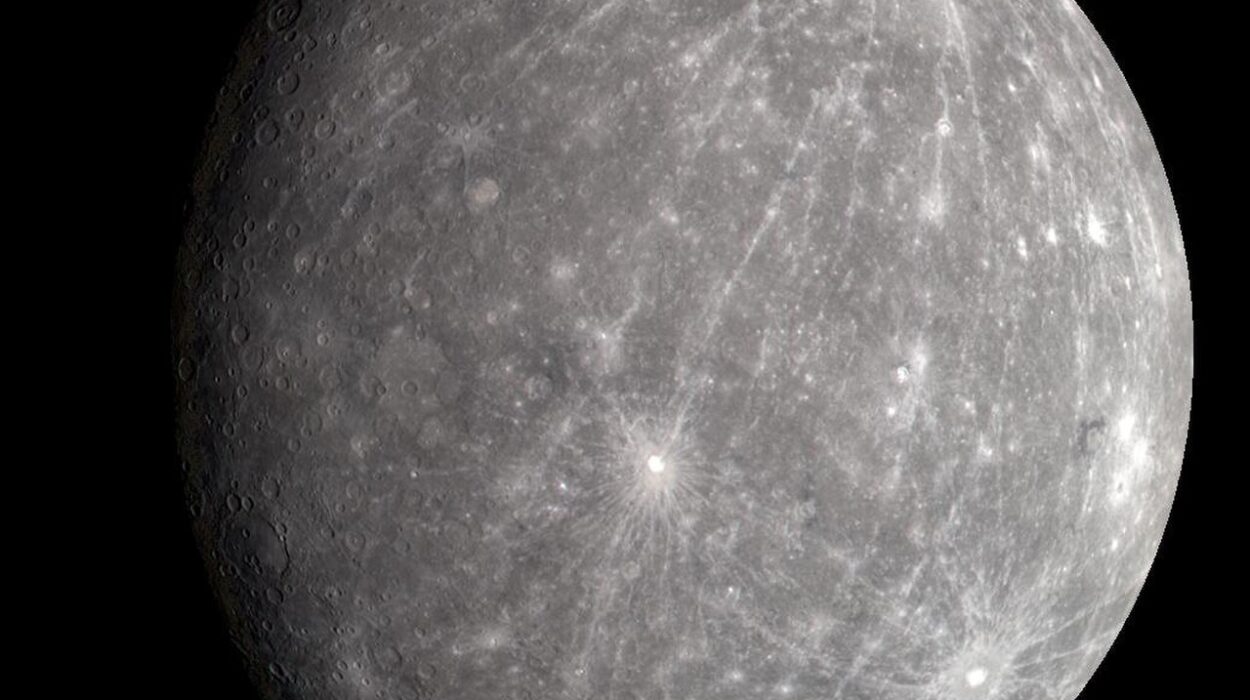
For example, Ganymede, the largest moon of Jupiter, is larger than Mercury. Titan, Saturn’s largest moon, is also bigger than Mercury. Yet neither is considered a planet because they orbit planets rather than the Sun.
The key difference between planets and dwarf planets lies in their gravitational influence.
The eight major planets have become dominant objects in their orbital regions. Over billions of years, they either pulled nearby material into themselves, captured it as moons, or scattered it elsewhere through gravitational interactions.
Dwarf planets have not done this. They continue to share their orbital neighborhoods with countless asteroids, icy bodies, or other small objects.
The Discovery of Dwarf Planets
The story of dwarf planets begins long before the term even existed.
In 1801, Italian astronomer Giuseppe Piazzi discovered Ceres between Mars and Jupiter. At first, astronomers celebrated it as a new planet.
Soon afterward, however, many more similar objects were discovered in the same region, now known as the asteroid belt. Scientists realized Ceres was just one member of a vast population of rocky bodies rather than a lone planet.
For more than a century, Ceres was classified as an asteroid.
Then came another dramatic discovery.
In 1930, American astronomer Clyde Tombaugh discovered Pluto, which was immediately recognized as the ninth planet.
For decades, generations of students learned that the Solar System had nine planets.
But beginning in the 1990s, astronomers discovered many icy worlds beyond Neptune in a region called the Kuiper Belt. Some of these objects were surprisingly large.
Then, in 2005, astronomers announced the discovery of Eris, an object that appeared to be comparable in size to Pluto and was even thought at first to be slightly larger.
This raised an important question.
Should Eris become the tenth planet?
Or should Pluto be reclassified?
To resolve the growing confusion, the International Astronomical Union created the modern definition of planets and introduced the entirely new category of dwarf planets.
Pluto became the most famous member of this new class.
The Five Officially Recognized Dwarf Planets
Currently, the International Astronomical Union officially recognizes five dwarf planets.
They are Ceres, Pluto, Haumea, Makemake, and Eris.
Each one is unique, and each tells a different story about the Solar System.
Ceres
Ceres is the only officially recognized dwarf planet located in the inner Solar System.
It orbits within the asteroid belt between Mars and Jupiter.
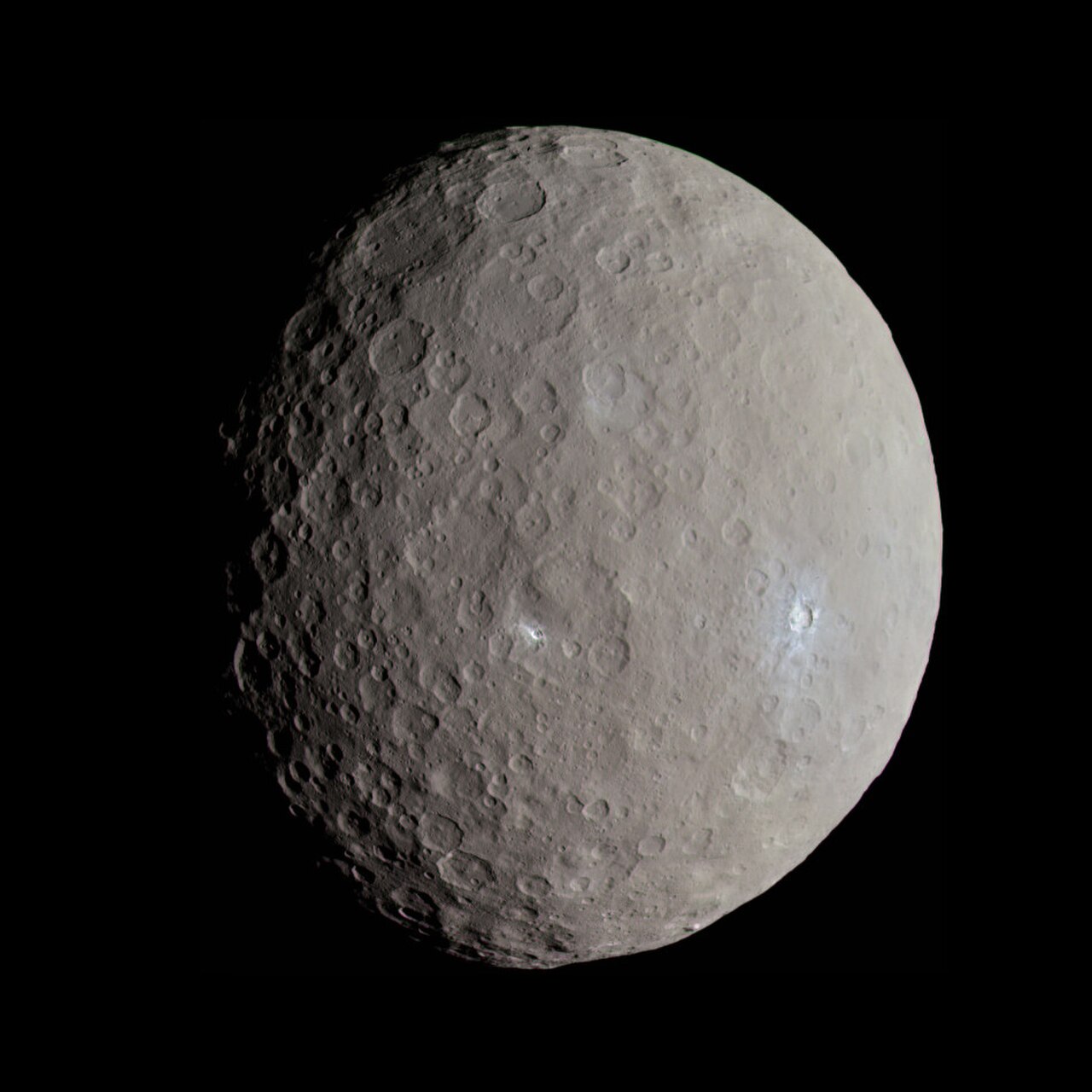
With a diameter of about 940 kilometers (584 miles), Ceres is the largest object in the asteroid belt, containing roughly one-third of the belt’s total mass.
Although much smaller than Earth’s Moon, Ceres is surprisingly complex.
NASA’s Dawn spacecraft visited Ceres between 2015 and 2018, revealing a fascinating world with bright salt deposits, towering mountains, impact craters, and evidence that it once contained—and may still contain—large amounts of water beneath its surface.
Scientists believe Ceres may even have a deep reservoir of salty liquid beneath its icy crust.
Pluto
Pluto is undoubtedly the world’s most famous dwarf planet.
It orbits the Sun in the distant Kuiper Belt, taking approximately 248 Earth years to complete one orbit.
Although Pluto has a diameter of only about 2,377 kilometers (1,477 miles), it possesses an astonishingly diverse landscape.
In 2015, NASA’s New Horizons spacecraft transformed our understanding of Pluto.
Instead of finding a frozen, inactive world, scientists discovered towering mountains made of water ice, enormous nitrogen-ice glaciers, vast plains, haze-filled skies, and evidence of active geological processes.
One of Pluto’s most iconic features is the heart-shaped region called Tombaugh Regio, named after its discoverer.
Some researchers also suspect Pluto may hide a liquid ocean beneath its icy shell.
Haumea
Haumea is one of the most unusual objects in the Solar System.
Unlike nearly spherical planets, Haumea has an elongated, football-like shape because it rotates extraordinarily fast.
One complete rotation takes less than four hours, making it one of the fastest-spinning large objects known.
Haumea is composed mostly of rock covered by a thin layer of crystalline water ice.
It also has two known moons and a faint ring, making it one of the few ringed objects in the Solar System.
Makemake
Makemake resides in the Kuiper Belt beyond Neptune.
It is slightly smaller than Pluto but remains one of the largest known objects in the outer Solar System.
Its surface is covered with frozen methane, ethane, and other ices, giving it a reddish appearance.
Makemake appears much less active than Pluto and has an extremely thin atmosphere that likely forms only when sunlight warms its icy surface during parts of its long orbit.
It also has one known moon.
Eris
Eris played a central role in redefining what a planet is.
Located in the scattered disk, a distant region beyond the Kuiper Belt, Eris follows a highly elongated orbit that carries it far beyond Pluto for much of its journey around the Sun.
Eris is almost the same size as Pluto but is significantly more massive because it is denser.
Its bright surface reflects most of the sunlight that reaches it, making it one of the most reflective large bodies in the Solar System.
Eris has one known moon named Dysnomia.
Could There Be More Dwarf Planets?
Almost certainly.
Astronomers have discovered hundreds of large icy objects beyond Neptune.
Many of them appear large enough to become nearly spherical, suggesting they may qualify as dwarf planets.
Several candidates, including Sedna, Orcus, Quaoar, Gonggong, and Salacia, are actively studied.
Because these distant worlds are incredibly far away and difficult to observe, scientists continue collecting data to determine whether they meet all the requirements for official classification.
Some researchers estimate that the outer Solar System may contain dozens or even hundreds of dwarf planets waiting to be confirmed.
Where Are Dwarf Planets Found?
Dwarf planets are found in different parts of the Solar System.
Ceres occupies the asteroid belt.
Pluto, Haumea, and Makemake reside in the Kuiper Belt, a vast region beyond Neptune filled with icy remnants from the Solar System’s formation.
Eris travels through the scattered disk, where many objects follow highly stretched orbits.
These distant regions contain countless frozen worlds that have changed very little over billions of years, making them valuable records of the Solar System’s earliest history.
How Do Dwarf Planets Form?
Scientists believe dwarf planets formed alongside the major planets about 4.6 billion years ago.
As the young Sun formed, a massive disk of gas and dust surrounded it.
Tiny particles collided and stuck together, gradually forming larger bodies called planetesimals.
Some planetesimals continued growing into full-sized planets.
Others remained relatively small because nearby giant planets disrupted their growth or because they simply lacked enough material.
These leftover worlds became today’s dwarf planets, preserving conditions that existed during the birth of the Solar System.
Do Dwarf Planets Have Atmospheres?
Some do.
Pluto has a thin atmosphere made primarily of nitrogen, along with smaller amounts of methane and carbon monoxide.
As Pluto moves closer to the Sun, some surface ice sublimates directly into gas, temporarily thickening its atmosphere.
When Pluto moves farther away, much of this atmosphere freezes back onto the surface.
Makemake may also develop a temporary atmosphere under favorable conditions.
Ceres possesses an extremely tenuous exosphere, with occasional detections of water vapor associated with surface or subsurface processes.
Most dwarf planets, however, have little or no substantial atmosphere.
Do Dwarf Planets Have Moons?
Several dwarf planets have natural satellites.
Pluto has five known moons.
Its largest moon, Charon, is so large compared with Pluto that the two bodies orbit a point in space located outside Pluto itself. Many scientists describe the pair as a binary system.
Haumea has two moons.
Eris has one.
Makemake has one.
Ceres, however, has no known moons.
Studying these moons helps scientists measure the masses and internal structures of dwarf planets.
Could Dwarf Planets Have Oceans?
One of the most exciting discoveries in planetary science is that some dwarf planets may contain hidden oceans beneath their icy surfaces.
Evidence suggests that Ceres may contain deep reservoirs of salty water.
Models of Pluto’s interior indicate that it may still harbor a liquid ocean insulated by layers of ice.
If these oceans exist, they could remain liquid because of internal heat generated by radioactive elements within the rocky interiors.
Although such environments are extremely cold and dark, they have become important targets in the search for potentially habitable environments beyond Earth.
How Are Dwarf Planets Different from Asteroids?
Both asteroids and dwarf planets orbit the Sun.
However, dwarf planets are generally large enough for their own gravity to shape them into nearly spherical worlds.
Most asteroids are too small for gravity to overcome the strength of their rocky material, leaving them irregularly shaped.
In addition, dwarf planets often show signs of complex geological activity, layered interiors, icy surfaces, or even possible subsurface oceans, making them far more planet-like than typical asteroids.
How Are Dwarf Planets Different from Planets?
The major planets dominate their orbits.
Earth, for example, has become the overwhelmingly largest object along its path around the Sun.
Although small asteroids occasionally cross Earth’s orbit, our planet overwhelmingly controls its gravitational neighborhood.
Pluto does not.
It shares the Kuiper Belt with countless icy bodies of comparable size.
This shared environment is the defining reason Pluto is classified as a dwarf planet rather than a major planet.
The distinction reflects orbital dynamics rather than simply physical appearance.
Why Do Scientists Study Dwarf Planets?
Dwarf planets are time capsules from the early Solar System.
Because many have remained relatively unchanged for billions of years, they preserve information about the materials and conditions that existed when the planets first formed.
By studying them, scientists hope to answer some of astronomy’s biggest questions.
How did planets grow?
Where did Earth’s water come from?
How do icy worlds evolve?
Can subsurface oceans remain liquid for billions of years?
Could life exist in hidden environments far from the Sun?
Every mission to a dwarf planet brings new surprises and helps piece together the story of our cosmic origins.
The Future of Dwarf Planet Exploration
Exploration of dwarf planets is only beginning.
NASA’s Dawn mission revealed Ceres to be an active and surprisingly dynamic world.
The New Horizons mission transformed Pluto from a distant point of light into one of the most geologically fascinating places ever visited by a spacecraft.
Astronomers continue discovering new distant objects using increasingly powerful telescopes.
Future observatories, including next-generation ground-based telescopes and advanced space missions, may identify many additional dwarf planets and study them in unprecedented detail.
Scientists are also proposing future spacecraft that could orbit or even land on some of these distant worlds, providing answers to questions that remain mysteries today.
Conclusion
Dwarf planets may not be counted among the Solar System’s eight major planets, but they are far from insignificant. These remarkable worlds are ancient survivors from the birth of our planetary system, each carrying a unique record of billions of years of cosmic history.
From the bright salt deposits of Ceres to Pluto’s icy mountains and hidden ocean, from Haumea’s extraordinary shape to the distant, frozen realm of Eris, dwarf planets reveal that the Solar System is far richer and more diverse than astronomers once imagined.
As new discoveries continue and future missions explore these distant worlds, dwarf planets will remain at the forefront of planetary science, helping humanity better understand where our Solar System came from and how it continues to evolve.